Newark Castle
Newark Castle, located on the south shore of the River Clyde estuary in Port Glasgow, Inverclyde, stands as a remarkable example of a late medieval hill castle that evolved significantly over centuries. Built in 1478 by George Maxwell upon inheriting the Barony of Finlanstone, the castle originally featured a tower house within a fortified barmkin enclosure. This strategic location was historically important for maritime activity, serving as a key point for unloading seagoing ships, which subsequently fostered the growth of the town of Port Glasgow to the castle’s south and east.
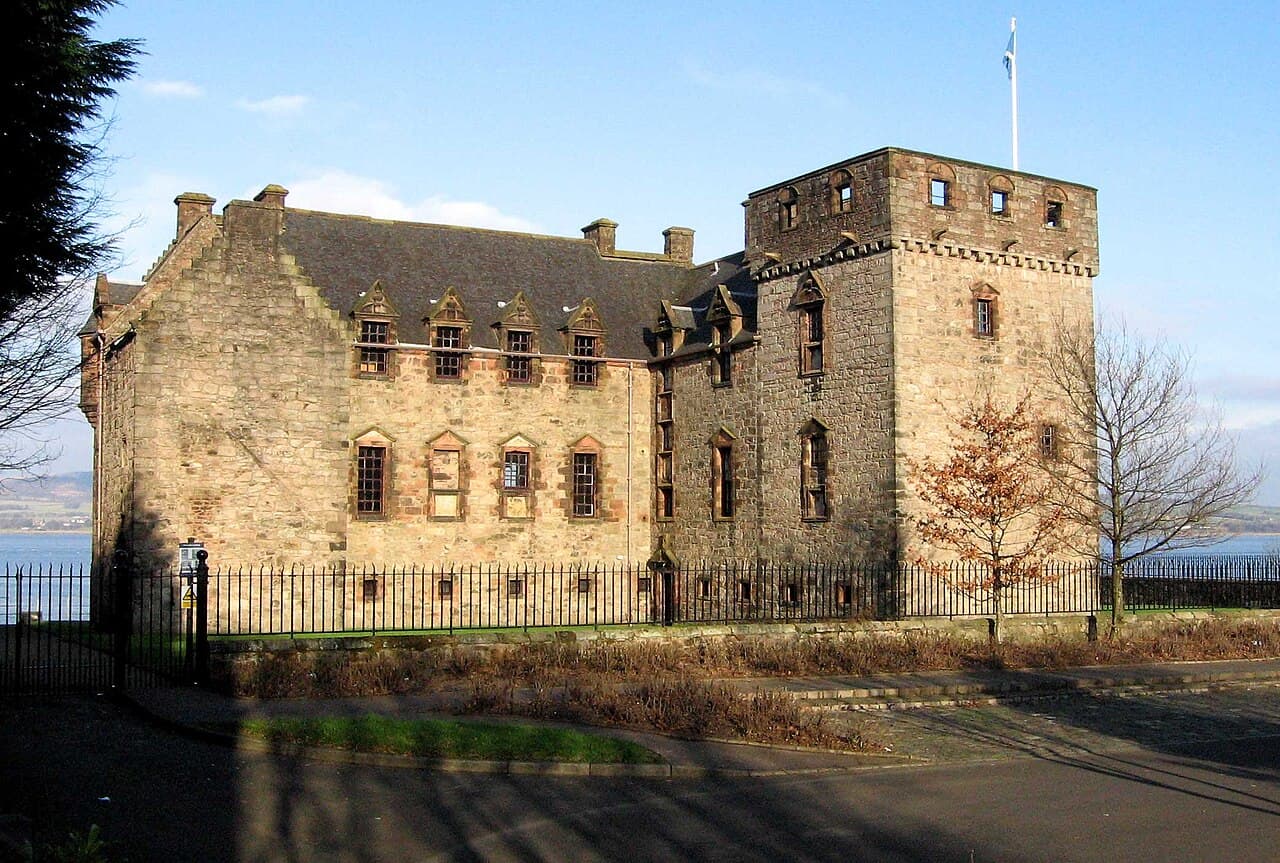
The castle’s initial defensive layout included a large gatehouse and a surrounding wall, of which only a corner tower remains today. Inside the enclosure, the castle likely contained a great hall and essential service buildings such as a bakehouse and brew house. In the late 16th century, the castle underwent significant transformation under Sir Patrick Maxwell, a powerful associate of King James VI of Scotland. Sir Patrick expanded the castle by constructing a new north range in the form of a three-storey Renaissance mansion, replacing the earlier hall. This renovation marked a shift from purely defensive architecture to more comfortable residential accommodations.
Architectural evolution and features
The original tower house and barmkin
The original structure was a classic late medieval tower house, a fortified residence typical of Scottish nobility. The barmkin wall, designed for defense and protection of livestock and goods, enclosed the courtyard and ancillary buildings. While most of this wall was demolished during later expansions, the northeast corner tower survived and was repurposed as a doocot (dovecote), a common feature in Scottish estates for housing pigeons.
Renaissance mansion and Scottish baronial style
The north range built by Sir Patrick Maxwell exhibits architectural elements of the Scottish baronial style, including crow-stepped gables and corbelled turrets at the corners. The mansion’s central block contains vaulted cellars with small windows, supporting a large hall above with expansive windows that allowed ample light. The east wing connects the mansion to the original tower house, while a short west wing links it to the gatehouse. A distinctive feature is the stairwell projecting from the north wall, supported on corbelling, providing access to upper floors.
Historical significance and ownership
The Maxwell family and political influence
The Maxwell family played a central role in the castle’s history. Sir Patrick Maxwell, notorious for violent acts including the murder of rival family members and domestic abuse, was a close confidant of King James VI. The castle remained in Maxwell hands until the late 17th century. In 1668, the land around Newark Castle was sold to the Glasgow authorities, who developed the area into the thriving port town of Port Glasgow, linking the castle’s history to Scotland’s maritime and shipbuilding heritage.
Later tenants and uses
After the last Maxwell died in 1694, the castle passed through various non-resident owners and tenants. Notably, John Orr, a ropemaker and dealer in exotic animals such as big cats and bears, rented the cellars, which were used to house these creatures. Later, Charles Williamson rented the gardens and cellars, taking measures to secure his stored fruit from theft by other tenants. The castle’s function shifted from noble residence to more utilitarian and commercial uses over time.
Preservation and visitor experience
Newark Castle entered state care in 1909 and is currently managed by Historic Scotland. It is well preserved, with extensive visitor facilities that allow exploration of its rich history and architecture. The site offers a tangible connection to Scotland’s late medieval period, Renaissance architectural developments, and the socio-political dynamics of the Maxwell family and the growth of Port Glasgow as a maritime hub.
Newark Castle in the context of Scottish castles
As a hill castle with a complex history of fortification, residential adaptation, and Renaissance influence, Newark Castle exemplifies the architectural and historical evolution typical of Scottish noble residences. Its location near the River Clyde estuary underscores the strategic importance of waterways in medieval and early modern Scotland, linking defense, commerce, and urban development.
Visitors to Newark Castle can appreciate the blend of military architecture and domestic comfort, the transformation from a fortified tower house to a Renaissance mansion, and the enduring legacy of the Maxwell family’s influence in the region. The castle’s survival amidst the industrial expansion of Port Glasgow’s shipyards further highlights its resilience and cultural significance.
Overall, Newark Castle remains a vital heritage site, offering insights into Scotland’s architectural styles, noble lineages, and maritime history, making it a compelling destination for historians, architects, and tourists alike.
Frequently asked questions (FAQ)
- How do I get to Newark Castle?
- Newark Castle is located in Port Glasgow, United Kingdom, and can be easily accessed by public transport. The nearest train station is Port Glasgow, which is a short walk from the castle. There are also local bus services that connect to the area, providing convenient options for visitors.
- What is the historical significance of Newark Castle?
- Newark Castle dates back to the 15th century and is a prime example of a medieval fortress. It played a significant role in the defense of the area during various conflicts, including the Wars of the Three Kingdoms. The castle's rich history reflects the architectural and cultural developments of its time.
- When was Newark Castle built?
- Construction of Newark Castle began in 1478 and was completed in the early 16th century. It was built by the famous architect John Stewart, who designed it as a residence for the noble family of the area. Over the centuries, the castle has undergone various renovations and restorations.
- Can I take guided tours of Newark Castle?
- Yes, Newark Castle offers guided tours that provide in-depth information about its history and architecture. These tours are led by knowledgeable guides who share fascinating stories and insights about the castle and its significance. Visitors can check the schedule for tour availability during their visit.
- Why is Newark Castle a popular tourist attraction?
- Newark Castle is popular for its stunning architecture, beautiful riverside location, and rich historical background. Visitors are drawn to its well-preserved structures and the stories of the families that lived there. The castle also serves as a picturesque setting for photography and leisurely walks.
- Is it possible to visit Newark Castle with children?
- Absolutely! Newark Castle is family-friendly and offers plenty of space for children to explore. The grounds are accessible, and there are interesting exhibits that engage younger visitors, making it an enjoyable experience for families.
- What are the opening hours for Newark Castle?
- Newark Castle is typically open to visitors from 10 AM to 5 PM, with extended hours during the summer months. It is advisable to check the official website for any changes in hours or seasonal closures before planning your visit. This ensures you make the most of your time at the castle.
- What are the ticket prices for Newark Castle?
- Admission to Newark Castle is generally free, allowing everyone to enjoy its historical significance without cost. However, there may be fees for guided tours or special events. Visitors can check at the entrance or the official website for any specific charges.
- What is the best time to visit Newark Castle?
- The best time to visit Newark Castle is during the spring and summer months when the weather is mild and the gardens are in full bloom. This allows visitors to enjoy the outdoor spaces and scenic views of the River Clyde. Additionally, the castle often hosts events and activities during this time, enhancing the visitor experience.
- Are there any nearby attractions to Newark Castle?
- Yes, there are several attractions near Newark Castle, including the scenic Clyde Muirshiel Regional Park and the historic town of Greenock, which features museums and galleries. Visitors can also explore the waterfront and enjoy local dining options. These nearby sites make for a perfect day out in the area.

Information
Website
Visit websiteSources & official resources
Verify the information above using these authoritative references.
Loading map...
Visitor reviews
No reviews yet. Been here? Write the first review and help other travelers!
Write the first reviewVisited this castle? Share your experience
Your review helps other travelers and adds first-hand knowledge to our encyclopedia.