Kilmahew Castle Ruins
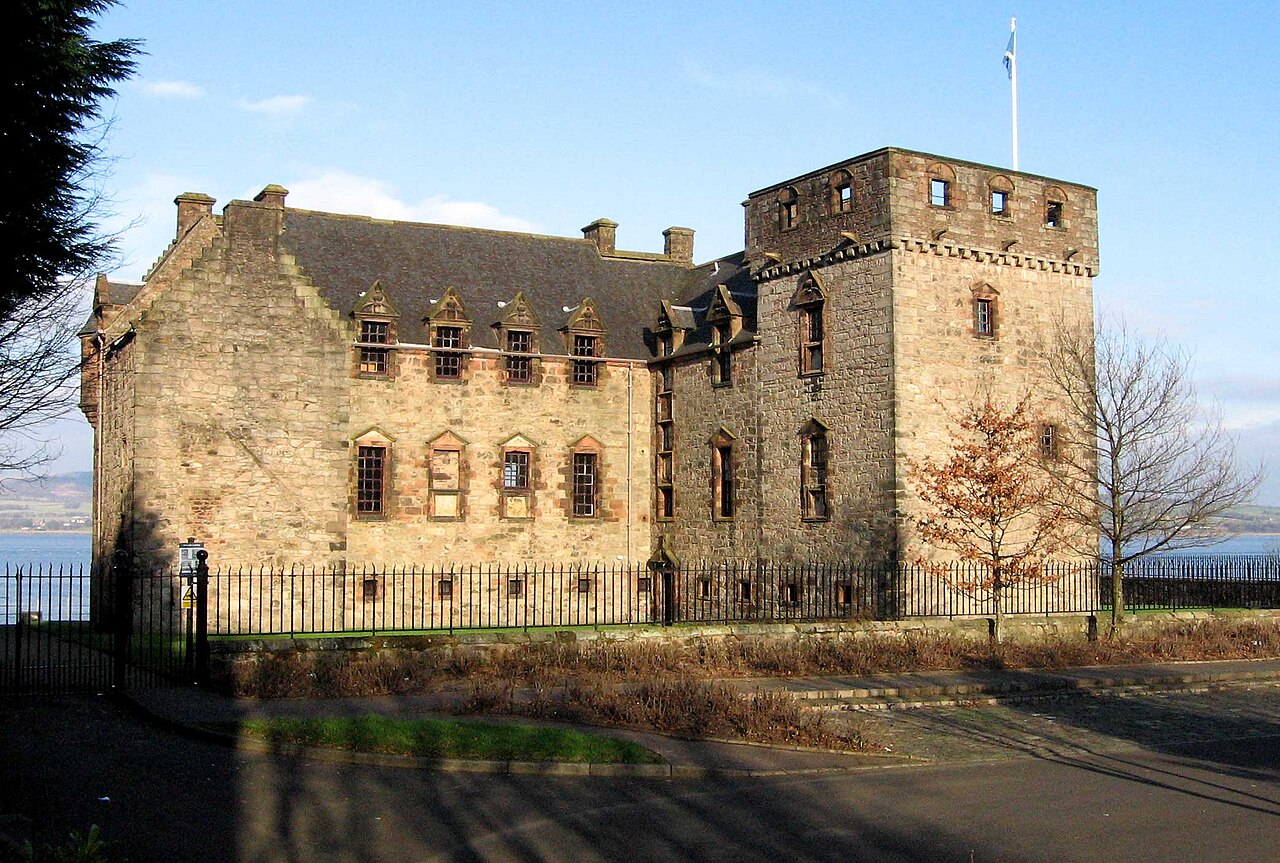
Kilmahew Castle stands as a significant historical site in Argyll and Bute, Scotland, with origins tracing back to lands granted around 1290 by Malcolm, Earl of Lennox to the Napier family. The castle itself, a 16th-century four-storey tower house, was the ancestral home of the Napiers for eighteen generations. This family is notable for their extensive lineage, including many descendants who emigrated to North America and made substantial contributions to engineering and other fields.
The Napier family and early history
The Napier family's association with Kilmahew began in the late 13th century, when Malcolm, Earl of Lennox, granted the lands. The castle's construction in the 16th century marked the establishment of a fortified residence typical of Scottish tower houses of the period. These structures were designed both for defense and as symbols of noble status. The Napiers maintained ownership of the estate for nearly 400 years, during which time the castle evolved to meet changing needs.
Legacy and lineage
One of the most prominent Napier descendants was John Napier, the mathematician credited with inventing logarithms, although direct familial ties to Kilmahew's Napiers are part of broader clan history. The Kilmahew branch of the family played a significant role locally, with their coat of arms preserved through heraldic quarterings by the Noble family of Ardmore, who represent the Napier legacy in heraldry today.
Architectural features and modifications
The original castle was a tower house built in the 16th century, featuring four storeys and typical defensive elements such as thick stone walls and narrow windows. The design reflects the High Medieval style transitioning into the Renaissance period, incorporating both military and residential functions.
18th-century alterations
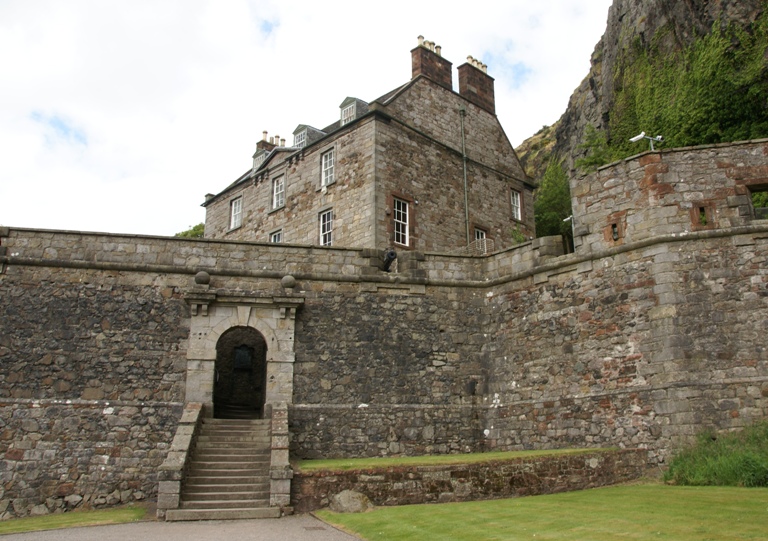
In 1744, the castle underwent significant modifications attributed to the architect John Douglas. These alterations likely included updates to the castle's interiors and structural reinforcements, reflecting the evolving architectural tastes and the reduced need for military defense in that era.
19th-century gothic revival influences
During the 19th century, under the ownership of Alexander Sharp, the castle saw the addition of Gothic-style modifications. These changes introduced characteristic features such as pointed arches, decorative battlements, and other romanticized medieval elements typical of the Gothic revival movement. This period's alterations contributed to the castle's picturesque ruinous appearance today.
Ownership transitions and estate history
Following the Napier lineage, the estate passed to George Maxwell of Newark and Tealing in 1694, who adopted the Napier name but left no legitimate heirs. The estate was later claimed by an illegitimate daughter, Jean Smith, who married David Brydie. Financial difficulties led to the sale of the property to Alexander Sharp in 1820 to settle gambling debts.
In 1839, James Burns of Bloomhill acquired the estate. He was the son of Rev. Dr. John Burns and died at the castle in 1871. The castle and surrounding lands were eventually acquired by the Archdiocese of Glasgow in 1948, marking a new chapter in the site's custodianship.
Current condition and cultural significance
Today, Kilmahew Castle remains a ruined structure, with its imposing tower house silhouette still visible amid the landscape. The ruins provide valuable insight into Scottish tower house architecture and the history of the Napier family. The site attracts visitors interested in medieval architecture, Scottish history, and genealogy.
Despite its ruinous state, the castle's remnants display elements from its original 16th-century construction, 18th-century modifications, and 19th-century Gothic revival enhancements. Preservation efforts focus on maintaining the structural integrity of the ruins and interpreting the site's layered history for educational and cultural purposes.
Frequently asked questions (FAQ)
- When was Kilmahew Castle originally built?
- Kilmahew Castle was originally constructed in the 16th century as a four-storey tower house, on lands granted to the Napier family around 1290.
- What architectural styles are evident at Kilmahew Castle?
- The castle features a mix of architectural styles, including its original 16th-century tower house design, 18th-century modifications by John Douglas, and 19th-century Gothic revival elements added by Alexander Sharp.
- Who were the original owners of Kilmahew Castle?
- The Napier family were the original owners, granted the lands by Malcolm, Earl of Lennox, and they held the estate for eighteen generations.
- What is the current condition of Kilmahew Castle?
- Kilmahew Castle is currently in a ruined state, with visible remnants of its tower house structure and later architectural modifications.
- Who owns Kilmahew Castle today?
- The castle and its surrounding estate are owned by the Archdiocese of Glasgow, which acquired the property in 1948.
Information
Architect
John Douglas
Current owner
Archdiocese of Glasgow
Loading map...
Visitor reviews
No reviews yet. Been here? Write the first review and help other travelers!
Write the first reviewVisited this castle? Share your experience
Your review helps other travelers and adds first-hand knowledge to our encyclopedia.