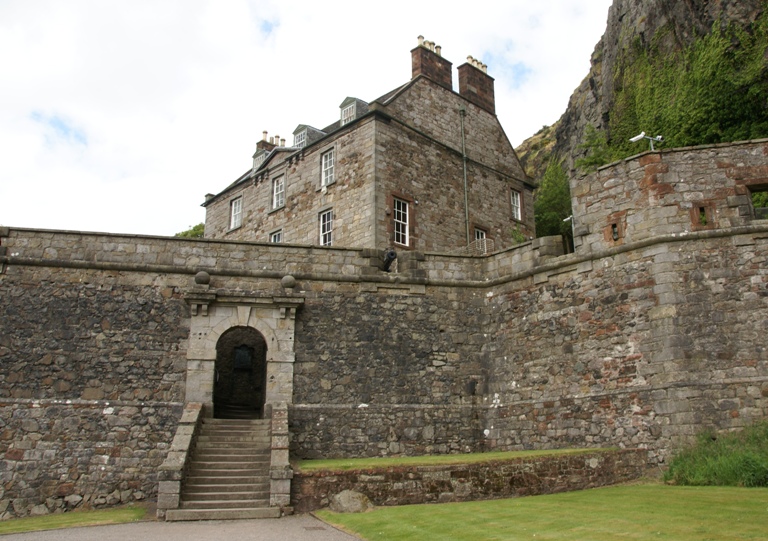
Dumbarton Rock
Dumbarton Rock is a striking geological and historical landmark located on the banks of the River Clyde in Scotland. This imposing 240-foot-tall volcanic basalt plug has served as a natural fortress for millennia, shaping the region's history from ancient times through the Georgian era. Its unique geological formation and strategic position have made it a coveted stronghold throughout Scottish history.
Geological and strategic significance
The rock itself is a rare example of a volcanic plug, formed from hardened magma that resisted erosion while the surrounding softer rock wore away. This geological feature provided a naturally defensible position, rising sharply above the surrounding landscape and the river. Its elevated vantage point allowed for extensive views over the Clyde estuary, making it an ideal location for defense and control of river traffic.
Because of this natural advantage, Dumbarton Rock became a focal point for human settlement and military fortification from prehistoric times. Its position at the confluence of the River Clyde and the River Leven made it a strategic gateway to the interior of Scotland, controlling access to the western lowlands.
Ancient stronghold and the kingdom of strathclyde
The site was the center of the ancient kingdom of Strathclyde, known in early medieval sources as Alt Clut (meaning "rock of the Clyde"). This kingdom was one of the major Brittonic realms in post-Roman Britain, and Dumbarton Rock served as its royal fortress and capital.
Archaeological evidence and historical records indicate that the fortress at Dumbarton was heavily fortified with strong stone walls and defensive structures by the early medieval period. The rock's natural defenses were augmented by man-made battlements and ramparts, creating a formidable bastioned fortress that could withstand sieges.
The fortress was a cultural and political hub, hosting rulers and serving as a symbol of power for the kingdom. It was also a target for various invaders, including the Vikings, who famously raided the fortress in the 9th century. The Viking siege in 870 AD was a significant event, resulting in the capture and destruction of the fortress, which marked a turning point in the region's history.
Medieval and renaissance history
Following the Viking era, Dumbarton Rock continued to play an important role in Scottish history. It was used as a royal residence and military stronghold throughout the medieval period. Notably, Sir William Wallace, a key figure in the First War of Scottish Independence, was imprisoned here in the early 14th century, underscoring the fortress's continued strategic importance.
In the 16th century, the rock's fortress was a royal refuge for Mary, Queen of Scots, who stayed there briefly as a child before her journey to France in 1548. This period saw the fortress adapting to changing military technologies and political circumstances.
Georgian military architecture and later history
By the 18th century, Dumbarton Rock underwent significant redevelopment to become a modern bastioned fortress reflecting contemporary military architectural principles. The Georgian era fortifications included extensive stone walls, bastions, and artillery placements designed to defend against artillery and naval threats.
This transformation illustrates the rock's enduring military significance, adapting through centuries from a natural fortress to a sophisticated bastioned fortress. The site remained active in military use well into the 19th century.
Cultural legacy and notable visitors
The rock's rich history has attracted numerous notable figures and inspired legends. According to local legend, Saint Patrick was thwarted by the Devil throwing the rock at his boat as he left Scotland for Ireland, a tale that highlights the cultural significance of the rock in Celtic folklore.
The legendary wizard Merlin is said to have stayed at the fortress when it was known as Alt Clut, adding a layer of mythic allure to its history. The poet William Wordsworth and his wife visited in 1803, drawn by the site's dramatic landscape and historical resonance.
Today, Dumbarton Rock stands as a symbol of Scotland's layered history, from ancient kingdoms to Georgian military innovation. It is a protected heritage site, attracting visitors interested in geology, history, and military architecture.
Visiting dumbarton rock
Visitors to Dumbarton Rock can explore the extensive remains of the fortress, including the bastioned walls and remnants of earlier medieval structures. The site offers panoramic views of the River Clyde and surrounding countryside, making it a popular destination for history enthusiasts and hikers alike.
Interpretive signage and guided tours provide insights into the site's complex history, from its volcanic origins to its role in Scottish national identity. The rock's accessibility and striking presence continue to captivate visitors, ensuring its place as a cherished landmark.
Frequently asked questions (FAQ)
- What is the historical significance of Dumbarton Rock?
- Dumbarton Rock was the heart of the ancient kingdom of Strathclyde and served as a royal fortress, a key military stronghold, and a cultural symbol throughout Scottish history.
- Can I visit Dumbarton Rock today?
- Yes, Dumbarton Rock is accessible to visitors who can explore its well-preserved bastioned fortress remains and enjoy panoramic views of the River Clyde and surrounding areas.
- When was Dumbarton Rock first fortified?
- The rock was fortified from early medieval times, serving as the capital of the kingdom of Strathclyde with strong stone walls and defensive structures.
- Who were some notable historical figures associated with Dumbarton Rock?
- Notable figures include the legendary Merlin, Sir William Wallace, Mary Queen of Scots, and poet William Wordsworth, all connected to the rock's rich history.
- Why is Dumbarton Rock geologically unique?
- It is a volcanic basalt plug, a hardened magma formation that resisted erosion, creating a naturally defensible and prominent geological feature.
Information
Website
Visit websiteSources & official resources
Verify the information above using these authoritative references.
Loading map...
Visitor reviews
No reviews yet. Been here? Write the first review and help other travelers!
Write the first reviewVisited this castle? Share your experience
Your review helps other travelers and adds first-hand knowledge to our encyclopedia.