Neuhaus Castle
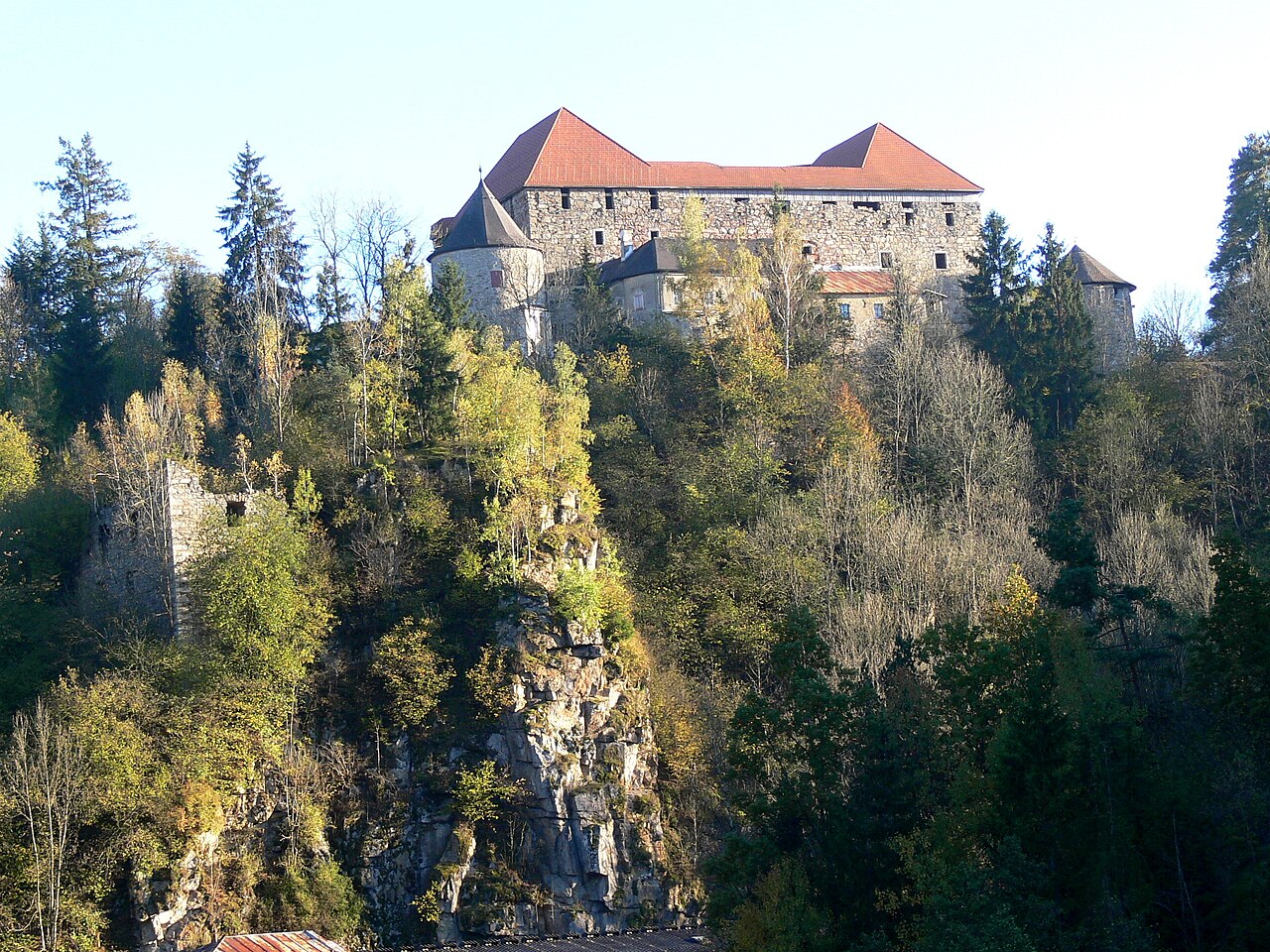
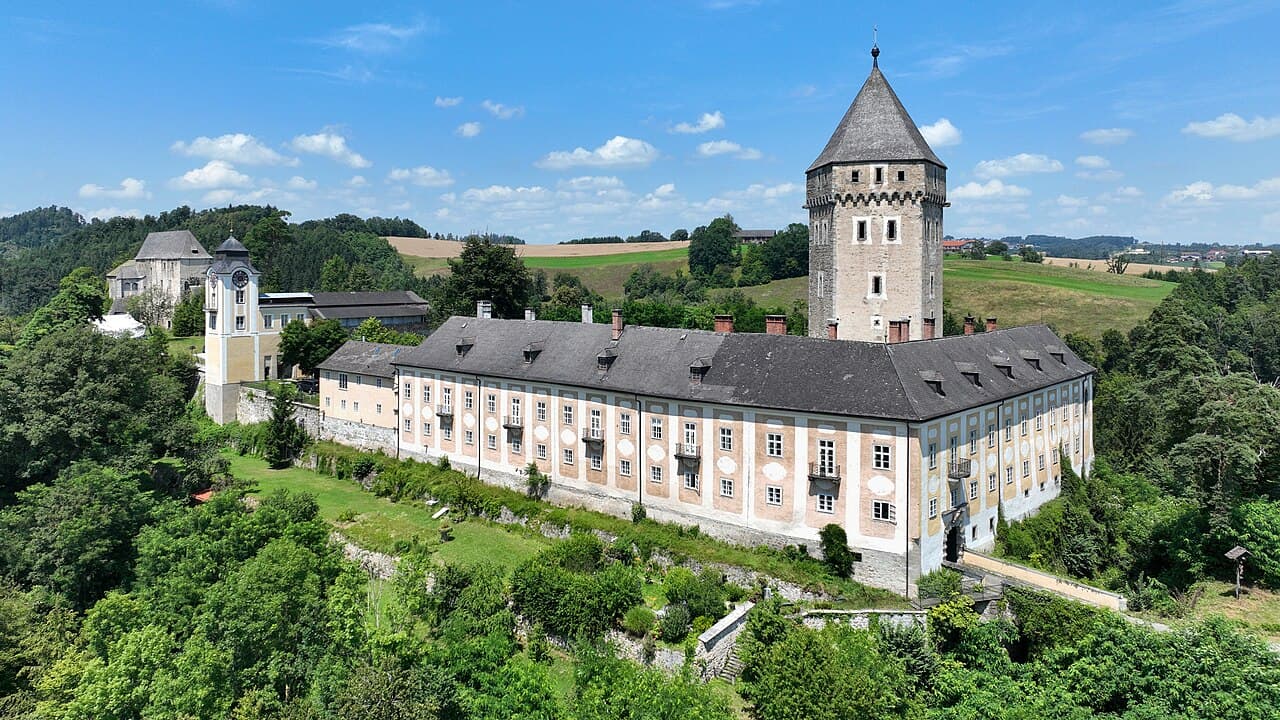
Neuhaus Castle, located in Neuhaus an der Donau, Upper Austria, is a significant example of a high medieval hill castle with origins tracing back to the 13th century. The castle's strategic position above the Danube River allowed it to control river traffic, a vital aspect of medieval commerce and defense. This control was enforced notably through a chain tower situated below the castle, from which a heavy chain could be stretched across the river to block passing ships, a defensive mechanism used in several medieval fortifications along important waterways.
Early history and construction
The earliest construction phase of Neuhaus Castle likely dates to the 13th century, possibly erected on the foundations of an earlier fortified house from the 12th century. This initial structure formed the basis for the castle's development through the centuries. The castle's distinctive pentagonal tower was added in the 14th century, enhancing its defensive capabilities and architectural complexity. This tower is a notable feature, rising to approximately 32 metres, which makes it one of the tallest medieval tower houses in the region of Styria.
Ownership and architectural evolution
Neuhaus Castle was originally constructed by the House of Stubenberg in the mid-14th century. Historical records from 1375 mention a figure known as 'Hans from Neuhaus,' indicating the castle's established role in the local nobility's domain. Over time, ownership passed to the Drachsler family and subsequently to the counts of Wurmbrand. The counts undertook significant fortification efforts, particularly in response to the threat posed by the advancing Ottoman Turks during the late medieval period. These enhancements were part of a broader trend of castle modernization to withstand evolving military technologies and siege tactics.
16th-century rebuilding
During the 16th century, Neuhaus Castle underwent substantial reconstruction. This period saw the adaptation of the castle's defenses and residential quarters to Renaissance military and architectural standards. The renovations included strengthening walls and updating living spaces to reflect contemporary tastes and functional needs, marking a transition from purely military fortress to a noble residence with defensive features.
Military significance and sieges
Neuhaus Castle's strategic location made it a focal point in regional conflicts. Documented sieges occurred in 1381, 1386, and 1389, reflecting the turbulent political landscape of medieval Austria. The castle's defenses, including its thick walls and elevated position, were tested during these assaults. The ability to control river traffic on the Danube added to its military importance, as controlling trade routes was crucial for economic and strategic dominance.
Decline and restoration efforts
Around 1800, Neuhaus Castle suffered near-total destruction due to a lightning strike, which led to a fire that devastated much of the structure. Following this event, the castle entered a prolonged period of decay lasting approximately two centuries. Despite this, the castle's extraordinarily thick walls preserved enough of the original structure to allow for modern restoration efforts.
Modern revitalization
In recent decades, significant restoration work has been undertaken to stabilize and reconstruct key parts of Neuhaus Castle. The medieval tower house has been nearly fully restored, preserving its status as one of the oldest and tallest high-rise medieval buildings in the region. Additionally, two adjoining buildings are undergoing reconstruction to revive the castle's historical footprint. These efforts aim to conserve the castle's architectural heritage and promote its cultural significance in Upper Austria.
Architectural features and style
Neuhaus Castle exemplifies the high medieval hill castle typology, characterized by its elevated position and robust defensive structures. The castle's pentagonal tower is a unique architectural element, contributing both to its defensive strategy and its silhouette against the landscape. The castle's walls are notably thick, a feature that has contributed to its partial survival despite centuries of neglect and damage.
The castle's architectural style reflects the transitions from medieval fortification principles to Renaissance adaptations, visible in the modifications made during the 16th century. While primarily functional in design, the castle also incorporates elements of noble residence aesthetics, balancing defense with habitation.
Location and surroundings
Situated at an altitude of approximately 420 metres above sea level, Neuhaus Castle overlooks the Danube River in the town of Neuhaus an der Donau. The location provided commanding views of the river valley and surrounding terrain, essential for early warning and defense. The castle's proximity to the Danube made it a critical point for controlling one of Europe's major waterways, influencing trade and military movements for centuries.
Cultural and historical significance
Neuhaus Castle remains an important cultural monument in Upper Austria, reflecting the region's medieval history and architectural evolution. Its restoration contributes to the preservation of Austria's heritage and offers insights into feudal life, military architecture, and the socio-political dynamics of the Middle Ages. The castle attracts visitors interested in history, architecture, and the scenic beauty of the Danube valley.
Frequently asked questions (FAQ)
- When was Neuhaus Castle originally built?
- Neuhaus Castle was likely built in the 13th century, possibly on the site of an earlier 12th-century fortified house.
- What is the significance of the pentagonal tower?
- The pentagonal tower, added in the 14th century, is a distinctive defensive feature and one of the tallest medieval tower houses in Styria, standing about 32 metres high.
- Who were the historical owners of Neuhaus Castle?
- The castle was originally built by the House of Stubenberg, later owned by the Drachsler family and the counts of Wurmbrand, who reinforced it against Ottoman threats.
- What caused the castle's decline?
- Around 1800, Neuhaus Castle was almost completely destroyed by lightning, leading to a fire and subsequent centuries of decay until restoration efforts began.
- Can visitors see the restored parts of Neuhaus Castle today?
- Yes, the medieval tower house has been nearly fully restored, and two adjoining buildings are under reconstruction, allowing visitors to experience the castle's historic architecture.
Photo gallery

Information
Loading map...
Visitor reviews
No reviews yet. Been here? Write the first review and help other travelers!
Write the first reviewVisited this castle? Share your experience
Your review helps other travelers and adds first-hand knowledge to our encyclopedia.