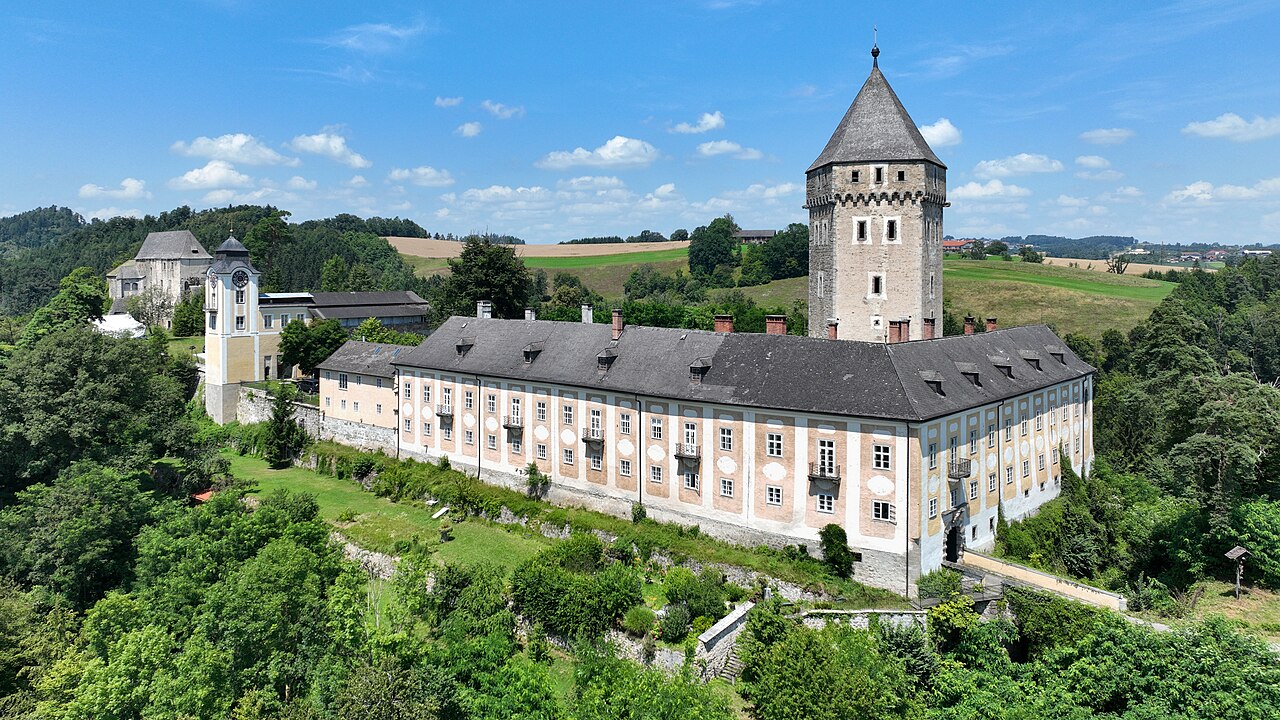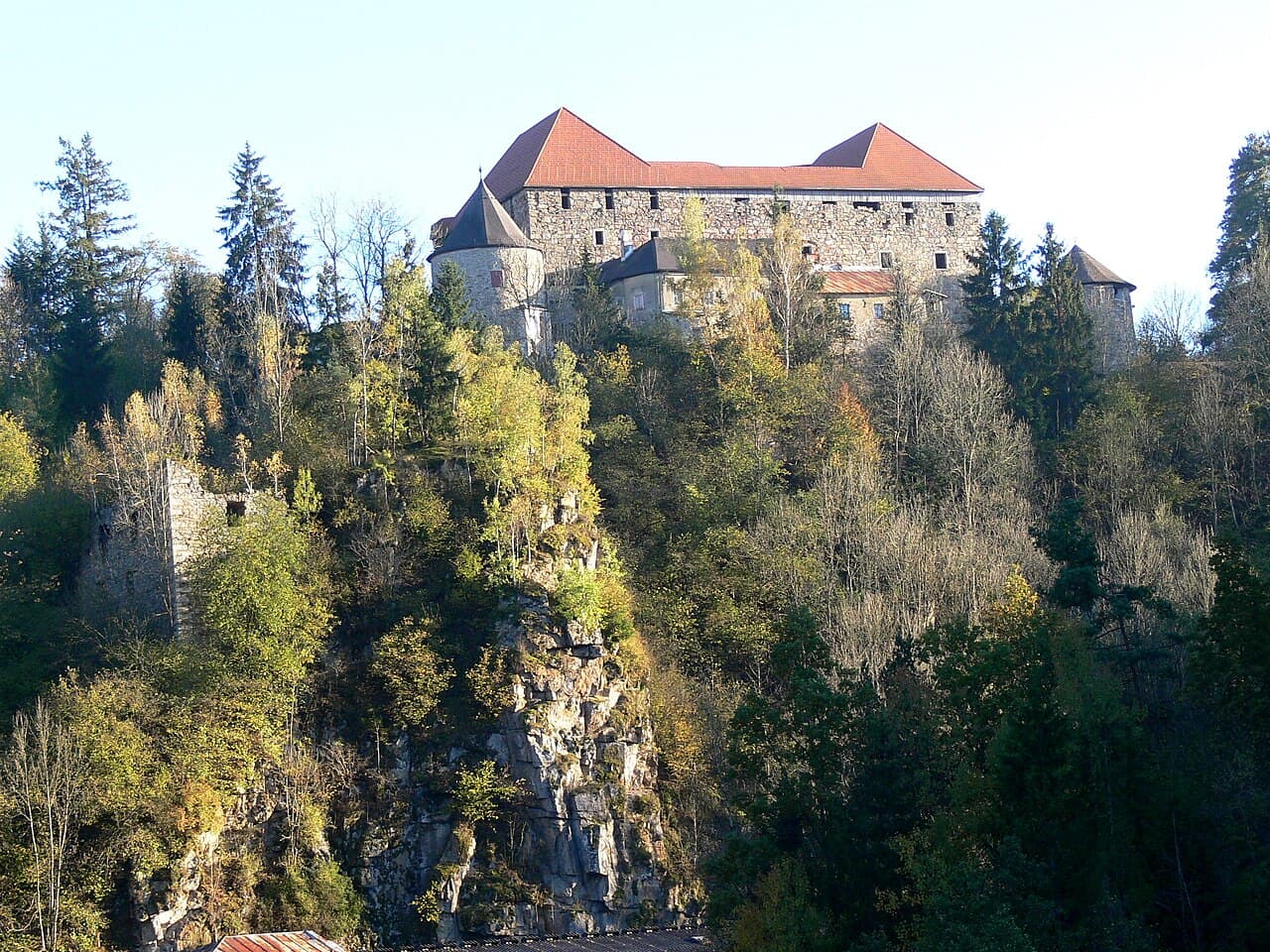
Pürnstein Castle
Pürnstein Castle stands prominently on a steep north-west facing hill in the region of Upper Austria, overlooking the valley below at an elevation of 537 meters (1,762 feet). This hill castle is one of the region's significant medieval fortifications, originally constructed in the late 10th century. The castle's first documented mention dates back to 1170, situating it firmly within the early medieval period.
Historical significance and ownership
During the 13th century, Pürnstein Castle came under the control of the Prince-Bishopric of Passau, a powerful ecclesiastical principality of the Holy Roman Empire. This transfer marked an important phase in the castle's history, as it became a strategic administrative and military center in the region. The castle's role evolved over the centuries, reflecting shifts in political power and military technology.
Architectural evolution and features
The castle's current appearance largely dates from the mid-15th century, when significant rebuilding and fortification efforts took place. One of the notable architectural highlights is the castle chapel, which was consecrated in 1449 and remains one of the best-preserved parts of the complex. The chapel's survival through subsequent disasters underscores its importance to the castle's occupants.
Layout and defensive structures
Pürnstein Castle is characterized by its spacious layout and robust fortifications. The castle complex features a large hexagonal residential palas at its core, which encloses a courtyard measuring approximately 17 by 13.5 meters. The palas housed essential rooms such as the knights' hall, living quarters, kitchen, and the chapel, all arranged around the central courtyard.
Surrounding the palas is a defensive wall reinforced by five semi-circular towers. These towers, along with the thick defensive walls measuring up to six meters, provided formidable protection against attackers. The main entrance leads into the outer bailey, from which visitors can access the main castle through the upper castle gate.
Topography and strategic location
The castle's placement on steep terrain on the north-west slope of the hill was a deliberate defensive choice. The elevated position allowed defenders to monitor the valley and control important routes, enhancing the castle's military effectiveness. The natural landscape complemented the man-made fortifications, making Pürnstein Castle a challenging target for besiegers.
Destruction and preservation efforts
On September 7, 1866, a devastating fire destroyed the entire interior of the castle, including all wooden structures and the roof of the inner castle. Remarkably, the castle chapel was spared from the flames. The fire was reportedly caused by arson, which marked a tragic turning point in the castle's history.
Despite this destruction, parts of the castle that were added in the 17th and 18th centuries remain habitable today. These later additions reflect the castle's continuous adaptation and use beyond its medieval origins.
Currently, the castle is under the care of its private owner along with the Association for the Preservation of Pürnstein Castle. Together, they oversee ongoing preservation and renovation efforts to maintain the castle's structural integrity and historical character.
Architectural details and materials
The castle's walls, with thicknesses reaching up to six meters, were constructed primarily from local stone, providing substantial defense against siege weaponry of the medieval period. The semi-circular towers were designed to offer overlapping fields of fire and to eliminate blind spots, a common feature in late medieval fortifications.
The hexagonal shape of the palas is relatively rare and demonstrates advanced medieval architectural planning, allowing for efficient use of space and enhanced defense. The internal rooms were multifunctional, serving both residential and administrative purposes.
Visiting Pürnstein Castle
Today, visitors to Pürnstein Castle can explore the ruins and the preserved sections that reveal the castle's layered history. The castle's commanding position offers scenic views of the surrounding Upper Austrian landscape. Preservation efforts have made parts of the castle accessible, allowing for educational visits and cultural events that celebrate its medieval heritage.
Access and visitor information
The castle is accessible via a path leading up the steep hill, which requires a moderate level of fitness. Visitors should prepare for uneven terrain and limited facilities on site. Guided tours are sometimes available through the preservation association, providing detailed insights into the castle's architecture and history.
Frequently asked questions (FAQ)
- How do I get to Pürnstein Castle?
- Pürnstein Castle is accessible by car, with parking available nearby. Public transportation options include local buses that connect to the nearest town, followed by a short hike to the castle.
- What is the historical significance of Pürnstein Castle?
- Pürnstein Castle dates back to the 12th century and played a crucial role in regional defense during medieval times. It is known for its strategic location and has been a witness to various historical events in Austria.
- When was Pürnstein Castle built?
- Construction of Pürnstein Castle began in the early 12th century, making it one of the oldest castles in the region. Over the centuries, it has undergone several renovations, reflecting various architectural styles.
- Can I visit Pürnstein Castle year-round?
- Yes, Pürnstein Castle is open to visitors throughout the year, although specific areas may be closed during winter months for maintenance. It is advisable to check the official website for seasonal updates.
- Why is Pürnstein Castle popular among tourists?
- Pürnstein Castle is popular for its stunning panoramic views of the surrounding landscape and its well-preserved architecture. Visitors enjoy exploring its rich history and scenic hiking trails nearby.
- Is it possible to take guided tours of the castle?
- Yes, guided tours of Pürnstein Castle are available, providing insights into its history and architecture. These tours are conducted by knowledgeable guides and are a great way to enhance your visit.
- What are the opening hours of Pürnstein Castle?
- Pürnstein Castle typically opens at 10 AM and closes at 5 PM, but hours may vary depending on the season. It is recommended to check the castle's website for the most current information before your visit.
- What are the ticket prices for Pürnstein Castle?
- Ticket prices for Pürnstein Castle are generally affordable, with discounts available for students and seniors. Children under a certain age may enter for free, making it a family-friendly destination.
- What nearby attractions should I visit while at Pürnstein Castle?
- While visiting Pürnstein Castle, you can explore other nearby attractions such as the picturesque town of Pürnstein and local hiking trails. Additionally, the beautiful natural scenery of the surrounding area offers plenty of opportunities for outdoor activities.
Photo gallery

Information
Current owner
Private owner and Association for the Preservation of Pürnstein Castle
Loading map...
Visitor reviews
No reviews yet. Been here? Write the first review and help other travelers!
Write the first reviewVisited this castle? Share your experience
Your review helps other travelers and adds first-hand knowledge to our encyclopedia.