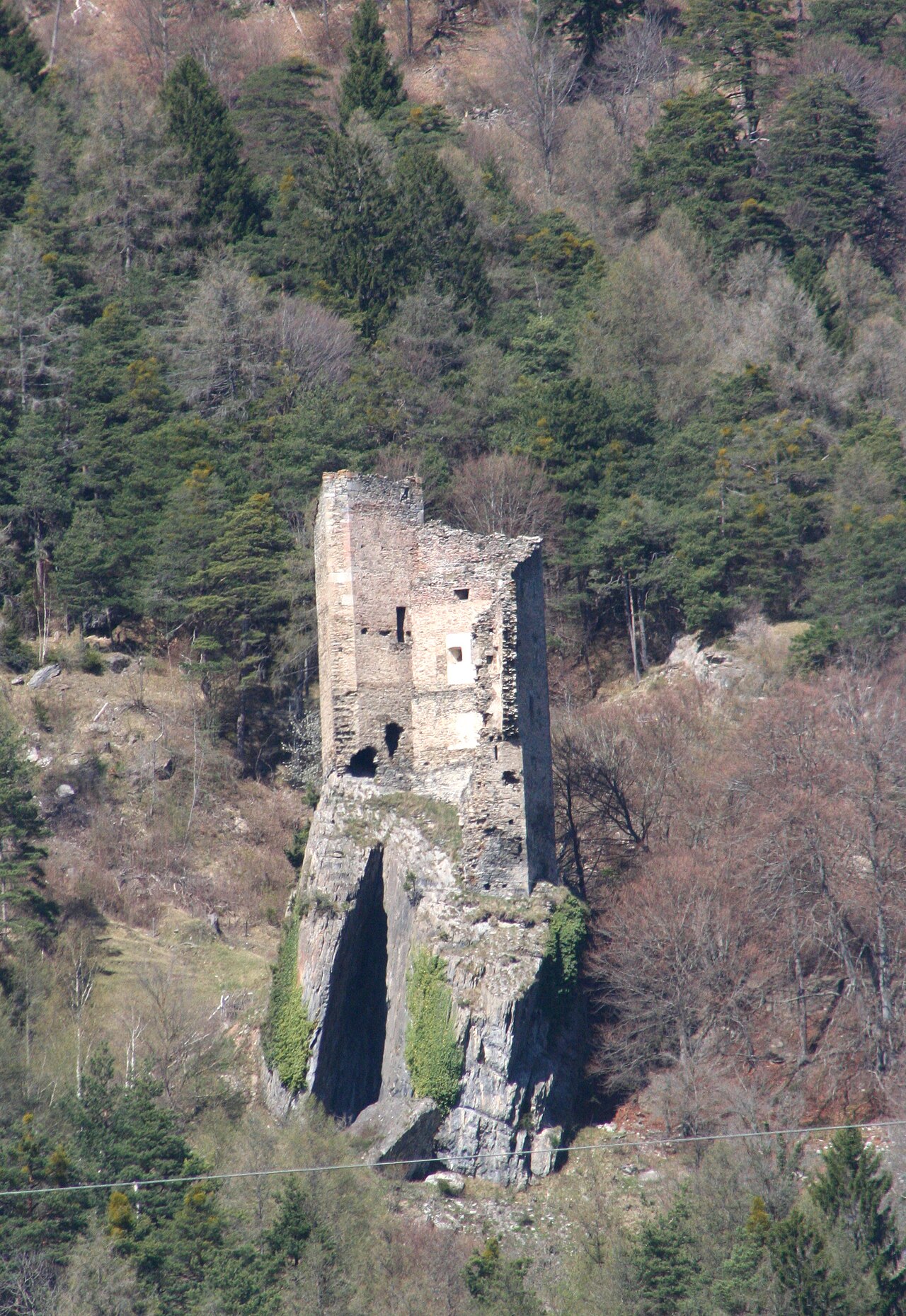
Neuburg Castle
Neuburg Castle stands as a significant high medieval fortress located in Untervaz, Switzerland. Constructed in the 13th century, it was likely established by the Baron Tumb von Neuburg from Vorarlberg, marking an important strategic and noble presence in the region of Graubünden. While the exact reasons for the Tumb von Neuburg family's acquisition of land in this area remain unclear, the castle's history reflects the complex feudal relationships and regional conflicts of the time.
The castle was first documented in 1345 under the name Nüwburg. Throughout the late 14th century, Neuburg Castle experienced various ownership changes and political tensions. In 1360, the castle was used as collateral in a loan agreement with Heinz and Martin Buwix, though it returned to the Tumb family by 1385. A notable conflict occurred in 1396 when Frik Tumb's dispute with Ulrich Brun von Rhäzüns escalated into a siege of the castle, illustrating the volatile nature of noble rivalries in medieval Switzerland. To safeguard his claim, Johann von Neuburg became a vassal to the Bishop of Chur in 1400.
Architectural features and layout
Neuburg Castle is renowned for its imposing rectangular keep, which remains one of the largest in the historic region of Raetia. The keep originally rose four stories high and measured approximately 12 by 29 meters. Its high entrance was positioned on the west side, about two meters above ground level, a typical defensive feature to hinder attackers. Internally, the tower was divided into three sections by substantial interior walls, enhancing both structural stability and defensive capabilities.
Surrounding the keep, remnants of the curtain walls and a gatehouse are still visible, particularly to the north and west. The northern courtyard contains a large, round cistern, essential for water storage during sieges. The castle underwent multiple expansions over time, including the addition of arcades, detached kitchens, and sinks. The walls were notably thick, about 1.5 meters at the base, tapering as they ascended, a common medieval construction technique to balance defense and weight.
Access to the castle's middle section was controlled by a gate approximately 2 meters high on the mountain side, providing an additional defensive barrier. The site's strategic location on elevated terrain further enhanced its defensive posture, typical of hill castles designed to oversee and control surrounding lands.
Historical ownership and decline
After the Tumb family regained control in the late 14th century, the castle passed into the hands of Rudolf von Rappenstein or possibly von Mötteli around 1450. By 1496, the castle was sold to the Bishop of Chur, who appointed a bailiff to manage the estates. During the bishopric's administration, the castle was expanded further, reflecting its ongoing importance.
However, by the 16th century, Neuburg Castle was abandoned and began to deteriorate. The municipality purchased the castle and its associated barony in 1577, but no significant restoration efforts were undertaken at that time. The castle gradually fell into ruin, with much of its structure collapsing over the following centuries.
Later history and current condition
Historical records indicate that the castle was demolished in 1745, yet substantial ruins remain today. These ruins provide valuable insight into medieval castle architecture in the region. The surviving elements, particularly the massive keep and portions of the curtain wall, offer a glimpse into the defensive strategies and living conditions of the medieval nobility in Graubünden.
Today, Neuburg Castle is recognized as an important heritage site. Its ruins attract visitors interested in medieval history and architecture, as well as those exploring the cultural landscape of eastern Switzerland. The site’s preservation allows for ongoing archaeological study and public education about the region's feudal past.
Significance in medieval Swiss history
Neuburg Castle exemplifies the typical development of a high medieval hill castle in the Alpine region. Its history reflects the complex feudal allegiances between local barons and ecclesiastical authorities such as the Bishop of Chur. The castle’s involvement in regional conflicts, including sieges and feuds, highlights the turbulent nature of medieval Swiss politics and territorial control.
The castle’s architectural features, including its large rectangular keep and robust curtain walls, demonstrate the adaptation of defensive design to mountainous terrain. Neuburg’s strategic location allowed its owners to exert influence over the surrounding valley and trade routes, underscoring the military and economic importance of such fortifications during the 13th to 16th centuries.
Archaeological and cultural value
As a partially preserved ruin, Neuburg Castle offers significant opportunities for archaeological research. Excavations have revealed the castle’s layout, construction phases, and modifications over several centuries. The site’s large cistern and remnants of ancillary buildings provide evidence of the daily life and logistical arrangements necessary to sustain a medieval fortress.
In addition to its historical and architectural importance, Neuburg Castle contributes to the cultural identity of Untervaz and the wider Graubünden region. It serves as a tangible link to the medieval past and a focal point for local heritage tourism.
Frequently asked questions (FAQ)
- When was Neuburg Castle built and by whom?
- Neuburg Castle was built in the 13th century, most likely by Baron Tumb von Neuburg from Vorarlberg.
- What architectural features make Neuburg Castle notable?
- The castle features one of the largest rectangular keeps in Raetia, with thick walls, a high entrance, curtain walls, a gatehouse, and a large cistern.
- Why was Neuburg Castle abandoned?
- Neuburg Castle was abandoned in the 16th century due to changes in political control and military needs, leading to its gradual ruin.
- Can visitors access the ruins of Neuburg Castle today?
- Yes, the ruins of Neuburg Castle are accessible to visitors interested in medieval history and architecture, though facilities and opening hours may vary.
- What role did Neuburg Castle play in regional conflicts?
- The castle was involved in feuds such as the 1396 siege during a dispute between the Tumb and Brun von Rhäzüns families, reflecting its strategic importance.
Information
Loading map...
Visitor reviews
No reviews yet. Been here? Write the first review and help other travelers!
Write the first reviewVisited this castle? Share your experience
Your review helps other travelers and adds first-hand knowledge to our encyclopedia.