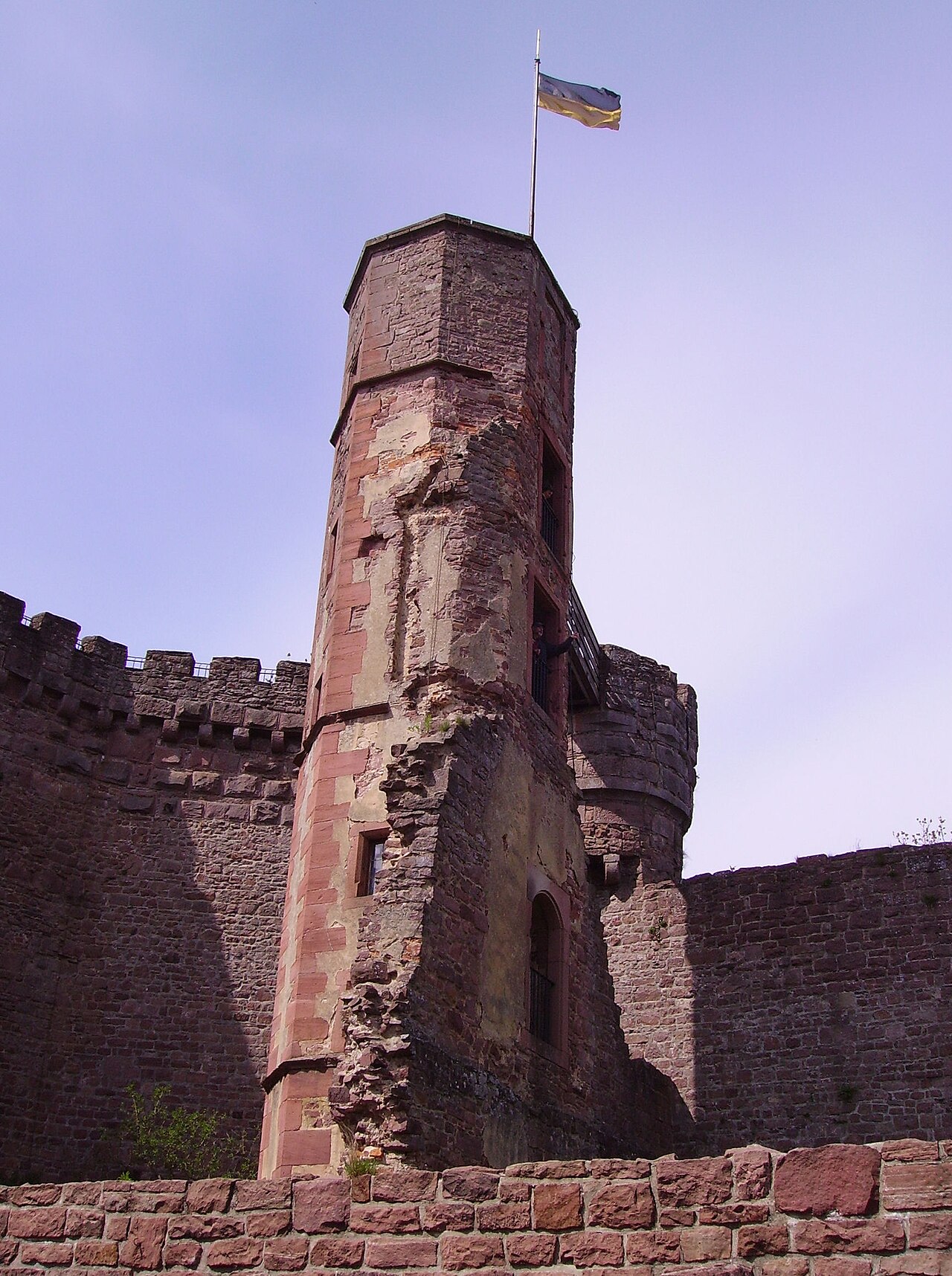
Reichenstein Castle Ruins
Reichenstein Castle stands as a historical relic on the northern end of Hollmuth hill near Neckargemünd, Germany. Constructed in the 12th century during the high medieval period, this fortress was strategically positioned to oversee the surrounding landscape and protect key routes along the Neckar River. The castle's location on elevated terrain provided natural defensive advantages, which were enhanced by man-made fortifications.
Architectural layout and defensive features
The castle complex is characterized by an almost rectangular ground plan, a typical design element for medieval fortifications aiming to maximize defensive efficiency. This layout was surrounded by a moat that separated the castle from the hill itself, serving as a crucial defensive barrier against invaders. The moat likely functioned as both a physical obstacle and a deterrent, complicating any siege attempts.
Terracing work carried out in the early 20th century helped to stabilize the site and preserve the remaining structure. The terracing would have involved leveling and reinforcing the slopes around the castle to prevent erosion and further decay of the ruins.
Historical ownership and decline
In the 14th century, Reichenstein Castle came under the ownership of the Palatinate, a significant territorial state within the Holy Roman Empire. This acquisition reflects the castle's strategic importance during the medieval period. However, by the 15th century, the castle was abandoned, likely due to changes in military technology, shifting political power, or economic factors that made maintaining the fortress untenable.
The castle's decline is visually documented in a 17th-century engraving by Merian, which depicts the site already in ruins. This engraving provides valuable historical evidence of the castle's condition several centuries after its abandonment, showing the gradual decay typical of many medieval fortifications that lost their strategic relevance.
Current condition and preservation
Today, only fragments of the castle walls remain, offering a glimpse into its original structure and scale. The preservation state is classified as ruins, with much of the superstructure lost to time. Despite this, the remaining masonry and layout allow historians and visitors to appreciate the castle's medieval origins and architectural style.
The site is accessible to visitors interested in medieval history and castle architecture, providing an opportunity to explore the remnants of a high medieval fortress nestled within the scenic landscape of the Neckar valley.
Significance in medieval fortification history
Reichenstein Castle exemplifies the typical defensive strategies employed during the high medieval period in Germany. Its use of natural topography combined with constructed fortifications like moats and rectangular layouts reflects common military architectural practices of the time. The castle's history of ownership and eventual abandonment also illustrates the broader socio-political shifts occurring in the region during the late Middle Ages.
Although largely in ruins, the site remains an important cultural heritage landmark, contributing to the understanding of medieval fortifications and feudal power structures in southwestern Germany.
Frequently asked questions (FAQ)
- How do I get to Reichenstein Castle Ruins?
- Reichenstein Castle Ruins is located in Neckargemünd, Germany, and can be accessed by car or public transport. If you're arriving by train, the nearest station is Neckargemünd, from where you can take a short bus ride or enjoy a scenic walk to the castle.
- What is the historical significance of Reichenstein Castle Ruins?
- Reichenstein Castle was built in the 13th century and played an important role in the defense of the region during the Middle Ages. The ruins today offer a glimpse into the architectural styles and strategic importance of castles in the Neckar valley.
- When was Reichenstein Castle Ruins last restored?
- The castle ruins have undergone several restoration efforts, with significant work done in the late 20th century to ensure safety and preserve its historical integrity. While the site remains in a largely ruinous state, these efforts have helped make it accessible for visitors.
- Can I visit Reichenstein Castle Ruins year-round?
- Yes, Reichenstein Castle Ruins is open to visitors year-round, although accessibility may vary depending on weather conditions. It's always a good idea to check for any seasonal restrictions or maintenance updates before your visit.
- Why is Reichenstein Castle Ruins a popular tourist attraction?
- The castle ruins are popular for their stunning panoramic views of the Neckar valley and the beautiful surrounding landscape. Additionally, the historical context and unique architecture attract history enthusiasts and photographers alike.
- Is it possible to take guided tours at Reichenstein Castle Ruins?
- Yes, guided tours are available at certain times throughout the year, providing visitors with in-depth knowledge about the castle’s history and architecture. These tours are a great way to enhance your experience and learn more about the significance of the site.
- What are the opening hours for Reichenstein Castle Ruins?
- The opening hours for Reichenstein Castle Ruins typically vary by season, with extended hours during the summer months. Generally, the castle is open from morning until late afternoon, so it’s advisable to check the official website for the most current information.
- What are the ticket prices for visiting Reichenstein Castle Ruins?
- Entry to Reichenstein Castle Ruins is usually free, but donations are appreciated to help with maintenance and preservation efforts. If you opt for a guided tour, there may be a small fee associated with that service.
- Are there any nearby attractions to visit along with Reichenstein Castle Ruins?
- Yes, visitors can explore several nearby attractions, including the charming town of Neckargemünd itself and the scenic hiking trails along the Neckar River. Additionally, the historic city of Heidelberg, with its famous castle and university, is just a short drive away.
Information
Loading map...
Visitor reviews
No reviews yet. Been here? Write the first review and help other travelers!
Write the first reviewVisited this castle? Share your experience
Your review helps other travelers and adds first-hand knowledge to our encyclopedia.