Netley Castle
Netley Castle stands as a remarkable example of Tudor military architecture and later Victorian adaptation, located in the village of Netley, Hampshire, England. Originally constructed in the 16th century during the reign of Henry VIII, the castle was part of the King's Device programme, a series of fortifications designed to defend the English coast against potential invasions from France and the Holy Roman Empire. This strategic initiative reflected the heightened tensions of the Renaissance period and the evolving nature of warfare, particularly with the increasing use of artillery.
The castle's initial design was focused on artillery defense, featuring a compact, robust structure with thick walls and gun ports suitable for mounting cannons. Unlike medieval castles built primarily for defense against siege engines and infantry, Netley Castle's architecture was adapted to withstand and deploy artillery fire. Its location on the coast provided a vantage point to monitor and repel naval threats, emphasizing its role as a coastal artillery fortification.
Architectural design and military function
Netley Castle was constructed as a small, D-shaped artillery fort, typical of Henry VIII's coastal defenses. The fort's walls were built of brick and stone, materials chosen for their durability and resistance to cannon fire. The castle featured a central courtyard surrounded by thick defensive walls, with embrasures for artillery pieces positioned to cover the approaches from sea and land.
The design included a gatehouse and several gun platforms, allowing defenders to operate multiple cannons simultaneously. The castle's compact size and low profile helped minimize its visibility and vulnerability to enemy fire, while its embrasures and battlements provided effective fields of fire. This reflects the transition in military architecture during the Tudor period, where artillery forts replaced traditional medieval castles.
Transformation into a Gothic-style residence
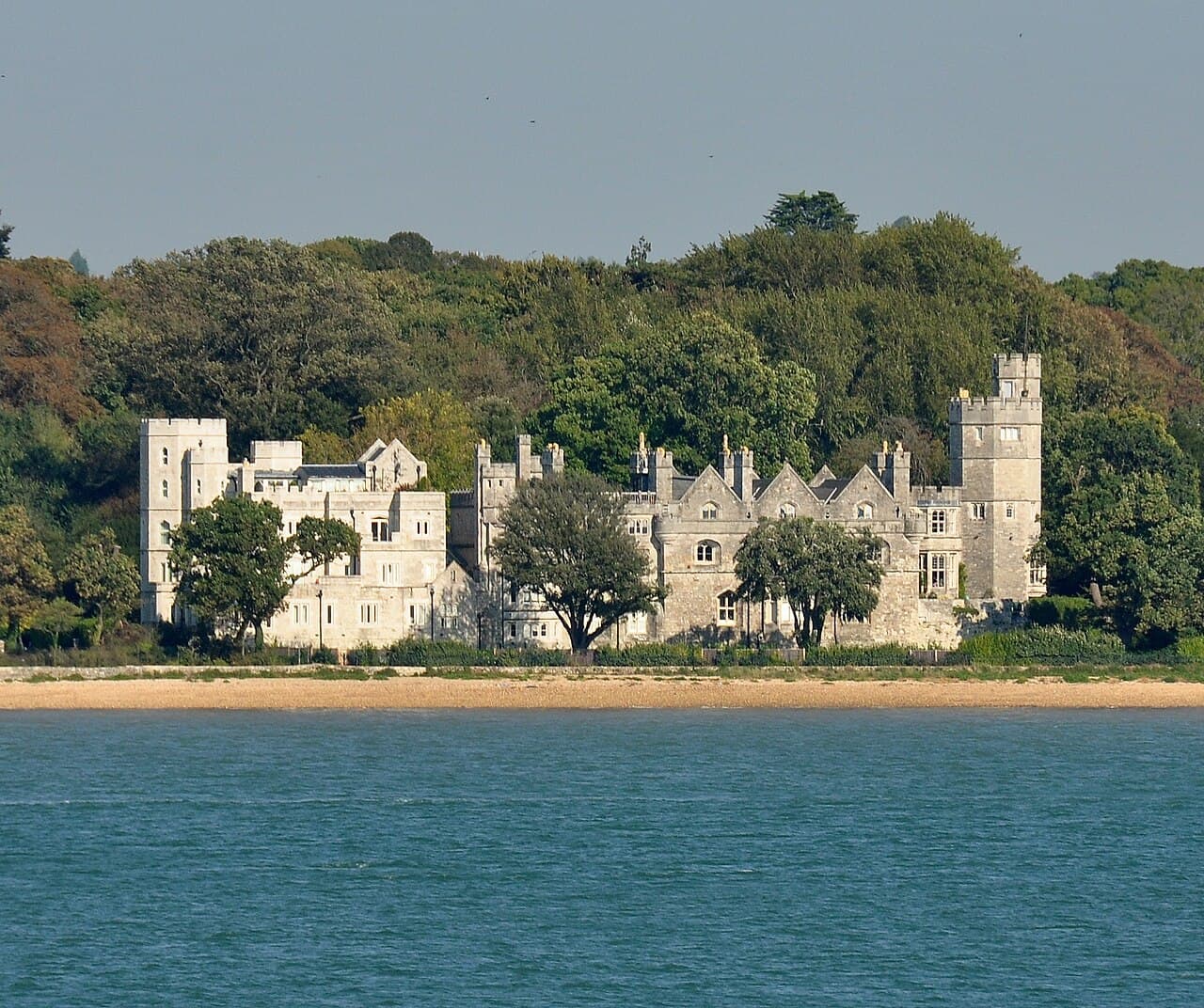
In the 19th century, Netley Castle underwent significant changes as it was gradually converted from a military fortification into a private residence. During this period, the castle was extended and remodeled in the Gothic Revival style, which was popular among the Victorian elite. This architectural style sought to evoke the romanticism of the medieval past, characterized by pointed arches, decorative battlements, and towers.
The conversion included the addition of octagonal towers and other Gothic elements that softened the fortress's austere military appearance, transforming it into a picturesque country house. These modifications reflected the 19th-century trend of repurposing historic buildings for residential use, blending historical architecture with contemporary tastes.
Later developments and current status
Following its period as a private residence, Netley Castle was subject to an archaeological survey that helped document and preserve its historical features. Subsequently, the castle was converted into nine residential flats, allowing for modern habitation while maintaining the structure's historical integrity.
Today, Netley Castle remains a notable heritage site, illustrating the evolution of English coastal defenses and the adaptive reuse of historic military architecture. Its blend of Tudor military design and Victorian Gothic residential features makes it a unique architectural landmark in Hampshire.
Historical significance and heritage
Netley Castle is an important example of the King's Device programme, which marked a shift in English coastal defense strategy during the early Tudor period. The programme's forts, including Netley, were among the first in England designed specifically to accommodate artillery, reflecting advances in military technology and changing geopolitical threats.
The castle's later transformation into a Gothic-style residence demonstrates the Victorian fascination with medieval architecture and the romanticization of England's past. This dual historical narrative enhances the castle's cultural value, attracting historians, architects, and visitors interested in military history and architectural evolution.
Visiting and accessibility
While Netley Castle is now divided into private residential flats, its exterior remains visible, offering a glimpse into its historic architecture. The castle's location in Hampshire makes it accessible for visitors interested in exploring Tudor coastal defenses and Victorian Gothic architecture in the English countryside.
Frequently asked questions (FAQ)
- How do I get to Netley Castle?
- Netley Castle is located in Netley, near Southampton, and is easily accessible by car or public transport. If you're driving, there is parking available nearby. For public transport, you can take a train to Southampton and then a short bus ride to the castle.
- What is the historical significance of Netley Castle?
- Netley Castle was built in the 13th century as a defensive fortification and served as a royal hunting lodge. It has witnessed significant historical events over the centuries, including the English Civil War. Today, it stands as a testament to medieval architecture and military history.
- When was Netley Castle constructed?
- Netley Castle was constructed in the early 13th century, specifically around 1240, under the order of Henry III. The castle's design reflects the architectural styles of its time, showcasing the transition from simple fortifications to more elaborate structures.
- Can I visit Netley Castle year-round?
- Yes, Netley Castle is open to visitors throughout the year. However, it is advisable to check for any seasonal events or maintenance closures before planning your visit. Guided tours may also be available during peak tourist seasons.
- Why is Netley Castle a popular tourist attraction?
- Netley Castle is popular for its stunning medieval architecture and picturesque surroundings. The castle offers breathtaking views of the Solent and is a perfect spot for photography and leisurely walks. Its rich history and connection to the monarchy also attract history enthusiasts.
- Is it possible to access Netley Castle with mobility aids?
- Yes, Netley Castle is committed to being accessible to all visitors. There are pathways and designated areas for those using mobility aids, although some parts of the castle may have uneven surfaces. It's recommended to contact the visitor center for specific accessibility information.
- What are the ticket prices for visiting Netley Castle?
- Entry to Netley Castle is generally free, but certain special events or guided tours may have a ticket fee. Always check the official website for the latest information on any charges and special events during your visit.
- What are the opening hours for Netley Castle?
- Netley Castle typically opens at 10 AM and closes at 5 PM, but these hours may vary depending on the season. It’s advisable to check the official website for the most accurate and up-to-date information regarding opening times.
- What nearby attractions should I visit while at Netley Castle?
- While visiting Netley Castle, you can explore the beautiful Netley Abbey and its serene gardens, which are just a short walk away. Additionally, the bustling city of Southampton is nearby, offering museums, shopping, and waterfront activities, making it a great complement to your castle visit.
Photo gallery

Information
Website
Visit websiteSources & official resources
Verify the information above using these authoritative references.
Loading map...
Visitor reviews
No reviews yet. Been here? Write the first review and help other travelers!
Write the first reviewVisited this castle? Share your experience
Your review helps other travelers and adds first-hand knowledge to our encyclopedia.