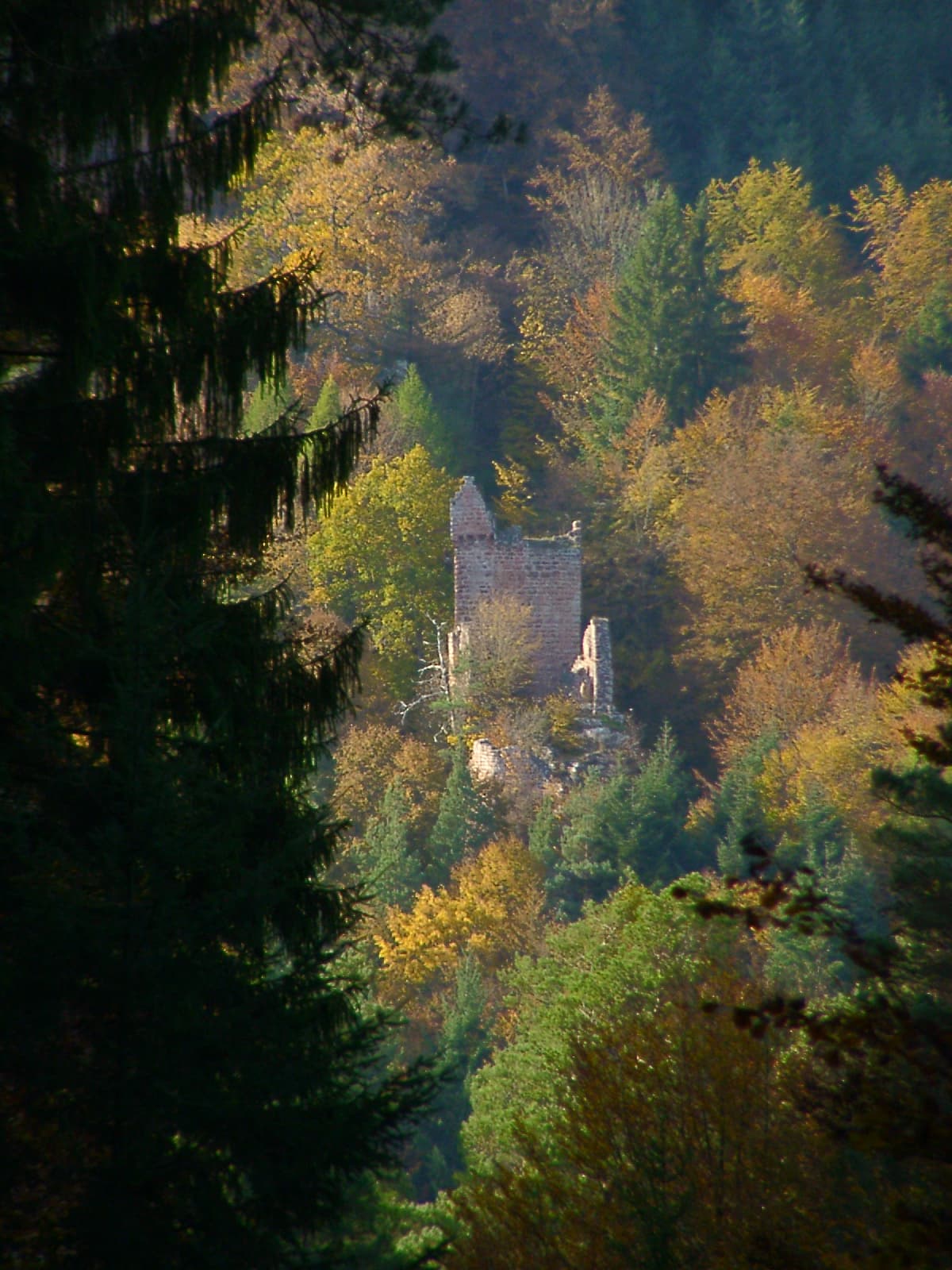
Breitenstein Castle Ruins
Breitenstein Castle ruins are perched atop a prominent 220-metre-high crag on the northern side of the Speyerbach valley in the Palatine Forest, Germany. This high medieval fortress, dating back to around 1246, offers a fascinating glimpse into the turbulent history of the region during the 13th and 14th centuries. The castle's strategic location provided commanding views of the valley below, making it an important defensive site in the Rhineland-Palatinate area.
Historical context and origins
Breitenstein Castle was likely constructed under the authority of Pope Innocent IV during the period of unrest surrounding the excommunication of Emperor Frederick II. The first documented mention of the castle occurs in 1257, linked to a knight of Kropsberg who served as castellan and vassal to the counts of Leiningen. By 1265, records identify Burkhard of Breitenstein as the castle's castellan.
The castle's history is intertwined with the regional power struggles of the late 13th century. Following the death of King Rudolph of Habsburg, conflict erupted in 1291 between the Habsburgs and their rivals. During this time, the counts of Sponheim constructed a nearby siege castle just south of Breitenstein, known as Lower Breitenstein (Nieder-Breitenstein). These two fortifications were separated by a broad neck ditch, emphasizing their defensive relationship.
Architectural features and layout
The inner ward of Breitenstein Castle, built in the Late Hohenstaufen period, occupies a narrow rock base accessible only to experienced climbers today. The most prominent surviving feature is the shield wall, constructed of rusticated ashlars and preserved almost to its full height. Its uphill side shows a distinctive sloping right-hand edge, and the corbels supporting the chemin de ronde inside the wall exhibit Gothic architectural elements.
The castle's defensive design includes a deep neck ditch hewn directly into the rock, guarding the approach from the attack side. Behind the shield wall, remnants of a modest domestic building remain, although the enceinte enclosing it has only partially survived. Access to the castle was not via a moat crossing but through a staircase carved out of the rock on the south side.
Surrounding the crag is an almost rectangular lower ward, of which only fragments of the walls remain. Approximately 50 metres away and 20 metres higher, across the neck ditch, lie the ruins of a separate outer ward with its own moat, indicating a complex multi-layered defensive system.
Later history and decline
In 1339, James of Flörsheim was appointed as a Burgmann (castle guardian), reflecting the castle's continued military importance. The castle was last mentioned in records in 1382, after which it likely came under the control of the counts of Leiningen.
Breitenstein Castle probably met its demise during the Electoral Palatine War in 1470-71, a feud involving its tenant family and Prince-Elector Frederick I. The conflict led to the castle's destruction, leaving it in ruins.
Preservation and modern significance
After centuries of neglect, the ruins were taken over in 1963 by the Rhineland-Palatinate State Castle Administration. Conservation and safety measures were implemented in 1988 and 1989 to stabilize the remaining walls and protect the site for future generations.
Today, the ruins of Breitenstein Castle offer a remarkable example of high medieval castle architecture adapted to a challenging rocky terrain. The site is a valuable cultural heritage landmark within the Palatine Forest, attracting visitors interested in medieval history, castle architecture, and hiking.
Access and visitor experience
Due to its location on a steep crag, access to the inner ward is challenging and suitable only for experienced climbers. The surrounding lower and outer wards can be explored more easily, providing insight into the castle's defensive complexity. The site offers panoramic views of the Speyerbach valley and the surrounding forested landscape, enhancing its appeal to visitors.
Architectural significance
The castle's shield wall is a notable example of rusticated ashlar masonry from the Late Hohenstaufen period, demonstrating advanced medieval defensive construction techniques. The presence of Gothic corbels on the chemin de ronde indicates stylistic influences from the 13th and 14th centuries, blending functionality with architectural detail.
Historical conflicts and feudal relations
The castle's history reflects the complex feudal relationships and territorial disputes of the Rhineland during the Middle Ages. The legal dispute over the siege castle built by the counts of Sponheim illustrates the overlapping claims and tensions between noble families and ecclesiastical authorities, such as the prince-bishopric of Speyer.
Breitenstein Castle remains an important site for understanding the military and political dynamics of the High Middle Ages in this region of Germany.
Frequently asked questions (FAQ)
- What are the opening hours for Breitenstein Castle Ruins?
- Breitenstein Castle Ruins are generally open to visitors from 9 AM to 6 PM daily during the summer months. In the winter, the hours may be reduced, so it’s advisable to check the official website before planning your visit.
- Is it possible to enter the castle ruins?
- Yes, visitors can explore the ruins of Breitenstein Castle. While there are no guided tours, you can wander around the site freely and enjoy the stunning views of the surrounding landscape.
- When was Breitenstein Castle built?
- Breitenstein Castle was constructed in the early 13th century, serving as a strategic point in the region. Its historical significance lies in its role during various conflicts, providing insights into medieval architecture and defense.
- Can I access Breitenstein Castle by public transport?
- While public transport options are limited, you can take a train to Lambrecht and then use local buses or taxis to reach the castle ruins. For the most convenient experience, consider driving or using a ride-sharing service.
- What is the best time to visit Breitenstein Castle Ruins?
- The best time to visit Breitenstein Castle Ruins is during the spring and early autumn when the weather is mild and the surrounding nature is vibrant. This allows for a more enjoyable exploration of the ruins and the stunning views they offer.
- Are there any nearby attractions to visit?
- Yes, nearby attractions include the beautiful Palatinate Forest and the charming town of Lambrecht, which is perfect for a leisurely stroll. Additionally, you can explore other historical sites in the region, making it a great day trip.
- What are the ticket prices for visiting the ruins?
- Entrance to Breitenstein Castle Ruins is typically free, allowing all visitors to enjoy the historical site without the worry of ticket costs. However, donations are appreciated to help maintain the site.
- Why is Breitenstein Castle historically significant?
- Breitenstein Castle is historically significant due to its long-standing presence since the 13th century, serving as a military stronghold in the region. Its architectural style and ruins offer a glimpse into the medieval period and the strategic importance of castles during that time.
- How do I prepare for my visit to Breitenstein Castle?
- To prepare for your visit, wear comfortable shoes as the terrain can be uneven. Bring water and a camera to capture the breathtaking views, and check the weather forecast to dress appropriately for your day out.
Photo gallery

Information
Current owner
Rhineland-Palatinate State Castle Administration
Loading map...
Visitor reviews
No reviews yet. Been here? Write the first review and help other travelers!
Write the first reviewVisited this castle? Share your experience
Your review helps other travelers and adds first-hand knowledge to our encyclopedia.



