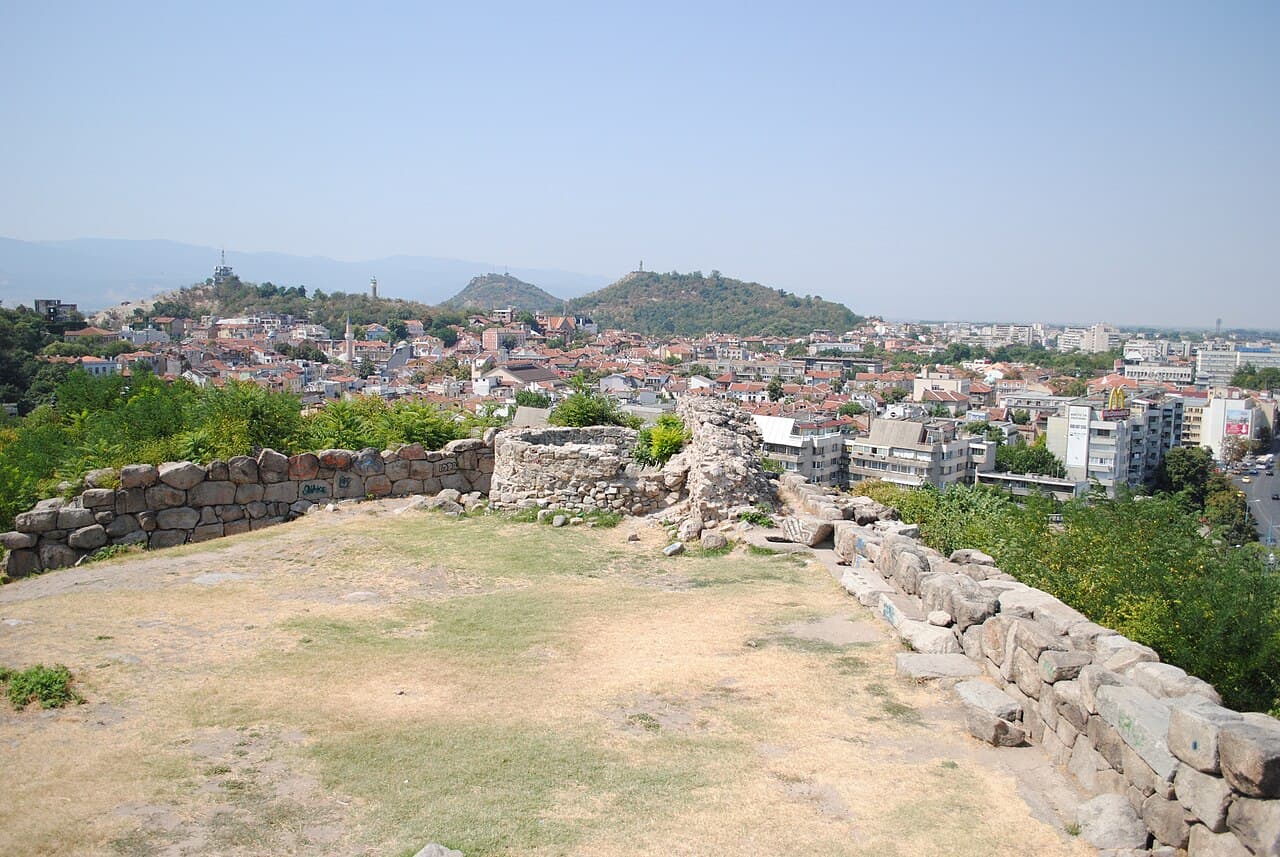
Nebet Tepe is a prominent archaeological site located in Plovdiv, Bulgaria, recognized as one of the city's historic hills where the ancient settlement was originally established. The site holds exceptional significance as it contains some of the earliest evidence of human habitation in the region, with settlements dating back to approximately 4000 BC. This makes Nebet Tepe a key location for understanding the prehistoric and historic development of one of Europe's oldest continuously inhabited cities.
Early settlements and thracian origins
The earliest inhabitants of Nebet Tepe were the Thracians, an ancient Indo-European people who played a foundational role in the cultural and political landscape of the Balkans. Archaeological excavations have revealed traces of early dwellings and fortifications that illustrate the hill's strategic importance. The Thracians utilized the natural elevation of Nebet Tepe to establish a fortified settlement, taking advantage of its commanding views over the surrounding plains and the Maritsa River valley.
Expansion under philip ii of macedon and roman influence
During the 4th century BC, the site underwent significant expansion under the rule of Philip II of Macedon, father of Alexander the Great. This period marked the transformation of Nebet Tepe into a more complex urban center, integrating Macedonian military and architectural techniques. Later, under the Roman Empire, the site was further developed as Plovdiv (then known as Philippopolis) became an important provincial city. The Romans fortified the hill, constructing robust city walls, towers, and gates, some of which remain visible today.
The citadel of the acropolis and justinian-era fortifications
As the ancient town expanded, Nebet Tepe evolved into the citadel of the city’s acropolis, serving as the defensive core of Plovdiv. The remains include substantial sections of fortification walls and several towers that exemplify military architecture from various periods. Notably, a postern gate dating from the reign of the Byzantine Emperor Justinian I (6th century AD) has been uncovered, which historically provided a strategic passageway down to the Maritsa River. This gate highlights the continued military significance of Nebet Tepe through the early medieval period.
Archaeological discoveries and preservation
Extensive archaeological work at Nebet Tepe has uncovered layers of construction and habitation spanning several millennia. Excavations have revealed residential buildings, defensive structures, and artifacts that reflect the diverse cultural influences over time, including Thracian, Hellenistic, Roman, and Byzantine elements. The site’s preservation as an archaeological ruin allows visitors to explore these remnants firsthand, offering insights into the evolution of urban fortifications and settlement patterns in ancient Thrace and beyond.
Cultural significance and tourism today
Today, Nebet Tepe stands as one of the most visited tourist attractions in Plovdiv, celebrated for its historical importance and panoramic views of the city. The site is designated as a cultural monument of national significance in Bulgaria, reflecting its value to the country’s heritage. Visitors can walk along the preserved walls, examine the remains of towers, and appreciate the layers of history visible in the ruins. The hill’s location within the modern cityscape of Plovdiv makes it accessible for educational tours, cultural events, and archaeological study.
Architectural features of nebett tepe
The fortifications at Nebet Tepe illustrate a mixture of architectural styles and construction techniques that evolved over centuries. The surviving city walls are built from large stone blocks, typical of ancient military architecture aimed at resisting sieges. The towers vary in shape and size, reflecting adaptations to changing defensive needs. The postern gate from Justinian’s era is a notable example of Byzantine military engineering, designed to provide a discreet exit and access to the river for supplies or escape.
Historical context within plovdiv’s development
Nebet Tepe’s role as the acropolis citadel places it at the heart of Plovdiv’s historical narrative. Over millennia, the city evolved from a Thracian settlement to a major Hellenistic center under Macedonian rule, and later a significant Roman provincial city. The hill’s fortifications reflect these successive layers of occupation and the strategic importance of the location. The continuous use and adaptation of Nebet Tepe’s defenses underscore its enduring military and administrative significance through ancient and early medieval times.
Frequently asked questions (FAQ)
- How do I get to Nebet Tepe?
- Nebet Tepe is located in the heart of Plovdiv, Bulgaria, making it easily accessible by public transport and on foot. Visitors can take a bus or tram to the city center and then enjoy a short walk to the castle site, which is situated on one of the city's famous hills.
- What is the historical significance of Nebet Tepe?
- Nebet Tepe is one of the oldest archaeological sites in Plovdiv, dating back to the Thracian civilization around the 6th millennium BC. It played a crucial role in the city's history and has remnants from various periods, including Roman and Byzantine influences, showcasing its importance through the ages.
- When was Nebet Tepe discovered?
- Nebet Tepe was discovered in the 1970s during urban construction, revealing layers of history that had been buried for centuries. Archaeological excavations have continued to uncover artifacts and structures that highlight the significance of this ancient site.
- Can I visit Nebet Tepe year-round?
- Yes, Nebet Tepe is open to visitors throughout the year, allowing them to explore its historical ruins and enjoy panoramic views of Plovdiv. However, it is recommended to check for any seasonal events or maintenance closures before planning your visit.
- Why is the architecture of Nebet Tepe unique?
- The architecture of Nebet Tepe reflects a blend of different cultures over millennia, with remnants of Thracian, Roman, and Byzantine structures. The unique stone walls and fortifications showcase the strategic importance of this hilltop location, making it a fascinating site for architecture enthusiasts.
- Is it possible to get guided tours at Nebet Tepe?
- Yes, guided tours are available at Nebet Tepe, offering visitors a deeper understanding of its historical and cultural significance. These tours can provide insights into the archaeological findings and the stories behind the ancient structures.
- What are the opening hours for Nebet Tepe?
- Nebet Tepe is generally open to the public from early morning until sunset, but specific opening hours may vary by season. It is advisable to check the local tourism website or contact visitor services for the most accurate information on opening times.
- What is the best time to visit Nebet Tepe?
- The best time to visit Nebet Tepe is during the spring and autumn months when the weather is mild and pleasant for outdoor exploration. These seasons also offer stunning views of the surrounding landscape, making your visit more enjoyable.
- Are there any nearby attractions to see after visiting Nebet Tepe?
- Yes, after visiting Nebet Tepe, you can explore other nearby attractions such as the Ancient Theatre of Plovdiv and the Roman Stadium. The vibrant Kapana arts district is also within walking distance, offering a variety of shops, cafes, and galleries to enjoy.
- What are the ticket prices for visiting Nebet Tepe?
- Entry to Nebet Tepe is typically free, allowing visitors to enjoy the historical site without any cost. However, some guided tours or special events may have associated fees, so it's best to check in advance for any applicable charges.
Photo gallery

Information
Loading map...
Visitor reviews
No reviews yet. Been here? Write the first review and help other travelers!
Write the first reviewVisited this castle? Share your experience
Your review helps other travelers and adds first-hand knowledge to our encyclopedia.