Concepción Castle — Spain castle

Concepción Castle

Concepción Castle in Cartagena, Spain
Cartagena, Spain
Early Medieval (5th–10th c.)
Partially Restored

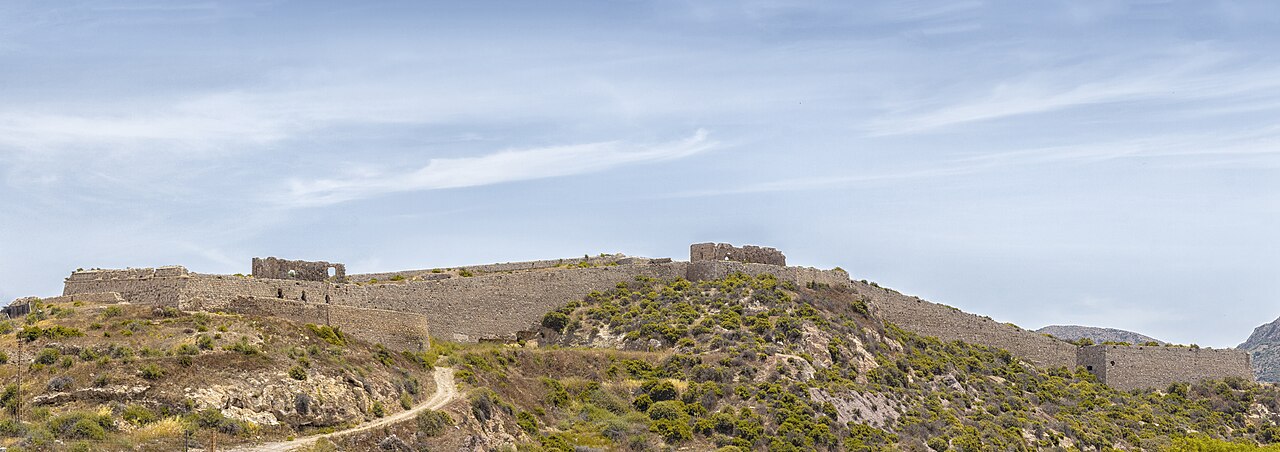
Concepción Castle, also known locally as Castillo de la Concepción, is a historic fortress perched on a prominent hill in the heart of Cartagena, within the Region of Murcia, Spain. This castle is a remarkable testament to the city's layered history, reflecting the influences of Roman, Islamic, and medieval Christian periods. Its strategic location overlooking the natural harbor of Cartagena has made it a key military and cultural landmark for over two millennia.

The origins of the site date back to antiquity, with the Greek historian Polybius recording the presence of a Roman temple dedicated to Asclepius, the god of healing, on the hill where the castle now stands. Archaeological excavations and recent restorations have revealed that the castle's foundation incorporates Roman cisterns, possibly linked to this temple or a later Byzantine structure, highlighting the site's long-standing importance.

The ancient and medieval significance of Cartagena

Cartagena was originally founded in the 3rd century BC by the Carthaginian general Hasdrubal the Fair as a fortified city at a natural harbor. Due to its strategic maritime position, it became one of Spain's most important naval ports by the 16th century. The city's military prominence continued into the 18th century with extensive fortifications built around the harbor, including numerous forts and batteries on surrounding hills and mountains.

During the 12th century, the hill that hosts Concepción Castle was fortified by the Almohads, Muslim rulers of the Kingdom of Murcia. They constructed an alcazaba, a palace-fortress typical of Islamic military architecture, primarily using rammed earth (tapial) techniques. Portions of these walls and towers survive within the current castle structure, including the Arabic lantern tower that once served as a lighthouse guiding ships into the harbor.

Construction and evolution during the Christian Reconquista

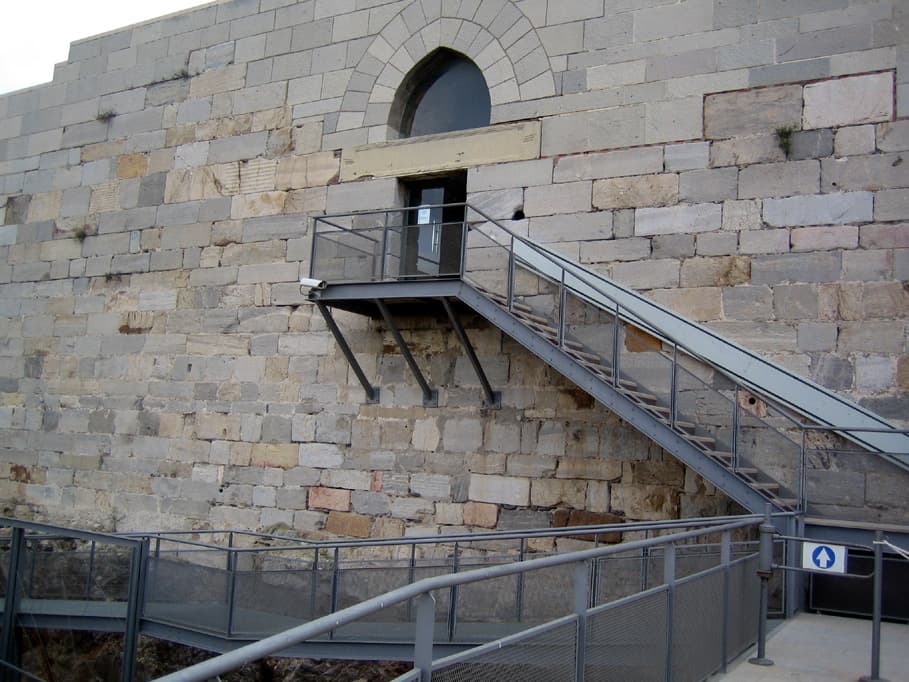
The city was conquered by Christian forces in 1245 under the leadership of Alfonso X of Castile, known as Alfonso the Wise. Following the conquest, Alfonso X initiated the construction of a large keep (donjon) atop the hill, reusing stones from local Roman ruins and gravestones, such as the notable funerary stele of Lucius Aemilius Rectus incorporated as a lintel in the tower's entrance.

This period marked Cartagena's emergence as the only Mediterranean port of the Crown of Castile, strategically positioned between the Crown of Aragon and the Kingdom of Granada. Alfonso X also founded the Order of Santa María de España in Cartagena, aimed at combating Muslim naval forces. However, after several naval defeats and the order's dissolution, the port's military importance diminished, and construction of the castle was left incomplete.

Architectural features of the castle

The castle's main entrance, known as the Puerta de la Villa, features a monumental arch flanked by two defensive towers, controlling access to the walled enclosure. The central keep, called El Macho, is built from large blocks of gray limestone quarried from Cabezo Gordo and pink travertine stone from Mula. The keep may have originally lacked a full second floor, resembling the Alfonsine tower at the Castle of Lorca.

The defensive walls incorporate 12th-century Muslim towers, showcasing the blend of Islamic and Christian military architecture. The castle also contains carved corbels and vault keystones dating from the 13th century, reflecting the craftsmanship of the Reconquista era.

Decline, transformation, and restoration

As Cartagena's military significance waned, particularly by the 18th century, the castle lost its defensive role and fell into gradual decay. In the early 19th century, parts of the fortress were partially demolished. By the early 20th century, the city council considered demolishing the ruins entirely, but the plan was never executed.

During the dictatorship of Primo de Rivera in the 1920s, the castle grounds were transformed into a public park with gardens, ponds, and wildlife, popularly known as the "Castle of the Ducks". Despite this, the castle remained largely in ruins until recent decades.

Today, Concepción Castle is partially restored and serves as a museum and cultural center interpreting the rich history of Cartagena. Visitors can explore the keep and enjoy panoramic views of the city and harbor, gaining insight into the site's multi-layered heritage spanning Roman, Islamic, and medieval Christian periods.

Visitor experience and significance

While much of the original castle structure was lost, the surviving elements offer a unique glimpse into the evolution of military architecture in southeastern Spain. The museum housed within the keep provides educational exhibits on Cartagena's history, including its role in the Reconquista and naval warfare.

The castle's elevated position affords spectacular views over the city, the harbor, and the surrounding landscape, making it a popular destination for tourists and history enthusiasts alike. Its combination of archaeological remains and restored features creates a compelling narrative of Cartagena's strategic importance through the centuries.

Architectural and historical legacy

Concepción Castle stands as a significant example of a hill castle that embodies the complex history of the Mediterranean region. Its construction phases reveal the interplay of Roman engineering, Islamic fortification techniques, and medieval Christian military architecture. The reuse of Roman materials and the preservation of Islamic towers within the Christian fortress illustrate the continuity and transformation of defensive strategies over time.

The castle's history is closely tied to the broader geopolitical dynamics of medieval Spain, including the Reconquista, the naval conflicts between Christian and Muslim powers, and the strategic importance of Mediterranean ports. As such, it remains an important cultural heritage site, reflecting the diverse influences that have shaped Cartagena and the wider Murcia region.

Frequently asked questions (FAQ)

How do I get to Concepción Castle in Cartagena?
Concepción Castle is located in Parque Alfonso Torres in Cartagena city center. It is accessible on foot from the old town and well connected by local buses.
What are the opening hours and ticket prices for visiting Concepción Castle?
The castle is open daily from 10:00 to 18:00. Tickets cost €3 for adults and €1.5 for children, with discounts for groups and seniors.
What historical periods are represented in Concepción Castle's architecture?
The castle features a mix of Roman, Islamic, and medieval Christian architectural elements, reflecting its long history from antiquity through the Reconquista.
Can I visit the museum inside the castle keep?
Yes, the keep houses a small museum with exhibits about Cartagena's history, the castle's construction, and its strategic military role.
Is the castle suitable for visitors with mobility issues?
Due to the hilltop location and uneven terrain, some areas may be challenging for visitors with limited mobility. However, the main museum area is accessible.
What is the best time of year to visit Concepción Castle?
Spring and autumn offer pleasant weather and fewer crowds, making these seasons ideal for visiting the castle and enjoying the panoramic views.

Photo gallery

Concepción Castle
Click to view

Photo by Nanosanchez•Public domain

1 photo • Click any image to view in full screen

Information

Hill Castle

Opening hours

10:00-18:00, daily

Ticket prices

€3 adult, €1.5 child

Current owner

Municipality of Cartagena

Address

Parque Alfonso Torres, Cartagena, Murcia, Spain

Sources & official resources

Verify the information above using these authoritative references.

Loading map...

Visitor reviews

No reviews yet. Been here? Write the first review and help other travelers!

Write the first review

Visited this castle? Share your experience

Your review helps other travelers and adds first-hand knowledge to our encyclopedia.
Write a review

(5/5)

0/2000 characters

Your review will be visible after admin approval

Nearby castles

0.4 km
Despeñaperros Castle — Spain castle

Despeñaperros Castle

Cartagena, Spain

Despeñaperros Castle, also known as San José Castle, stands as a significant 18th-century hill fortress located in the historic center of Cartagena, within the Murcia Region of Spain. This castle is a remarkable example of post-Renaissance military architecture, reflecting the evolution of defensive strategies from the early modern period through the 19th century. It was officially declared a cultural heritage site on 7 August 1997, underscoring its importance in Spanish history and architectural heritage. The castle is strategically perched approximately 55 meters above sea level on a hill historically known as Cabezo de la Cruz. This elevation provided commanding views over Cartagena, enabling control of key access points including the San José Gates, the Castle of the Moors, and the nearby Naval Hospital. Its location was originally chosen by the Carthaginian civilization during the founding of the ancient city of Qart Hadasht, modern-day Cartagena. The hill was one of five used by Hasdrubal the Fair to establish the city and featured a temple dedicated to the Phoenician god Chusor, associated with fishing and metalworking. This early religious and strategic significance laid the foundation for the site's enduring military importance. Historical significance and evolution Ancient origins and Carthaginian foundation The origins of the castle site date back to the Carthaginian period, when the hill served as a critical part of the city's fortifications and religious landscape. The temple dedicated to Chusor reflects the cultural and spiritual life of the early settlers. Although no visible remains from this era survive above ground, archaeological findings confirm the site's continuous strategic use. 18th-century construction and War of Spanish Succession The current castle structure was erected in the 18th century during the War of Spanish Succession. At this time, the hill was integrated into Cartagena’s defensive network to protect the city against external threats. The nearby San José Gates, constructed under the reign of Charles III, formed part of this fortified perimeter. The castle's design reflects the military engineering principles of the post-Renaissance period, emphasizing artillery defense and strategic control of the approaches to the city. 19th-century military enhancements and the Peninsular War During the Peninsular War (also known as the War of Independence), the castle's military role was reinforced. A battery capable of housing five cannons was installed to defend against potential French invasions and to provide mutual support for the Castle of the Moors. Despite the 1812 siege of Cartagena, the city was never directly assaulted, thanks in part to the robust defensive systems that included Despeñaperros Castle. Mid-19th century reforms and decline By the mid-1800s, the castle underwent significant reforms documented in the 1859 Medina Report. These changes transformed the hilltop into a fortified position capable of supporting a garrison. However, as urban development accelerated in the early 20th century, parts of the city walls were demolished to accommodate growth, leading to a decline in the castle’s military function. The University District project in the late 20th century further altered the site, including partial dismantling of the eastern sector. Architectural features and layout Fortification design and materials The castle is a large bastioned fortress constructed primarily from masonry. Its walls are generally flat and robust, typical of 19th-century fortified construction. The design was optimized for artillery defense, with the elevated position allowing effective coverage of the surrounding strategic points. Interior organization The interior is organized around two main perimeters. The lower perimeter contains rooms that historically housed the garrison and includes a water reservoir essential for sustaining the occupants during sieges. The upper perimeter was designed to hold cannons, with firing positions arranged to maximize defensive firepower. Unfortunately, due to abandonment and lack of maintenance, the upper sections have suffered deterioration, including the loss of gun embrasures and parapets. Strategic artillery placement The castle’s artillery placements were positioned to provide overlapping fields of fire covering the San José Gates, the Castle of the Moors, and the Naval Hospital. This mutual support system was a key element of Cartagena's defensive strategy during the 18th and 19th centuries. Preservation and current status Today, Despeñaperros Castle remains a significant cultural and historical landmark in Cartagena. Although parts of the fortress have deteriorated, ongoing restoration efforts initiated in 2015 aim to preserve and rehabilitate the site. The castle’s status as a cultural heritage site ensures its protection and highlights its importance as a symbol of Cartagena’s military history and architectural evolution. Visitors to the castle can explore its remains and appreciate the strategic design that has endured centuries of conflict and change. The site offers insight into the complex layering of history from the Carthaginian foundation through the post-Renaissance military reforms and into the modern era. Visiting information and cultural significance As a protected monument, Despeñaperros Castle serves not only as a historical site but also as a cultural venue that connects visitors with Cartagena’s rich past. Its commanding position offers panoramic views of the city and the surrounding landscape, making it a favored destination for history enthusiasts and tourists alike. The castle’s layered history, architectural features, and strategic importance provide a compelling narrative of military architecture adapting to evolving warfare technologies and urban development pressures. It stands as a testament to Cartagena’s resilience and historical significance on the Mediterranean coast.

Post-Renaissance (17th–18th c.)
Details
0.8 km
Los Moros Fort — Spain castle

Los Moros Fort

Cartagena, Spain

Los Moros Fort, also known as Castillo de los Moros, stands prominently on the hill of the Moors in the historic city of Cartagena, within the Murcia region of Spain. This fortification offers a commanding view of the natural harbor that has defined Cartagena's strategic importance for centuries. The fort's location atop a 56-meter-high hill has made it a key military site from the early 18th century through to modern times. Cartagena itself was founded in the 3rd century BC by the Carthaginian general Hasdrubal the Fair. Its natural harbor quickly established it as a vital naval base, which later became one of Spain's most important naval ports by the 16th century. The city's military significance was further underscored in the 18th century when extensive fortifications were constructed around the harbor, including numerous forts and batteries on the surrounding hills and mountains. Historical significance and military role The hill of the Moors played a crucial role during the War of the Spanish Succession in 1706. It was used by the artillery forces loyal to Philip V of Spain, specifically the Duke of Berwick, to effectively besiege and capture the nearby Concepción Castle, which was held by Austracist forces. This strategic use of the hill demonstrated its military value, prompting the later construction of a permanent fortification on the site. Construction and architectural design Los Moros Fort was constructed between 1773 and 1778 as part of a broader effort to modernize and strengthen Cartagena's defenses during the reign of King Carlos III. The fort was designed by the Spanish military engineer Juan Martín Cermeño, renowned for his work on fortifications in Spain, and the construction was overseen by the Croatian military engineer Mateo Vodopich. The fort exemplifies the principles of eclectic Neoclassicism as interpreted by the Frenchified Spanish School of military engineering. It is often mistakenly described as a hornwork, but there is consensus among historians and architects that it is in fact a crownwork. This design allowed it to provide effective protection for the Hospital Bastion and the San José Gates, which were critical points in the bastioned city walls of Cartagena. Architectural features The fort's elongated and irregular shape follows the contours of the hill, maximizing defensive coverage. Bastioned fronts and angled walls were designed to deflect artillery fire and provide overlapping fields of fire. Thick stone walls and earthworks helped absorb cannon impacts. Internal courtyards and chambers accommodated troops and artillery placements. The fort's position allowed it to control access to the San José Gates, one of the main entrances to the walled city. Later history and current condition After serving as a key military installation for over a century, Los Moros Fort lost its military function in 1929 when it was transferred from the Ministry of War to civilian authorities. Various proposals for adaptive reuse, including as a jail, were considered but never realized. Since then, the fort has been largely abandoned and has suffered from neglect. Today, the fort remains freely accessible to visitors but is in a state of prolonged deterioration. Its surroundings in the Santa Lucía district are somewhat rundown, leading to issues such as illegal dumping and use by vagrants. Despite this, the fort's distinctive elongated crownwork structure and commanding views of Cartagena's harbor make it a site of historical and architectural interest. Cartagena's fortifications and military heritage The construction of Los Moros Fort was part of a comprehensive fortification program in Cartagena during the 18th century, driven by its designation as the capital of the Mediterranean Maritime Department in 1726. This status necessitated the strengthening of the city's defenses to protect its naval facilities and strategic harbor. Cartagena's fortifications from this period include a network of bastions, forts, and batteries that collectively formed a formidable defensive system. The fortifications reflect the evolution of military architecture in Spain, incorporating lessons from contemporary European military engineering schools. The fort's strategic location Situated at an altitude of 56 meters, Los Moros Fort commands a panoramic view over the harbor and the city, allowing defenders to monitor and control maritime and land approaches. Its position was critical in conjunction with other nearby fortifications, creating overlapping fields of fire and mutual support. Visiting los moros fort today Visitors to Los Moros Fort can explore its unique architectural layout and enjoy sweeping views of Cartagena and the Mediterranean Sea. While the fort is not currently maintained as a formal tourist site, its accessibility offers an opportunity for those interested in military history and architecture to experience a significant piece of Cartagena's heritage. Visitors should exercise caution due to the fort's state of disrepair and the condition of the surrounding neighborhood. Efforts to preserve and restore the fort have been limited, but its historical importance remains recognized by local authorities and heritage organizations.

Post-Renaissance (17th–18th c.)
Details
1.6 km

Galeras Fort

Cartagena, Spain

Galeras Fort, locally known as Fuerte de Galeras, stands prominently on a 219-meter-high mountain overlooking the historic city of Cartagena in the Region of Murcia, Spain. This fortress is a remarkable example of 18th-century military architecture, designed to protect one of Spain's most strategic naval bases. Its commanding position provided control over the harbor and the adjacent military shipyards, which have been vital to Spanish naval power since antiquity. Historical background and strategic importance The origins of Cartagena date back to the 3rd century BC when it was founded by the Carthaginian general Hasdrubal the Fair. Its natural harbor made it a coveted maritime stronghold throughout history. By the 16th century, Cartagena had become one of Spain's most important naval ports, necessitating extensive fortifications to defend against evolving military threats. Although plans to fortify the Galeras hill were first proposed in the 16th century, the actual construction of Galeras Fort took place in the mid-18th century, between approximately 1750 and 1777. This period coincided with the reign of King Carlos III, under whose directive Cartagena was designated the capital of the Mediterranean Maritime Department, prompting a comprehensive modernization of the city's defenses. The hill's strategic value was recognized even earlier by military engineer Vespasiano I Gonzaga, who suggested relocating the city to this elevated position to better withstand artillery advances. Although the relocation never occurred, the hill remained a key defensive site. Construction and architectural design The fort was primarily designed by Pedro Martín-Paredes Cermeño, a military engineer from Melilla, and constructed under the supervision of Croatian military engineer Mateo Wodopich (also known as Mateo Vodopich), a specialist in fortifications. The design reflects the principles of the Frenchified Spanish School of military architecture and embodies an eclectic form of Neoclassical style, which was prevalent in mid-18th-century military constructions. Galeras Fort features a roughly quadrangular layout with five irregular bastions positioned at the corners and an additional bastion on the northeast side. The fort is surrounded by a deep moat and counterscarp, with a drawbridge providing controlled access. Thick, sloped curtain walls, especially on the southern side, were engineered to withstand naval artillery bombardments, highlighting the fort's role in coastal defense. Within the fort, a large central courtyard connects various vaulted chambers and service rooms. The bastions are hollow and contain vaulted spaces designed to resist explosions, providing secure storage for munitions and shelter for personnel. A two-story building on the terrace once housed a semaphore station, enabling visual communication across distances. Extending from the fort's southwest front are the Carlos III walls, a five-kilometer-long defensive barrier that encloses the military shipyard and much of the city, underscoring the fort's role as a critical citadel in Cartagena's defense system. Military history and role in conflict Galeras Fort played a significant role during several key conflicts in Spanish history. It was actively involved during the Peninsular War (1808–1814), when Spain resisted Napoleonic invasion forces. Later, the fort was a focal point during the Cantonal Revolution of 1873–74, a federalist uprising in which republican forces seized the garrison. Traditional stories suggested that the rebels raised the Ottoman flag to deceive the defenders, but detailed historical research has shown that the flag flown was the red-yellow-purple tricolor associated with the federalists, reflecting their political stance. Throughout the 20th century, the fort's military significance declined, transitioning to use as a military prison. Control of the site transferred from the Spanish Army to the Navy in 1987, and it remains under the jurisdiction of the Spanish Armed Forces. Current status and accessibility Today, Galeras Fort remains military property and is closed to the public. The site is reportedly used for telecommunications and as a lighthouse, maintaining its strategic importance in a modern context. While the mountain itself is accessible to visitors, the fortifications are within a restricted military zone, limiting direct exploration. Despite restricted access, the fort's impressive Neoclassical bastions, moat, and defensive walls remain visible, offering a glimpse into the sophisticated military engineering of the 18th century. Its preservation provides valuable insight into Spain's naval defense heritage and the evolution of coastal fortifications. Architectural significance and legacy Galeras Fort exemplifies the adaptation of classical military engineering principles to the challenges posed by artillery and naval warfare in the 18th century. Its design incorporates advanced features such as angled bastions for overlapping fields of fire, bomb-proof vaulted chambers, and robust curtain walls angled to deflect cannonballs. The fort's integration into the larger defensive network of Cartagena, including neighboring Atalaya Fort and the extensive Carlos III walls, illustrates a comprehensive approach to coastal defense. This network protected one of Spain's most vital naval arsenals, which continues to serve as a major military port today. As a testament to its historical and architectural importance, Galeras Fort remains a significant landmark in the military history of Spain, reflecting centuries of strategic evolution from ancient times through the modern era.

Post-Renaissance (17th–18th c.)
Details