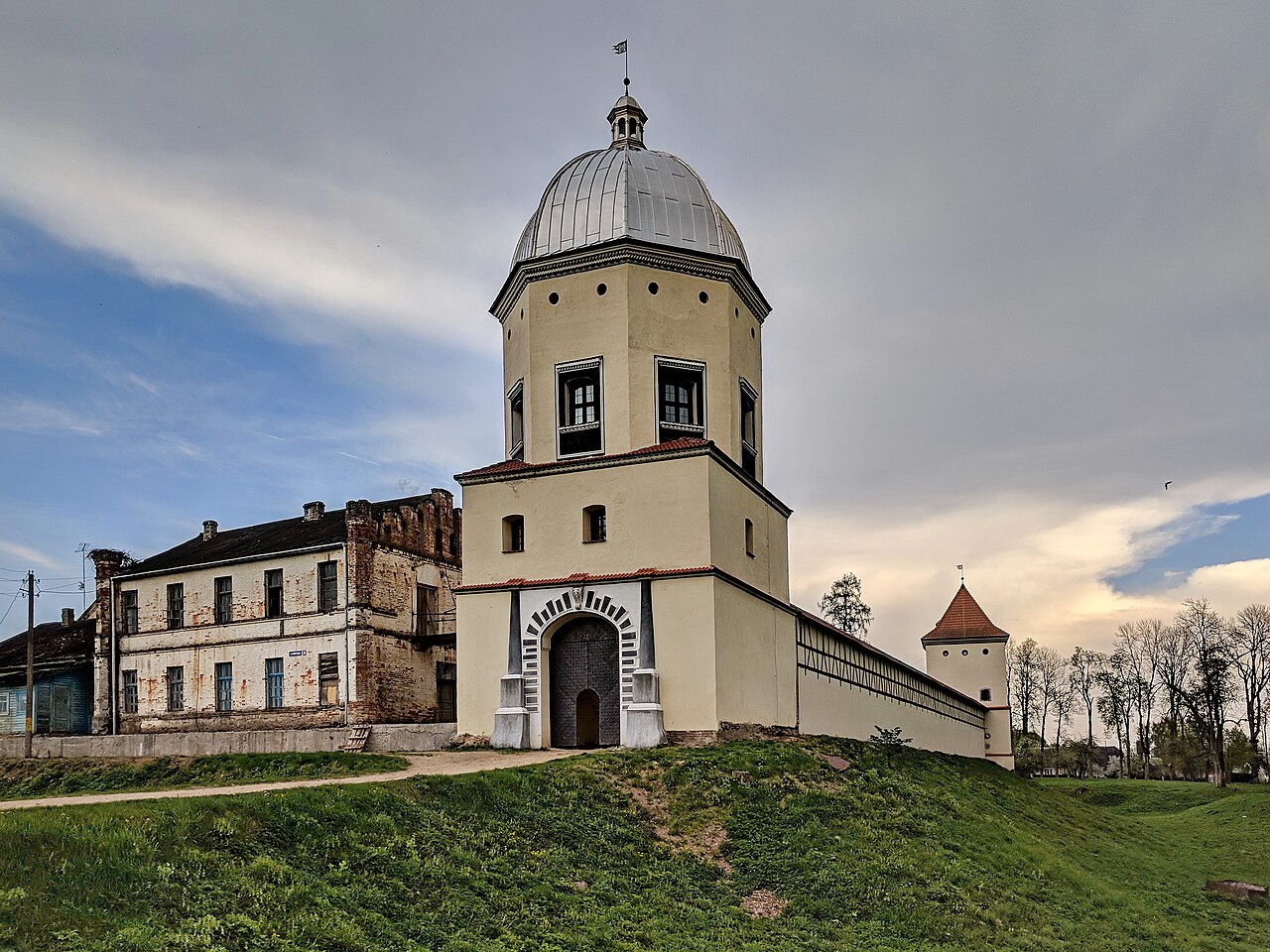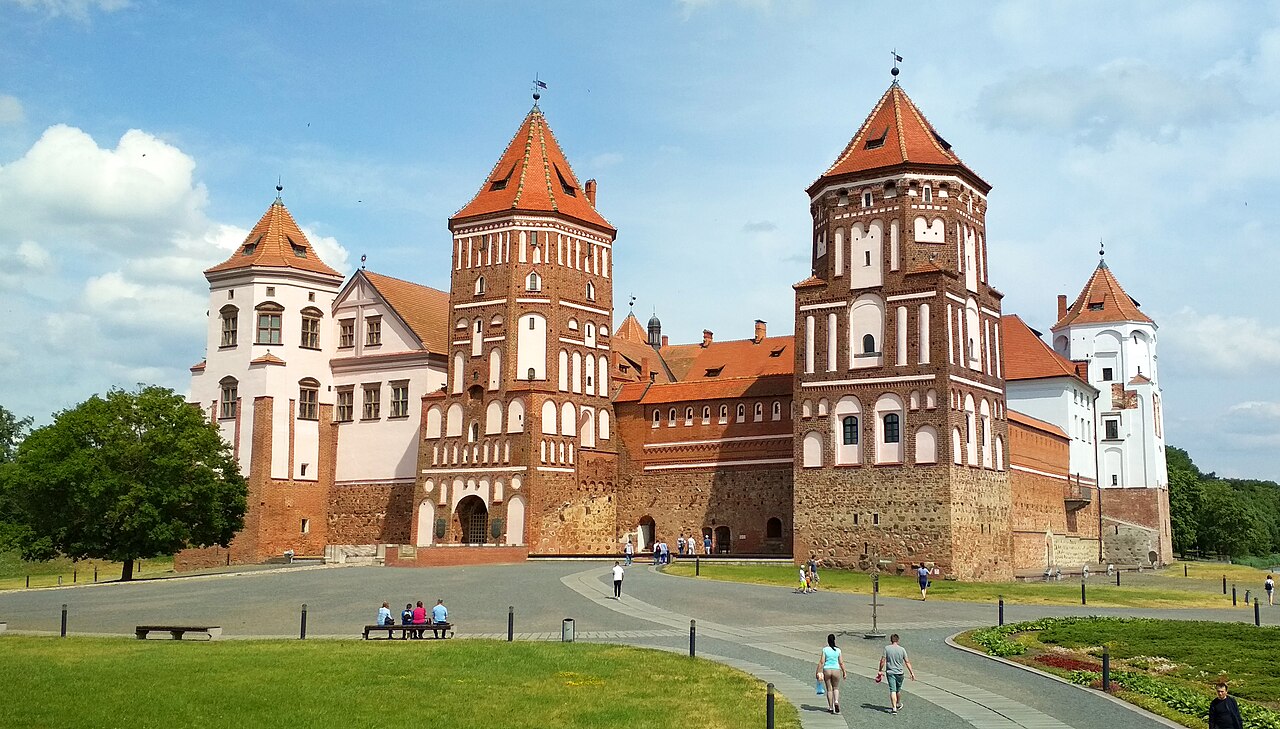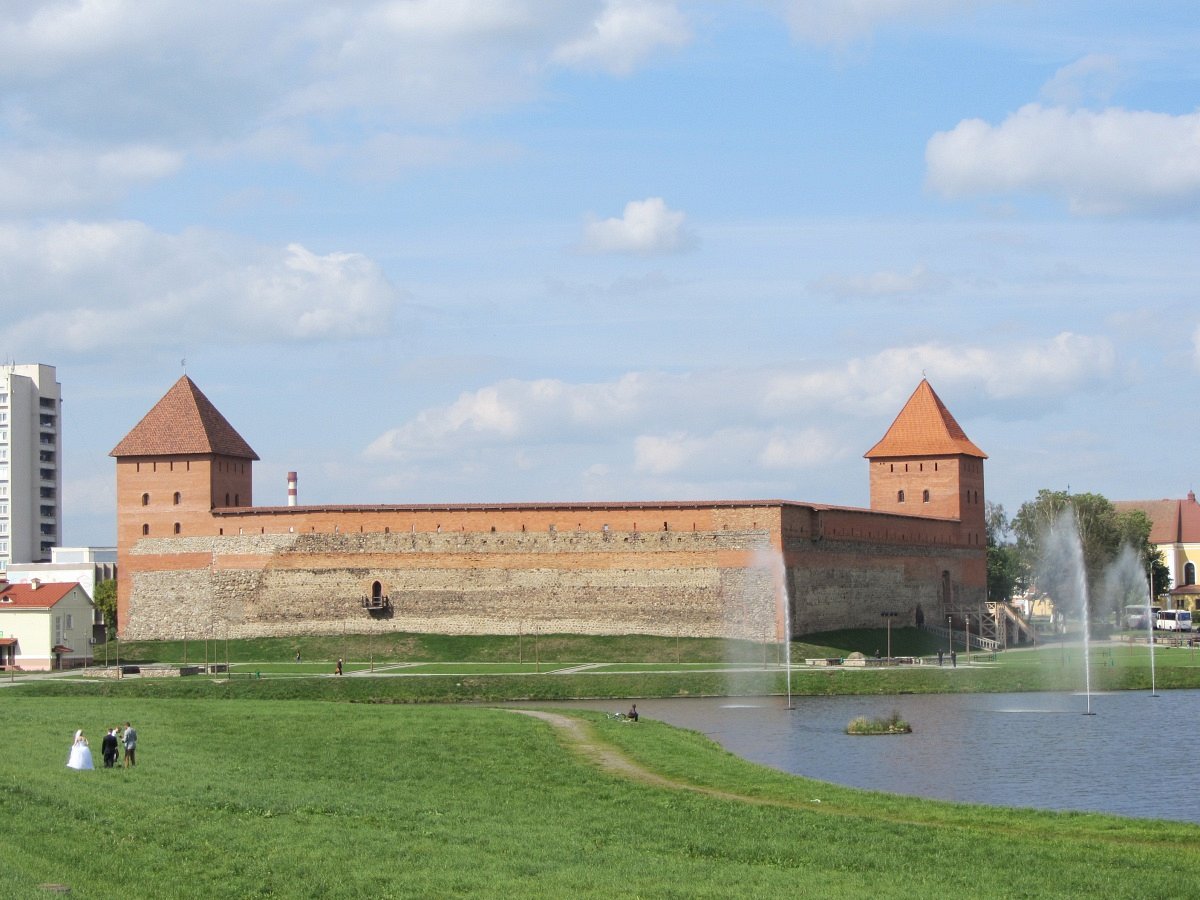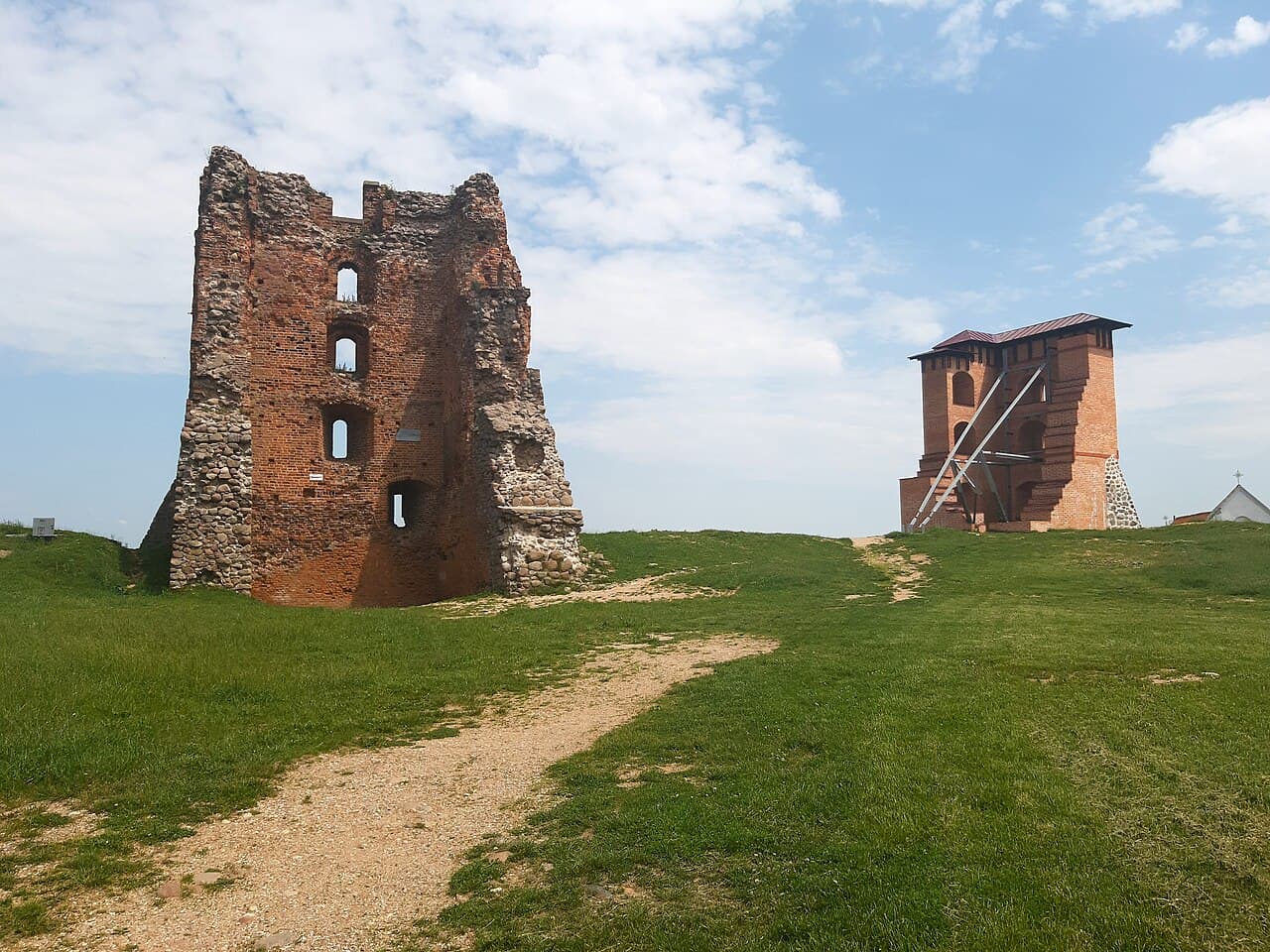
Navahrudak Castle Ruins
Navahrudak Castle stands as a significant historical fortress in Belarus, renowned for its pivotal role in the formation and defense of the Grand Duchy of Lithuania. Perched atop a high hill at 323 meters above sea level, the castle occupies a commanding position that once served as a vital defensive and administrative center. The site is traditionally linked to the coronation of Duke Mindaugas as King of Lithuania in the 13th century, marking a foundational moment in Lithuanian statehood and elevating Navahrudak to a place of great political and cultural importance.
The castle's origins trace back to the early medieval period, initially featuring wooden fortifications and earthworks that were rebuilt multiple times from the 11th through the mid-13th centuries. By the late 13th century, under Mindaugas’s leadership, the fortress underwent substantial upgrades with the introduction of robust oak walls and the construction of its first stone tower. This early stone tower laid the groundwork for the later Shield Tower, a hallmark of the castle’s enduring medieval architecture.
Historical significance and early development
Navahrudak Castle’s historical prominence is deeply intertwined with the rise of the Grand Duchy of Lithuania. The castle is cited by chronicler Maciej Stryjkowski as the site of Mindaugas’s coronation and probable burial, although modern historians debate the exact location of these events. Regardless, Navahrudak’s strategic and symbolic value was unmistakable during the high medieval period.
The castle faced numerous military challenges, including attacks by the Teutonic Knights in 1314, 1391, and 1394. Despite these sieges, the fortress’s defenses held firm, showcasing its formidable construction and strategic design. The castle also endured raids by Tatar forces in the early 16th century and was a northern frontier fortification against various incursions.
Mindaugas and the castle's political role
The crowning of Mindaugas as King of Lithuania around the mid-13th century was a defining moment for Navahrudak Castle. This event transformed the fortress from a regional stronghold into a symbol of Lithuanian sovereignty and unity. The castle became the political heart of the emerging Lithuanian state, hosting significant noble events such as the 1422 wedding of King Władysław II Jagiełło and Princess Sophia Holshanska, which reinforced dynastic alliances.
Architectural evolution and fortifications
The castle's architecture evolved significantly over centuries, reflecting advancements in military technology and changing political circumstances. Initially dominated by wooden structures, the fortress saw the introduction of stone elements from the 13th century onward. The earliest stone tower, built in the 13th century, featured a square plan with thick walls of roughly hewn stones bound by lime mortar. This tower was later buried under subsequent construction but formed the foundation for the imposing Shield Tower erected in the 14th century.
The shield tower and other key structures
The Shield Tower is a five-story brick edifice approximately 25 meters tall, with walls nearly 3 meters thick. It features defensive arrow slits with semicircular arches, a stone staircase embedded in the southern wall, and a small bell turret crowning the fourth floor. This tower exemplifies medieval defensive architecture adapted to evolving warfare demands.
Adjacent to the Shield Tower is the Kostelna Tower, a robust square tower with thick stone and brick walls connected by substantial curtain walls reinforced with buttresses. Other notable towers include the Lesser Tower, the Posadska Tower with an artillery embrasure, the Shaft Tower built above a natural spring with a secret vaulted passage, and the Observation Tower, a large 16th-century artillery tower designed for cannon defense.
Defensive systems and layout
Navahrudak Castle’s defensive system included two polygonal rings of stone walls at least 3 meters high, extensive earthen ramparts up to 30 meters wide, and deep moats. The natural steep slopes around the hill, sometimes as steep as 60 degrees, enhanced the fortress’s defensibility. Wooden fortifications complemented the stone defenses, especially on the northern and northwestern approaches.
Later history and decline
From the 16th century onward, the castle’s military importance gradually diminished. It suffered damage during the Russo-Polish War (1654–67) when Russian forces occupied it twice. The Great Northern War brought further devastation in 1706 when Swedish troops sacked Navahrudak. By the 18th century, the castle was largely in ruins, with only a few towers like the Observation, Shield, and Kostelna remaining intact.
Despite its decline, the castle grounds maintained cultural significance. The 15th-century St. Michael’s Church within the courtyard served as a venue for the highest appellate court of the Grand Duchy until 1775. A two-story stone palace from the 14th century also stood nearby, notable as a rare example of secular medieval architecture in Belarus.
Modern preservation and cultural use
Conservation efforts began in the 1920s to stabilize and preserve the ruins, focusing on key structures such as the Kostelna Tower. Recent restoration programs aim to maintain the castle’s historical footprint, stabilize walls, and partially reconstruct the Shield Tower’s upper sections. These efforts prioritize preserving the castle’s authentic medieval character rather than full reconstruction.
Today, the castle ruins serve as a cultural venue hosting medieval reenactments and theatrical jousting, attracting visitors interested in the rich heritage of Belarus and the Grand Duchy of Lithuania. The site’s dramatic hilltop setting and evocative ruins offer a tangible connection to the region’s medieval past and architectural legacy.
Frequently asked questions (FAQ)
- How do I get to Navahrudak Castle ruins?
- Navahrudak Castle ruins are located near the town of Navahrudak in Belarus. The site is accessible by local roads, and visitors can reach it by car or public transport from nearby cities like Grodno.
- What is the best time to visit Navahrudak Castle ruins?
- The best time to visit Navahrudak Castle ruins is during the late spring to early autumn months when the weather is mild and the site hosts medieval reenactments and cultural events.
- Is there an entrance fee to visit Navahrudak Castle ruins?
- Visiting Navahrudak Castle ruins is free of charge, making it an accessible cultural and historical destination for all visitors.
- Can I explore the towers of Navahrudak Castle ruins?
- While the ruins are open to the public, access inside the towers may be restricted for safety reasons. Visitors can explore the castle grounds and view the towers from outside.
- What historical events are associated with Navahrudak Castle?
- Navahrudak Castle is linked to the coronation of Mindaugas as King of Lithuania, multiple sieges by the Teutonic Knights, and significant noble events such as the 1422 royal wedding, highlighting its political and military importance.
Photo gallery

Information
Opening hours
9:00-18:00, daily
Ticket prices
Free
Current owner
Municipality
Website
Visit websiteSources & official resources
Verify the information above using these authoritative references.
Loading map...
Visitor reviews
No reviews yet. Been here? Write the first review and help other travelers!
Write the first reviewVisited this castle? Share your experience
Your review helps other travelers and adds first-hand knowledge to our encyclopedia.