Lida Castle
Lida Castle stands as a monumental example of medieval military architecture in Belarus, originally constructed in 1323 under the directive of Grand Duke Gediminas of Lithuania. This hill castle was strategically positioned at the confluence of the Kamenka and Lida rivers, utilizing natural defenses enhanced by man-made fortifications to guard the southeastern frontier of the Grand Duchy of Lithuania against incursions by the Teutonic Knights and other adversaries. The castle's location gave rise to the modern town of Lida, which grew around its imposing walls.
Historical significance and military role
The construction of Lida Castle marked a pivotal moment in the defense strategy of the Grand Duchy, as it was among the first stone fortresses built in the region, symbolizing a shift from wooden fortifications to more durable stone and brick structures. The castle formed a critical link in a defensive chain that included other prominent fortresses such as Hrodna, Navahrudak, Kreva, Medininkai, and Trakai. This network was designed to secure the duchy's borders and resist the expansionist ambitions of the Teutonic Order.
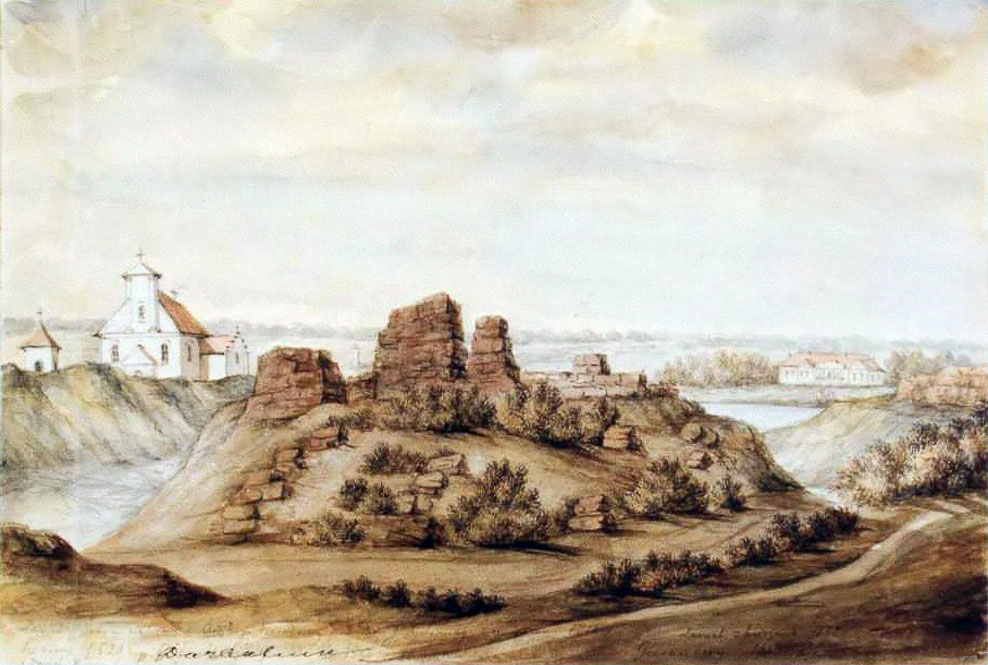
Throughout the 14th and 15th centuries, Lida Castle was repeatedly tested in battle. It endured several sieges by the Teutonic Knights in 1384, 1392, and 1394, demonstrating its resilience despite occasional captures. The castle also played a role in regional power struggles, such as the conflict between Švitrigaila and Sigismund Kęstutaitis in 1433, and the imprisonment of the family of Yury of Smolensk in 1406. Later, it faced assaults from the Crimean Tatars in 1506 and Russian forces during the Russo-Polish War in 1659. The castle's military importance declined after suffering heavy damage during the Great Northern War when Swedish troops twice captured it and destroyed its towers.
In the late 18th century, Lida Castle witnessed its last significant military engagement during the Kościuszko Uprising of 1794, a national insurrection against Russian rule. Following this period, the castle gradually lost its defensive function and fell into partial ruin.
Architectural features and layout
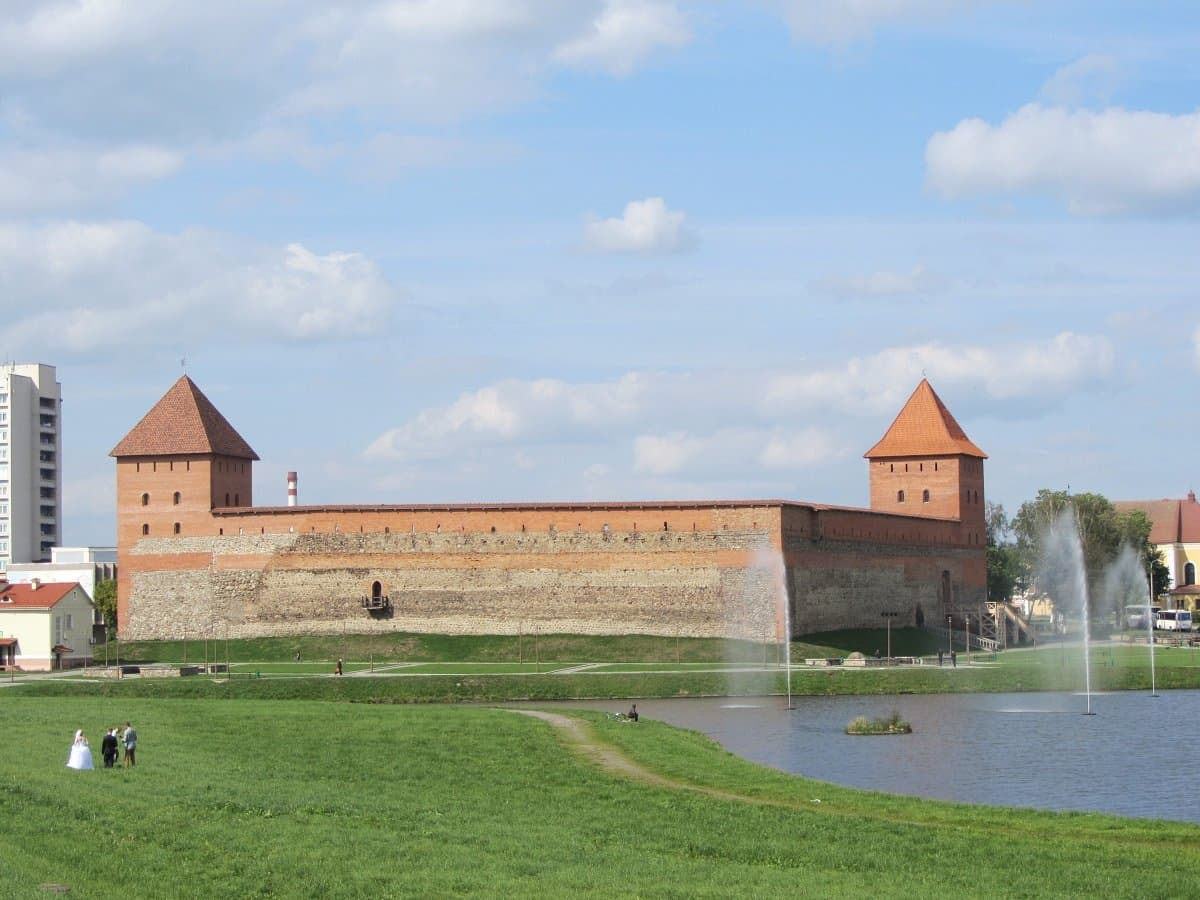
Lida Castle is built on an artificial sandy mound approximately 5 to 6 meters high, shaped into a roughly trapezoidal plan with sides measuring between 80 and 93.5 meters. The site is naturally fortified by the surrounding marshlands and the rivers, with a wide moat separating the fortress from the town on the northern side.
The fortress walls reach up to 15 meters in height and are constructed primarily from large, partially shaped boulders bonded with smaller stones and mortar. The walls are approximately 2 meters thick at the base, tapering to 1.5 meters at the top, and reinforced internally with wooden beams for additional stability. The use of red brick is notable in architectural details such as corners, arches, towers, and decorative bands, particularly on the eastern and northern walls where a distinctive Baltic (Wendish) masonry pattern is evident.
The battlements feature a brick parapet with trapezoidal embrasures designed for archers and later firearm users. A wooden gallery runs along the interior perimeter below the battlements, supported by beams and accessible via staircases in the northwest and southeast corners. This gallery was covered by a sloping wooden roof, providing defenders with protected positions.
The castle was originally anchored by two main corner towers. The southwestern tower, square in plan and measuring approximately 9 meters per side, dates from the early 14th century and served as a residential space with thick defensive walls. Today, it remains mostly in ruins. The northeastern tower, larger and built between the late 14th and early 15th centuries, measures about 12 by 12.5 meters and was adapted for artillery use, featuring an arched brick entrance and internal staircases within the walls.
Access to the castle was controlled by three gates: two on the eastern wall and one on the southern side. The larger eastern gate, adorned with the Grand Duchy of Lithuania's coat of arms, likely included a drawbridge and defensive portcullis. The smaller eastern gate served as a daily entrance. The southern gate, elevated above the courtyard floor, functioned as a secret or emergency exit.
Internal structures and daily life
Inside the courtyard, archaeological excavations have uncovered foundations of various buildings essential to the castle's operation. These include residential quarters, barracks, a court, an archive, and a prison established in 1568. The barracks were divided into smaller heated rooms equipped with tiled clay stoves, reflecting the castle's role as a military garrison.
Additional facilities included a smithy and kitchen for soldiers located in the southeastern sector, as well as two wells—one for general use and another larger one for watering horses. The courtyard was paved with cobblestones and connected by paved paths to key areas.
Artifacts recovered from the site provide rich insights into the castle's military and domestic life. Finds include metal objects such as spurs, horseshoes, knives, scissors, keys, locks, arrowheads, and crossbow bolts, alongside ceramic and glass vessels, bone tools, and stone projectiles used in siege engines. Coins bearing the names of Lithuanian princes Keistut and Vytautas further confirm the castle's historical context.
Preservation and modern use
Despite partial destruction over the centuries, Lida Castle remains a significant cultural and historical monument. The southwestern tower stands largely as a ruin, and parts of the western wall were dismantled in the 19th century to aid reconstruction of the town after a fire. Early 20th-century archaeological interventions helped prevent further vandalism.
Major restoration efforts began in 1982, focusing on rebuilding sections of the walls up to 12 meters high, with newly reconstructed parts distinguished by red brick. Further restoration took place in 2010, aiming to stabilize and preserve the castle's medieval appearance.
Today, Lida Castle hosts annual medieval-style tournaments that celebrate its historical legacy. A museum is also being developed within the castle towers to educate visitors about its rich past and architectural significance. The castle stands as a testament to the military ingenuity and cultural heritage of the Grand Duchy of Lithuania, attracting scholars, tourists, and history enthusiasts alike.
Frequently asked questions (FAQ)
- What is the historical significance of Lida Castle?
- Lida Castle, built in the 14th century, is a remarkable example of Gothic architecture in Belarus. It served as a defensive fortress and played a crucial role in the region's history, particularly during conflicts between Lithuania and the Teutonic Knights.
- When was Lida Castle constructed?
- Lida Castle was constructed between 1323 and 1330 under the Grand Duchy of Lithuania. Its strategic location made it an important military and administrative center during the medieval period.
- Can I visit Lida Castle year-round?
- Yes, Lida Castle is open to visitors throughout the year. However, the best time to visit is during the spring and summer months when the weather is pleasant, and outdoor activities and reenactments are often held.
- What are the opening hours for Lida Castle?
- Lida Castle typically opens at 10 AM and closes at 6 PM from April to October. During the winter months, hours may vary, so it's advisable to check in advance before planning your visit.
- Is there an admission fee to enter Lida Castle?
- Yes, there is a ticket price for entry to Lida Castle, which helps support its preservation and maintenance. Prices may vary for adults, children, and groups, so it's best to check the official website for the latest information.
- How do I get to Lida Castle from Minsk?
- To reach Lida Castle from Minsk, you can take a train or a bus to Lida, which takes approximately 2 to 3 hours. Once in Lida, the castle is within walking distance from the city center.
- Are there any nearby attractions I can visit?
- Yes, in addition to Lida Castle, visitors can explore the scenic landscapes of the surrounding region, including the beautiful Lida Lake and the historic town of Lida itself, which offers charming cafes and local shops.
- Is Lida Castle accessible for visitors with disabilities?
- Lida Castle has made efforts to improve accessibility for all visitors, including those with mobility challenges. While some areas may be more difficult to navigate, staff are available to assist and provide information on accessible routes.
Photo gallery

Information
Website
Visit websiteSources & official resources
Verify the information above using these authoritative references.
Loading map...
Visitor reviews
No reviews yet. Been here? Write the first review and help other travelers!
Write the first reviewVisited this castle? Share your experience
Your review helps other travelers and adds first-hand knowledge to our encyclopedia.