Narrow Water Castle
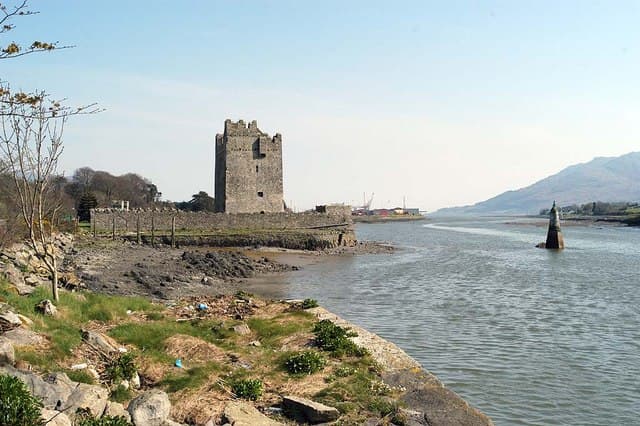
Narrow Water Castle stands prominently on the bank of the Clanrye River, also known as the Newry River, just north of the town of Warrenpoint in County Down, Northern Ireland. This historic site occupies a strategic position where the river meets Carlingford Lough, guarding a narrow waterway that was crucial for controlling river-borne access to the inland areas during medieval times.
The origins of Narrow Water Castle trace back to the early 13th century when a Norman knight, Hugh de Lacy, the first Earl of Ulster, constructed a keep here in 1212. This early fortification was part of a broader network of Norman castles, including Carlingford Castle and Green Castle, built to establish Norman control over Ulster and protect against incursions. The original keep was designed primarily as a defensive stronghold to monitor and secure the river approaches.
Architectural significance and tower house design
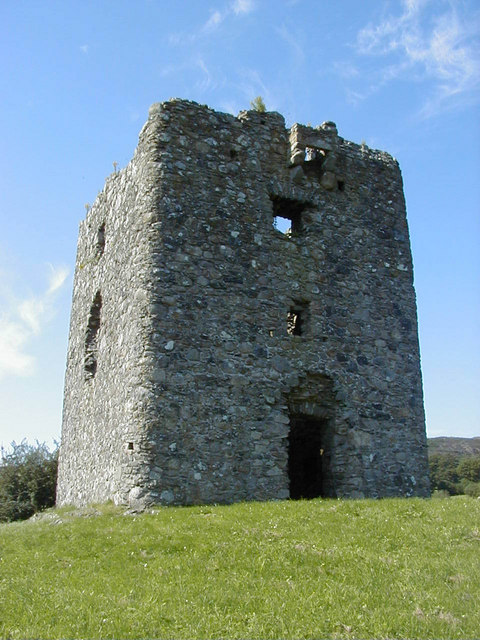
The castle that stands today largely dates from the 1560s, built as a typical Irish tower house and bawn for an English garrison. Tower houses were a prevalent form of fortified residence across Ireland from the 14th to early 17th centuries, combining defensive features with domestic living spaces. Narrow Water Castle exemplifies this architectural type, featuring a rectangular plan and rising three stories high with an attic.
One of the castle's most remarkable architectural features is its straight stairs embedded within the thick walls, which is unusual since most tower houses employed spiral staircases for defensive advantages. The walls are notably thick, measuring up to 1.5 metres (five feet) in places, and cleverly incorporate stairs, closets, and latrines within the structure, reflecting advanced medieval building techniques aimed at maximizing internal space and defense.
The bawn and defensive elements
The castle is surrounded by a bawn, a walled courtyard typical of Irish tower houses, which provided an additional layer of defense and space for livestock and supplies. The bawn walls would have been equipped with battlements and possibly small towers or gun loops to repel attackers. Narrow Water's position on a hill above the riverbank further enhanced its defensive capabilities, allowing surveillance over the waterway and land approaches.
Historical ownership and events
By the late 16th century, Hugh Magennis, Chief of the Mournes, had taken control of Narrow Water Castle. The castle changed hands several times during the turbulent period of Irish history marked by rebellion and English colonization. In 1596, the English retook the castle but granted it to Sir Arthur Magennis under the condition that the English could use it when needed.
During the Irish Rebellion of 1641, the castle was seized by Sir Conn Magennis, a notable figure of the time. Subsequently, in 1644, it was defended for the King against Parliamentary forces during the English Civil War, highlighting its continued military importance. The castle was eventually sold in 1670 to Francis Hall, whose family retained ownership until the mid-20th century.
Later uses and decline
Between 1744 and 1819, the bawn housed a salt works, illustrating the site's adaptation to commercial uses beyond military purposes. In 1834, the castle was repurposed as kennels, signifying its decline as a noble residence. During the 19th century, a new castle was constructed nearby in the Elizabethan Revival style, also known as Narrow Water Castle, which is distinct from the original tower house ruins.
Modern history and preservation
Narrow Water Castle was taken into state care in 1956 and is now a protected historic monument managed as part of Northern Ireland's heritage. Despite its ruined condition, the castle remains a striking example of Renaissance-period tower house architecture and medieval military strategy.
The site is also known for a tragic event in modern history: on 27 August 1979, it was the location of a deadly Provisional IRA ambush against a British army convoy, resulting in the loss of 18 soldiers. This incident marked the deadliest single attack on the British Army during the period known as The Troubles.
Visitor experience and accessibility
Today, Narrow Water Castle is accessible to visitors, particularly in the summer months when cruises along the river provide scenic views of the castle from the water. However, access to the interior may be limited due to its ruined state and preservation concerns. The castle's picturesque location and rich history make it a compelling destination for those interested in medieval architecture and Irish history.
Legacy and cultural significance
Narrow Water Castle stands as a testament to the complex history of Ulster, reflecting the layers of Norman conquest, Irish clan dynamics, English colonization, and modern conflict. Its tower house design is a key example of Irish Renaissance military architecture, while its turbulent history encapsulates centuries of struggle and change in Northern Ireland.
The castle's unique features, such as its straight internal staircases and well-preserved bawn walls, offer valuable insights into the defensive innovations of the period. As a state care monument, it contributes to the cultural heritage and tourism of County Down, drawing visitors who seek to explore Ireland's medieval past and its enduring legacy.
Frequently asked questions (FAQ)
- How do I visit Narrow Water Castle?
- Narrow Water Castle is open to visitors mainly during the summer months. Access to the interior may be limited due to its ruined condition, but the surrounding grounds and river views are accessible. Cruises along the Clanrye River offer excellent views of the castle from the water.
- What is the historical significance of Narrow Water Castle?
- Narrow Water Castle is a prime example of a 16th-century Irish tower house with a rich history dating back to the Norman conquest in 1212. It played a strategic role in controlling river access and witnessed key events during the Irish Rebellion and English Civil War.
- When was Narrow Water Castle built?
- The current tower house structure of Narrow Water Castle was built in the 1560s, replacing an earlier Norman keep constructed in 1212 by Hugh de Lacy.
- Why is Narrow Water Castle unique architecturally?
- Unlike most Irish tower houses that feature spiral staircases, Narrow Water Castle is unique for its straight internal stairs built within the thick walls. This architectural feature is rare and showcases advanced medieval design.
- Is Narrow Water Castle accessible for people with mobility issues?
- Due to its ruined state and historic structure, Narrow Water Castle may present challenges for visitors with mobility issues. The terrain and limited facilities may require assistance or alternative arrangements.
- Are there any notable events associated with Narrow Water Castle?
- Yes, the castle was the site of a tragic Provisional IRA ambush in 1979 that resulted in the deaths of 18 British soldiers. This event was the deadliest single loss for the British Army during The Troubles.
Photo gallery

Information
Opening hours
Summer months
Current owner
State care historic monument
Address
A2/Warrenpoint Road, Northern Ireland
Loading map...
Visitor reviews
No reviews yet. Been here? Write the first review and help other travelers!
Write the first reviewVisited this castle? Share your experience
Your review helps other travelers and adds first-hand knowledge to our encyclopedia.