Moyry Castle
Moyry Castle stands as a significant Elizabethan military fortification in County Armagh, Northern Ireland. Constructed in 1601 by Lord Mountjoy (Charles Blount, 1st Earl of Devon) during the closing phase of the Nine Years' War, this castle was strategically placed on a natural rocky hillock overlooking the Moyry Pass, also known as the Gap of the North. This narrow passage was a vital route linking northern and southern Ireland, making control of this area crucial for English forces seeking to consolidate their hold over Ulster.
The castle's primary function was to secure this ancient natural route, enabling English troops to move safely and maintain dominance in a region rife with conflict. Moyry Castle embodies the military architectural style of the early 17th century, reflecting the practical needs of a small garrison fortification rather than a grand residence.
Architectural features and design
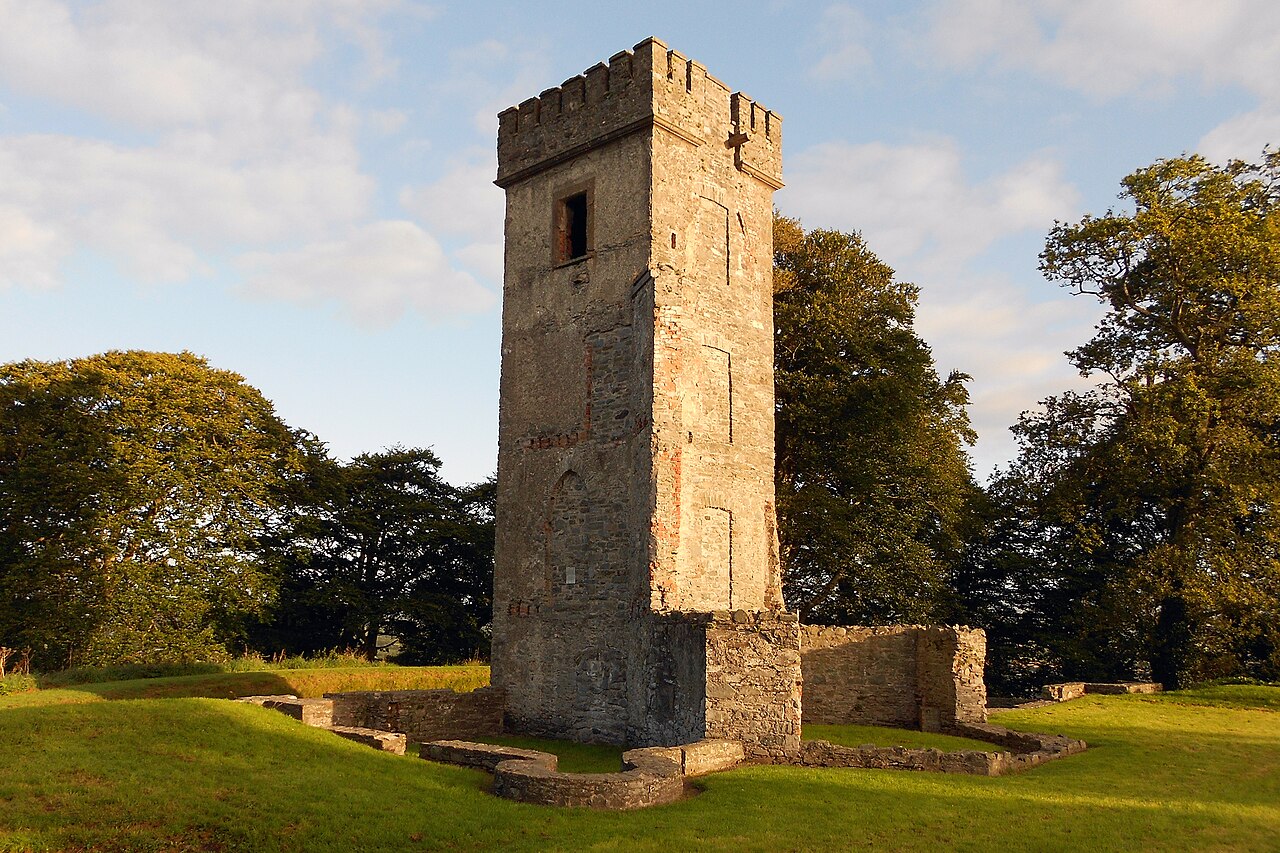
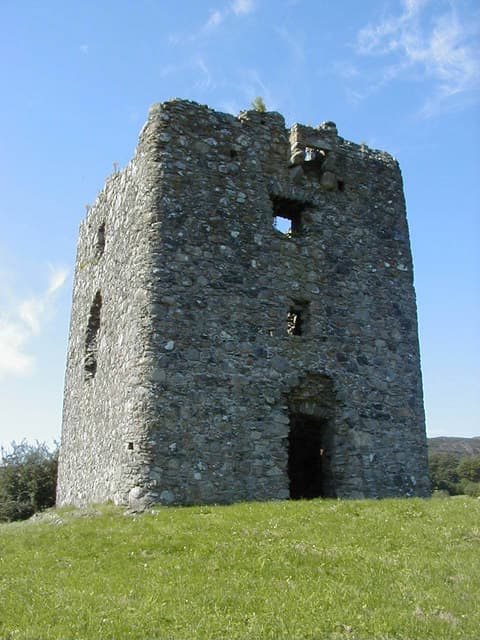
The castle is a compact, rectangular keep measuring approximately 8 meters on each side and rising three stories high. Its walls, about 1.2 meters thick, are constructed from local stone using traditional masonry techniques of the period. The keep’s corners are rounded, a design choice that enhanced its defensive capabilities by deflecting projectiles and reducing blind spots.
The entrance, located on the northeast side, is protected by a machicolation, a projecting parapet with openings through which defenders could drop stones or boiling liquids on attackers. This feature is typical of fortifications designed to withstand sieges and assaults during the Renaissance period.
Musketry loopholes punctuate the walls on all sides except the northern wall, allowing defenders to fire firearms while remaining protected. The northern wall is notable for containing built-in fireplaces with external chimneys, an unusual feature in a small military keep, indicating attention to the comfort and needs of the garrison.
The keep is set within a small bawn—a defensive courtyard enclosed by stone walls. Portions of the bawn walls remain standing up to 2.75 meters high, revealing the castle’s original defensive perimeter. The bawn likely had a single entrance on the northeast side, providing controlled access to the courtyard and the keep.
Historical context and military significance
Constructed during the late Elizabethan period, Moyry Castle was a key element in the English Crown’s military campaign to subdue Gaelic Irish resistance in Ulster. The Nine Years’ War (1594–1603) was a protracted conflict between Irish chieftains and English forces, and control of strategic passes like Moyry was essential for troop movements and supply lines.
Lord Mountjoy, appointed by Queen Elizabeth I, oversaw the castle’s construction as part of his northern campaign. Soon after its completion, Captain Anthony Smith was installed as constable, commanding a small garrison of approximately twelve soldiers tasked with maintaining security and control over the Moyry Pass.
Following the accession of King James I in 1603, Moyry Castle continued to hold strategic importance. In 1606, nearby towns such as Dromintee and Carrickbroad were assigned responsibilities to support the castle's upkeep and defense, underscoring its role as a regional military outpost during the early 17th century.
Role during subsequent conflicts
During the tumultuous Irish Confederate Wars of the 1640s, the castle came under the control of Irish Confederate forces in 1641, reflecting the shifting allegiances and ongoing strife of the period. Later, during the Williamite War in Ireland, Moyry Castle again featured in military operations. In 1690, troops loyal to King William III passed through the Moyry Pass en route to the pivotal Battle of the Boyne, a turning point in Irish history.
Legends and cultural significance
Moyry Castle is also enveloped in local folklore, notably the legend of a black cat said to have appeared shortly after the castle’s construction. According to tradition, this spectral feline was the avenger of a slain wizard, haunting the castle and terrifying its garrison. This story adds a supernatural dimension to the site’s historical narrative and enriches its cultural heritage.
Preservation and current status
Today, Moyry Castle is designated as a State Care Historic Monument, ensuring its preservation and protection for future generations. The castle remains largely intact, retaining its original three-story form and much of its defensive structure. The surrounding bawn’s remains provide valuable insight into the castle’s defensive layout and military function.
The castle’s elevated position at approximately 116 meters above sea level affords commanding views of the surrounding landscape, emphasizing its strategic placement. Its proximity to modern infrastructure, including the nearby Belfast/Dublin railway, makes the site accessible and visible to visitors and travelers.
The site is freely accessible to the public, allowing visitors to explore the rugged beauty of the castle’s setting and appreciate its historical significance. Moyry Castle’s modest size and straightforward design reflect its primary role as a military outpost rather than a noble residence, offering a tangible connection to the turbulent history of early 17th-century Ireland.
In summary, Moyry Castle is an important example of a Renaissance-era military keep built to secure a critical passage during a period of intense conflict. Its architectural features, historical associations, and enduring legends make it a noteworthy site in Northern Ireland’s rich tapestry of castles and fortifications.
Frequently asked questions (FAQ)
- How do I visit Moyry Castle?
- Moyry Castle is freely accessible to the public year-round. Visitors can explore the site at their own pace, enjoying the surrounding landscape and historical features.
- What is the historical significance of Moyry Castle?
- Moyry Castle was built in 1601 by Lord Mountjoy to secure the strategic Moyry Pass during the Nine Years' War, playing a key role in English military campaigns in Ulster.
- Can I see Moyry Castle from nearby transport routes?
- Yes, Moyry Castle is easily visible from the Belfast/Dublin railway line, making it a notable landmark for travelers on this route.
- What architectural features does Moyry Castle have?
- The castle features a small rectangular keep with rounded corners, thick stone walls, a machicolation above the entrance, musketry loopholes, and a defensive bawn courtyard.
- Is Moyry Castle associated with any legends or folklore?
- Local legend tells of a black cat spirit that haunted the castle shortly after its construction, adding a supernatural element to its history.
Photo gallery

Information
Current owner
State Care Historic Monument
Website
Visit websiteAddress
Kilnasaggart Road, United Kingdom of Great Britain and Northern Ireland
Sources & official resources
Verify the information above using these authoritative references.
Loading map...
Visitor reviews
No reviews yet. Been here? Write the first review and help other travelers!
Write the first reviewVisited this castle? Share your experience
Your review helps other travelers and adds first-hand knowledge to our encyclopedia.