Martkopi Towers
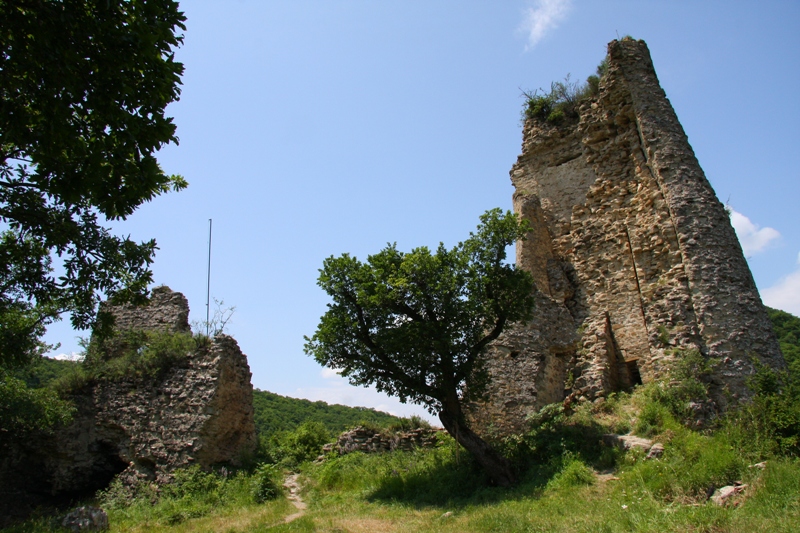
The Martkopi Towers are a pair of historic fortified towers located in the village of Martkopi, within the Gardabani municipality of the Kvemo Kartli region in Georgia. These towers, known individually as the Shinjikashvili Tower and the Tushmalishvili Tower, date back to the 18th century and represent an important example of local defensive architecture from the post-Renaissance period.
Both towers were constructed by prominent local families as fortified refuges during times of conflict or unrest. Their circular ground plan is characteristic of defensive structures designed to withstand attacks and provide a secure shelter. The towers stand as significant cultural landmarks within Martkopi, reflecting the historical social organization and architectural traditions of the region.
Historical context and purpose
During the 18th century, the region of Kvemo Kartli experienced various periods of instability, including raids and local conflicts. In response, noble families such as the Shinjikashvili and Tushmalishvili clans built fortified towers as safe havens. These towers served both defensive and residential functions, allowing inhabitants to retreat and protect themselves and their valuables.
While detailed historical records about the towers are limited, their construction reflects the broader Georgian tradition of building family towers in vulnerable rural areas. These structures were integral to community defense and symbolized the status and resilience of the families who built them.
Architectural features of the Martkopi Towers
Shinjikashvili Tower
The Shinjikashvili Tower is situated on a small plot nestled between modern houses, which now serves as a modest public park. It maintains its circular plan and robust stone construction, typical of Georgian defensive towers of the period. Although the tower's interior is not accessible to visitors, its exterior remains well-preserved, showcasing the traditional masonry techniques used in the 18th century.
Tushmalishvili Tower
The Tushmalishvili Tower stands within the private backyard of a residence, built by an ancestor of the current owner. This tower also features a circular design and was complemented by a nearby church constructed by the same forefather, highlighting the family's local influence. Unfortunately, part of the tower collapsed in 2000, including the loss of its original ornate entrance, which was a notable architectural element.
Access to the Tushmalishvili Tower is restricted due to its location on private property, but the owner has occasionally provided guided visits, offering insight into the tower's history and significance.
Preservation and current condition
Both towers are valued as cultural heritage sites within Martkopi. The Shinjikashvili Tower is freely accessible to the public and remains in a well-preserved state externally, although it is not open for interior exploration. The Tushmalishvili Tower is partially ruined due to the collapse in 2000 but retains much of its original structure, reflecting the challenges of preserving historic stone towers in inhabited areas.
Significance in Georgian architectural heritage
The Martkopi Towers exemplify the tradition of family-built defensive towers in Georgia's rural regions during the post-Renaissance period. Their circular architectural form and strategic placement within the village highlight the practical and social functions these towers served.
These towers contribute to the understanding of Georgian vernacular architecture, demonstrating how local communities adapted construction techniques to meet security needs. They also represent the intertwined relationship between family lineage, religious patronage, and local governance in Georgian history.
Visiting information
Visitors to Martkopi can freely explore the area around the Shinjikashvili Tower, which is set within a small public park in the village center. While the interior is not open, the tower's exterior offers a glimpse into 18th-century Georgian defensive architecture.
The Tushmalishvili Tower is located on private property and is generally not accessible to the public. However, visitors who meet the owner may be granted a private tour, providing a unique opportunity to learn about the tower's history and the family's heritage.
Martkopi itself is situated in the Kvemo Kartli region, an area rich in historical sites and cultural landmarks, making it a worthwhile destination for those interested in Georgian history and architecture.
Frequently asked questions (FAQ)
- How do I visit the Martkopi Towers?
- The Shinjikashvili Tower is freely accessible in a small public park in Martkopi village. The Tushmalishvili Tower is on private property and usually closed to the public, but visitors may receive a private tour if the owner is present.
- What is the historical significance of the Martkopi Towers?
- These towers were built in the 18th century by local families as fortified refuges during times of conflict, reflecting Georgian defensive architectural traditions in rural areas.
- Can I enter the towers?
- The Shinjikashvili Tower cannot be entered, but its exterior is well preserved for viewing. The Tushmalishvili Tower is privately owned and not generally open for interior access.
- Why do the towers have a circular ground plan?
- The circular design was a common feature in Georgian defensive towers, providing structural strength and better defense against attacks by eliminating weak corners.
- Is there any restoration work ongoing at the towers?
- There is no current public information about restoration projects; the Tushmalishvili Tower suffered partial collapse in 2000 and remains partially preserved.
Information
Loading map...
Visitor reviews
No reviews yet. Been here? Write the first review and help other travelers!
Write the first reviewVisited this castle? Share your experience
Your review helps other travelers and adds first-hand knowledge to our encyclopedia.