Bebris Castle
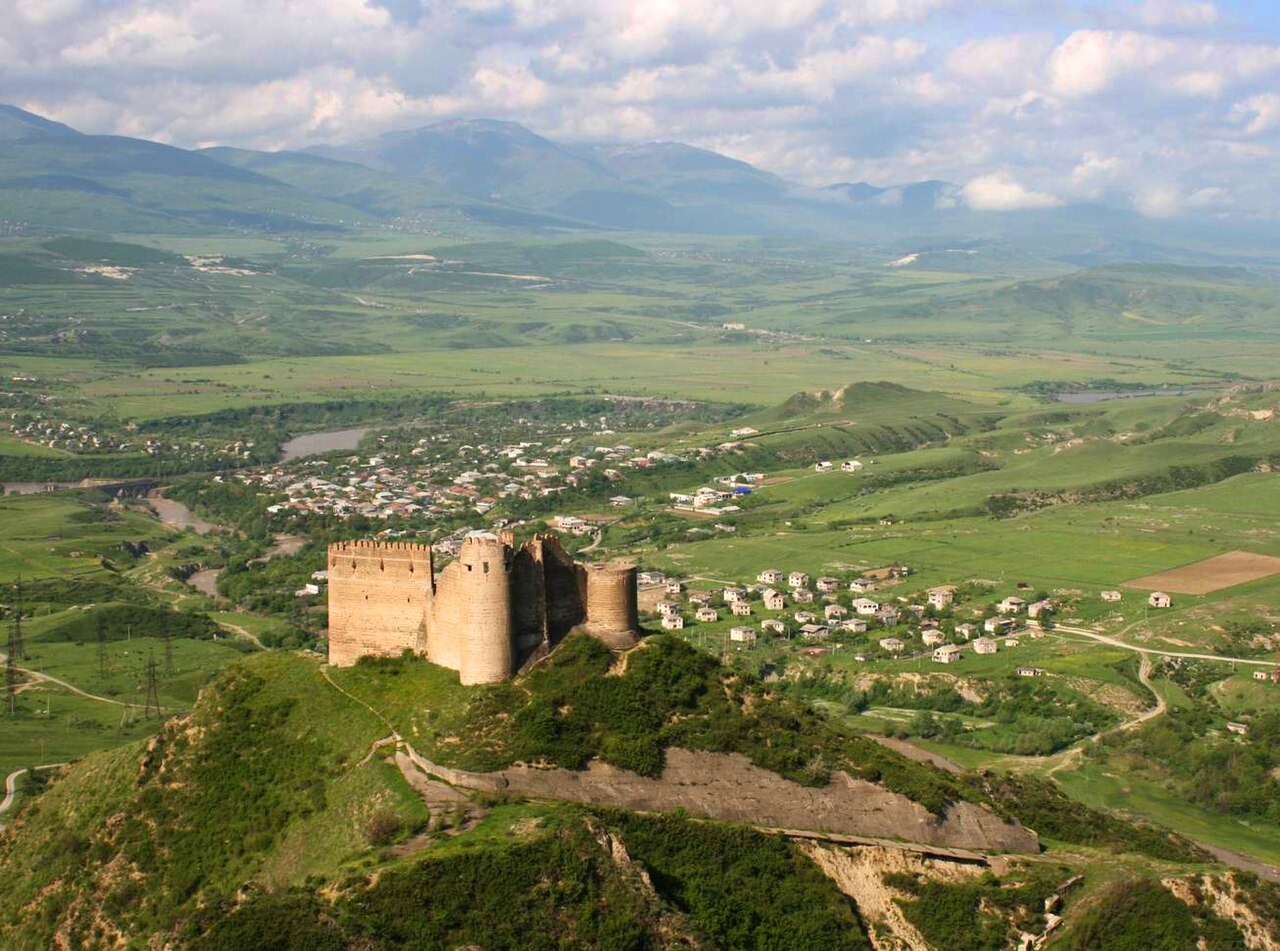
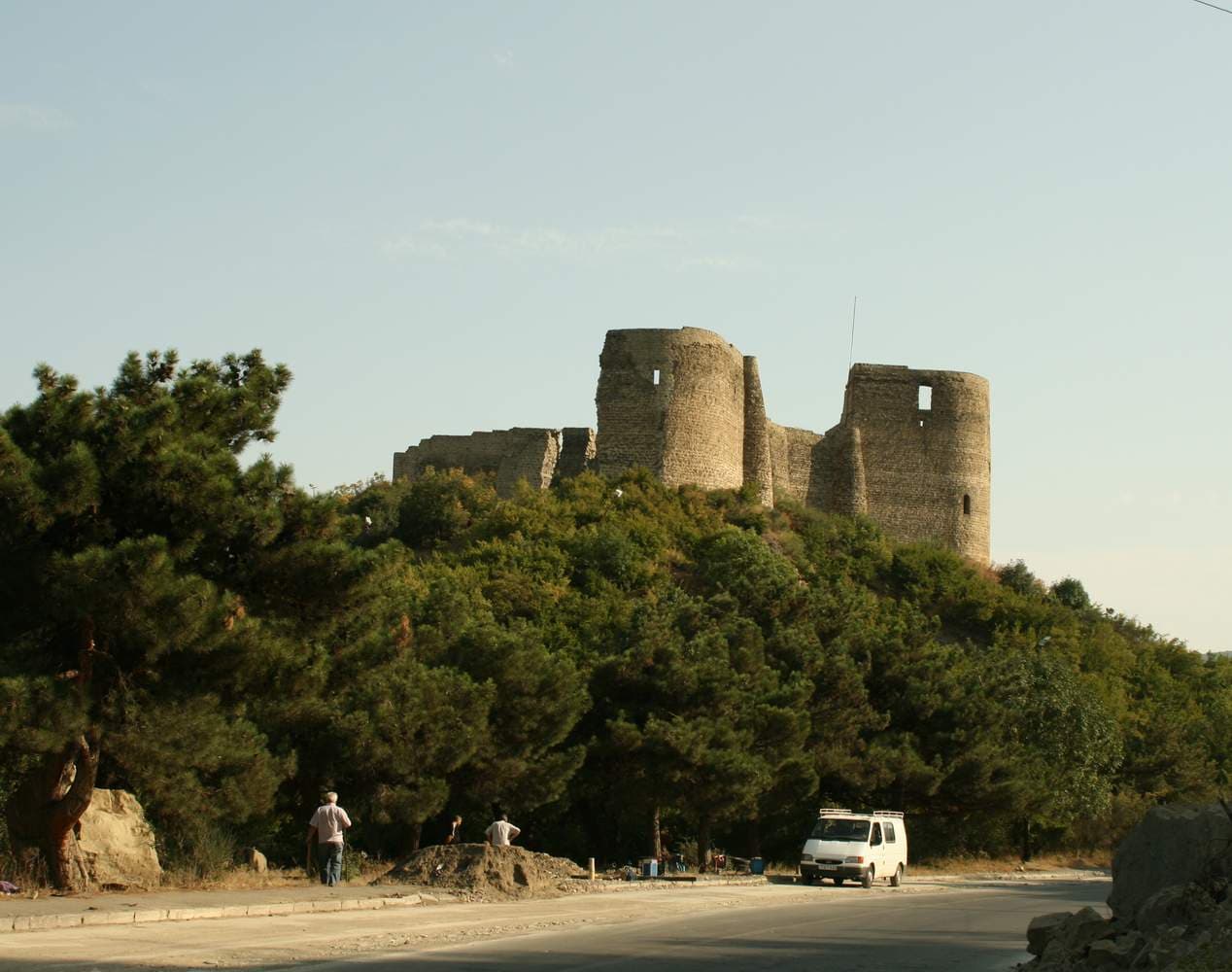
Bebris Castle, also known locally as Bebris Tsikhe, Bebristsikhe, or Beberi, is a significant early medieval fortress located north of the city of Mtskheta in the Mtskheta-Mtianeti region of Georgia. Positioned strategically on a high rock in a narrow section of the Aragvi River valley, the castle was designed to guard the northern approaches to Mtskheta, an ancient capital of Georgia. The site’s long history of fortification reflects its enduring military and cultural importance in the region.
Early origins and historical significance
Archaeological excavations have uncovered that the initial fortifications on the site date back to the 1st century BC, continuing through to at least the 4th century AD. These early defenses indicate the site's longstanding strategic value. The present castle structure, however, was constructed in the 9th century during the early medieval period. It is first mentioned in written records in the early 13th century by King George IV of Georgia, who noted it as the place where Demetrius I of Georgia died in 1156.
The fortress remained in use through the centuries, with references into the 18th century when the Georgian historian Vakhushti Batonishvili described it as Belta Castle. Throughout its history, Bebris Castle served as a crucial defensive site protecting the approaches to Mtskheta and, by extension, the kingdom of Kartli and later Georgia itself.
Architectural features and layout
Bebris Castle was constructed to harmonize with the natural landscape, effectively becoming a continuation of the mountainous terrain. The fortress occupies a roughly triangular ground plan, consisting of a main castle area and an outer courtyard. The castle's walls are notably thick, measuring over 2 meters, and are built from stones of nearly equal size, demonstrating skilled masonry typical of the period.
The fortress features three large towers at each corner of the triangle, each serving both defensive and residential functions. The southwestern tower is the best preserved and was the largest; it functioned as a dungeon and included four levels with embrasures for archers or artillery, separated by wooden ceilings. The eastern tower was originally square but was destroyed and rebuilt in the 18th century. The outer courtyard included a watchtower on its eastern side, guarding the approach from the former road.
The complex terrain influenced the castle's multifaceted shape, especially in the lower courtyard, where the walls are now largely in ruins. Archaeological layers in the vicinity reveal continuous occupation from ancient to feudal times, underscoring the site's long-term strategic and residential use.
Defensive design elements
The castle’s position on a high rock in a narrow valley provided natural defense against invaders. The thick stone walls, triangular plan, and placement of towers allowed defenders to cover all approaches effectively. Embrasures in the towers allowed for ranged defense, while the high vantage point gave visibility over the surrounding Aragvi and Mtkvari river valleys.
Legend and cultural heritage
A local legend explains the origin of the name "Bebris Tsikhe" (Fortress of the Old Man). According to the tale, the fortress once belonged to a prince named Simon who had a kind daughter, Makrine, and a cruel son, Mamuka. After Simon's death, Mamuka imposed harsh taxes and brutal punishments on peasants, ignoring his sister's pleas for mercy. Imprisoned by Mamuka, Makrine witnessed a miraculous event involving snakes and divine intervention that led Mamuka to repent and become a monk. The fortress was subsequently named to commemorate this story, symbolizing mercy and redemption.
This legend adds cultural depth to the site, reflecting the intertwining of local folklore with historical memory.
Modern history and preservation efforts
In the 19th century, a new road was constructed to bypass the fortress to the west, changing the historic route that once ran along the east side by the riverbank. In 2004, Bebris Castle was officially designated as one of the National Cultural Monuments of Georgia, recognizing its importance to Georgian heritage.
Unfortunately, in 2010, heavy spring rains caused landslides that severely damaged the northeastern walls of the castle. Restoration efforts began soon after and continue to this day, aiming to stabilize and preserve the remaining structures. Despite its ruined condition, Bebris Castle remains freely accessible to visitors who can explore the site and enjoy panoramic views of Mtskheta and the surrounding valleys.
Visitor experience and accessibility
Visitors to Bebris Castle can explore the ruins, which offer a tangible connection to Georgia’s early medieval past. The site’s rocky terrain and partially ruined walls provide a somewhat adventurous experience, with opportunities to climb and view the landscape from elevated positions. Safety precautions should be observed due to the uneven and sometimes unstable surfaces.
The castle’s proximity to Mtskheta and its location near the Narekvavi-Mtskheta-Railway Station road make it easily accessible for day trips. The surrounding area is rich in historical sites, including the ancient city of Mtskheta itself, which is a UNESCO World Heritage Site.
Frequently asked questions (FAQ)
- How do I get to Bebris Castle?
- Bebris Castle is conveniently located next to the Narekvavi-Mtskheta-Railway Station road in Georgia, making it accessible by car or public transport. Visitors can take local buses or taxis from nearby cities such as Mtskheta or Tbilisi for a quick and scenic journey.
- What is the historical significance of Bebris Castle?
- Bebris Castle dates back to the medieval period and is an important landmark in Georgian history. It served as a defensive structure and played a key role in protecting the region from invasions, reflecting the architectural and military strategies of its time.
- When was Bebris Castle built?
- The construction of Bebris Castle is believed to have started in the 10th century, though it has undergone various renovations throughout the centuries. Its enduring structure showcases the evolution of Georgian fortification techniques and architectural styles over time.
- Can I visit Bebris Castle year-round?
- Yes, Bebris Castle is open to visitors year-round, although the best time to visit is during the spring and fall when the weather is mild. This allows for a more comfortable exploration of the castle and its picturesque surroundings.
- Why is the architecture of Bebris Castle noteworthy?
- The architecture of Bebris Castle is noteworthy due to its unique blend of defensive and residential features, typical of Georgian castles. Its robust walls, watchtowers, and strategic location exemplify the ingenuity of medieval engineering and the importance of fortifications in the region.
- Is it possible to access the castle grounds easily?
- Yes, the castle grounds are accessible to visitors, with pathways leading up to the site. However, some areas may involve uneven terrain, so it is recommended to wear appropriate footwear while exploring the castle and its scenic surroundings.
- What are the opening hours for Bebris Castle?
- Bebris Castle typically opens its doors to visitors from 9 AM to 6 PM daily, allowing ample time for exploration. It is advisable to check for any seasonal changes in hours before planning your visit.
- Are there any nearby attractions to explore after visiting the castle?
- Yes, after visiting Bebris Castle, you can explore nearby attractions such as the historic town of Mtskheta, a UNESCO World Heritage site, and the ancient Jvari Monastery. These sites offer a rich glimpse into Georgia's cultural heritage and are just a short drive away.
- What are the ticket prices for visiting Bebris Castle?
- The ticket prices for Bebris Castle are quite affordable, with discounts available for students and seniors. It's a great way to experience a piece of history without breaking the bank.
Photo gallery

Information
Loading map...
Visitor reviews
No reviews yet. Been here? Write the first review and help other travelers!
Write the first reviewVisited this castle? Share your experience
Your review helps other travelers and adds first-hand knowledge to our encyclopedia.