Narberth Castle
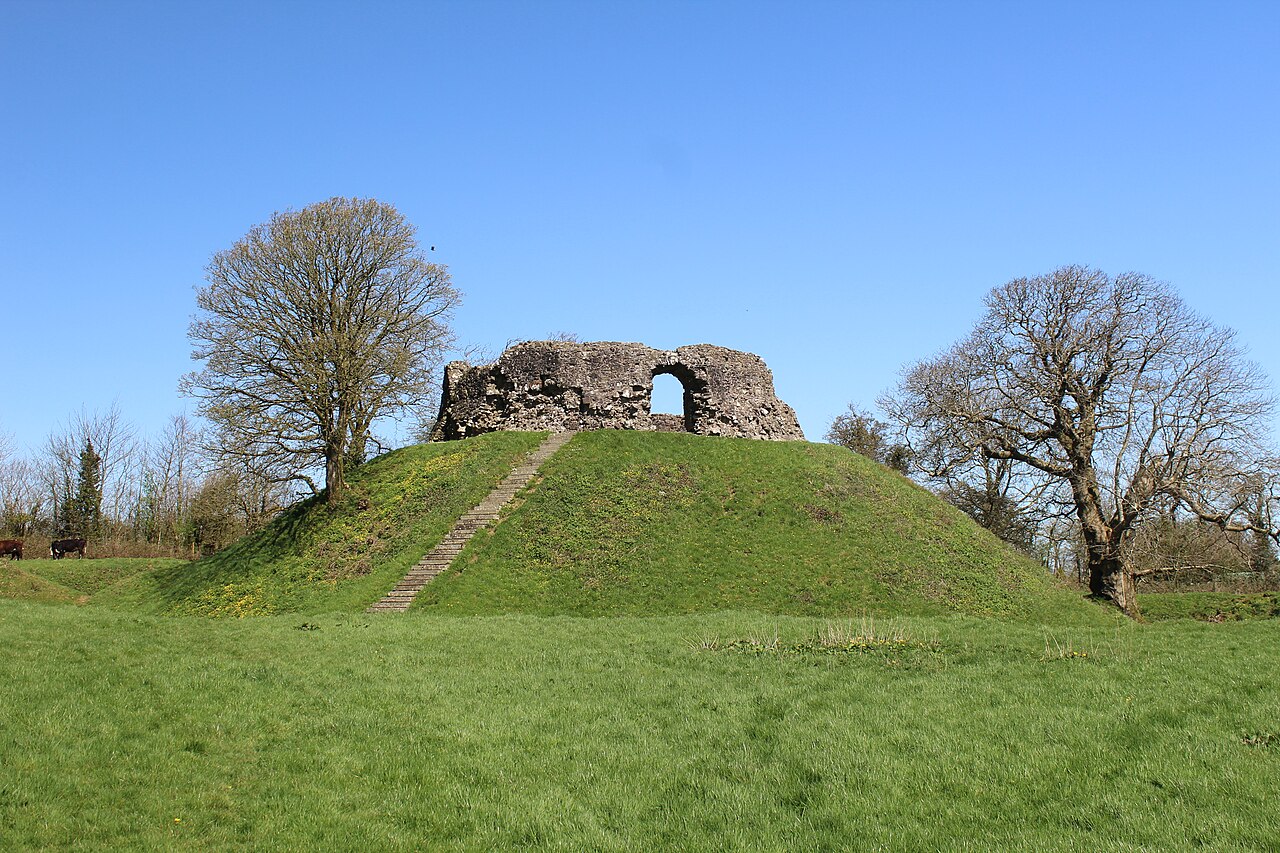
Narberth Castle is a ruined Norman fortress located in the town of Narberth in Pembrokeshire, West Wales. This hill castle occupies a strategic rocky promontory overlooking the valley of Narberth Brook, making use of natural steep slopes on three sides for defense. The castle's remains date primarily from the 13th century, reflecting the transition from earlier timber fortifications to durable stone construction during the High Medieval period.
The site is steeped in local legend, with associations to the ancient Welsh tales of the Mabinogion. The castle is traditionally linked to the figure of Pwyll, prince of the kingdom of Dyfed, and the story of Rhiannon's imprisonment as recounted in the third branch of the Mabinogi. While the precise identification of the castle mentioned in the legend is debated, the current Norman ruins likely overlay an earlier defensive site, a common practice for Norman builders consolidating power in Wales.
Historical background and origins
The earliest fortifications at Narberth are believed to have been established in the early 12th century by a Norman follower of Arnulf de Montgomery. Initially a timber and earthwork castle, it was first recorded in documents dating to 1116. This early structure endured attacks during Welsh uprisings in 1113 and again in 1116 but was quickly rebuilt, underscoring the site's military importance.
Throughout the 12th and 13th centuries, Narberth Castle was part of the lordship of Pembroke and passed through several prominent Anglo-Norman families. Notably, Henry FitzHenry, an illegitimate son of King Henry I, was among its early lords. Control later transferred to the influential Marshal family from 1199, who undertook significant rebuilding efforts.
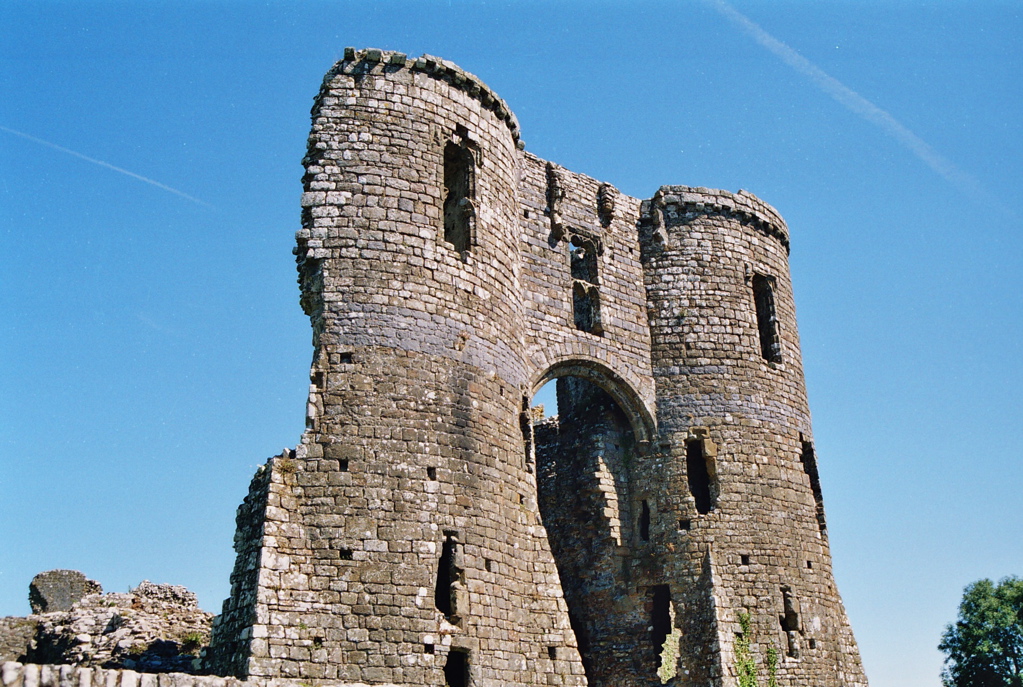
The wooden castle was replaced by a stone fortress in the mid-13th century, likely following damage inflicted by the Welsh prince Llywelyn ap Gruffydd during his 1257 campaign. This stone phase introduced four round towers at the enclosure's corners, a gatehouse with a protective ditch on the north side, and a semicircular barbican on the south side, enhancing the castle's defensive capabilities.
Architectural features and layout
Narberth Castle occupies an irregular rectangular enclosure approximately 50 meters long north to south and 25 meters wide east to west. The stone curtain walls enclose the site, with four round towers at the corners and an additional smaller mural tower integrated into the west wall.
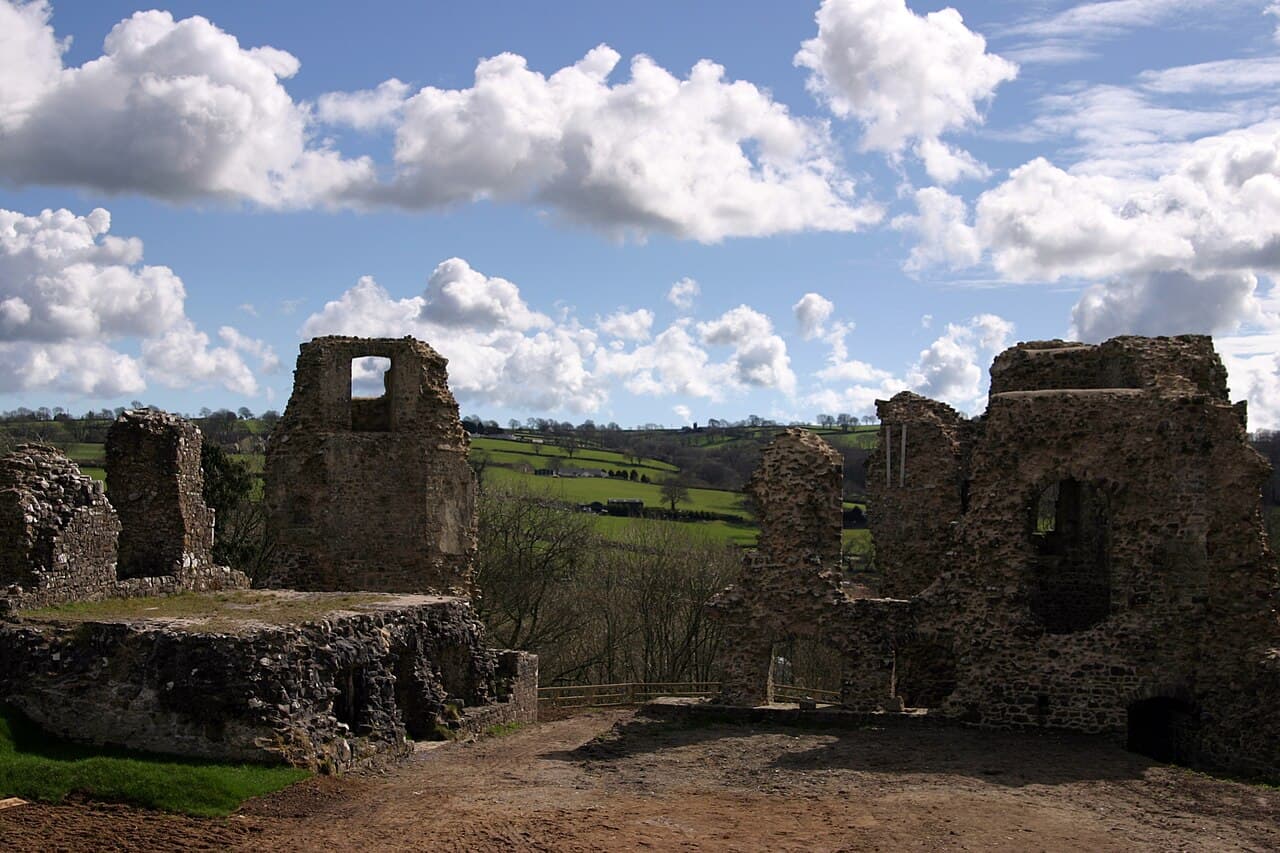
The two southern towers survive as more substantial ruins, with the southwest tower, known locally as the "chapel tower," retaining three stories. This tower served multiple purposes over time, including as a bakehouse. In contrast, the northern towers and gatehouse remain only as fragments, indicating significant loss in these areas.
Within the enclosure, archaeological evidence points to a probable two-story residential building on the southern side, featuring a ground-floor kitchen area and an upper hall used for domestic and social functions. On the eastern side, a vaulted cellar remains in situ beneath another residential structure, demonstrating medieval construction techniques for durable storage spaces.
Defensive elements
The castle's defensive design capitalizes on the natural topography with steep slopes on three sides, supplemented by man-made fortifications. The northern gatehouse was protected by a ditch, controlling access tightly. The semicircular barbican on the south side acted as a fortified outwork, providing an additional layer of defense against attackers.
Historical significance and later history
Throughout its history, Narberth Castle was a focal point in the turbulent borderlands between England and Wales. It endured multiple assaults during Welsh revolts, including damage during a 1299 uprising. The castle notably never changed hands during the Glyndŵr Rising (1400–1415), a major Welsh rebellion against English rule.
In the English Civil War, the castle was captured by forces loyal to Oliver Cromwell and subsequently slighted, leading to its ruinous condition. By the 16th century, the castle's military importance had diminished, and it was adapted for residential use by Rhys ap Thomas after 1516.
Following the Laws in Wales Acts of 1535, which integrated Wales into the English administrative system, Narberth Castle ceased to function as a lordship center. Occupation continued until the late 17th century, after which the castle was abandoned and gradually quarried for building materials, contributing to its current ruinous state.
Archaeological discoveries and preservation
Excavations carried out in the early 21st century uncovered over 20 graves on the north side of the castle, dating from the 12th to 13th centuries. These graves suggest the former presence of a church and cemetery that were displaced during the castle's stone construction phase. Such findings provide insight into the site's layered history, combining military, residential, and religious functions.
In 2005, the castle was taken over by the local council and made safe for public access after conservation efforts stabilized the ruins. The remaining structures mainly consist of single and double-storey walls, with the barrel-vaulted kitchen cellars notably intact. No upper-storey rooms survive intact.
An early engraving displayed at Narberth railway station depicts now-vanished tall Flemish-style chimneys, similar to those at the well-preserved Manorbier Castle. This suggests architectural influences and styles that once adorned the castle but are now lost.
Cultural role and modern significance
In the early 20th century, Narberth Castle served as a cultural focal point for the town's annual fair, with processions culminating in the castle grounds accompanied by dancing and music. Today, the castle is a significant heritage site representing the Norman conquest and medieval history of Pembrokeshire.
Visitors to Narberth Castle can explore the ruins and appreciate the defensive design adapted to the natural landscape. The castle's layered history, from Welsh legend through Norman military architecture to post-medieval residential adaptation, offers a rich narrative of medieval Wales and its border conflicts.
Frequently asked questions (FAQ)
- How do I get to Narberth Castle?
- Narberth Castle is located in the town of Narberth, Pembrokeshire, Wales. It is accessible by car and public transport, with the nearest railway station being Narberth railway station, a short walk from the castle ruins.
- What are the opening hours of Narberth Castle?
- The castle is open to the public year-round during daylight hours. There are no formal opening times, but visitors should plan to visit during daylight for safety and better visibility.
- Is there an entrance fee to visit Narberth Castle?
- Entry to Narberth Castle is free of charge, as it is managed by the local council and maintained as a public heritage site.
- What is the historical significance of Narberth Castle?
- Narberth Castle played a key role in the Norman conquest of southwest Wales and was involved in several Welsh uprisings. It also features in Welsh legend and was a contested fortress during medieval border conflicts.
- Can I explore the interior of Narberth Castle?
- Visitors can explore the castle ruins, including the remains of towers, walls, and vaulted cellars. However, no upper-storey rooms survive intact, and some areas may be restricted for safety reasons.
- When is the best time to visit Narberth Castle?
- The best time to visit Narberth Castle is during the spring and summer months when daylight hours are longer and weather conditions are more favorable for exploring the ruins.
- Are there any guided tours available at Narberth Castle?
- Currently, there are no regular guided tours at Narberth Castle, but local heritage groups occasionally organize events and informational walks. Visitors can also find interpretive signage at the site.
Photo gallery

Information
Sources & official resources
Verify the information above using these authoritative references.
Loading map...
Visitor reviews
No reviews yet. Been here? Write the first review and help other travelers!
Write the first reviewVisited this castle? Share your experience
Your review helps other travelers and adds first-hand knowledge to our encyclopedia.