Amroth Castle
Amroth Castle is a castellated country house located in Pembrokeshire, Wales, with a complex history spanning from the early medieval period to the present day. The current structure mainly dates from the 18th century, built upon the remains of an earlier residence that likely originated in the 15th century. This layered architectural history reflects the evolution of the site from a feudal stronghold into a picturesque country house designed in the style of a mock castle.
Early medieval origins and feudal history
The site of Amroth Castle has been associated with feudal residency since the early medieval period. Historical records indicate that the property was under the ownership of the Elliott family from the 14th century, a lineage that played a significant role in the local area. By 1690, the estate, locally known as Eareweare, was in the hands of John Elliott, who was recorded as paying tax on five hearths, indicative of a substantial residence.
Earlier still, there was a small stone castle approximately half a mile to the north of the current site, dating possibly from the 12th century. Although little remains of this original fortification, it suggests the strategic importance of the area during the medieval period.
Architectural evolution and 18th-century rebuilding
The present-day Amroth Castle is primarily an 18th-century country house featuring castellated elements that give it the appearance of a traditional castle. This style, often referred to as a mock castle, was popular in the post-medieval period as a romanticized nod to medieval architecture rather than a defensive fortress.
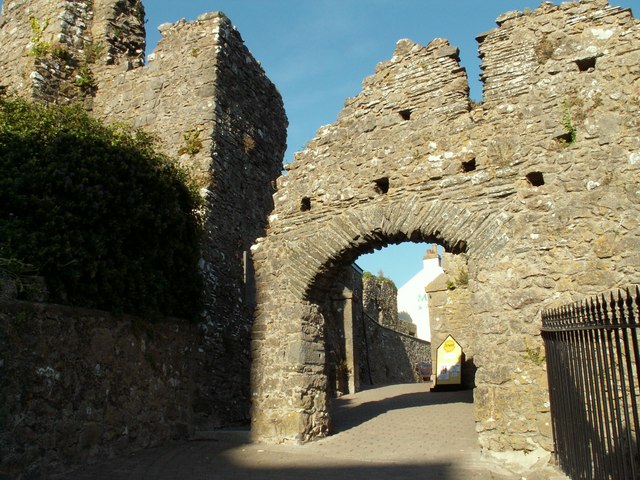
Despite the extensive rebuilding in the early 1700s, some elements from the earlier 15th-century residence remain within the structure, preserving a tangible link to its medieval past. The castle is enclosed by a high wall with an entrance archway located at the south-western corner, features that contribute to its historic character.
In 1790, the property was acquired by Colonel Ackland, who undertook several alterations and additions, further shaping the castle's appearance and functionality as a country house rather than a fortress.
Architectural features and current condition
The castle's gatehouse has undergone significant restoration, maintaining its historical form while adapting to modern preservation standards. The overall structure exemplifies the post-Renaissance architectural tendencies of blending ornamental castellations with comfortable residential design.
Today, Amroth Castle functions as a holiday venue, allowing visitors to experience its historic ambiance and architectural charm firsthand. The castle's preservation as a well-maintained country house ensures that its rich history remains accessible and appreciated.
Historical significance and cultural context
Amroth Castle's history reflects the broader patterns of Welsh country estates transitioning from medieval fortifications to romanticized residences in the post-medieval era. Its connection to the Elliott family and later owners like Colonel Ackland illustrates the continuity of local landholding families and their evolving architectural tastes.
The castle's location in Pembrokeshire situates it within a region known for its numerous historic castles and fortified sites, contributing to Wales's rich cultural heritage. While not a military fortress in its current form, Amroth Castle's design preserves the aesthetic and symbolic elements of medieval castle architecture.
Loading map...
Visitor reviews
No reviews yet. Been here? Write the first review and help other travelers!
Write the first reviewVisited this castle? Share your experience
Your review helps other travelers and adds first-hand knowledge to our encyclopedia.