Nanno Castle
Nanno Castle stands as a remarkable example of a fortified noble residence that evolved through centuries of architectural and historical transformations. Located in the village of Nanno within the municipality of Ville d’Anaunia in Italy, this hill castle first appears in historical records in 1264, marking its significance in the medieval landscape of the Alpine region. Originally built by the local nobility, it served as a strategic stronghold and family seat for the Denno-Nanno lineage, a prominent ministeriales family serving the Counts of Eppan and later the Prince-Bishops of Trento.
The castle’s initial construction in the 13th century reflects the typical characteristics of high medieval fortifications designed for defense and control over the surrounding territory. Its original core was a robust medieval keep (mastio) with thick stone walls, constructed to withstand sieges and attacks common during this turbulent era. This keep formed the nucleus around which the castle complex expanded over time.
Throughout the 14th and 15th centuries, Castel Nanno experienced a series of ownership changes, reflecting the complex feudal dynamics of the region. The Spaur family briefly controlled the castle in the late 14th century, but ecclesiastical authority was reasserted when the Bishop of Trento restored the estate to the Nanno family in 1420. This interplay of noble and church power underscores the castle’s importance as both a military and administrative center.
Renaissance transformation and architectural features
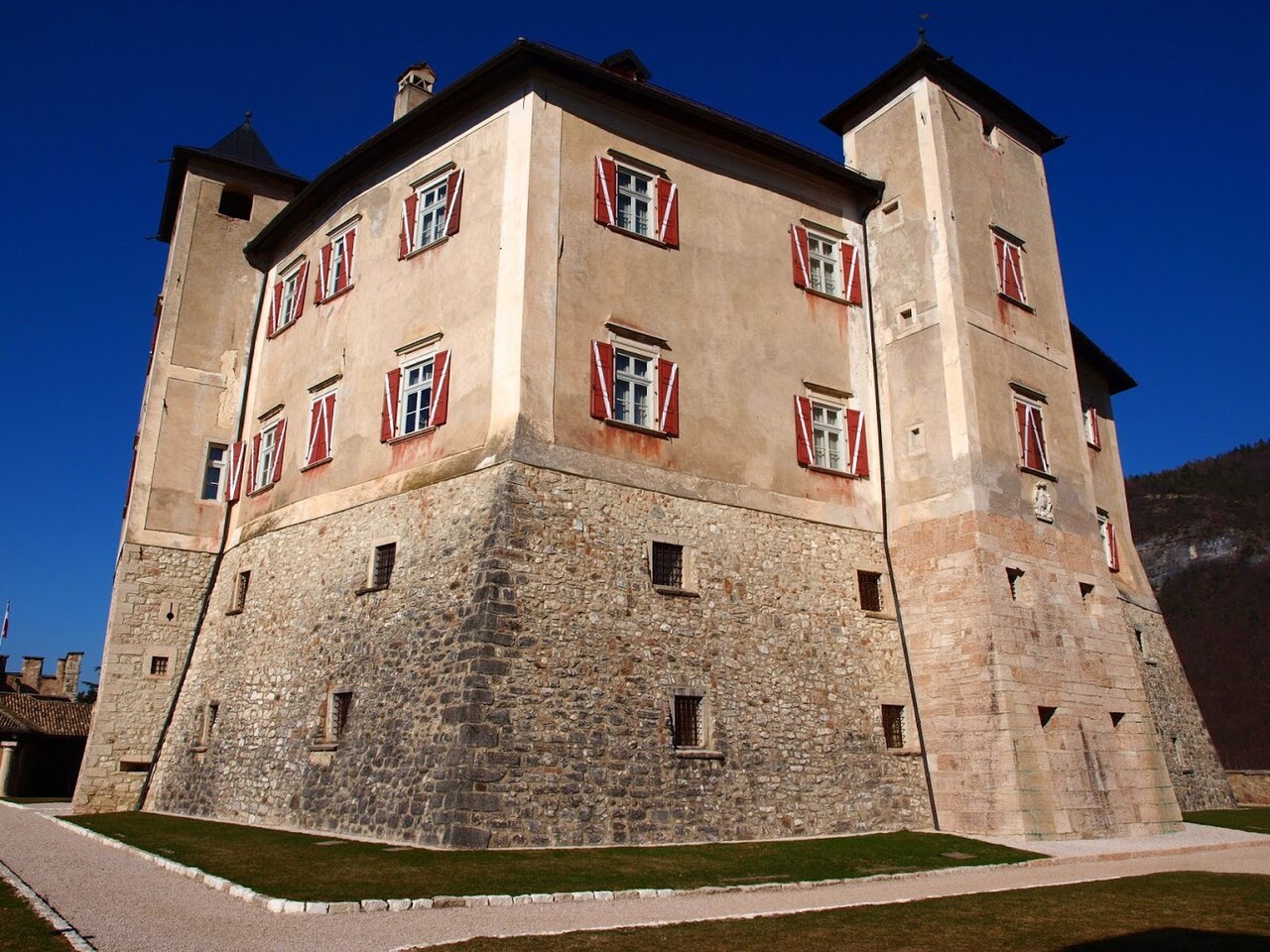
A defining moment in the castle’s history occurred in the early 16th century when Giovanni Gaudenzio Madruzzo initiated extensive renovations between 1520 and 1530. These works transformed the medieval fortress into a comfortable Renaissance residence, reflecting the evolving tastes and social aspirations of its owners. The renovation introduced a new residential building that enveloped the original keep, blending fortress elements with the elegance and domesticity characteristic of Renaissance architecture.
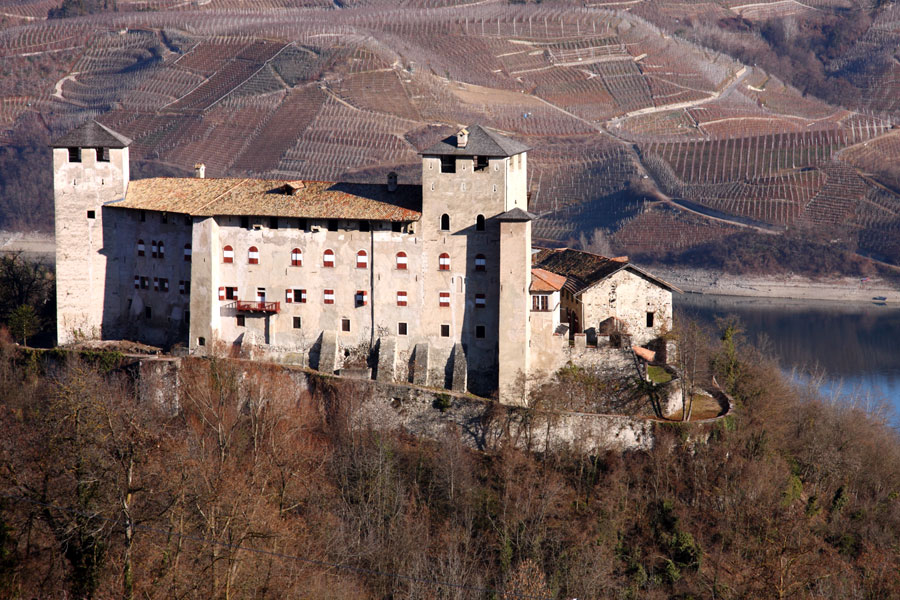
The castle’s layout features a quadrangular defensive wall enclosing the residence, punctuated by four corner towers. These towers and curtain walls provided both protection and a visual statement of noble prestige. The integration of the medieval keep with Renaissance additions created a composite structure that balanced military functionality with residential comfort.
Although the central keep suffered a partial collapse in 1873, its remnants remain a testament to the castle’s medieval origins. The Renaissance additions include refined masonry and residential quarters designed to accommodate the lifestyle of the Madruzzo family, who were influential figures in the region. Cristoforo Madruzzo, son of Giovanni Gaudenzio, notably became Prince-Bishop of Trento, further linking the castle to significant religious and political developments.
Historical significance and events
Castel Nanno’s history is intertwined with notable events and figures. The castle was the ancestral seat of the Denno-Nanno family and later the Madruzzo family, who played key roles in regional politics. In 1610, the castle was the site of a grim witch trial resulting in the execution of three women by burning, reflecting the social tensions and judicial practices of early modern Europe.
After the extinction of the Madruzzo male line in 1661, the castle reverted to the control of the Prince-Bishopric of Trento, illustrating the shifting power structures in the region. The late 19th century saw restoration efforts led by Carlo Ritter von Giuliani, a prominent librarian and museum director from Trento, who sought to preserve the castle’s historical fabric.
Architectural remains and current condition
Today, Castel Nanno remains a striking example of a hill castle that embodies both medieval defensive architecture and Renaissance residential design. The castle is surrounded by its original defensive walls and four corner towers, which have been well preserved. The partially ruined keep still dominates the complex, providing insight into the castle’s original military purpose.
The Renaissance residential structures reflect the 16th-century transformation, showcasing the adaptation of medieval fortresses into stately homes. While detailed decorative elements are not extensively documented, photographic evidence reveals significant architectural features both inside and out, underscoring the castle’s layered history.
Currently privately owned, Castel Nanno is not open to the public, which has helped preserve its integrity but limits visitor access. Its location within the village of Nanno highlights its role as a local historical landmark, bearing witness to centuries of architectural evolution and noble heritage.
Legacy and cultural importance
Castel Nanno’s enduring presence offers valuable insights into the feudal, religious, and social history of northern Italy. Its architectural evolution from a medieval fortress to a Renaissance residence exemplifies broader trends in castle development during the transition from the Middle Ages to the early modern period. The castle’s association with prominent noble families and significant historical events enriches its cultural narrative.
As a heritage site, it contributes to the understanding of regional power dynamics, architectural styles, and historical continuity in the Alpine region. Despite limited public access, the castle remains a subject of interest for historians, architects, and cultural enthusiasts seeking to explore Italy’s rich medieval and Renaissance past.
Frequently asked questions (FAQ)
- When was Nanno Castle originally built?
- Nanno Castle was originally constructed in the 13th century, with the first documented mention in 1264.
- What architectural styles are present at Nanno Castle?
- The castle features a blend of high medieval defensive architecture and Renaissance residential renovations from the early 16th century.
- Is Nanno Castle open to the public?
- Nanno Castle is privately owned and not open to the public, so visits are not permitted.
- What notable historical events took place at Nanno Castle?
- Nanno Castle was the site of a witch trial in 1610, where three women were condemned and executed by burning.
- Who were the original owners of Nanno Castle?
- The castle was originally owned by the Denno-Nanno family, a ministeriales family serving the Counts of Eppan and later the Prince-Bishops of Trento.
Information
Sources & official resources
Verify the information above using these authoritative references.
Loading map...
Visitor reviews
No reviews yet. Been here? Write the first review and help other travelers!
Write the first reviewVisited this castle? Share your experience
Your review helps other travelers and adds first-hand knowledge to our encyclopedia.