Burg Thun
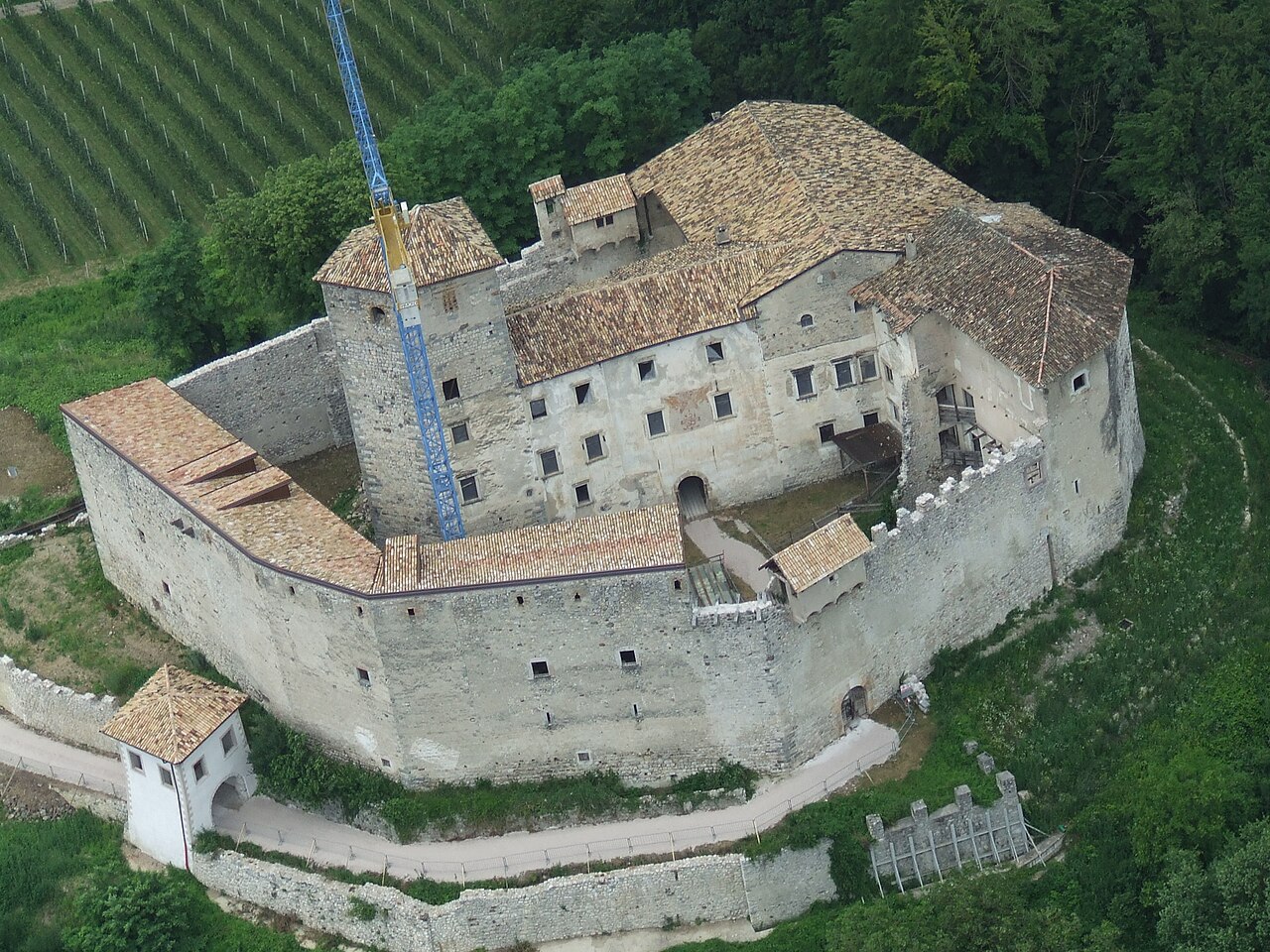
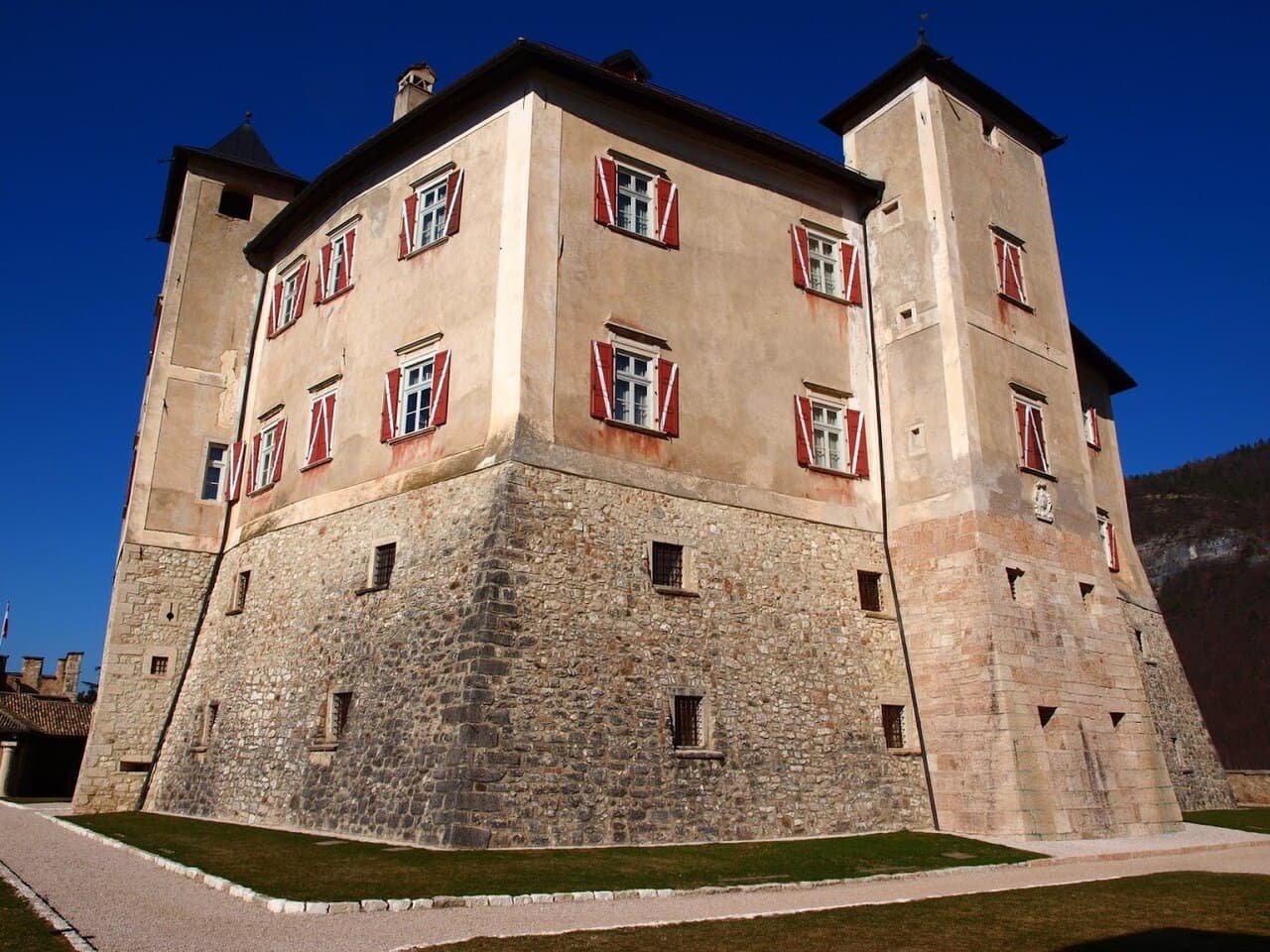
Castel Thun stands as a remarkable example of a high medieval hill castle that has evolved into a noble residence, nestled atop the Belvesino hill overlooking the scenic Val di Non in the Trentino-Alto Adige region of northern Italy. Built in the 13th century, this castle not only dominates the landscape with its imposing fortifications but also preserves an extensive collection of original furnishings, art, and historical artifacts that vividly illustrate the lifestyle of the rural nobility over several centuries.
Constructed initially as a strategic fortress, Castel Thun was the ancestral seat of the powerful Thun family, one of the oldest noble lineages in the region. The castle's location on a hill provided both natural defense and commanding views of the surrounding valley, which was crucial during the turbulent medieval period. Over time, the castle's military function gave way to residential and representational purposes, reflecting the changing needs and tastes of its aristocratic owners.
The castle's architecture reflects a blend of medieval fortification techniques and Renaissance residential styles, with significant modifications made during the 16th and 17th centuries. Among its most striking features is the Spanish Gate, constructed in 1566, which showcases a unique Moorish-inspired design, reportedly influenced by Giorgio Thun's travels in Spain. This gate, along with the castle's extensive system of lookout towers, bastions, moats, and defensive walls, underscores the castle's dual role as a fortress and noble residence.
Historical significance and ownership
First documented in records from 1267-1268 as Castel Belvesino, the castle became the principal stronghold of the Thun family, whose name evolved from the local Tono or Tonne to the Germanized Thun, reflecting the cultural integration within the region. The family expanded their influence across the Noce Valley through acquisition of additional properties and jurisdictional rights, establishing themselves as a dominant noble house without relying solely on military conquest.
Throughout its history, Castel Thun endured several fires and periods of damage, notably the tragic 1569 fire that claimed the life of Sigismondo Thun, a prominent imperial orator at the Council of Trent. Despite these setbacks, the family continuously restored and enhanced the castle, adapting it to contemporary architectural and residential standards.
The castle remained in the Thun family's possession until 1982, when the last owner, Count Zdenko Franz Thun Hohenstein, passed away. In 1992, the property was acquired by the Autonomous Province of Trento, which undertook an extensive restoration project lasting nearly two decades. Since 2010, Castel Thun has been open to the public as part of the Castello del Buonconsiglio museum network, contributing to regional cultural heritage and tourism.
Architectural features and layout
Castel Thun's layout follows a north-south axis, conforming to the natural shape of the hill. The castle retains the essential characteristics of a medieval fortress, including thick defensive walls, multiple towers, and a complex system of earthworks and bastions designed to withstand artillery attacks from the 16th century onwards. The southern and western bastions are particularly massive, reflecting adaptations to evolving military technology.
The Spanish Gate serves as the main entrance, distinguished by its ashlar masonry and Moorish stylistic elements. Access was historically controlled by a drawbridge over a moat, a typical defensive feature to deter invaders. The castle's fortifications were equipped to mount up to thirty cannons around 1600, indicating its strategic military importance even as it transitioned toward a residential function.
Interior and furnishings
The castle's interiors underwent significant transformation between 1792 and 1794, shifting from a purely defensive fortress to a more comfortable and elegant noble residence. The Bishop's Room (Stanza del Vescovo), dating from the 17th century, is among the most notable spaces, entirely paneled in Swiss pine wood, featuring a coffered ceiling and a tiled stove decorated with majolica tiles. This room exemplifies the blend of practicality and artistic refinement characteristic of the castle's later residential phase.
Original furnishings from the 16th century remain intact throughout the castle, alongside a precious collection of porcelain, silverware, glassware, and carriages that evoke the lifestyle of the rural nobility. The castle also houses an extensive library and a rich art gallery, which together provide a comprehensive cultural and historical narrative of the Thun family and the region.
Cultural role and modern significance
Today, Castel Thun is a vital cultural landmark within Trentino-Alto Adige, attracting visitors interested in medieval architecture, noble heritage, and regional history. The castle's preservation and public accessibility allow for educational opportunities and tourism development, contributing to the broader network of castles managed by the Province of Trento.
In 2011, the castle hosted the signing of the Euregio Tirolo-Alto Adige-Trentino foundation act, highlighting its ongoing symbolic importance as a site of regional cooperation and cultural identity among neighboring territories.
Visitors can explore the castle's extensive fortifications, richly decorated rooms, and historical collections, gaining insight into the evolution of aristocratic life from the high medieval period through the Renaissance and into the modern era. The castle's setting amidst the blooming apple orchards of Val di Non adds to its picturesque allure, especially in springtime.
Visitor information
- Opening hours: Typically open daily with seasonal variations; visitors should check current schedules before planning their visit.
- Ticket prices: Admission fees apply, with discounts for children, seniors, and groups.
- Accessibility: While the castle is situated on a hill, efforts have been made to accommodate visitors with limited mobility in certain areas.
- Nearby attractions: The castle is part of a network including Buonconsiglio Castle and other historic sites in Trentino.
Frequently asked questions (FAQ)
- What is the historical significance of Burg Thun?
- Burg Thun is a medieval castle that dates back to the 13th century, making it a vital part of the region's history. It served as a strategic fortification and residence for local nobility, reflecting the architectural styles and defensive needs of its time.
- When was Burg Thun built?
- Burg Thun was constructed in the late 1200s, around 1270, and has been well-preserved over the centuries. This makes it one of the oldest structures in the area, offering visitors a glimpse into medieval life.
- How do I get to Burg Thun?
- Burg Thun is located in Vigo di Ton, Italy, and can be accessed by car or public transport. The nearest train station is in nearby Malè, from where you can take a bus or taxi to reach the castle.
- What are the opening hours for Burg Thun?
- Burg Thun is typically open to visitors from April to October, with specific hours varying by season. It is advisable to check the official website for the most current opening times before planning your visit.
- Can I take a guided tour of Burg Thun?
- Yes, guided tours are available at Burg Thun, providing a deeper understanding of its history and architecture. These tours often include access to areas not open to the general public and are led by knowledgeable guides.
- Is it possible to visit Burg Thun with children?
- Absolutely! Burg Thun is family-friendly and offers a fascinating experience for children as well as adults. The castle's spacious grounds and engaging history make it an enjoyable outing for visitors of all ages.
- What are the ticket prices for visiting Burg Thun?
- Ticket prices for Burg Thun are quite reasonable, with discounts available for students and seniors. Children under a certain age may enter for free, making it an affordable family destination.
- When is the best time to visit Burg Thun?
- The best time to visit Burg Thun is during the spring and early autumn months when the weather is mild and pleasant. This allows visitors to fully enjoy the scenic surroundings and participate in outdoor activities.
- Are there any nearby attractions to Burg Thun?
- Yes, there are several nearby attractions including the picturesque town of Malè and the stunning Val di Non. Visitors can explore beautiful hiking trails and enjoy local cuisine, making it a great addition to your trip.
Photo gallery

Information
Website
Visit websiteSources & official resources
Verify the information above using these authoritative references.
Loading map...
Visitor reviews
No reviews yet. Been here? Write the first review and help other travelers!
Write the first reviewVisited this castle? Share your experience
Your review helps other travelers and adds first-hand knowledge to our encyclopedia.