Namdaemun
Namdaemun, also known as the Sungnyemun ("Honoring Propriety Gate"), is a significant historic monument located in the Jung District of Seoul, South Korea. Serving as the southern gate of the original Eight Gates of Seoul, it formed a crucial part of the Seoul City Wall that marked the boundaries of the capital during the Joseon dynasty. This gate stands as a testament to Korea's late medieval fortification architecture and urban planning traditions.
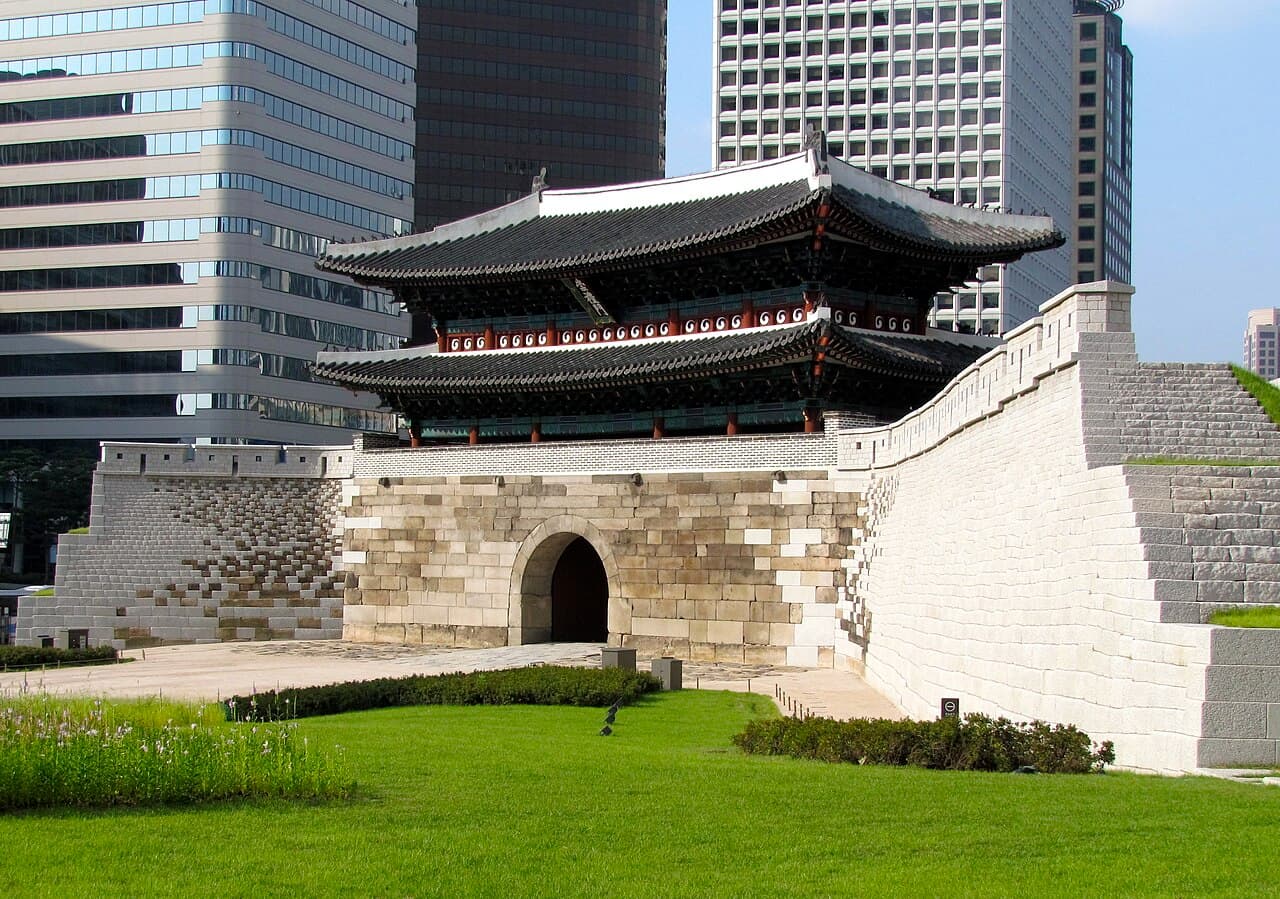
Constructed in 1398, the final year of King Taejo's reign, Namdaemun is one of the oldest surviving wooden structures in Seoul. Its architectural form follows a traditional pagoda-style gateway, characterized by a two-tiered wooden pavilion atop a massive stone base. The gate was rebuilt in 1447 after damage, reaffirming its role as a defensive and ceremonial entrance.
Architectural features and design
The structure combines a robust stone fortress base with an elegant wooden superstructure. The stone walls are thick and tall, designed to withstand sieges and protect the city. Rising above is the wooden pavilion with gracefully curved eaves, intricately painted brackets, and tiled roofs typical of Joseon-era architecture. The gate's defensive features include bastioned elements integrated into its design, enabling defenders to protect the entrance effectively.
The gate originally formed part of a larger stone circuit wall around Seoul, which extended approximately 18.2 kilometers (11.3 miles) and stood up to 6.1 meters (20 feet) high. Namdaemun was one of the three major gateways through this wall, controlling access to the city and serving as a symbol of royal authority and protection.
Historical significance and events
Namdaemun has witnessed centuries of Korean history, including invasions, political changes, and urban development. It was designated as South Korea's first National Treasure, reflecting its cultural and historical importance. The gate's location next to the bustling Namdaemun Market, one of Seoul's oldest and largest markets, highlights its continuing relevance as a cultural landmark.
In 2008, the gate suffered severe damage due to an arson attack that destroyed much of the wooden pavilion. This event sparked a nationwide effort to restore the monument faithfully. Restoration work began in February 2010 and was completed by April 2013. The gate was officially reopened to the public on 4 May 2013, restored to its historical appearance using traditional materials and techniques.
Preservation and current status
Today, Namdaemun is recognized as a well-preserved cultural heritage site, maintained by the South Korean government. Its restoration involved meticulous craftsmanship to replicate original construction methods. The gate remains a prominent tourist attraction and a symbol of Seoul's historical identity.
Visitors can explore the area around Namdaemun, including the vibrant market and nearby landmarks such as Seoul Plaza and Seoul Station. The gate's location in the heart of the city makes it accessible and a focal point for those interested in Korean history and architecture.
Namdaemun in the context of Korean fortifications
As a bastioned fortress gate, Namdaemun exemplifies the defensive strategies of the late medieval period in Korea. Its combination of stone fortifications and wooden structures reflects a blend of military functionality and aesthetic principles. The gate's role was not only defensive but also ceremonial, marking the transition from the outer city to the royal capital.
The Seoul City Wall, of which Namdaemun is a part, was a comprehensive fortification system protecting the city from external threats. The wall and gates were integral to controlling movement, trade, and security during the Joseon dynasty, illustrating the importance of urban defense in Korean history.
Frequently asked questions (FAQ)
- When was Namdaemun originally built?
- Namdaemun was originally constructed in 1398, during the final year of King Taejo of Joseon's reign.
- What architectural style characterizes Namdaemun?
- Namdaemun features a traditional late medieval Korean pagoda-style gateway with a stone base and wooden pavilion, typical of Joseon dynasty architecture.
- What happened to Namdaemun in 2008?
- In 2008, Namdaemun suffered severe damage from an arson attack that destroyed much of its wooden pavilion.
- Is Namdaemun open to visitors today?
- Yes, after restoration completed in 2013, Namdaemun is open to the public and serves as a cultural heritage site and tourist attraction.
- Where is Namdaemun located within Seoul?
- Namdaemun is located in the Jung District of Seoul, between Seoul Station and Seoul Plaza, adjacent to the Namdaemun Market.
- What is the significance of Namdaemun in Seoul's city defenses?
- Namdaemun was one of the major gates in the Seoul City Wall, serving both defensive and ceremonial roles during the Joseon period.
Photo gallery

Information
Address
Jung District, Seoul, South Korea
Loading map...
Visitor reviews
No reviews yet. Been here? Write the first review and help other travelers!
Write the first reviewVisited this castle? Share your experience
Your review helps other travelers and adds first-hand knowledge to our encyclopedia.