
Nagashino Castle
Nagashino Castle stands as a significant historical site located in Shinshiro, Japan, known primarily for its pivotal role in the Battle of Nagashino in 1575. Constructed in 1508 by Suganuma Motonari, the castle was strategically positioned at the confluence of the Ure River and Kansa River. These natural barriers provided formidable defense advantages, characteristic of many lowland castles built during Japan's turbulent Sengoku period.
The castle's early history is intertwined with the fortunes of the Suganuma clan, who were retainers of the powerful Takeda clan. However, control of Nagashino Castle shifted to forces loyal to the Tokugawa clan, reflecting the complex and shifting allegiances of the era. The castle's most renowned moment came during the Battle of Nagashino, when the castle was under the lordship of Okudaira Sadamasa. In 1575, the castle was besieged by the forces of Takeda Katsuyori, a key figure in the period's military conflicts.
The battle that changed Japanese warfare
The Battle of Nagashino is celebrated as a turning point in Japanese military history, marking the first large-scale use of firearms in battle. The allied forces of Oda Nobunaga and Tokugawa Ieyasu came to the castle's defense, employing innovative tactics that would revolutionize warfare in Japan. Notably, Oda's troops constructed multiple wooden stockades to protect their arquebusiers from the famed Takeda cavalry charges. These stockades effectively blunted the cavalry's impact, allowing the gunners to fire in rotating volleys, maintaining a continuous barrage that devastated the attacking forces.
This battle demonstrated the tactical advantage of firearms when properly integrated into battlefield strategy, signaling a move away from traditional hand-to-hand combat dominated by swords and spears. The success of these tactics at Nagashino influenced subsequent military engagements and the broader course of Japanese warfare during the late medieval and renaissance periods.
Architectural features and strategic location
While Nagashino Castle was a lowland castle, its location at the meeting point of two rivers was a deliberate choice to maximize natural defenses. The rivers served as natural moats, complicating direct assaults and channeling enemy movements. The castle's fortifications would have included typical Sengoku period features such as earthen walls, wooden palisades, and possibly watchtowers to oversee the surrounding terrain.
Unfortunately, the physical remains of the castle are limited today. Only a few remnants of the original structures survive, primarily earthworks and foundations. Despite the scarcity of ruins, the site retains significant cultural value due to its historical importance.
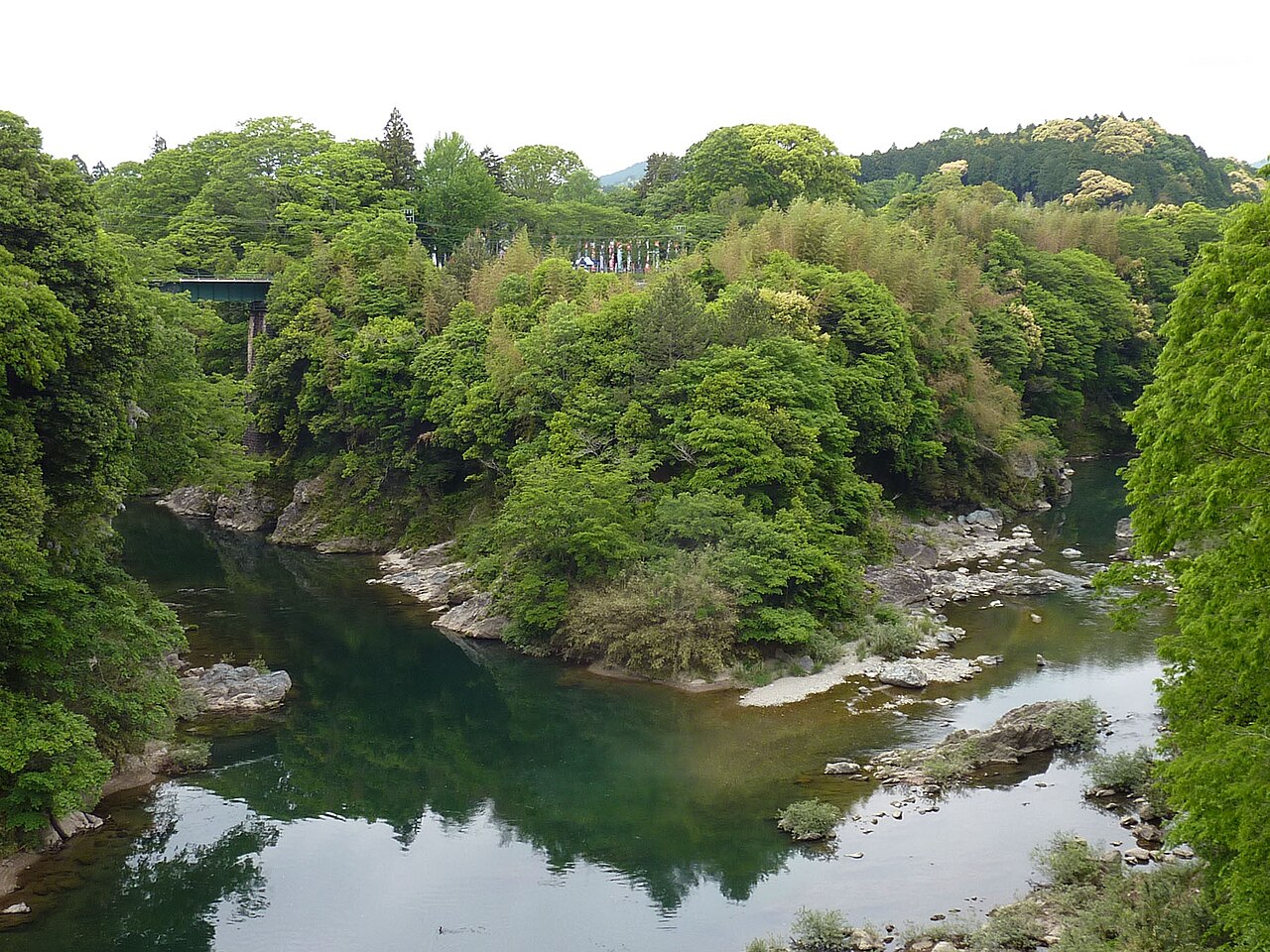
Photo by First version: Aboshi at Japanese Wikipedia Second version: Mocchy at Japanese Wikipedia • CC BY-SA 3.0
Present-day site and visitor experience
Visitors to Nagashino Castle ruins can explore a small museum that houses numerous artifacts recovered from the castle grounds and the battle site. The museum provides valuable context about the castle's history, the battle, and the samurai culture of the era.
There is also a historical walking trail around the town of Shinshiro, marked by signs indicating locations of former samurai residences, gates, and sections of the castle. While the trail offers insight into the castle's layout and the lifestyle of its inhabitants, much of the experience involves interpreting these markers in a modern residential setting rather than viewing extensive original structures.
The castle ruins are accessible to visitors traveling between other regional attractions, such as Takane Castle and Toyohashi. Although the remains are modest, the site holds a special place in Japanese history as the location of a battle that heralded the modernization of warfare in Japan.
Historical significance and legacy
Nagashino Castle is remembered less for its architectural grandeur and more for its role as the stage for a transformative military engagement. The Battle of Nagashino is often cited by historians as the first example of effective combined arms tactics in Japan, integrating firearms with traditional forces to overcome a formidable cavalry opponent.
This battle influenced the strategic thinking of future daimyo and contributed to the eventual unification of Japan under the Tokugawa shogunate. The castle's legacy endures in military history and cultural memory, symbolizing the shift from medieval to early modern warfare in Japan.
Preservation challenges
The limited preservation of Nagashino Castle is partly due to the passage of time and the nature of its construction materials, which were primarily wood and earth. Unlike stone castles found in other regions, these materials have not withstood centuries of weathering and redevelopment.
Efforts to maintain the site focus on archaeological research, museum curation, and public education rather than structural restoration. This approach helps preserve the historical narrative and artifacts while acknowledging the physical site's fragile state.
Frequently asked questions (FAQ)
- How do I get to Nagashino Castle?
- Nagashino Castle is located in Shinshiro, Japan, and can be accessed by public transportation. The nearest station is JR Nagashino Station, from where you can take a bus or taxi to the castle site. If you are driving, there are parking facilities available nearby.
- What is the historical significance of Nagashino Castle?
- Nagashino Castle is renowned for its role in the historic Battle of Nagashino in 1575, where the forces of Tokugawa Ieyasu and Takeda Katsuyori clashed. The battle is famous for the innovative use of firearms by Ieyasu's troops, which changed the course of Japanese warfare. The castle itself serves as a reminder of Japan's feudal past and military strategies.
- When was Nagashino Castle built?
- Nagashino Castle was constructed in 1540 by the Matsudaira clan. It served as a strategic military base during the Sengoku period, reflecting the architectural styles of the time. The castle has undergone several renovations throughout its history, preserving its significance as a historical landmark.
- Can I enter Nagashino Castle?
- Yes, visitors can enter the castle grounds and explore the historical site. The castle features informative displays and scenic views of the surrounding area. However, certain sections may be restricted to preserve the site, so be sure to check for any updates before your visit.
- Why is Nagashino Castle a popular tourist destination?
- Nagashino Castle attracts visitors for its rich history and beautiful setting. The castle's association with the famous Battle of Nagashino draws history enthusiasts, while its picturesque surroundings appeal to nature lovers. Additionally, the site hosts various cultural events and reenactments throughout the year.
- Is it possible to visit Nagashino Castle year-round?
- Yes, Nagashino Castle is open to visitors throughout the year, although specific opening hours may vary by season. It’s advisable to check the official website for the most accurate information regarding seasonal events and accessibility. Visiting in spring or autumn can offer a particularly stunning backdrop due to blooming cherry blossoms or vibrant fall foliage.
- What are the opening hours for Nagashino Castle?
- Nagashino Castle typically opens at 9:00 AM and closes at 5:00 PM, but these hours can change based on the season and special events. It’s recommended to verify the current hours on the official website or at the visitor center before planning your trip. Arriving early can help you avoid crowds and enhance your experience.
- Are there any nearby attractions to Nagashino Castle?
- Yes, there are several attractions near Nagashino Castle, including the Nagashino Castle Museum, which provides deeper insights into the castle's history. The beautiful Aichiken Shinshiro Nature Park is also nearby, offering hiking trails and outdoor activities. Exploring these nearby sites can enrich your visit to the area.
- What are the ticket prices for Nagashino Castle?
- Admission to Nagashino Castle is relatively affordable, typically costing around 500 yen for adults. Discounts may be available for children and seniors, making it accessible for families. Always check for any special promotions or group rates before your visit to maximize your experience.
Photo gallery

Photo by First version: Aboshi at Japanese Wikipedia Second version: Mocchy at Japanese Wikipedia•CC BY-SA 3.0
Information
Website
Visit websiteSources & official resources
Verify the information above using these authoritative references.
Loading map...
Visitor reviews
No reviews yet. Been here? Write the first review and help other travelers!
Write the first reviewVisited this castle? Share your experience
Your review helps other travelers and adds first-hand knowledge to our encyclopedia.