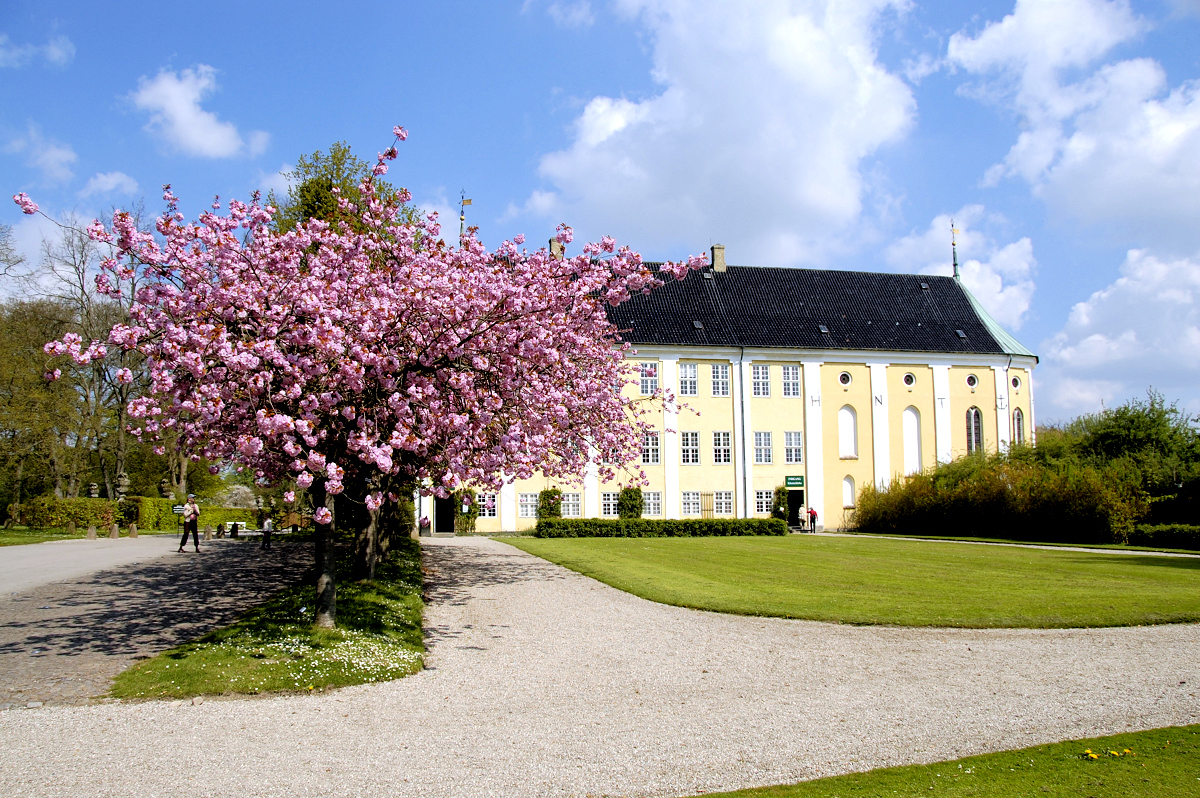
Næsbyholm Castle

Næsbyholm Castle: Renaissance heritage in Glumsø, Denmark
Glumsø, Denmark
Renaissance (15th–17th c.)
Restored

Næsbyholm Castle is a historic estate located near Glumsø, Denmark, with its origins dating back to at least 1388. The estate's history reflects the evolution of Danish noble residences through the centuries, culminating in the construction of a significant Renaissance castle in the late 16th century. The castle as it stands today is a testament to resilience and restoration following devastating fires in the 20th century.

The origins and early history of Næsbyholm

The earliest recorded mention of Næsbyholm occurs in 1388, placing it firmly within the medieval period of Danish history. While the original medieval structures have not survived, the estate was an important noble seat. In the late 16th century, the estate underwent a major transformation under the direction of Sten Brahe, a notable Danish nobleman. In 1585, Brahe commissioned the construction of a grand Renaissance castle that reflected the architectural styles and defensive needs of the period.

Architectural features of the Renaissance castle

The Renaissance castle built by Sten Brahe was characterized by typical features of the period, including symmetrical layouts, ornamental gables, and robust stone masonry. The design likely incorporated defensive elements such as thick walls and possibly moats, common in Danish castles of the era, although detailed records of the original structure are limited. The castle would have served both as a noble residence and a symbol of power and prestige in the region.

20th-century fires and rebuilding efforts

Tragically, the original Renaissance castle was destroyed by fire in 1932. This loss was significant given the castle's architectural and historical value. A new main building was constructed on the site to replace the burnt structure, aiming to preserve the estate's function and heritage. However, this replacement building suffered partial destruction in another fire in 1947.

The current building was subsequently rebuilt in a style faithful to the original Renaissance design, maintaining the historical character of the estate. The reconstruction efforts reflect a dedication to preserving Denmark's architectural heritage, blending historical accuracy with modern construction techniques.

Modern use and cultural significance

Today, Næsbyholm Castle operates primarily as a venue for weddings and events, opening its historic ambiance to the public. While it no longer functions as a noble residence, the castle remains an important cultural landmark in the Region Zealand area. Its Renaissance architecture and storied past attract visitors interested in Danish history, architecture, and heritage.

Location and accessibility

Situated near the town of Glumsø in Region Zealand, Næsbyholm Castle is accessible to visitors and event guests. The estate's setting in the Danish countryside adds to its appeal, offering picturesque landscapes typical of Zealand's rural areas.

Frequently asked questions (FAQ)

How do I get to Næsbyholm Castle?
Næsbyholm Castle is located in Glumsø, Denmark, and can be easily accessed by car or public transportation. If you're driving, there is parking available near the castle. Public transport options include trains and buses that connect to Glumsø, followed by a short walk to the castle.
What is the historical significance of Næsbyholm Castle?
Næsbyholm Castle dates back to the 15th century and has a rich history tied to Danish nobility. It originally served as a defense structure and later transformed into a residence, reflecting various architectural styles over the centuries. The castle is a key part of Denmark's cultural heritage and showcases the evolution of Danish architecture.
When was Næsbyholm Castle built?
Næsbyholm Castle was built in the late 15th century, with its construction attributed to the noble family of the time. Over the years, the castle has undergone several renovations and expansions, enhancing its architectural features. Today, it stands as a testament to the historical significance of Denmark's royal past.
Can I visit Næsbyholm Castle?
Yes, Næsbyholm Castle is open to visitors, but it is advisable to check the official website for current visiting hours and any special events. Guided tours may be available, offering insights into the castle's history and architecture. Be sure to book in advance during peak tourist seasons.
Why is Næsbyholm Castle important to Danish culture?
Næsbyholm Castle is important due to its historical connections with Danish nobility and its architectural significance. It serves as a cultural landmark that attracts visitors interested in Denmark's rich history. The castle also houses art and artifacts that tell the story of its past and the families who resided there.
Is it possible to host events at Næsbyholm Castle?
Yes, Næsbyholm Castle offers facilities for hosting events such as weddings, corporate meetings, and private gatherings. The picturesque surroundings and historic ambiance make it a unique venue. It is recommended to contact the castle management for details on event planning and availability.
What are the opening hours for Næsbyholm Castle?
The opening hours for Næsbyholm Castle vary by season, so it is best to check the official website for the latest information. Generally, the castle is open from late spring to early autumn, with specific hours for guided tours. During the off-season, accessibility may be limited.
What are the ticket prices for visiting Næsbyholm Castle?
Ticket prices for Næsbyholm Castle vary depending on age and whether you are part of a guided tour. Discounts may be available for children, seniors, and groups. For the most accurate pricing, please visit the official website prior to your visit.
What nearby attractions can I visit while at Næsbyholm Castle?
While visiting Næsbyholm Castle, you can explore the beautiful surrounding countryside and nearby Glumsø Lake for scenic views and outdoor activities. The town of Glumsø also offers charming shops and restaurants to enjoy. Additionally, other historical sites in the region can enhance your cultural experience.

Information

Lowland Castle

Sources & official resources

Verify the information above using these authoritative references.

Loading map...

Visitor reviews

No reviews yet. Been here? Write the first review and help other travelers!

Write the first review

Visited this castle? Share your experience

Your review helps other travelers and adds first-hand knowledge to our encyclopedia.
Write a review

(5/5)

0/2000 characters

Your review will be visible after admin approval

Nearby castles

15.3 km
Antvorskov — Denmark castle

Antvorskov

Slagelse, Denmark

Antvorskov monastery, located near the town of Slagelse on the island of Zealand, Denmark, was a significant medieval religious and military complex. Founded in the late 12th century, it served as the principal Scandinavian headquarters of the Knights Hospitaller, also known as the Order of Saint John of Jerusalem. This order was a Catholic military and hospitaller organization dedicated to caring for the sick and defending Christendom. Antvorskov’s establishment around 1165–1170 followed a land grant by King Valdemar the Great, marking the start of a major religious institution with a hospital, monastery, and church complex. The monastery quickly grew in prominence, becoming one of the largest landowners in Denmark by the 13th and 14th centuries through donations from nobility seeking spiritual favor. The prior of Antvorskov held considerable political influence, often sitting on the Danish Council of the Realm (Rigsrådet). Notable priors such as Henrik of Hohenscheid and Jep Mortensen contributed to the monastery’s religious and architectural development. Mortensen, in particular, led a major rebuilding phase in the late 15th century, adding a chapel and other structures to the complex. Medieval religious and architectural complex The original monastery was constructed primarily using medieval brick known locally as munkesten, typical of 12th-century Danish ecclesiastical buildings. The complex included the monastery living quarters, a church with an adjoining chapel, and a hospital dedicated to caring for pilgrims and those afflicted with diseases such as leprosy. The layout reflected the dual religious and hospitaller mission of the Knights Hospitaller, combining spiritual functions with medical care facilities. Architectural modifications continued over the centuries, culminating in the late 15th century with the addition of a new chapel by Jep Mortensen. This period saw the expansion of the complex to accommodate the growing religious community and its needs. The church itself was a central feature, with a tower that was later enhanced with a tall spire by 1584, reflecting its transformation into a royal castle under King Frederik II. Transition to royal castle and decline The Reformation in Denmark brought significant changes to Antvorskov. The Catholic monastery was dissolved, and its revenues were taken over by the Danish crown. In 1580, King Frederik II appointed Peder Reedtz as the secular administrator, converting the former monastic complex into a royal residence known as Antvorskov Castle. Frederik II spent his final years at the castle, dying there in 1588. Following Frederik II’s death, the castle’s importance waned. King Christian IV used it only occasionally, and the site suffered damage during the mid-17th-century Swedish wars. The abbey church was closed in 1684, and parish activities were moved to St. Peter’s Church in Slagelse. In the early 18th century, the estate briefly became a countship under Elisabeth Helene von Vieregg but later reverted to royal ownership. Between 1717 and 1763, the castle served as a cavalry district, housing soldiers, and the church reopened for worship in 1722. Ruin and archaeological preservation By the late 18th century, the monastery church was dismantled, and its building materials were reused in nearby manor houses. The remaining monastic buildings deteriorated and were demolished by 1816 due to their ruinous state. Excavations conducted in 1887–1888 uncovered substantial remains of the original monastery, including some of the earliest 12th-century brickwork. Today, the ruins of Antvorskov are preserved and exhibited by the National Museum in Slagelse. These archaeological remains reveal the layout and scale of a major medieval monastic complex, illustrating the architectural techniques and religious functions of the Knights Hospitaller in Scandinavia. The site continues to attract interest for its historical significance and connection to Danish medieval and early modern history. Historical significance and legacy Antvorskov monastery was not only a religious center but also a political institution. Its priors were influential figures in Danish governance until the Reformation. The site’s transformation into a royal castle reflects the shifting religious and political landscape of Denmark in the 16th century. The legacy of Antvorskov endures through its archaeological remains and the historical records documenting its role as a key Scandinavian outpost of the Knights Hospitaller. The ruins also inspired cultural figures such as Hans Christian Andersen, who mentioned the site in his writings, highlighting its place in Denmark’s romantic historical imagination during the 19th century.

High Medieval (11th–13th c.)
Details
19.2 km

Holsteinborg Castle

Rude, Denmark

Holsteinborg Castle is a significant Renaissance castle located in Rude, Denmark. Constructed between 1598 and 1651 by the noble Trolle family, the castle stands as a well-preserved example of Danish Renaissance architecture. Since 1707, it has been owned by the Holstein family, who have played a pivotal role in the estate's development and cultural history. Architectural features and construction history The construction of Holsteinborg Castle spanned over five decades, reflecting the evolving architectural styles and needs of its owners. The castle's design is characterized by its robust brickwork, steeply pitched roofs, and ornate gables typical of the Danish Renaissance style. The estate includes a main building surrounded by a moat, defensive walls, and several ancillary structures such as stables and farm buildings, which together form a self-sufficient manor complex. The castle's layout is rectangular, featuring a central courtyard that was common in Renaissance manor houses, allowing for both defense and domestic functionality. The interiors retain period features including wood-paneled halls, grand fireplaces, and original staircases, which highlight the craftsmanship of the era. Historical significance and cultural contributions Holsteinborg Castle is notable not only for its architecture but also for its role in Danish social history. After the Holstein family acquired the estate, Ulrich Adolph Holstein, the first count, initiated progressive social reforms around 1710. He established ten village schools on the estate, promoting education in rural Denmark at a time when it was not widely accessible. The castle also holds a place in Danish cultural history as the site where the first Christmas tree in Denmark was lit in 1808. This tradition spread throughout the country and remains an integral part of Danish holiday celebrations. Additionally, Holsteinborg was the location of Northern Europe's first savings bank, opened in 1810, and Denmark's first health insurance scheme in 1811, marking the estate as a center of early social welfare innovations. Between 1810 and 1825, the estate expanded its educational outreach by building fourteen schools and twelve handicraft schools, further cementing its role in community development and vocational training. Connection to hans christian andersen Hans Christian Andersen, the famed Danish author, visited Holsteinborg Castle frequently. The castle and its surroundings inspired many of his works, including fairytales, poems, and travel accounts. Andersen's relationship with the Holstein family and his stays at the castle provided a creative environment that influenced his literary output during the 19th century. Present day status and visitor information Today, Holsteinborg Castle remains a well-preserved Renaissance estate, still owned by the Holstein family. The castle's historical significance and architectural integrity make it an important cultural landmark in Denmark. Visitors to the castle can explore its exterior architecture and the surrounding estate, although access to the interior may be limited as it remains a private residence. The estate's location in the Region Zealand places it within reach of other notable Danish castles and cultural sites, making it a valuable destination for those interested in Denmark's aristocratic history and Renaissance architecture. Educational and social legacy The legacy of Holsteinborg Castle extends beyond its physical structure. The early establishment of schools and social institutions on the estate reflects a commitment to community welfare and education uncommon for its time. This pioneering spirit contributed to the development of rural education and social services in Denmark, influencing broader national policies in the centuries that followed. Holsteinborg's role in initiating Denmark's first savings bank and health insurance system highlights the estate's importance as a hub of innovation in social finance and healthcare, predating many modern systems.

Renaissance (15th–17th c.)
Details
21.5 km
Gavnø Castle — Denmark castle

Gavnø Castle

Næstved, Denmark

Gavnø Castle stands as a significant historical and architectural landmark near Næstved, Denmark. Its origins trace back to the early 13th century, with the first known mention in King Valdemar's census book of 1231, where a 'house on Gavnø' is recorded. This early structure functioned as a defensive hill castle guarding Denmark’s western coasts. Over the centuries, the castle evolved from a medieval stronghold into a refined aristocratic residence, reflecting changes in architectural style and usage.The medieval origins and religious significanceDuring the 15th century, Queen Margaret I established St Agnes' Priory at Gavnø, transforming part of the castle into a religious institution for nuns from noble families. The priory's chapel, located in the castle’s southern wing, remains a prominent feature, though it has been extended and altered over time. This religious chapter in Gavnø’s history adds a layer of cultural importance, illustrating the castle’s dual role as both a fortress and a spiritual center.Architectural features of the chapelThe chapel retains elements of its original medieval design, with later additions that harmonize with the castle's evolving style. It is an example of how ecclesiastical architecture was integrated into a noble residence, preserving sacred spaces while accommodating the needs of the aristocracy.Transformation under Count Otto Thott in the 18th centuryThe most significant transformation of Gavnø Castle occurred after Count Otto Thott acquired the estate in 1737. Thott undertook extensive renovations and expansions, reshaping the castle into a three-winged building characterized by its distinctive yellow facade and Rococo architectural style. This style is marked by elegant ornamentation, curved forms, and a light, decorative aesthetic that contrasts with the castle’s medieval origins.The Rococo style and its impactThe Rococo renovation introduced refined decorative details, symmetrical layouts, and a more comfortable residential atmosphere. The castle’s design from this period reflects the tastes of the Danish aristocracy during the post-Renaissance era, emphasizing beauty and sophistication over military defense.Count Otto Thott’s collections and cultural legacyCount Thott was a passionate collector, and Gavnø Castle became a repository for his vast assemblage of paintings, manuscripts, and books. At the time of his death, his library contained over 120,000 volumes, surpassing even the holdings of the Danish National Library. This remarkable collection highlights Gavnø’s role not only as a noble residence but also as a center of knowledge and culture.The library and its significanceThe extensive library housed rare and valuable works, reflecting the intellectual interests of the Enlightenment period. Although the collection has since been dispersed, its legacy endures as a testament to the castle’s cultural importance.The castle grounds and gardensSurrounding Gavnø Castle is a park renowned for its rare trees, rose garden, and extensive bulb displays. The gardens contribute to the estate’s charm and provide a scenic setting that complements the castle’s architectural elegance. The landscaping reflects 18th-century garden design trends, emphasizing both aesthetic appeal and botanical variety.Botanical highlightsThe park is especially noted for its collection of rare trees, which attract botanists and garden enthusiasts. The rose garden offers seasonal color and fragrance, while the bulb displays create vibrant springtime spectacles, making Gavnø a destination for visitors interested in horticulture as well as history.Preservation and current statusToday, Gavnø Castle remains a well-preserved example of a post-Renaissance hill castle with Rococo style enhancements. It continues to draw visitors for its architectural beauty, historical significance, and cultural heritage. The castle's preservation allows for public appreciation of its layered history, from medieval fortification to aristocratic residence and cultural hub.

Post-Renaissance (17th–18th c.)
Details