Naarden Fortress
Naarden Fortress is a striking example of a Renaissance star fort located in the historic town of Naarden, in the Netherlands. Built primarily in the 17th century, it represents one of the best-preserved fortified towns in Europe, showcasing the evolution of military architecture from the late 16th century through the 19th century. Its fortifications reflect the strategic importance of Naarden, situated between the sea and the marshes of the river Vecht, controlling access routes and protecting the region from invasions.
The original fortifications date from the 1570s, but these were significantly modernized after the invasion by Louis XIV of France in 1672, during the Franco-Dutch War. The updates transformed Naarden into a modern star fort, a hallmark of Renaissance military engineering, characterized by angular bastions, curtain walls, and extensive defensive ditches. These features allowed defenders to cover all approaches with overlapping fields of fire, eliminating blind spots common in medieval castles.
Renaissance star fort design and layout
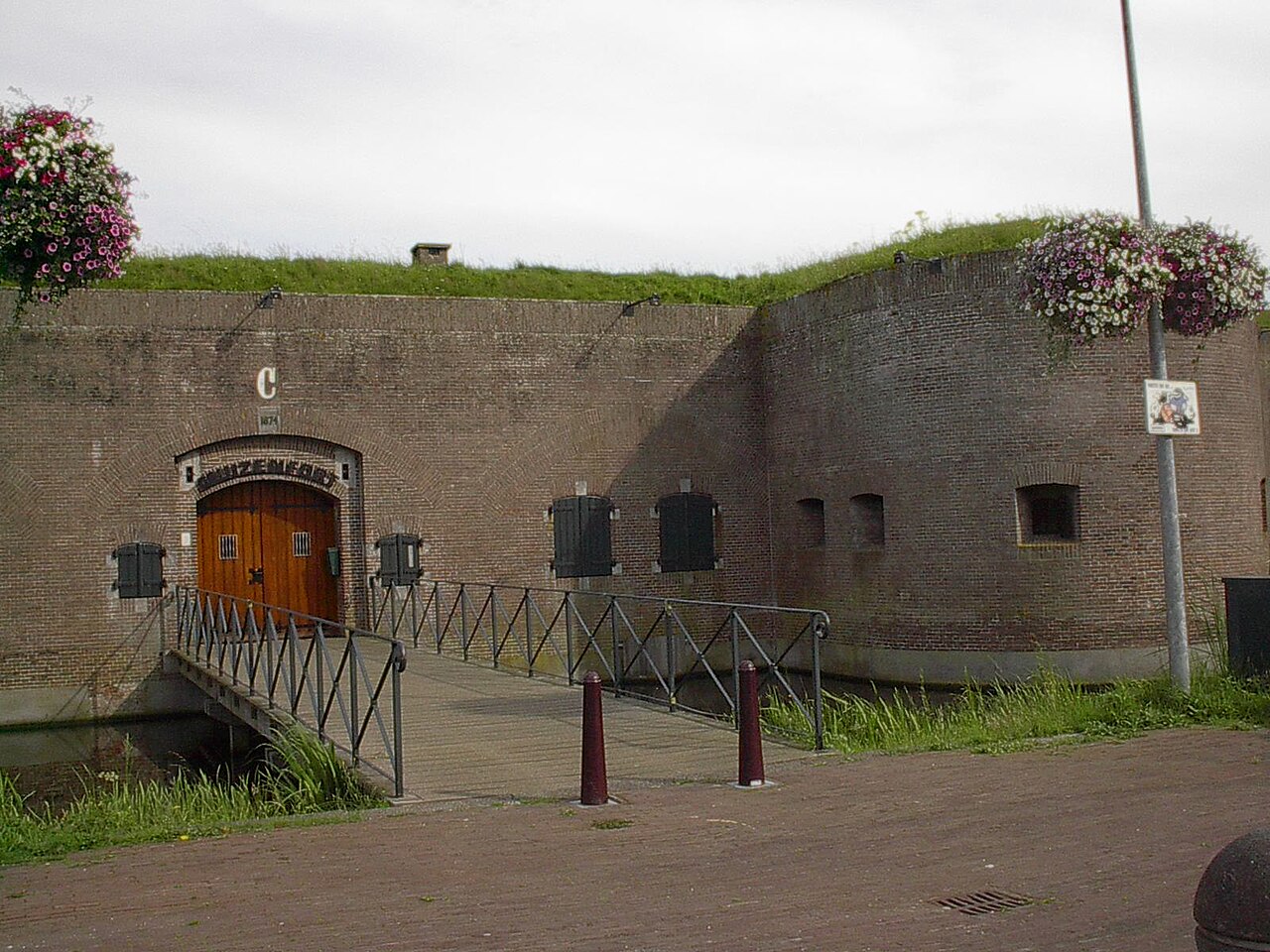
The fortress is designed as a classic star fort with arrow-headed bastions connected by curtain walls. The lower sections of the walls are constructed from brick, a common material in Dutch fortifications, providing both strength and resilience against artillery fire. The bastions have two levels of flanks: an upper level at the bastion's summit and a lower level just above the waterline, allowing defenders to engage enemies at multiple heights.
Access to the lower flank is provided by tunnels from the street behind the bastion, leading to five casemates built into the faces of the bastions and a powder magazine. These casemates served as protected firing positions and storage for munitions. A tunnel from the lower flank leads to a small pier, facilitating the resupply of the fortress by boat. Adjacent to the last casemate is the unique listening tunnel, a long passage along the bastion face with roof holes, enabling guards to detect enemy movements on the water silently.
Fortifications facing sea and land
The fortress's defenses are divided into two main sectors: the seaward and landward fortifications. The landward side features the prominent arrow-headed bastions and curtain walls described above, while the seaward defenses include a large bastion housing the arsenal (now repurposed as a furniture showroom) and a sluice gate. This sluice was vital for controlling water levels and protecting the harbor, allowing ships to enter the town from the sea safely.
Two batardeaux—water barriers—were constructed across the ditch to connect the sea dam with the town walls, enhancing the fortress's water defenses. Surrounding the entire town is a covered way with a second defensive ditch in front, providing an additional layer of protection and a patrol path for soldiers.
19th-century upgrades and military use
During the 19th century, Naarden Fortress underwent significant upgrades to adapt to advances in artillery technology. Many new bomb shelters and army-related buildings, such as barracks, were constructed within the fortifications. The emphasis of defense shifted from the inner walls to the outer circuit, particularly the covered way, to counter the increased range and firepower of modern artillery.
The extensive network of bomb shelters built in the 1890s remains largely intact, offering a visible record of the evolution in military fortification strategies. However, by the end of the 19th century, the fortress's defensive value diminished due to changing warfare tactics and technology.
Gates and access points
Originally, Naarden had two main gates: the Amsterdam gate and the Utrecht gate. Both original gates have been demolished. The current Utrecht gate dates from the 19th century, while the Amsterdam gate no longer exists. In the 20th century, a third entrance was created to improve access to the town.
Transition to a historic monument and museum
After World War I, the military importance of Naarden Fortress declined, leading to the withdrawal of the army. The fortress was preserved as a monument, safeguarding it from demolition. Today, visitors can freely explore the fortress, including the covered way, which provides an excellent walking path around the fortifications.
One of the bastions houses a dedicated museum that offers detailed information about the fortress's history and architecture. The museum grants access to the extensive network of tunnels and casemates, making it an essential stop for those wishing to understand Naarden's military heritage fully.
Architectural significance and preservation
Naarden Fortress is an outstanding example of Renaissance military architecture adapted over centuries to meet changing defense needs. Its preservation allows for the study of fortification techniques from the 16th to the 19th centuries, including the transition from medieval walls to star forts designed to withstand artillery bombardment.
The fortress's condition is well preserved, with many original structures intact, including walls, bastions, tunnels, and bomb shelters. This preservation provides valuable insight into the military engineering and urban planning of fortified towns in the Netherlands and Europe.
Unique features of Naarden Fortress
- The listening tunnel, a rare defensive innovation allowing guards to detect enemy movements underwater.
- The integration of water management in defense through sluice gates and batardeaux.
- The extensive network of casemates and bomb shelters illustrating the evolution of fortification design.
Naarden Fortress remains a vital cultural heritage site, attracting visitors interested in military history, architecture, and Dutch history. Its accessible layout and informative museum make it a prime destination for educational tourism and historical studies.
Frequently asked questions (FAQ)
- What is the historical significance of Naarden Fortress?
- Naarden Fortress is a star-shaped fortification built in the 17th century, showcasing advanced military architecture of its time. It played a crucial role in the defense against invasions, particularly during the Eighty Years' War. Today, it stands as a testament to the Netherlands' rich military history and is recognized as a national monument.
- When was Naarden Fortress constructed?
- Construction of Naarden Fortress began in 1600 and was completed in 1680. It was designed by the famous military architect Pieter Post as part of a larger defense system for the region. The fortress has been well-preserved, allowing visitors to appreciate its historical architecture.
- Can I visit Naarden Fortress year-round?
- Yes, Naarden Fortress is open to visitors throughout the year, although specific areas may have limited access during winter months. It is advisable to check the official website for any seasonal events or closures before planning your visit. Guided tours are available, offering insights into the fortress's history and architecture.
- What are the opening hours for Naarden Fortress?
- Naarden Fortress typically opens at 10 AM and closes at 5 PM, but these hours may vary depending on the season. During holidays or special events, the fortress may have extended hours. Always check the official site for the most current information before your visit.
- Is Naarden Fortress accessible for visitors with disabilities?
- Yes, Naarden Fortress strives to be accessible to all visitors. There are pathways and facilities designed to accommodate those with mobility challenges, though some historical areas may have limitations due to their original architecture. It's best to contact the fortress in advance for specific accessibility inquiries.
- What is the best time to visit Naarden Fortress?
- The best time to visit Naarden Fortress is during the spring and early autumn months when the weather is mild and pleasant. This is also when the surrounding nature is at its most beautiful, enhancing your experience. Additionally, visiting during weekdays may help avoid larger crowds.
- Are there any nearby attractions to explore after visiting Naarden Fortress?
- Yes, after exploring Naarden Fortress, visitors can enjoy nearby attractions such as the Naarden Museum, which offers insights into the local history and culture. The beautiful lakes and parks surrounding the fortress also provide excellent opportunities for a leisurely walk or picnic. Don't miss the charming town of Naarden with its historic buildings and cafes.
- What are the ticket prices for Naarden Fortress?
- Ticket prices for Naarden Fortress are generally affordable, with discounts available for children, students, and seniors. Entry fees contribute to the maintenance and preservation of this historic site. It's recommended to check the official website for the latest pricing and any special offers.
Information
Loading map...
Visitor reviews
No reviews yet. Been here? Write the first review and help other travelers!
Write the first reviewVisited this castle? Share your experience
Your review helps other travelers and adds first-hand knowledge to our encyclopedia.