De Trompenburgh
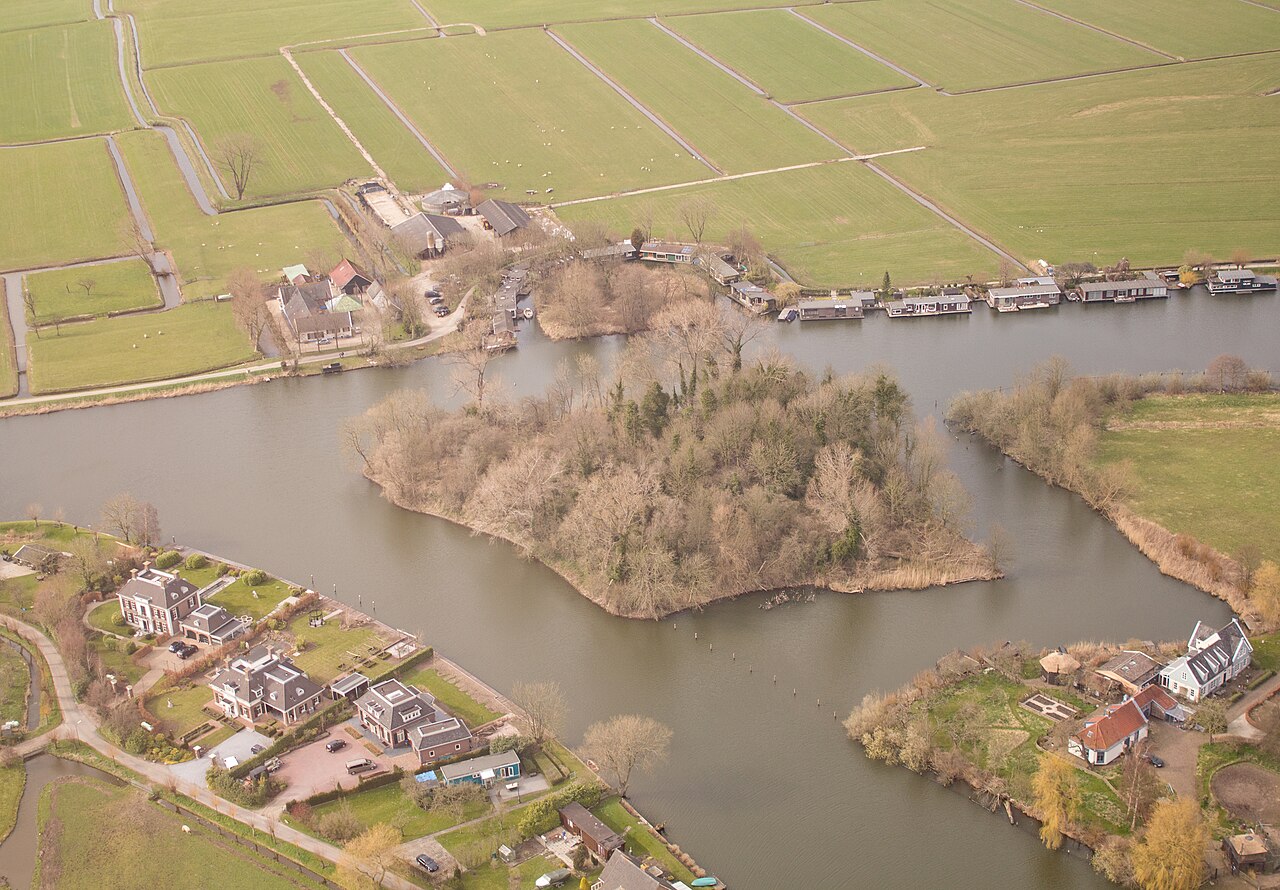
De Trompenburgh stands as a remarkable 17th-century manor house in 's-Graveland, Netherlands, embodying the maritime legacy and architectural grandeur of the Dutch Republic era. Originally built in 1654, this estate was designed by the notable architect Daniël Stalpaert for Admiral Maarten Tromp, a celebrated naval hero. The manor's unique design, almost entirely surrounded by water, was intentionally crafted to resemble a ship, complete with decks and railings, symbolizing Tromp's naval achievements and the maritime dominance of the Dutch Republic during the Renaissance period.
Historical background and ownership lineage
The estate's origins trace to an earlier buitenplaats constructed by Andries Bicker in 1636. The current house's foundation was laid in 1654 by Joan van Hellemondt, who named it "De Hooge Dreuvik." Following his death, his widow Margaretha van Raephorst remarried Admiral Cornelis Tromp in 1667, further entwining the property with the Tromp family's naval legacy. Cornelis Tromp, son of Maarten Tromp, undertook significant redecorations and enhancements to the estate.
However, the manor suffered devastation during the Rampjaar of 1672, when French forces invaded the Netherlands. After refusing to pay a ransom, the house was burned by French troops. Undeterred, Cornelis Tromp rebuilt the estate between 1675 and 1684, renaming it "Syllisburg" in honor of his noble title Count of Sölvesborg, bestowed by King Christian V of Denmark. The manor served as Tromp's summer residence and hosted dignitaries such as Stadtholder William III, the French Marquis of Ausson, and Prince Philip of Brandenburg.
Following the deaths of Cornelis Tromp and his wife in the early 1690s, inheritance disputes delayed major changes. The estate was leased to naval officers until 1704 when Jacob Roeters purchased it, renaming it "Trompenburgh" by 1745 to honor the Tromp family. Roeters and his descendants implemented minor enhancements, including a second belvedere with a clock cast by Pieter van Seelst in 1763 and a commemorative poem by Gerard Brandt above the dome hall entrance.
Architectural design and features
De Trompenburgh is a prime example of Dutch Baroque architecture with strong Renaissance influences. Its distinctive layout is characterized by the manor being almost entirely surrounded by water, creating a moat that emphasizes its ship-like form. The roof is designed to mimic a ship's deck, originally providing views toward the historic Zuiderzee, a former inlet of the North Sea.
The central structure, or corps de logis, is constructed with wooden walls and connected by a corridor to an octagonal pavilion housing the dome hall. This hall is richly decorated with maritime-themed paintings that celebrate the Tromp family's naval heritage. The artwork includes depictions of famous warships such as the Witte Olifant and the Hollandia, naval battles, and portraits of Admirals Cornelis Tromp and Maarten Tromp along with their spouses. Some paintings are attributed to the renowned marine artist Willem van de Velde the Elder.
Notably, a statue of Fama, the Roman goddess of fame, was originally placed in the moat but later moved beneath the dome's roof. Above the dome hall entrance, a poem by Gerard Brandt from 1666 honors Cornelis Tromp's naval accomplishments, adding cultural depth to the estate.
Grounds and landscape evolution
The original grounds featured tree-lined avenues planted by Tromp himself, visible into the late 18th century. In the early 1700s, Matthijs Straalman transformed the landscape into an English garden style, favoring naturalistic terrain over geometric layouts. Straalman replaced the original wooden bridge with a dam and updated the manor's windows to sliding models. Later owners introduced further window modifications in the 19th century, reflecting the Empire style.
Preservation and modern use
Throughout the 19th and 20th centuries, De Trompenburgh changed hands several times, narrowly escaping demolition in 1827. The estate was modernized internally by Cornelis van IJsseldijk and later maintained by caretakers during periods of guardianship. Around the turn of the 20th century, the painter Johan Willem Kaiser was among its tenants.
In 1903, Frans Ernst Blaauw acquired the estate and bequeathed it to the Dutch state in 1935 with strict conditions preserving its appearance and preventing expansion. Restoration efforts uncovered original decorative elements such as a large painted bird in the hall and intricate grisaille paneling that simulates sculptural relief.
Between 2006 and 2011, the Rijksmuseum utilized Trompenburgh for lectures and exhibitions. Since 2012, it has housed the Dutch Institute for Knowledge Transfer, serving as a venue for private meetings. Ownership transferred to the Monumentenbezit foundation in 2016, which initiated restoration projects in 2020 to restore the exterior woodwork to its original color and refurbish the gardens, preserving the estate's historic character.
Architectural significance and cultural heritage
De Trompenburgh is a unique fusion of architecture, naval symbolism, and landscape design. Its almost complete encirclement by water and ship-like form make it an exceptional example of a Renaissance manor house that visually celebrates the maritime prowess of the Dutch Republic. The estate's decorative program, including paintings by prominent artists and literary tributes, underscores the cultural importance of the Tromp family in Dutch naval history.
The manor's preservation and adaptive reuse reflect a commitment to maintaining Dutch heritage. Its integration of architectural innovation, artistic expression, and landscaped gardens offers visitors insight into 17th-century aristocratic life and naval glory. De Trompenburgh remains a testament to the enduring legacy of the Tromp family and the Dutch Golden Age.
Frequently asked questions (FAQ)
- What is the historical significance of De Trompenburgh?
- De Trompenburgh is a notable example of Dutch neo-Renaissance architecture and was originally built in the 19th century. Its historical significance lies in its association with the wealthy families of the Netherlands and its role in the cultural heritage of the region.
- When was De Trompenburgh built?
- De Trompenburgh was constructed in 1856 and has since been a symbol of the opulent lifestyle of the Dutch aristocracy during that era. The castle's architecture reflects the styles popular during the mid-19th century in the Netherlands.
- Can I visit De Trompenburgh?
- Yes, De Trompenburgh is open to visitors. It is advisable to check the official website for specific visiting days and any scheduled tours or events.
- What are the opening hours for De Trompenburgh?
- The opening hours for De Trompenburgh vary by season, typically from 10 AM to 5 PM. It's recommended to verify the current hours before planning your visit, as they may change for special events or holidays.
- Is it possible to access De Trompenburgh by public transport?
- Yes, De Trompenburgh is accessible by public transport. Visitors can take a train to 's-Graveland and then use local bus services or a short taxi ride to reach the castle.
- What are the ticket prices for visiting De Trompenburgh?
- Ticket prices for De Trompenburgh are generally reasonable, with discounts available for children and seniors. Check the official website for the latest pricing information and any special promotions or family packages.
- When is the best time to visit De Trompenburgh?
- The best time to visit De Trompenburgh is during the spring and summer months when the gardens are in full bloom. Additionally, visiting during weekdays can help avoid crowds and provide a more serene experience.
- Are there any nearby attractions to explore when visiting De Trompenburgh?
- Yes, there are several nearby attractions including the beautiful nature reserves and parks in 's-Graveland, such as the Natuurmonumenten areas. Visitors can also explore the charming village itself, which offers picturesque scenery and local shops.
Information
Website
Visit websiteSources & official resources
Verify the information above using these authoritative references.
Loading map...
Visitor reviews
No reviews yet. Been here? Write the first review and help other travelers!
Write the first reviewVisited this castle? Share your experience
Your review helps other travelers and adds first-hand knowledge to our encyclopedia.