Muwaylih Castle — Saudi Arabia castle

Muwaylih Castle

Muwaylih Castle: a historic hill castle in Saudi Arabia
High Medieval (11th–13th c.)
Ruins

Muwaylih Castle is a notable example of a hill castle located in Saudi Arabia, distinguished by its strategic placement and historical significance. Although the exact city location is not definitively recorded, this castle is recognized for its elevated position, which provided natural defensive advantages typical of hill castles.

Historical context and significance

Muwaylih Castle dates back to the medieval period, reflecting the architectural and military strategies employed in the region during that time. Castles like Muwaylih were often constructed to oversee important trade routes and to serve as defensive strongholds against invasions or local conflicts. The castle's elevated location would have allowed its occupants to monitor the surrounding landscape effectively, providing early warnings of approaching threats.

Architectural features and design

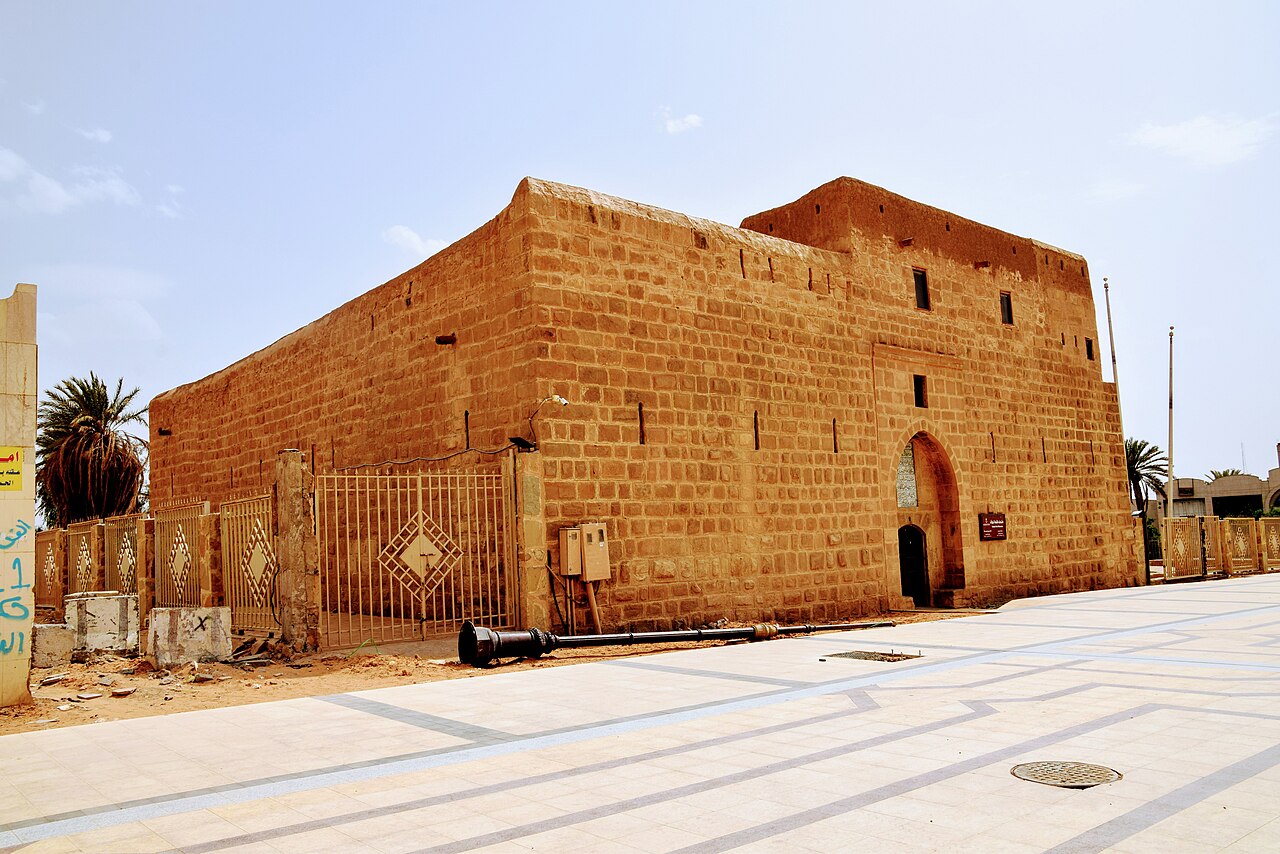
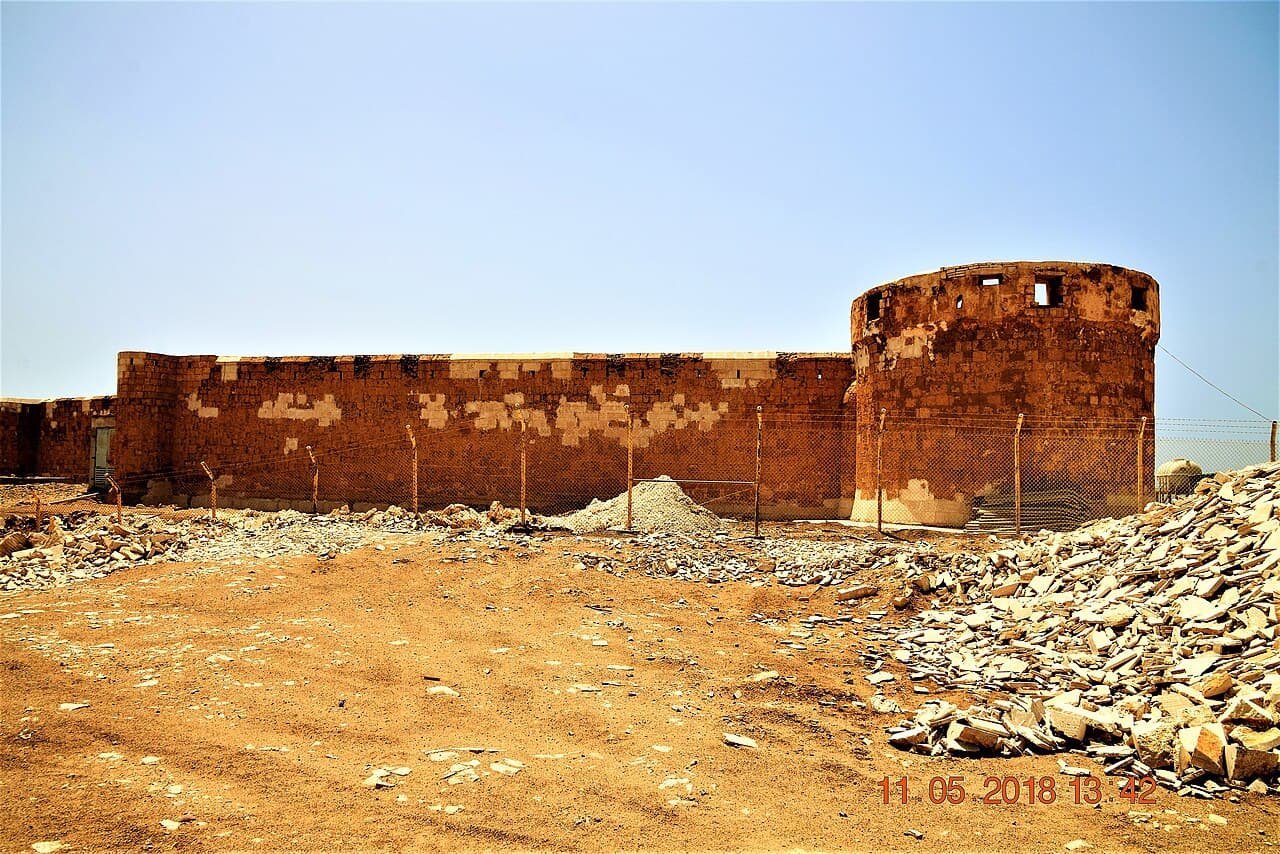
The castle's design incorporates typical elements of hill castles, including robust stone walls adapted to the uneven terrain of its site. Defensive features likely included battlements and towers positioned to maximize visibility and protect vulnerable approaches. The use of natural topography was integral to its defensive strategy, reducing the need for extensive artificial fortifications.

Construction materials and techniques

Local stone was the primary building material, chosen for its durability and availability. The masonry techniques would have involved carefully fitted stones without mortar in some sections, a common practice in medieval fortifications to allow flexibility and strength. The castle's walls were probably thick enough to withstand sieges and attacks, with narrow windows or arrow slits for archers.

Role in regional history

While specific historical events linked to Muwaylih Castle are not well documented, its existence signifies the importance of fortified sites in controlling territory and securing trade routes in the Arabian Peninsula. Such castles often served as administrative centers and military bases, influencing local governance and security.

Military and administrative functions

The castle likely housed a garrison responsible for the defense of the area and the enforcement of the ruling authority's control. It may have also functioned as a residence for local leaders or commanders, combining military and administrative roles in one complex.

Preservation and current condition

Muwaylih Castle is currently classified as a hill castle with its condition not fully documented but likely to be in a state ranging from ruins to partially preserved. The harsh climate and natural erosion in the region might have contributed to the castle's deterioration over time. Efforts to study and preserve such sites are important for understanding the medieval history of Saudi Arabia and the broader Arabian Peninsula.

Archaeological and cultural importance

As an archaeological site, Muwaylih Castle offers insights into medieval military architecture and settlement patterns in Saudi Arabia. Preservation initiatives could help protect its remains and promote awareness of the region's historical heritage.

Visiting information and accessibility

Due to the uncertain exact location and limited documentation, visiting Muwaylih Castle may require special arrangements or guidance from local authorities or heritage organizations. Visitors interested in medieval castles in Saudi Arabia might consider exploring other well-documented sites alongside Muwaylih to gain a comprehensive understanding of the region's fortified architecture.

Frequently asked questions (FAQ)

What is Muwaylih Castle known for?
Muwaylih Castle is known for its strategic hilltop location and its role as a medieval defensive stronghold in Saudi Arabia.
Can I visit Muwaylih Castle?
The exact location of Muwaylih Castle is not well documented, so visiting may require special arrangements or local guidance.
What architectural features does Muwaylih Castle have?
Muwaylih Castle features typical hill castle elements such as strong stone walls, battlements, and defensive towers adapted to the terrain.

Photo gallery

Muwaylih Castle
Click to view

Photo by Heritage Commission•CC BY-SA 4.0

1 photo • Click any image to view in full screen

Information

Hill Castle

Loading map...

Visitor reviews

No reviews yet. Been here? Write the first review and help other travelers!

Write the first review

Visited this castle? Share your experience

Your review helps other travelers and adds first-hand knowledge to our encyclopedia.

Write a review

(5/5)

0/2000 characters

Your review will be visible after admin approval

Nearby castles

43 km

King Abdul Aziz Fort

Duba, Saudi Arabia

King Abdul Aziz Fort is a prominent historical fortress located in the municipality of Duba in modern-day Saudi Arabia. Constructed during the early consolidation period of the Saudi state under King Abdul Aziz Al Saud, the fort stands as a significant symbol of the kingdom's architectural and military heritage in the Tabuk region. Its strategic position atop a high hill overlooking the western market area highlights its original role as a defensive and administrative stronghold. The historical background of King Abdul Aziz Fort The site of the fort has a layered history that predates the current structure. Initially, it hosted a small Ottoman military tower, serving as a base for soldiers commanded by a blockbashi, a military officer rank. This tower functioned as a strategic outpost connected to the nearby Al-Muwaylih Fort, playing a key role in regional security and military coordination. Over time, the tower evolved into an independent installation within the area. During the reign of King Abdul Aziz, the Ottoman tower was repurposed as a police station and courthouse before being demolished to facilitate the construction of a larger, more robust fortification. This transition reflects the shifting political and military priorities as the Saudi state expanded its control and administrative reach. The current fort was built in 1352 AH (1933 CE), marking an important phase in the kingdom's early state formation. It served as the administrative center for Saudi government operations in the Tabuk region and functioned as a critical border guard post. The fort's role necessitated internal modifications to accommodate both military and administrative functions effectively. Architectural features and layout King Abdul Aziz Fort occupies an area of approximately 1000 square meters on uneven, sloping terrain, which influenced its architectural design. The fort is primarily constructed from limestone, a common building material in the region, giving it durability and a distinctive appearance. Its design reflects the regional Ottoman fort style, evident in the four towers shaped as three-quarter circles, which provided enhanced defensive capabilities and vantage points. The fort's structure adapts to the hillside location through the use of massive retaining walls and a staircase leading visitors to the main arched entrance. This entrance is notable for its inscription plaque bearing the Islamic declaration of faith and a dedication recording that the fort was established by command of King Abdul Aziz Al Saud, directly linking the fort to his reign and legacy. Inside, the fort is organized around a central open courtyard, a common feature in traditional fortifications that allowed for light, ventilation, and communal activities. Surrounding the courtyard on all sides are numerous rooms and facilities designed to support the fort's military, administrative, and social functions. A large mosque occupies most of the northern façade of the courtyard, underscoring the fort's religious and communal importance. The current fort replaced the old Ottoman tower and its associated courtyard, incorporating newer construction that included multiple rooms for soldiers, the blockbashi, and an external cannon emplacement. This evolution reflects the fort's adaptation to changing military technologies and administrative needs. The adjacent school building Next to the southwestern tower of the fort stands a small school building dating from the early period of King Abdul Aziz's reign. This modest structure features a long corridor with six rooms, three on each side, illustrating the site's combined military and educational roles. The establishment of a school highlights the broader social development efforts undertaken during the early Saudi state formation period. Restoration and preservation efforts After years of neglect, the fort suffered significant deterioration, including collapsed sections of walls and ceilings. Recognizing its historical and cultural value, restoration efforts were initiated in 1420 AH (2001 CE) by the Saudi Antiquities and Museums Agency. These efforts aimed to preserve the fort's traditional architectural character and structural integrity, ensuring its survival as an authentic example of early 20th-century Saudi fortifications. Today, King Abdul Aziz Fort is managed under the auspices of the Saudi General Authority for Tourism and National Heritage, part of the Ministry of Tourism. The site is being developed as a museum to educate visitors about the fort's historical significance, architectural features, and the broader heritage of the Saudi state during King Abdul Aziz's reign. Significance in Saudi heritage and architecture King Abdul Aziz Fort stands as a testament to the early consolidation of the Saudi state and its efforts to establish administrative and military control over the Tabuk region. The fort's architecture embodies a blend of Ottoman influences and local building traditions, adapted to the challenging hillside terrain. Its four distinctive towers, robust limestone walls, and functional layout reflect the practical needs of defense and governance during a formative period in Saudi history. The fort's religious and educational components, including the mosque and adjacent school, demonstrate the multifaceted role such structures played in community life, extending beyond mere military purposes. The preservation and restoration of the fort ensure that this heritage remains accessible, allowing contemporary visitors to appreciate the architectural ingenuity and historical depth of Saudi Arabia's early 20th-century fortifications.

Post-Renaissance (17th–18th c.)
Details
89.4 km

Al-Azlam Fort

Duba, Saudi Arabia

Al-Azlam Fort stands as a significant historical structure located in the municipality of Duba, Saudi Arabia. This Mamluk-era hill castle was strategically positioned to oversee and protect vital routes along the eastern coast of the Red Sea, a critical area for trade and military control during the medieval Islamic period. Its origins trace back to the reign of Sultan Muhammad ibn Qalawun, who ruled the Mamluk Sultanate from 1285 to 1341 CE, marking the fort as an important military and administrative site from the late 13th century onward. The fort’s construction reflects the military architectural practices of the Mamluk period, emphasizing both defense and functionality. Built primarily from dressed limestone blocks, the walls demonstrate skilled masonry designed to withstand siege warfare and harsh coastal conditions. The fort's location on a hill provided a vantage point for surveillance and defense, typical of hill castles built to control surrounding terrain and travel routes. Historical significance and strategic role Al-Azlam Fort played a pivotal role in securing the Red Sea coastline during a time when maritime and overland trade routes were vital to the economic and political stability of the Islamic world. The fort operated as a supply and staging point for military forces tasked with defending the region from potential incursions. Its strategic importance was heightened during the early 16th century when Sultan Qansuh al-Ghawri ordered a major reconstruction in 1510, updating the fort’s defenses to meet evolving military technologies and threats. Beyond its military function, the fort was an essential stop on the Egyptian pilgrimage route leading to the holy cities of Islam. Pilgrims traveling from Egypt to Mecca and Medina would rest and resupply at Al-Azlam, highlighting the fort’s role in facilitating religious journeys and supporting the broader Islamic community. Architectural layout and features The fort covers an area of approximately 1,500 square meters and is situated near the main road connecting the cities of Duba and Al-Wajh. Its design centers around a large courtyard, which serves as the organizational core of the complex. Surrounding the courtyard are various internal chambers, including rectangular and semi-circular rooms that likely served multiple purposes such as storage, living quarters, and administrative functions. One of the notable architectural elements is the diwan, or assembly hall, which was traditionally used for official meetings and gatherings. The presence of this hall indicates the fort’s administrative importance in addition to its military role. The entire complex is enclosed by a robust protective wall, enhancing its defensive capabilities and controlling access to the interior spaces. Construction materials and techniques The use of dressed limestone blocks is a hallmark of the fort’s construction, providing both durability and an imposing aesthetic. The careful shaping and fitting of these blocks exemplify the Mamluk builders' expertise in stone masonry. This construction method ensured that the fort could resist attacks and endure the coastal climate over centuries. Preservation and current condition Today, Al-Azlam Fort remains largely well-preserved, with many of its structural elements intact and visible in situ. This preservation allows historians and visitors to gain insight into the fort’s original layout and function. The site offers a tangible connection to the Mamluk period’s military and administrative architecture in the Arabian Peninsula. As the only surviving fort from the Mamluk era in this part of Saudi Arabia, Al-Azlam Fort holds unique cultural and historical value. It stands as a testament to the region’s medieval past and its role in the broader Islamic world’s defense and pilgrimage networks. Cultural and heritage importance Al-Azlam Fort is not only a military relic but also a cultural landmark that reflects the historical interactions between trade, religion, and governance in the Red Sea region. Its function as a pilgrimage station underscores the interconnectedness of Islamic societies and the importance of safe travel and resupply points along pilgrimage routes. Preserving and studying Al-Azlam Fort contributes to understanding the Mamluk Sultanate’s reach and influence beyond Egypt and the Levant, extending into the Arabian Peninsula. The fort’s architecture and history provide valuable insights into the defensive strategies and daily life during a dynamic period of Islamic history.

Late Medieval (14th–15th c.)
Details
134.5 km
Tabuk Castle — Saudi Arabia castle

Tabuk Castle

Tabuk, Saudi Arabia

Tabuk Castle, also known as Tabuk Fortress, is a prominent 16th-century hill castle situated in Tabuk, the administrative center of Tabuk Province in northwestern Saudi Arabia. Constructed in 1559 during the Renaissance period, this fortress played a strategic role in the defense and control of the region, protecting important trade routes and serving as a military stronghold. Historical background and significance The castle's construction dates back to the mid-16th century, a time when the Ottoman Empire exerted influence over the Arabian Peninsula. Tabuk Castle was built under Ottoman auspices as part of a broader network of fortifications designed to secure the empire's southern borders and safeguard the pilgrimage routes to Mecca. Its location atop a hill provided a commanding view of the surrounding landscape, allowing early warning of any approaching threats. Throughout its history, the castle witnessed various phases of military and administrative use. It served as a garrison for Ottoman troops and later became an important symbol of regional authority. The fortress also played a role in local governance and was a center for controlling caravan traffic and maintaining security in the harsh desert environment. Architectural features and design Tabuk Castle exemplifies typical hill castle architecture adapted to the arid climate and terrain of northwestern Arabia. The fortress is constructed primarily from local stone and mudbrick, materials chosen for their availability and thermal properties, which help moderate interior temperatures. The castle's design includes thick defensive walls with battlements and towers strategically positioned for surveillance and defense. The main entrance is fortified with a heavy gate, and the walls are punctuated by arrow slits and gun ports, reflecting the military technology of the period. Inside, the castle contains several chambers and courtyards that would have housed soldiers, administrative offices, and storage facilities. The layout is compact yet functional, emphasizing defense and control over comfort. The elevated position of the castle on a hill enhances its defensive capabilities and visibility. Restoration and current use In recent decades, Tabuk Castle has undergone restoration efforts to preserve its structural integrity and historical value. These efforts have included reinforcing the walls, repairing damaged sections, and adapting parts of the interior for public access. Today, the castle functions as a museum open to visitors, showcasing artifacts and exhibits related to the castle's history, the Ottoman period in the region, and the cultural heritage of Tabuk. The museum provides educational opportunities and promotes awareness of the area's historical significance. Geographical and cultural context Located in the city of Tabuk, the castle overlooks a region characterized by desert landscapes and rugged hills. This strategic location was vital for controlling the ancient trade and pilgrimage routes passing through northwestern Arabia. The fortress is an important cultural landmark in Saudi Arabia, reflecting the architectural and military traditions of the Ottoman era. It contributes to the understanding of the historical interactions between the Arabian Peninsula and the wider Islamic world during the Renaissance period. Visitor information and accessibility Tabuk Castle is accessible to the public, offering visitors a chance to explore its historic walls, towers, and museum exhibits. The site provides insight into the military architecture of the 16th century and the historical context of the region. Visitors can appreciate the castle's elevated position, which offers panoramic views of the city of Tabuk and the surrounding desert. The museum's exhibits enhance the visitor experience by providing detailed information about the castle's construction, use, and restoration.

Renaissance (15th–17th c.)
Details