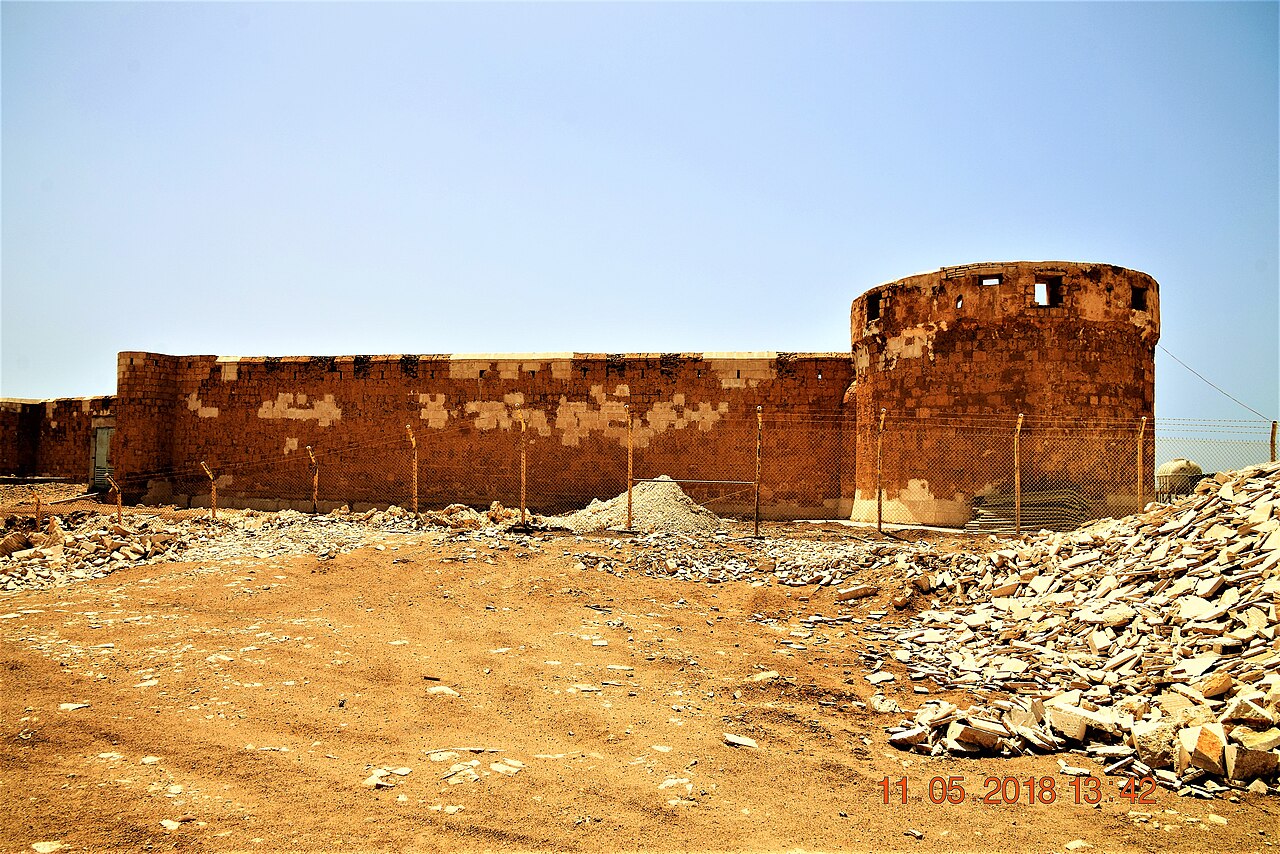
Al-Azlam Fort
Al-Azlam Fort stands as a significant historical structure located in the municipality of Duba, Saudi Arabia. This Mamluk-era hill castle was strategically positioned to oversee and protect vital routes along the eastern coast of the Red Sea, a critical area for trade and military control during the medieval Islamic period. Its origins trace back to the reign of Sultan Muhammad ibn Qalawun, who ruled the Mamluk Sultanate from 1285 to 1341 CE, marking the fort as an important military and administrative site from the late 13th century onward.
The fort’s construction reflects the military architectural practices of the Mamluk period, emphasizing both defense and functionality. Built primarily from dressed limestone blocks, the walls demonstrate skilled masonry designed to withstand siege warfare and harsh coastal conditions. The fort's location on a hill provided a vantage point for surveillance and defense, typical of hill castles built to control surrounding terrain and travel routes.
Historical significance and strategic role
Al-Azlam Fort played a pivotal role in securing the Red Sea coastline during a time when maritime and overland trade routes were vital to the economic and political stability of the Islamic world. The fort operated as a supply and staging point for military forces tasked with defending the region from potential incursions. Its strategic importance was heightened during the early 16th century when Sultan Qansuh al-Ghawri ordered a major reconstruction in 1510, updating the fort’s defenses to meet evolving military technologies and threats.
Beyond its military function, the fort was an essential stop on the Egyptian pilgrimage route leading to the holy cities of Islam. Pilgrims traveling from Egypt to Mecca and Medina would rest and resupply at Al-Azlam, highlighting the fort’s role in facilitating religious journeys and supporting the broader Islamic community.
Architectural layout and features
The fort covers an area of approximately 1,500 square meters and is situated near the main road connecting the cities of Duba and Al-Wajh. Its design centers around a large courtyard, which serves as the organizational core of the complex. Surrounding the courtyard are various internal chambers, including rectangular and semi-circular rooms that likely served multiple purposes such as storage, living quarters, and administrative functions.
One of the notable architectural elements is the diwan, or assembly hall, which was traditionally used for official meetings and gatherings. The presence of this hall indicates the fort’s administrative importance in addition to its military role. The entire complex is enclosed by a robust protective wall, enhancing its defensive capabilities and controlling access to the interior spaces.
Construction materials and techniques
The use of dressed limestone blocks is a hallmark of the fort’s construction, providing both durability and an imposing aesthetic. The careful shaping and fitting of these blocks exemplify the Mamluk builders' expertise in stone masonry. This construction method ensured that the fort could resist attacks and endure the coastal climate over centuries.
Preservation and current condition
Today, Al-Azlam Fort remains largely well-preserved, with many of its structural elements intact and visible in situ. This preservation allows historians and visitors to gain insight into the fort’s original layout and function. The site offers a tangible connection to the Mamluk period’s military and administrative architecture in the Arabian Peninsula.
As the only surviving fort from the Mamluk era in this part of Saudi Arabia, Al-Azlam Fort holds unique cultural and historical value. It stands as a testament to the region’s medieval past and its role in the broader Islamic world’s defense and pilgrimage networks.
Cultural and heritage importance
Al-Azlam Fort is not only a military relic but also a cultural landmark that reflects the historical interactions between trade, religion, and governance in the Red Sea region. Its function as a pilgrimage station underscores the interconnectedness of Islamic societies and the importance of safe travel and resupply points along pilgrimage routes.
Preserving and studying Al-Azlam Fort contributes to understanding the Mamluk Sultanate’s reach and influence beyond Egypt and the Levant, extending into the Arabian Peninsula. The fort’s architecture and history provide valuable insights into the defensive strategies and daily life during a dynamic period of Islamic history.
Frequently asked questions (FAQ)
- What is the historical significance of Al-Azlam Fort?
- Al-Azlam Fort, located in Duba, Saudi Arabia, is an important historical site that dates back to the 19th century. It served as a strategic military fortification to protect the region and played a significant role in the defense against various incursions. The fort's architecture reflects the traditional building techniques of the time and represents the cultural heritage of the area.
- When was Al-Azlam Fort built?
- Al-Azlam Fort was constructed in the mid-1800s, during a time when the region was crucial for trade and military operations. Its establishment was part of a larger effort to fortify important locations along the Red Sea coast. The fort has since been preserved as a symbol of the historical significance of the area.
- Can I visit Al-Azlam Fort?
- Yes, visitors are welcome to explore Al-Azlam Fort and its surrounding grounds. The fort offers a glimpse into the region's history and architecture, making it a great destination for history buffs and tourists alike. It is advisable to check local guidelines for any visitor restrictions or requirements before planning your visit.
- What are the opening hours for Al-Azlam Fort?
- Al-Azlam Fort typically opens to visitors from 8 AM to 5 PM, but hours may vary during public holidays or special events. It is recommended to verify the schedule prior to your visit to ensure you have ample time to explore the site. Guided tours may also be available during these hours.
- Is it possible to access Al-Azlam Fort by public transport?
- While public transport options may be limited, visitors can reach Al-Azlam Fort by taxi or private vehicle. Local transport services might provide routes to Duba, from where you can hire a taxi to the fort. Planning your trip ahead of time can ensure a smoother journey.
- What is the best time to visit Al-Azlam Fort?
- The best time to visit Al-Azlam Fort is during the cooler months, from October to March, when temperatures are more pleasant for outdoor exploration. Early mornings or late afternoons can also provide a more comfortable experience. Additionally, visiting during the winter months allows you to enjoy the surrounding landscape and historical charm without the intense heat.
- Are there any nearby attractions to visit along with Al-Azlam Fort?
- Yes, visitors can explore several nearby attractions, including beautiful beaches along the Red Sea and other historical sites in Duba. The area is known for its stunning landscapes, so consider taking a tour of the coastline or visiting local markets for a complete experience. These attractions complement your visit to Al-Azlam Fort and offer a deeper understanding of the region.
- What are the ticket prices for visiting Al-Azlam Fort?
- Entry to Al-Azlam Fort is often free, but it's advisable to check for any updates regarding fees or charges for guided tours. Some special exhibitions or events may require a ticket, so it’s best to inquire before your visit. This allows you to plan your budget accordingly while enjoying the historical site.
Information
Loading map...
Visitor reviews
No reviews yet. Been here? Write the first review and help other travelers!
Write the first reviewVisited this castle? Share your experience
Your review helps other travelers and adds first-hand knowledge to our encyclopedia.