King Abdul Aziz Fort
King Abdul Aziz Fort is a prominent historical fortress located in the municipality of Duba in modern-day Saudi Arabia. Constructed during the early consolidation period of the Saudi state under King Abdul Aziz Al Saud, the fort stands as a significant symbol of the kingdom's architectural and military heritage in the Tabuk region. Its strategic position atop a high hill overlooking the western market area highlights its original role as a defensive and administrative stronghold.
The historical background of King Abdul Aziz Fort
The site of the fort has a layered history that predates the current structure. Initially, it hosted a small Ottoman military tower, serving as a base for soldiers commanded by a blockbashi, a military officer rank. This tower functioned as a strategic outpost connected to the nearby Al-Muwaylih Fort, playing a key role in regional security and military coordination. Over time, the tower evolved into an independent installation within the area.
During the reign of King Abdul Aziz, the Ottoman tower was repurposed as a police station and courthouse before being demolished to facilitate the construction of a larger, more robust fortification. This transition reflects the shifting political and military priorities as the Saudi state expanded its control and administrative reach.
The current fort was built in 1352 AH (1933 CE), marking an important phase in the kingdom's early state formation. It served as the administrative center for Saudi government operations in the Tabuk region and functioned as a critical border guard post. The fort's role necessitated internal modifications to accommodate both military and administrative functions effectively.
Architectural features and layout
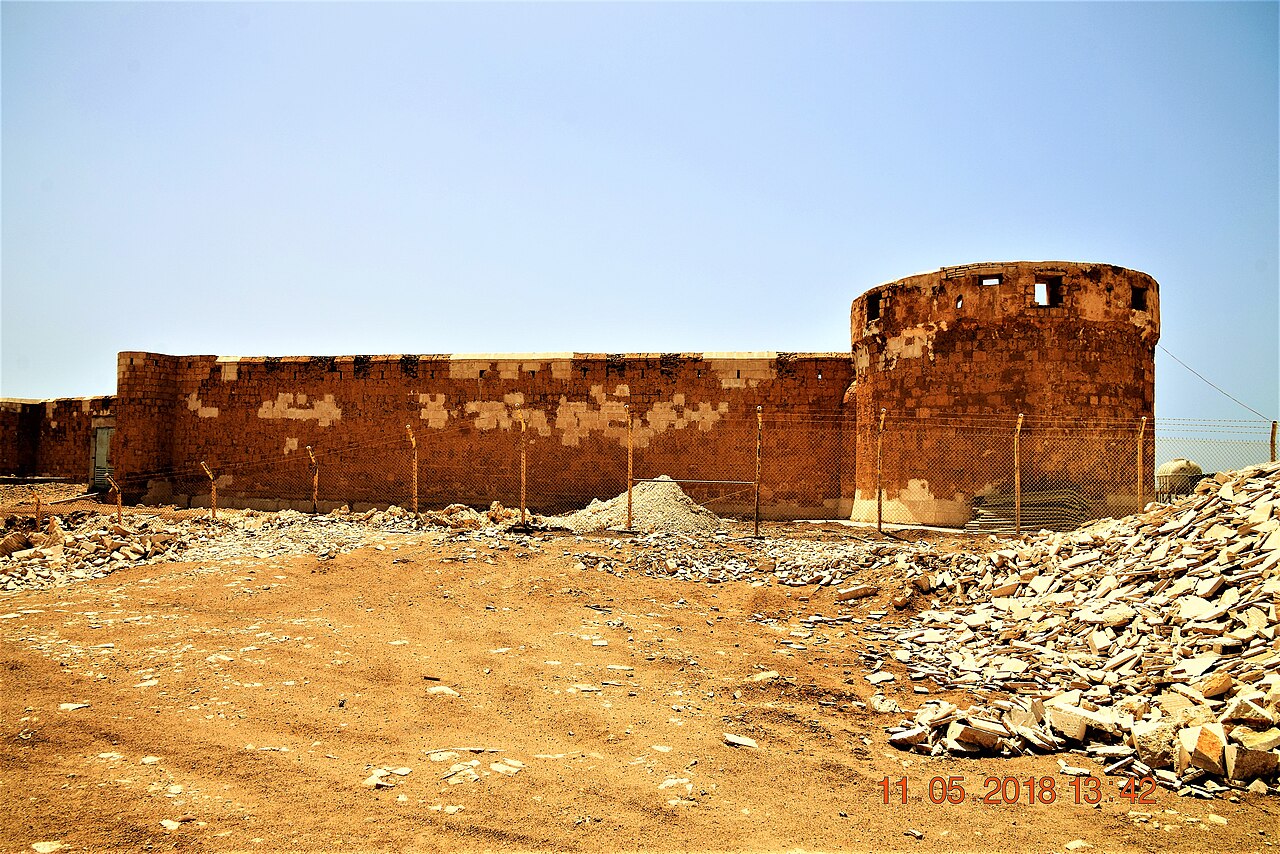
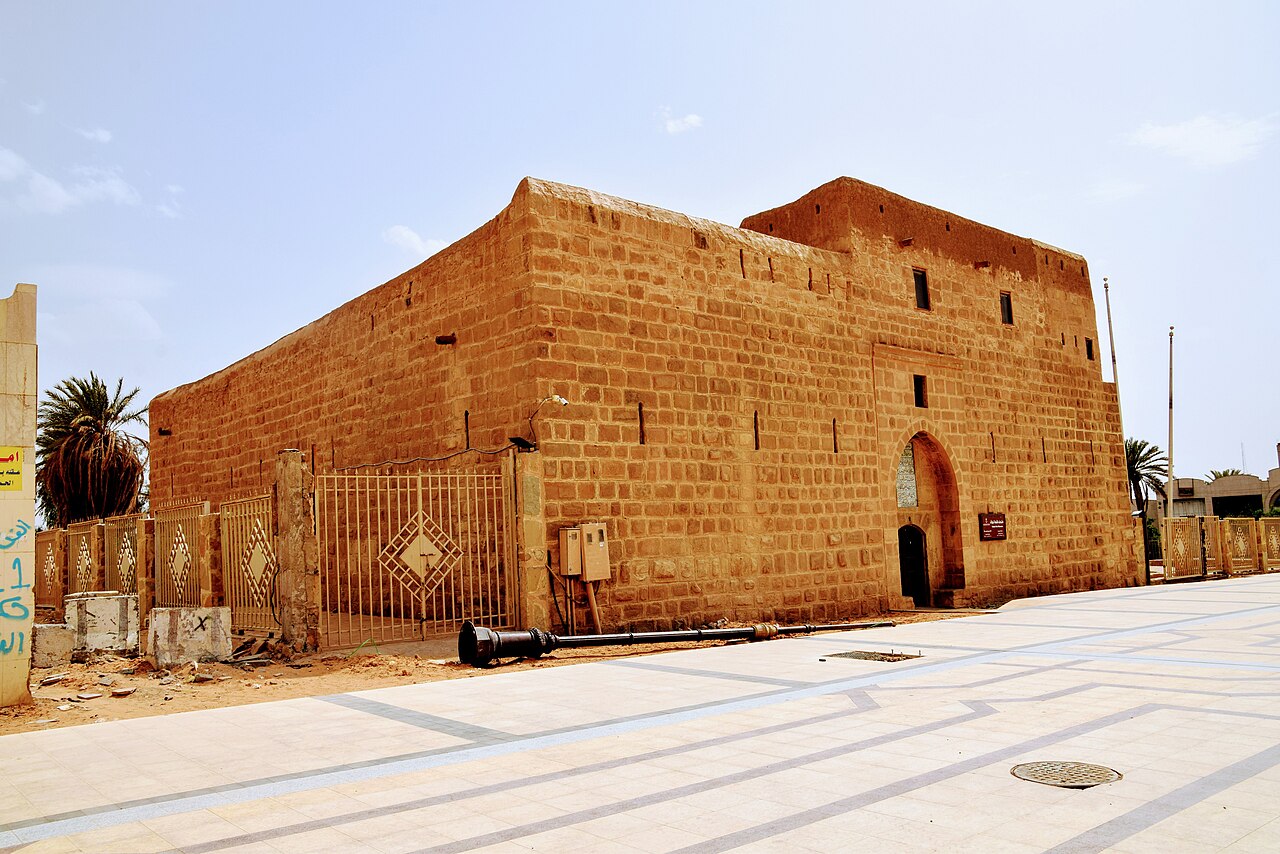
King Abdul Aziz Fort occupies an area of approximately 1000 square meters on uneven, sloping terrain, which influenced its architectural design. The fort is primarily constructed from limestone, a common building material in the region, giving it durability and a distinctive appearance. Its design reflects the regional Ottoman fort style, evident in the four towers shaped as three-quarter circles, which provided enhanced defensive capabilities and vantage points.
The fort's structure adapts to the hillside location through the use of massive retaining walls and a staircase leading visitors to the main arched entrance. This entrance is notable for its inscription plaque bearing the Islamic declaration of faith and a dedication recording that the fort was established by command of King Abdul Aziz Al Saud, directly linking the fort to his reign and legacy.
Inside, the fort is organized around a central open courtyard, a common feature in traditional fortifications that allowed for light, ventilation, and communal activities. Surrounding the courtyard on all sides are numerous rooms and facilities designed to support the fort's military, administrative, and social functions. A large mosque occupies most of the northern façade of the courtyard, underscoring the fort's religious and communal importance.
The current fort replaced the old Ottoman tower and its associated courtyard, incorporating newer construction that included multiple rooms for soldiers, the blockbashi, and an external cannon emplacement. This evolution reflects the fort's adaptation to changing military technologies and administrative needs.
The adjacent school building
Next to the southwestern tower of the fort stands a small school building dating from the early period of King Abdul Aziz's reign. This modest structure features a long corridor with six rooms, three on each side, illustrating the site's combined military and educational roles. The establishment of a school highlights the broader social development efforts undertaken during the early Saudi state formation period.
Restoration and preservation efforts
After years of neglect, the fort suffered significant deterioration, including collapsed sections of walls and ceilings. Recognizing its historical and cultural value, restoration efforts were initiated in 1420 AH (2001 CE) by the Saudi Antiquities and Museums Agency. These efforts aimed to preserve the fort's traditional architectural character and structural integrity, ensuring its survival as an authentic example of early 20th-century Saudi fortifications.
Today, King Abdul Aziz Fort is managed under the auspices of the Saudi General Authority for Tourism and National Heritage, part of the Ministry of Tourism. The site is being developed as a museum to educate visitors about the fort's historical significance, architectural features, and the broader heritage of the Saudi state during King Abdul Aziz's reign.
Significance in Saudi heritage and architecture
King Abdul Aziz Fort stands as a testament to the early consolidation of the Saudi state and its efforts to establish administrative and military control over the Tabuk region. The fort's architecture embodies a blend of Ottoman influences and local building traditions, adapted to the challenging hillside terrain. Its four distinctive towers, robust limestone walls, and functional layout reflect the practical needs of defense and governance during a formative period in Saudi history.
The fort's religious and educational components, including the mosque and adjacent school, demonstrate the multifaceted role such structures played in community life, extending beyond mere military purposes. The preservation and restoration of the fort ensure that this heritage remains accessible, allowing contemporary visitors to appreciate the architectural ingenuity and historical depth of Saudi Arabia's early 20th-century fortifications.
Frequently asked questions (FAQ)
- When was King Abdul Aziz Fort built?
- King Abdul Aziz Fort was constructed in 1352 AH (1933 CE) during the reign of King Abdul Aziz as part of early Saudi state consolidation efforts.
- What architectural style does King Abdul Aziz Fort represent?
- The fort reflects a mixed architectural style with strong Ottoman influences, especially visible in its four three-quarter circle towers and limestone construction adapted to hillside terrain.
- What is the historical significance of King Abdul Aziz Fort?
- The fort served as a military, administrative, and border guard post in the Tabuk region, symbolizing Saudi Arabia's early efforts to consolidate control and governance under King Abdul Aziz.
- Can visitors access King Abdul Aziz Fort today?
- Yes, the fort has been restored and is being developed as a museum by the Saudi General Authority for Tourism and National Heritage, allowing public access to its historical and architectural features.
- What unique features does the fort have?
- Unique features include its four three-quarter circle towers, a central courtyard with a large mosque, an inscription plaque above the main entrance, and an adjacent school building from King Abdul Aziz's early reign.
Information
Current owner
Saudi General Authority for Tourism and National Heritage
Website
Visit websiteSources & official resources
Verify the information above using these authoritative references.
Loading map...
Visitor reviews
No reviews yet. Been here? Write the first review and help other travelers!
Write the first reviewVisited this castle? Share your experience
Your review helps other travelers and adds first-hand knowledge to our encyclopedia.