Muslim Walls of Madrid
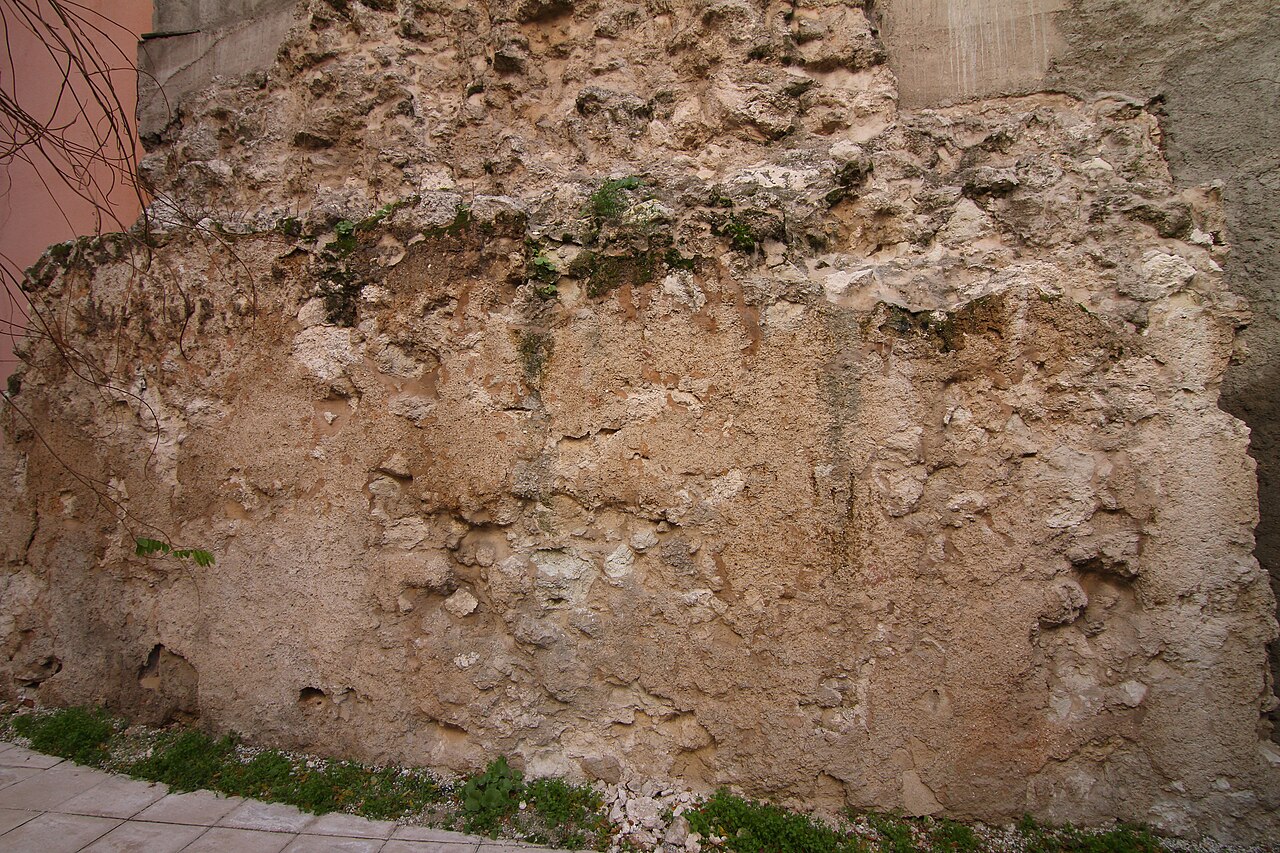
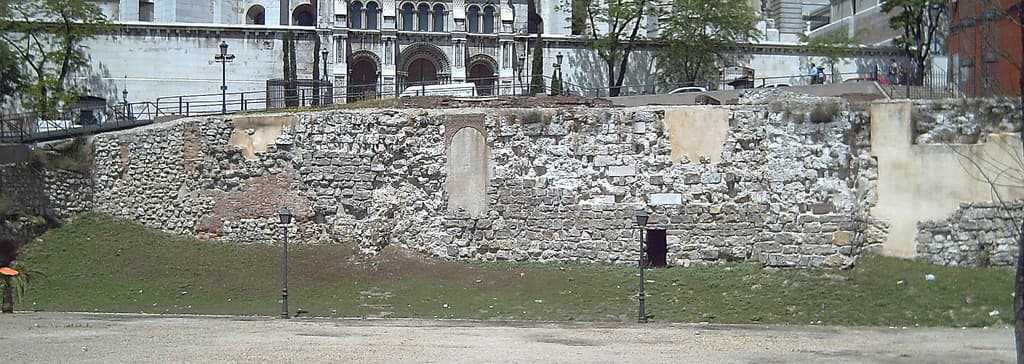
The Muslim Walls of Madrid, also known as the Arab Walls of Madrid, represent the oldest surviving architectural remains in the Spanish capital. Constructed in the 9th century during the period of Muslim rule over the Iberian Peninsula, these walls formed a crucial part of a fortress that marked the original urban core around which Madrid developed. Built on a strategic promontory overlooking the Manzanares River, the walls were designed to protect the settlement and assert control over this important area.
Declared an Artistic-Historic Monument in 1954, these ruins offer a rare glimpse into the Early Medieval fortifications of the region. The walls were constructed using traditional Muslim military architectural techniques of the time, incorporating albarrana towers, which were detached defensive towers connected to the main walls by smaller curtain walls. This design enhanced defensive capabilities by allowing defenders to cover blind spots and provide flanking fire.
Historical context and significance
The walls date back to the 9th century, a period when the Emirate of Córdoba was consolidating its power in the Iberian Peninsula. The fortress served as a military and administrative center, likely founded under the reign of Muhammad I of Córdoba, after whom the nearby Park of Mohamed I is named. Muhammad I is traditionally regarded as the founder of the city of Madrid, marking the walls as a foundational element in the city's history.
The fortress enclosed a relatively small but strategically important area that would eventually grow into the city of Madrid. Its location on elevated ground next to the river allowed for effective surveillance and defense against potential invaders or rival factions during the turbulent medieval period.
Architectural features and surviving structures
The tower of Narigües
One of the most prominent surviving features is the Tower of Narigües, located along Calle Mayor at number 83, near the viaduct on Calle de Segovia. This tower is believed to have been an albarrana tower, detached from the main wall but connected by a minor curtain wall. Its primary function was as a viewpoint to monitor the surrounding landscape and river approaches, enhancing the fortress's defensive network.
Other remnants and archaeological discoveries
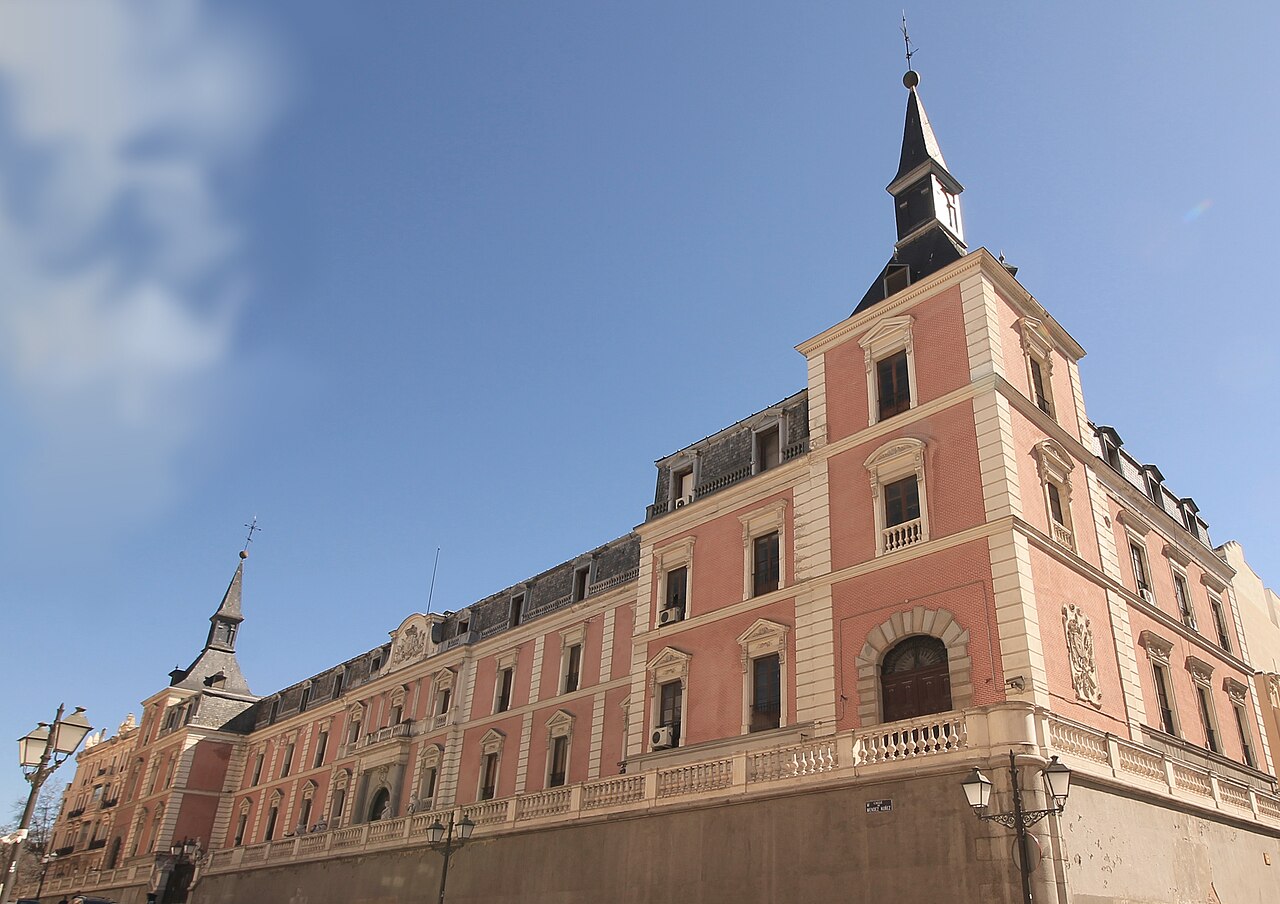
Throughout the 20th century, urban development led to the destruction of some sections of the walls, including those near number 12 Calle de Bailén, where an apartment block was built. However, parts of the walls were incorporated into the foundations of newer structures, preserving fragments of the original fortifications.
Significant archaeological excavations took place during the remodelling of the Plaza de Oriente in 1996, revealing numerous remains of the walls. Although many of these were lost after the works, the base of the Tower of the Bones was preserved and is now displayed in the underground car park of the plaza, providing visitors with direct access to this historic element.
Between 1999 and 2000, a 70-metre-long section of the walls was uncovered beneath the Plaza de la Armería, situated between the Royal Palace and Almudena Cathedral. This excavation occurred during the construction of the Royal Collections Gallery, scheduled to open in 2023. The uncovered segment is believed to correspond to the Puerta de la Sagra, one of the original gates of the walled enclosure, highlighting the fortress's complex defensive layout.
Preservation and cultural importance
Today, the Muslim Walls of Madrid stand as an archaeological site and a tangible connection to the city's Early Medieval past. Despite the challenges posed by urban expansion and modern construction, efforts have been made to preserve and showcase these ruins to the public. They offer valuable insights into Islamic military architecture in Spain and the early history of Madrid itself.
The walls are an essential part of Madrid's cultural heritage, attracting historians, archaeologists, and visitors interested in the city's origins and the broader history of the Iberian Peninsula during the Muslim era. Their location near prominent landmarks such as the Royal Palace underscores their historical significance and continued relevance to understanding Madrid's urban evolution.
Frequently asked questions (FAQ)
- What is the historical significance of the Muslim Walls of Madrid?
- The Muslim Walls of Madrid, constructed in the 9th century, are a vital part of the city's history as they represent the early Islamic influence in Spain. They served as a defensive structure for the city during the Muslim rule and are considered one of the few remnants of that era in Madrid.
- When was the Muslim Walls of Madrid built?
- The construction of the Muslim Walls began in 852 AD under the rule of Emir Muhammad I of Córdoba. They were built to protect the newly established city of Mayrit, which later evolved into modern-day Madrid.
- Can I visit the Muslim Walls of Madrid?
- Yes, visitors can explore the Muslim Walls of Madrid, as they are part of the city's heritage. While some sections are integrated into public spaces, others can be accessed through guided tours that provide insight into their historical context.
- What are the opening hours for the Muslim Walls of Madrid?
- The Muslim Walls are accessible year-round, typically from early morning until sunset. However, it's advisable to check local resources or visitor centers for any seasonal changes in hours or special event schedules.
- Is it possible to take guided tours of the Muslim Walls of Madrid?
- Yes, guided tours of the Muslim Walls are available and provide a deeper understanding of the history and architecture of this significant landmark. These tours often include access to nearby historical sites, enhancing the visitor experience.
- What is the best time to visit the Muslim Walls of Madrid?
- The best time to visit the Muslim Walls is during the spring and fall when the weather is mild and conducive to walking tours. Additionally, visiting during weekdays can help avoid the larger crowds typically seen on weekends.
- Are there any nearby attractions to visit along with the Muslim Walls of Madrid?
- Yes, nearby attractions include the Royal Palace of Madrid, the Almudena Cathedral, and the historic Plaza Mayor. Exploring these sites can provide a comprehensive view of Madrid's rich history and vibrant culture.
- What are the ticket prices for visiting the Muslim Walls of Madrid?
- Visiting the Muslim Walls is generally free, as they are part of the city's public heritage. However, guided tours may have associated fees, which vary depending on the provider and the duration of the tour.
- How do I get to the Muslim Walls of Madrid?
- The Muslim Walls are conveniently located in the city center and can be reached by public transport, including buses and the metro. Walking is also an excellent option, as it allows you to enjoy the surrounding historical area.
Photo gallery

Information
Address
Calle Mayor 83, Madrid, Spain
Loading map...
Visitor reviews
No reviews yet. Been here? Write the first review and help other travelers!
Write the first reviewVisited this castle? Share your experience
Your review helps other travelers and adds first-hand knowledge to our encyclopedia.