Castles of Valderas

Castles of valderas in alcorcón, spain
Alcorcón, Spain
Post-Renaissance (17th–18th c.)
Well Preserved

The Castles of Valderas in Alcorcón, a southern suburb of Madrid, Spain, are a remarkable example of early 20th-century aristocratic architecture influenced by European styles. Commissioned in 1917 by José Sanchiz de Quesada, the Marquis of Vasto and locally known as the Marquis of Valderas, these castles represent a unique blend of Saxon architectural inspiration with a distant nod to the famed Chambord Castle in France. The complex originally consisted of three palatial structures: the main castle for the Marquis and his family, a smaller building serving as a private chapel, and another for the servants.

Architectural design and influences

The design of the Castles of Valderas was the work of architect Luis Sainz de los Terreros, who skillfully integrated Saxon stylistic elements into the construction, a rare choice in early 20th-century Spain. The main castle features imposing facades, steeply pitched roofs, and ornate detailing reminiscent of Northern European castles. The smaller buildings complement the main structure, with the chapel exhibiting ecclesiastical architectural features suited for private worship, while the servants' quarters were more modest but carefully constructed to maintain the overall harmony of the estate.

Historical significance and notable visitors

The Castles of Valderas quickly became a social and political hub due to their proximity to the royal hunting grounds of Venta de la Rubia. This location attracted prominent figures such as King Alfonso XIII and the dictator Miguel Primo de Rivera, who frequented the estate for hunting parties and social gatherings. These visits underscore the castles' importance as a symbol of aristocratic prestige and political influence during the early 20th century in Spain.

Role during the spanish civil war

With the outbreak of the Spanish Civil War (1936-1939), the Castles of Valderas underwent a dramatic change in function. Initially abandoned, the main castle was soon occupied by Nationalist leaders Francisco Franco and Emilio Mola due to its strategic location near the front lines of Madrid. The castle served as a military headquarters during the offensives to capture the capital. Historical photographs from the National Library of Spain reveal military personnel conducting experiments with rockets designed to deliver propaganda leaflets over Republican lines, highlighting the castle's role in psychological warfare.

The ummo affair and cultural legacy

In 1967, the Castles of Valderas gained unexpected notoriety as the site of an alleged UFO sighting linked to the Ummo affair, a mysterious and controversial episode in Spanish ufology. This event added a layer of cultural intrigue to the castles' history, attracting interest from researchers and enthusiasts of unexplained phenomena. Despite this unusual chapter, the castles remain primarily celebrated for their architectural merit and historical connections.

Current status and preservation

Today, the Castles of Valderas stand as well-preserved examples of early 20th-century aristocratic residences in the Madrid region. Their association with notable historical figures and events, combined with their distinctive architectural style, make them significant cultural landmarks. While not as widely known internationally as other Spanish castles, they offer valuable insight into the social and political fabric of Spain during a turbulent era.

Visiting information and accessibility

Visitors to Alcorcón interested in Spanish history and architecture can appreciate the Castles of Valderas for their unique blend of styles and historical resonance. Although the castles are privately owned and access may be limited, the surrounding area offers opportunities to explore the heritage of the region. The castles' proximity to Madrid makes them accessible for day trips, providing a fascinating glimpse into Spain's aristocratic past and Civil War history.

Frequently asked questions (FAQ)

How do I get to the Castles of Valderas?
The Castles of Valderas are located in Alcorcón, Spain, easily accessible by public transportation. You can take the Metro Line 12 to the Parque de Lisboa station, followed by a short walk to the castle.
What is the historical significance of the Castles of Valderas?
The Castles of Valderas were built during the late medieval period and served as a strategic defense point in the region. They are a testament to the architectural style of the time and reflect the historical conflicts that shaped the area.
When was the Castles of Valderas constructed?
Construction of the Castles of Valderas began in the late 15th century and continued into the early 16th century. They were completed during a time of significant political and social change in Spain.
Can I visit the Castles of Valderas year-round?
Yes, the Castles of Valderas are open to visitors throughout the year. However, it is advisable to check the specific opening hours and any seasonal variations before planning your visit.
Why is the architecture of the Castles of Valderas unique?
The architecture of the Castles of Valderas showcases a blend of Gothic and Renaissance styles, which is quite rare in Spain. The intricate stonework and defensive structures highlight the craftsmanship of the era.
Is it possible to access the Castles of Valderas with a wheelchair?
The Castles of Valderas have made efforts to improve accessibility for visitors with mobility challenges. However, due to the historical nature of the site, some areas may still present difficulties.
What are the ticket prices for visiting the Castles of Valderas?
Ticket prices for the Castles of Valderas are quite reasonable, with discounts available for students and seniors. It's recommended to purchase tickets online in advance to avoid long queues.
What are the opening hours for the Castles of Valderas?
The Castles of Valderas typically open at 10 AM and close at 6 PM, with extended hours during the summer months. Always check their official website for the most current opening times before your visit.
When is the best time to visit the Castles of Valderas?
The best time to visit the Castles of Valderas is during the spring and fall when the weather is mild and pleasant. These seasons also offer fewer crowds, allowing for a more enjoyable experience.
Are there any nearby attractions to visit when at the Castles of Valderas?
Yes, there are several nearby attractions, including Parque de Lisboa and the local museums of Alcorcón. These sites provide additional cultural and recreational opportunities for visitors.

Information

Palace Castle

Sources & official resources

Verify the information above using these authoritative references.

Loading map...

Visitor reviews

No reviews yet. Been here? Write the first review and help other travelers!

Write the first review

Visited this castle? Share your experience

Your review helps other travelers and adds first-hand knowledge to our encyclopedia.

Write a review

(5/5)

0/2000 characters

Your review will be visible after admin approval

Nearby castles

7.6 km

Castle of Villaviciosa de Odón

Villaviciosa de Odón, Spain

Hidden behind the narrow streets of Villaviciosa de Odón in Spain, the Castle of Villaviciosa de Odón stands as a somber Renaissance fortress steeped in centuries of history. Originally constructed in the late 15th century, this hill castle has witnessed a diverse array of uses and transformations, reflecting the complex socio-political and cultural evolution of the region. Its strategic location near the Guadarrama river once controlled vital movements through the surrounding forests and hunting grounds, underscoring its military and aristocratic importance. Over time, the castle served numerous roles including a royal residence, a prison, a military garrison, and an educational institution, before becoming the Archives of the Spanish Air Force in the 20th century. Historical origins and early construction The origins of the castle trace back to 1496 when Andrés de Cabrera, the Marquis of Moya, and Beatriz Fernández de Bobadilla established the earliest known structure on the site. This initial fortress served as a fortified residence for the noble Counts of Chinchón, embedding the castle within the aristocratic landscape of late medieval Spain. However, the castle's early existence was turbulent. It was destroyed in 1521 during the Revolt of the Comuneros, a major uprising against royal authority in Castile. Commanders Diego de Heredia and Antonio de Mesa led the demolition, marking a significant moment of conflict in the castle's history. Renaissance reconstruction under juan de herrera In 1583, the castle underwent a comprehensive reconstruction commissioned by Don Diego Fernández de Cabrera y Bobadilla, the third Count of Chinchón. This ambitious project was overseen by Juan de Herrera, one of Spain's most influential architects of the Renaissance period. Herrera's design introduced a distinctive asymmetric silhouette by crafting one tower uniquely, setting it apart from the others. This architectural choice not only enhanced the castle's defensive capabilities but also gave it a striking visual identity that persists to this day. Royal ownership and 18th-century restorations The castle's ownership shifted in 1738 when King Philip V acquired the county and granted it to his son, Infante Luis. Infante Luis, half-brother to Ferdinand VI, initiated restoration efforts led by the renowned architect Ventura Rodríguez. During this period, the locality was renamed Villaviciosa de Odón, cementing the castle's place in the region's identity. Following the death of Infante Luis's wife, Bárbara de Braganza, in 1758, King Ferdinand VI took residence in the castle and died there the following year, adding a poignant royal chapter to its history. Manuel godoy's imprisonment and political turmoil In 1797, María Teresa de Borbón, Countess of Chinchón, married Manuel Godoy, the powerful Prime Minister and favorite of King Charles IV. Godoy's political fall during the Mutiny of Aranjuez in 1808 led to his imprisonment within the castle, highlighting its role as a site of political intrigue and consequence. Educational and military uses in the 19th century The 19th century marked a shift in the castle's function when it became home to Spain's first formal forestry school, the Escuela Especial de Ingenieros de Montes, established in 1848. This pioneering institution laid the foundation for professional forestry education in Spain before relocating to El Escorial and later Madrid. Subsequently, the castle served as a military school from 1886 with the Colegio de Educandos del Cuerpo de Carabineros, and later as a granary and agricultural facility, reflecting its adaptive reuse over time. Impact of the spanish civil war and preservation efforts During the Spanish Civil War, the castle was occupied by both Republican and Nationalist forces, suffering damage and looting amid the conflict. This period marked one of the most challenging chapters in its preservation. In 1965, the Spanish State acquired the castle and embarked on a thorough restoration program, addressing the war-inflicted damages and centuries of wear. Since 1972, it has served as the Archivo Histórico General del Aire, preserving Spain's aviation history within its historic walls. Architectural features and structural details The castle manifests a blend of late medieval fortification and Renaissance architectural elements. Its layout features multiple towers, with one distinctively designed by Juan de Herrera to create an asymmetric profile. The robust stone walls are characteristic of the Madrid region's traditional construction methods, ensuring durability and a commanding presence. The 18th-century restorations by Ventura Rodríguez introduced further aesthetic refinements, although specific details of these changes remain less documented. The castle's interiors have been adapted to accommodate its modern institutional role while preserving key historical elements. Defensive structures and towers The castle's towers served both defensive and residential purposes, with battlements and thick walls designed to withstand sieges. The uniquely shaped tower remains a focal point, symbolizing the Renaissance architectural innovation brought by Herrera. Courtyards and internal layout The internal courtyards provided space for daily activities, gatherings, and military drills. These open areas are framed by the castle's stone walls and towers, creating a cohesive fortress-palace complex. Cultural significance and current status Today, the Castle of Villaviciosa de Odón stands as a well-preserved monument to Spain's rich history, blending noble heritage, royal connections, and educational innovation. Its role as the General Historical Archive of the Air Force ensures ongoing preservation and public awareness of its architectural and historical value. The castle's integration into the town's fabric along Madrid Avenue connects it to the community while maintaining its distinct identity as a heritage site. Visitors can appreciate the castle's enduring stone fabric, its unique towers, and the layers of history embedded within its walls.

Late Medieval (14th–15th c.)
Details
10.4 km
Muslim Walls of Madrid — Spain castle

Muslim Walls of Madrid

Madrid, Spain

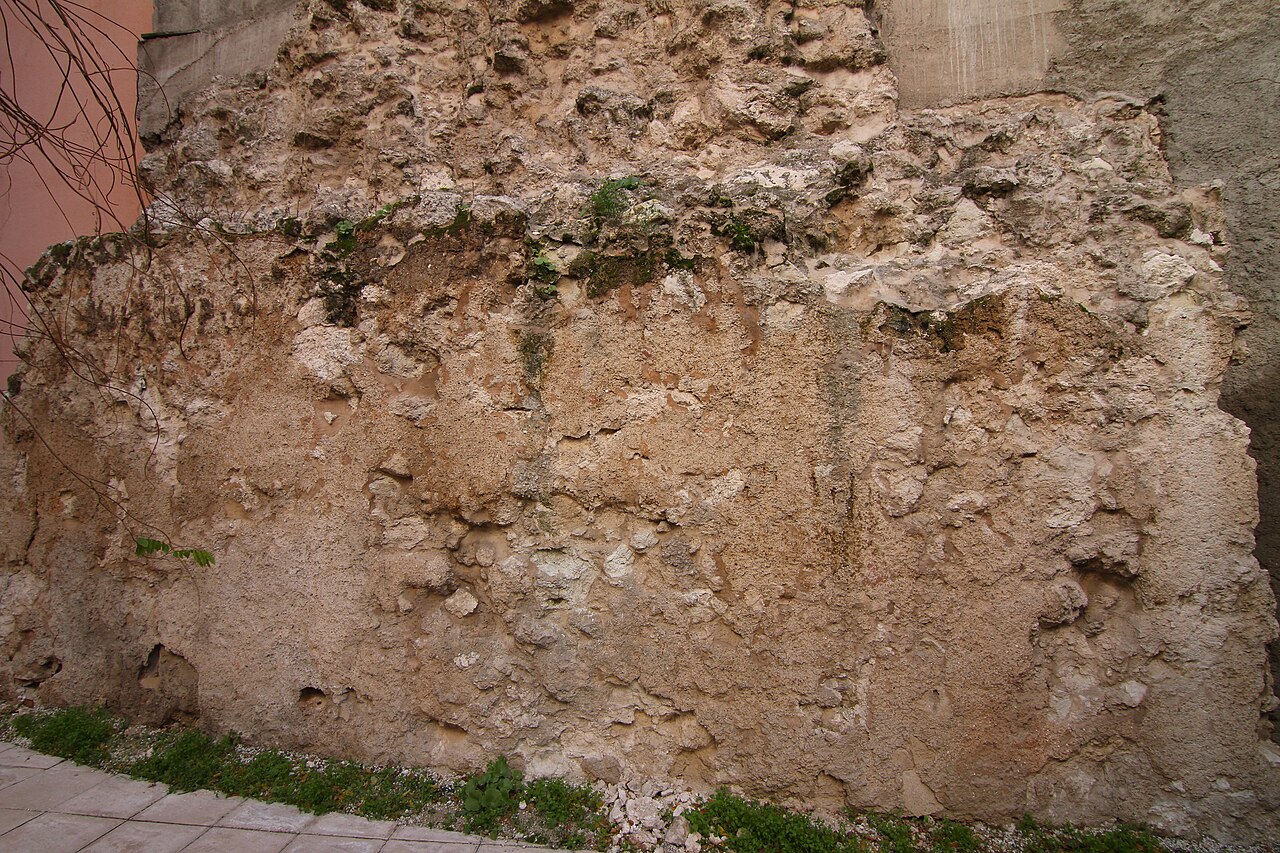
The Muslim Walls of Madrid, also known as the Arab Walls of Madrid, represent the oldest surviving architectural remains in the Spanish capital. Constructed in the 9th century during the period of Muslim rule over the Iberian Peninsula, these walls formed a crucial part of a fortress that marked the original urban core around which Madrid developed. Built on a strategic promontory overlooking the Manzanares River, the walls were designed to protect the settlement and assert control over this important area. Declared an Artistic-Historic Monument in 1954, these ruins offer a rare glimpse into the Early Medieval fortifications of the region. The walls were constructed using traditional Muslim military architectural techniques of the time, incorporating albarrana towers, which were detached defensive towers connected to the main walls by smaller curtain walls. This design enhanced defensive capabilities by allowing defenders to cover blind spots and provide flanking fire. Historical context and significance The walls date back to the 9th century, a period when the Emirate of Córdoba was consolidating its power in the Iberian Peninsula. The fortress served as a military and administrative center, likely founded under the reign of Muhammad I of Córdoba, after whom the nearby Park of Mohamed I is named. Muhammad I is traditionally regarded as the founder of the city of Madrid, marking the walls as a foundational element in the city's history. The fortress enclosed a relatively small but strategically important area that would eventually grow into the city of Madrid. Its location on elevated ground next to the river allowed for effective surveillance and defense against potential invaders or rival factions during the turbulent medieval period. Architectural features and surviving structures The tower of Narigües One of the most prominent surviving features is the Tower of Narigües, located along Calle Mayor at number 83, near the viaduct on Calle de Segovia. This tower is believed to have been an albarrana tower, detached from the main wall but connected by a minor curtain wall. Its primary function was as a viewpoint to monitor the surrounding landscape and river approaches, enhancing the fortress's defensive network. Other remnants and archaeological discoveries Throughout the 20th century, urban development led to the destruction of some sections of the walls, including those near number 12 Calle de Bailén, where an apartment block was built. However, parts of the walls were incorporated into the foundations of newer structures, preserving fragments of the original fortifications. Significant archaeological excavations took place during the remodelling of the Plaza de Oriente in 1996, revealing numerous remains of the walls. Although many of these were lost after the works, the base of the Tower of the Bones was preserved and is now displayed in the underground car park of the plaza, providing visitors with direct access to this historic element. Between 1999 and 2000, a 70-metre-long section of the walls was uncovered beneath the Plaza de la Armería, situated between the Royal Palace and Almudena Cathedral. This excavation occurred during the construction of the Royal Collections Gallery, scheduled to open in 2023. The uncovered segment is believed to correspond to the Puerta de la Sagra, one of the original gates of the walled enclosure, highlighting the fortress's complex defensive layout. Preservation and cultural importance Today, the Muslim Walls of Madrid stand as an archaeological site and a tangible connection to the city's Early Medieval past. Despite the challenges posed by urban expansion and modern construction, efforts have been made to preserve and showcase these ruins to the public. They offer valuable insights into Islamic military architecture in Spain and the early history of Madrid itself. The walls are an essential part of Madrid's cultural heritage, attracting historians, archaeologists, and visitors interested in the city's origins and the broader history of the Iberian Peninsula during the Muslim era. Their location near prominent landmarks such as the Royal Palace underscores their historical significance and continued relevance to understanding Madrid's urban evolution.

Early Medieval (5th–10th c.)
Details
10.5 km
Christian Walls of Madrid — Spain castle

Christian Walls of Madrid

Madrid, Spain

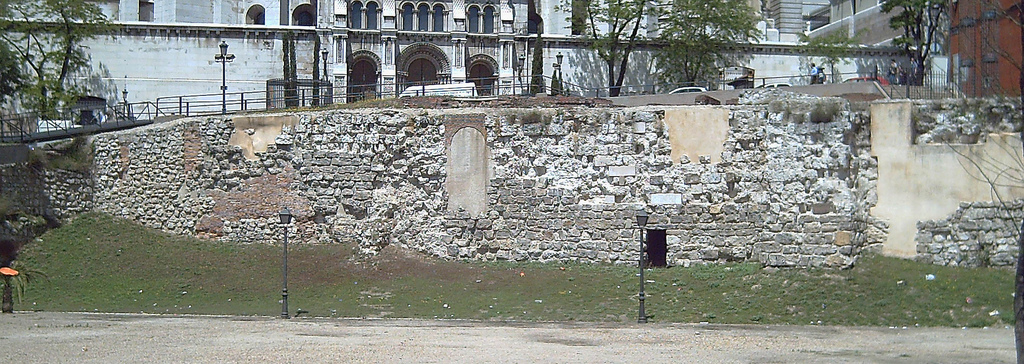
The Christian Walls of Madrid, also known as the Medieval Walls, represent a significant phase in the defensive architecture of Madrid, Spain. Constructed between the 11th and 12th centuries, these walls were built following the city's transition to the Crown of Castile after the Reconquista. They served as an extension to the original 9th-century Muslim Walls, expanding the city's fortifications to encompass the new districts that emerged during this period of Christian consolidation. Historical context and purpose After Madrid was captured from Muslim control, the need arose to protect the growing Christian population and the newly established districts. The Christian Walls were constructed primarily as a defensive measure against potential invasions and internal unrest. Their erection reflected the military and political changes of the High Medieval period in the Iberian Peninsula, particularly the efforts of the Castilian monarchy to secure its expanding territories. Architectural features and layout The walls followed a bastioned fortress design, incorporating towers and gates strategically placed to control access and enhance defense. The fortifications enclosed a larger urban area than the earlier Muslim walls, accommodating the new Christian neighborhoods. The construction utilized local materials and techniques typical of the High Medieval period, with robust stone masonry forming thick walls designed to withstand sieges. Key sections and surviving remains Despite the extensive demolition of the walls following the relocation of the royal court by Philip II in 1561, several sections remain visible today. Important surviving fragments are found along the streets of los Mancebos, Don Pedro, del Almendro, Escalinata, del Espejo, Mesón de Paños, and Cava Baja. Additional remnants are located in Plaza de Isabel II and within the underground parking garage at Plaza de Oriente. Integration into the urban fabric The remaining sections of the walls have been incorporated into the structures of buildings in El Madrid de los Austrias, the historic center named after the Habsburg dynasty. This integration reflects the layers of Madrid's urban development, where medieval fortifications coexist with later architectural styles and city planning. Decline and preservation The walls lost their military function after the court moved to Madrid, leading to their gradual demolition as the city expanded beyond the medieval boundaries. However, recognition of their historical and cultural value led to the designation of the surviving remains as a Historical and Artistic Monument in 1954. Conservation efforts aim to preserve these fragments as tangible links to Madrid's medieval past. Significance in Spanish medieval fortifications The Christian Walls of Madrid exemplify the transitional period of fortification architecture in Spain, bridging the Islamic defensive traditions with emerging Christian military styles. Their bastioned fortress characteristics illustrate adaptations to new warfare techniques and urban expansion needs during the High Medieval period. Legacy and visitor experience Today, visitors to Madrid can explore the historic center to view these remnants, which offer insight into the city's medieval defenses and urban evolution. The walls contribute to the cultural heritage of Madrid, providing a physical connection to the city's formative centuries.

High Medieval (11th–13th c.)
Details