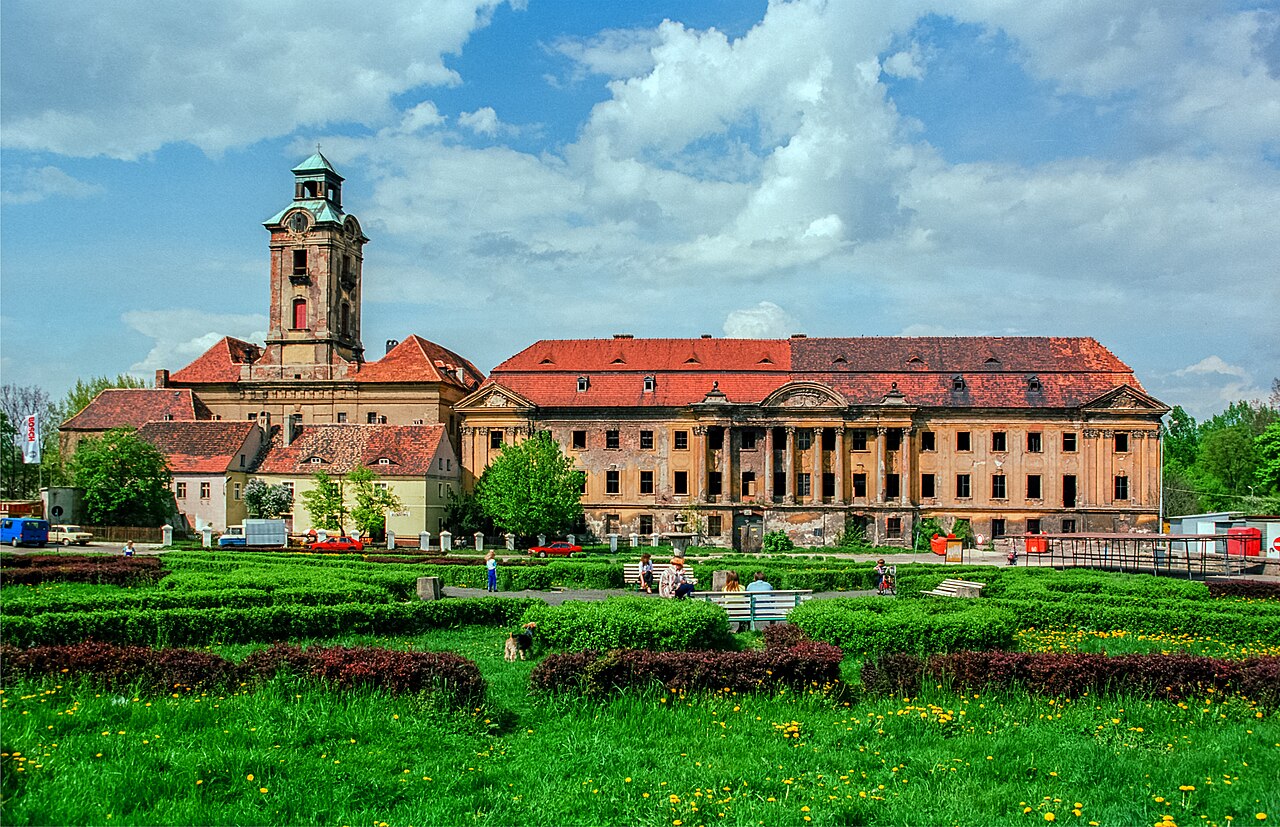
Muskau Castle
Muskau Castle, located in Bad Muskau, Germany, is renowned primarily for its association with the expansive Muskau Park, a masterpiece of landscape design and a designated UNESCO World Heritage Site since 2004. The castle complex and its surrounding park represent a harmonious blend of architectural and natural beauty, reflecting the evolution of garden and castle design in the 19th century.
Architectural development of Muskau Castle
The castle complex, known locally as Schloss Muskau, developed over several centuries, but the defining structure today is the New Palace, constructed in the 19th century. This main building exemplifies the Neo-Renaissance architectural style, characterized by its symmetrical facades, ornate detailing, and elegant proportions. The New Palace replaced earlier structures on the site and served as the centerpiece of the estate during the period of its greatest cultural significance.
The castle's architecture reflects the tastes and ambitions of the era, combining classical Renaissance elements with modern construction techniques of the time. This style was part of a broader 19th-century revival of Renaissance aesthetics across Europe, emphasizing grandeur and historical continuity.
Significance of Muskau Park
Muskau Park is one of the largest and most famous English landscape gardens in Central Europe, uniquely spanning both sides of the German-Polish border along the Lusatian Neisse River. The park covers approximately 3.5 square kilometers and was designed to create a naturalistic landscape that integrates seamlessly with the castle and its surroundings.
The park was originally laid out by Prince Hermann von Pückler-Muskau, a pioneering landscape gardener and nobleman, who envisioned a park that combined artistic landscaping with the natural topography of the region. His work at Muskau established new standards for garden design, emphasizing sweeping vistas, carefully planned water features, and a variety of plantings to create a living work of art.
The park includes a variety of features such as winding paths, ornamental lakes, bridges, and strategically placed architectural follies that enhance the visitor experience and highlight the natural beauty of the area. The integration of the park with the castle complex exemplifies the 19th-century ideal of combining architecture and landscape to create a unified aesthetic environment.
Historical context and cultural importance
The development of Muskau Castle and its park occurred during a period of significant cultural and political change in Europe. The 19th century saw the rise of Romanticism, which influenced the design of the park and the castle, emphasizing emotion, nature, and historical styles. The Neo-Renaissance style of the New Palace reflects this historicist trend, drawing inspiration from the grandeur of the Renaissance while adapting it to contemporary needs.
Muskau Castle and Park have served various roles over time, including a noble residence, a cultural landmark, and a public park. The site's preservation and recognition by UNESCO highlight its importance as a cultural heritage site that embodies the artistic and historical values of the region.
Present-day status and visitor experience
Today, Muskau Castle and its park are open to visitors who come to explore the rich history, architectural beauty, and natural landscapes. The castle itself, particularly the New Palace, offers insight into 19th-century aristocratic life and architectural trends. Visitors can enjoy walking tours, guided excursions, and seasonal events that celebrate the heritage of the estate.
The park's extensive pathways and scenic views provide a tranquil setting for recreation and education, making it a popular destination for tourists and locals alike. The cross-border nature of the park adds a unique dimension, allowing visitors to experience a shared cultural landscape between Germany and Poland.
Frequently asked questions (FAQ)
- What is the historical significance of Muskau Castle?
- Muskau Castle, a UNESCO World Heritage Site, is renowned for its stunning landscape park and its role as a masterpiece of 19th-century landscape architecture. Designed by Hermann von Pückler-Muskau, the castle symbolizes the harmonious integration of architecture and nature, reflecting the Romantic ideals of its time.
- When was Muskau Castle built?
- Construction of Muskau Castle began in the late 18th century, with major renovations occurring in the 19th century under Hermann von Pückler-Muskau. The castle has undergone extensive restoration efforts since its destruction during World War II, with significant progress made in recent decades to preserve its architectural integrity.
- What are the opening hours for Muskau Castle?
- Muskau Castle is typically open to visitors from April to October, with hours varying slightly throughout the season. It’s best to check the official website before your visit for the most current opening times and any special events that may affect accessibility.
- Can I visit Muskau Castle with a wheelchair?
- Yes, Muskau Castle is designed to be accessible for visitors with mobility impairments. The main areas of the castle and the surrounding park have facilities to ensure a comfortable experience for all guests.
- Is there an admission fee to enter Muskau Castle?
- Yes, there is a ticket fee to enter Muskau Castle and its grounds. Prices vary based on age and whether visitors are part of a guided tour, so checking the official website for current rates and any discounts is recommended.
- When is the best time to visit Muskau Castle?
- The best time to visit Muskau Castle is during the spring and early autumn months when the gardens are in full bloom and the weather is pleasant. Visiting during these times allows you to fully appreciate the beauty of the landscape park surrounding the castle.
- What nearby attractions can I explore when visiting Muskau Castle?
- Nearby attractions include the picturesque Muskau Park, which offers scenic walking trails and beautiful views. Additionally, the town of Bad Muskau is worth exploring for its charming shops, cafes, and cultural heritage sites.
Information
Website
Visit websiteSources & official resources
Verify the information above using these authoritative references.
Loading map...
Visitor reviews
No reviews yet. Been here? Write the first review and help other travelers!
Write the first reviewVisited this castle? Share your experience
Your review helps other travelers and adds first-hand knowledge to our encyclopedia.