Murud-Janjira Castle
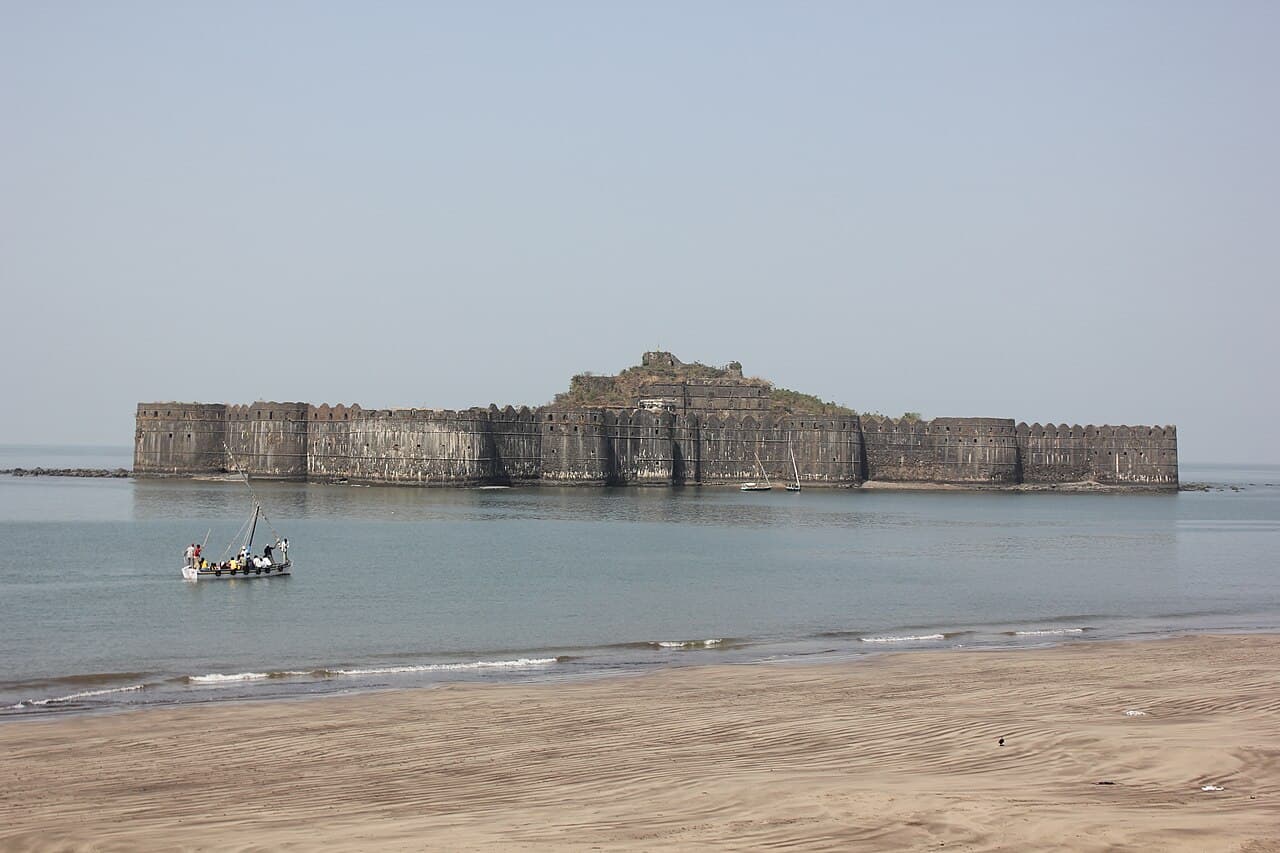
Murud-Janjira castle is a remarkable marine fortress situated on an island just off the coast of the village of Murud in the Raigad district of Maharashtra, India. This fortress stands as a testament to the strategic military architecture of the 15th century and is renowned for its unique position and formidable defenses that made it impregnable to attacks by the Dutch, Marathas, Portuguese, and the English East India Company.
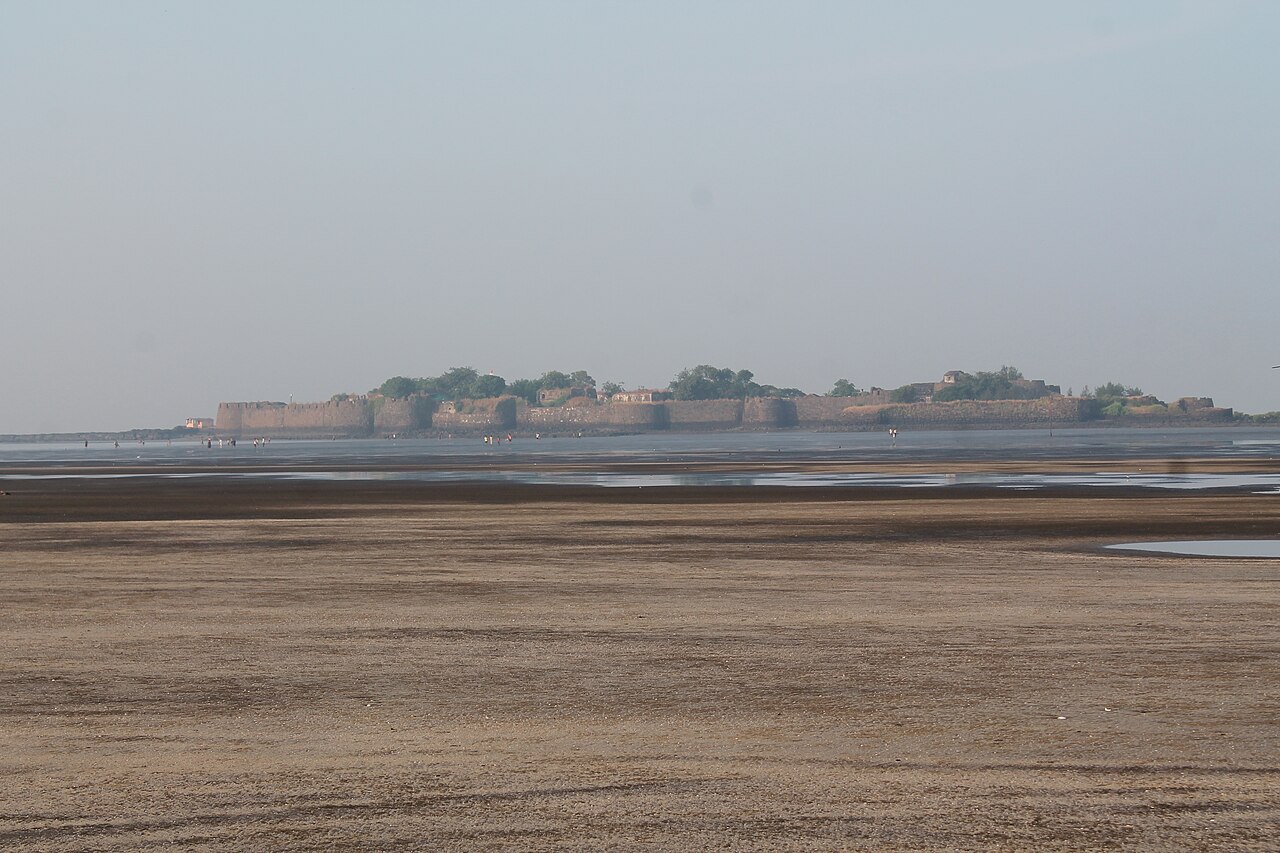
The fort occupies a rocky oval island in the Arabian Sea, approximately 165 kilometers south of Mumbai. It is approached primarily by sailboats from the nearby Rajapuri pier. The main gate of the fort faces Rajapuri and remains concealed until visitors are very close, underscoring the fort's defensive design. Additionally, a small postern gate offshore served as an escape route in times of siege.
Architectural features and fortifications
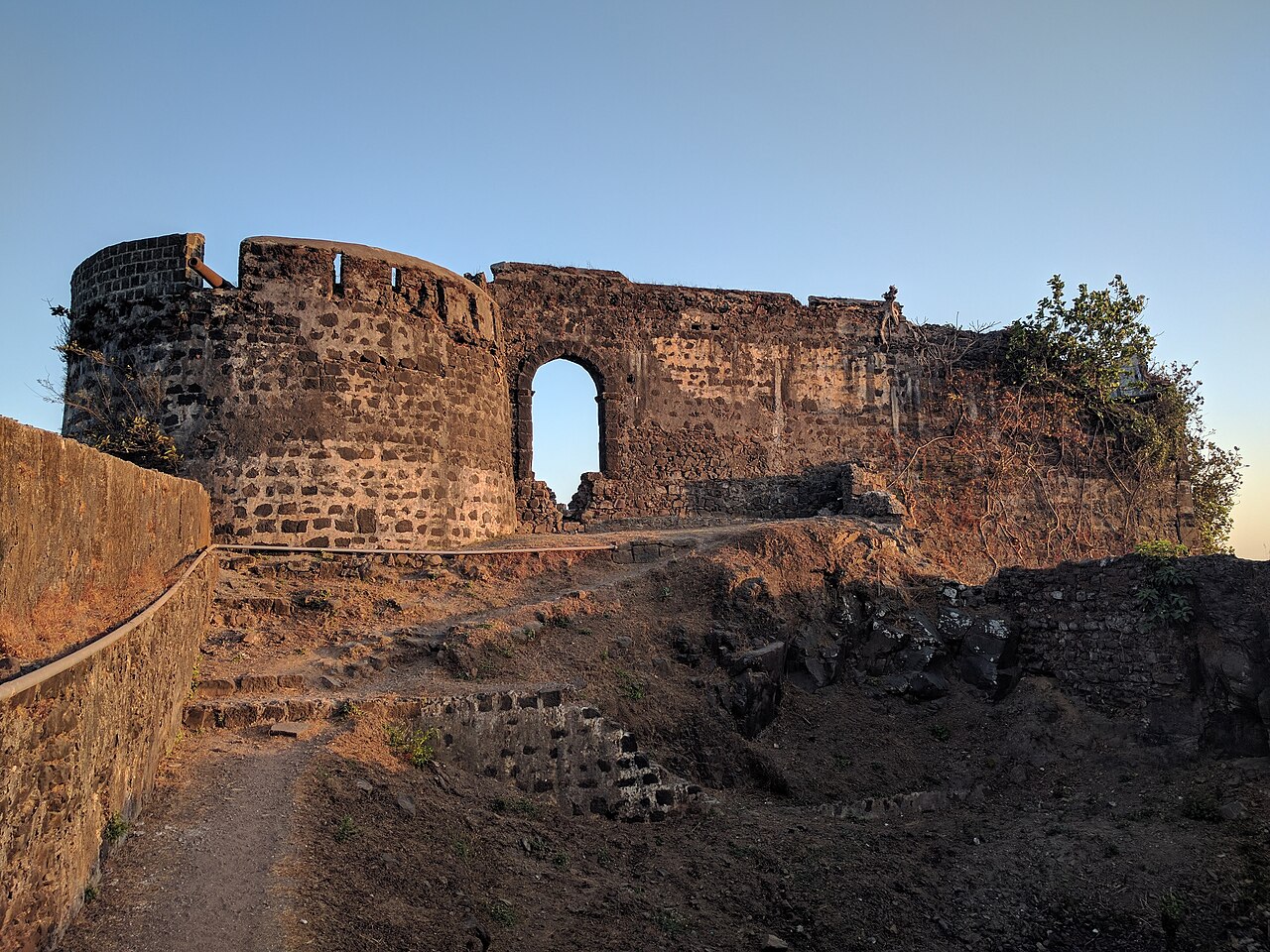
The fort boasts 19 rounded bastions that remain intact, each originally equipped with a variety of cannons of both native and European origin, many of which are now rusted relics. The fort's walls are made from a durable mixture of lead, sand, and lime mortar, contributing to its resilience against artillery attacks.
Within the fort's expansive 22-hectare area, there were numerous essential facilities that made it a self-sustaining stronghold. These included officers' quarters, a mosque, and two large freshwater tanks that ensured a reliable water supply. The fort also features artistic carvings on the outer walls flanking the main gate, including a striking sculpture of a tiger-like beast clutching an elephant, as well as depictions of elephants and lions that reflect the cultural artistry of the period.
The nawabs' palace and secret passages
The palace of the Nawabs of Murud-Janjira remains in good condition and exemplifies the fort's architectural ingenuity. It was designed to be self-sufficient and included secret doors for discreet hiding and escape. The palace's construction is noted for its strength and uniqueness, indicative of the strategic importance placed on security and sustainability within the fort complex.
Historical background and significance
The origins of Murud-Janjira trace back to a small wooden fortification built by a local Koli leader in the late 15th century. This initial structure was intended to protect local fishermen and villagers from pirates and raiders and was known as "Medhekot." The fort was captured by Pir Khan, a general of the Nizamshah of Ahmednagar, who expanded and reinforced it significantly.
Between 1567 and 1571, the fort was transformed into a much larger and more formidable stone fortress by Burhan Khan, under the direction of Malik Ambar, the Abyssinian-origin regent of Ahmednagar. Malik Ambar appointed the Siddi commander who established the fort as a key stronghold. The Siddis, originally loyal to the Adilshahi and later the Mughals, became independent rulers of the fort, maintaining their power despite multiple attempts by various forces to capture it.
Military resilience and sieges
Murud-Janjira is famed for its unconquered status despite repeated assaults by the Portuguese, British, and Maratha forces. The Maratha ruler Shivaji attempted to scale its 12-meter-high granite walls but failed. His son Sambhaji also tried to tunnel into the fort but was unsuccessful. This resilience is a testament to the fort's robust construction and strategic design.
In 1736, during a conflict to regain Raigarh, the Siddis suffered heavy losses at the hands of the forces led by Baji Rao. Despite this, the Siddis maintained control over Murud-Janjira, Gowalkot, and Anjanwel, highlighting the fort's enduring military importance in the region.
Cultural and strategic importance
The fort's location on an island provided a natural defense barrier, making it a significant naval base on the west coast of India. Its control over maritime routes and proximity to important ports underlined its strategic value. Murud-Janjira also served as a cultural hub under the Siddis, who were of African descent and integrated local and Islamic architectural and artistic influences.
The fort's enduring legacy is reflected in its status as one of the strongest marine forts in India and a symbol of the Siddis' maritime power and independence. Today, it stands as a popular tourist attraction, offering insights into the military architecture and history of the western Indian coast.
Visitor experience and accessibility
Visitors typically reach Murud-Janjira by boat from Rajapuri pier, with the fort's impressive silhouette emerging as one approaches the island. The fort's well-preserved bastions, gates, and palace provide a fascinating glimpse into its past. The surrounding waters and scenic coastal views enhance the experience, making it a must-visit for history enthusiasts and architecture admirers alike.
The fort's combination of natural and man-made defenses, along with its rich history of resilience against powerful empires, continues to captivate visitors and scholars interested in India's coastal fortifications.
Frequently asked questions (FAQ)
- How do I reach Murud-Janjira fort?
- Murud-Janjira fort is accessible only by boat from the Rajapuri pier near Murud village. Visitors can hire local boats to reach the island fort.
- What is the historical significance of Murud-Janjira fort?
- Murud-Janjira fort is historically significant as an impregnable marine fortress that resisted multiple attacks by the Portuguese, Marathas, Dutch, and British, showcasing the military prowess of the Siddis.
- When was Murud-Janjira fort built?
- The original fort dates back to the late 15th century, initially constructed as a wooden structure by a local Koli leader before being expanded into a stone fortress in the 16th century.
- Can I explore the palace of the Nawabs inside the fort?
- Yes, the palace of the Nawabs inside Murud-Janjira fort is still in good condition and open for visitors to explore, offering insights into the fort's residential and defensive architecture.
- Is Murud-Janjira fort well preserved?
- The fort is partially preserved with many bastions and structures intact, though some areas show signs of ruin. It remains one of the best-preserved marine forts in India.
- What are the best times to visit Murud-Janjira fort?
- The best time to visit Murud-Janjira is during the cooler months from November to February when the weather is pleasant for boat rides and exploring the fort.
Photo gallery

Information
Loading map...
Visitor reviews
No reviews yet. Been here? Write the first review and help other travelers!
Write the first reviewVisited this castle? Share your experience
Your review helps other travelers and adds first-hand knowledge to our encyclopedia.