Munsbach Castle

Munsbach Castle: baroque heritage in Luxembourg
Munsbach, Luxembourg, Luxembourg
Post-Renaissance (17th–18th c.)
Well Preserved

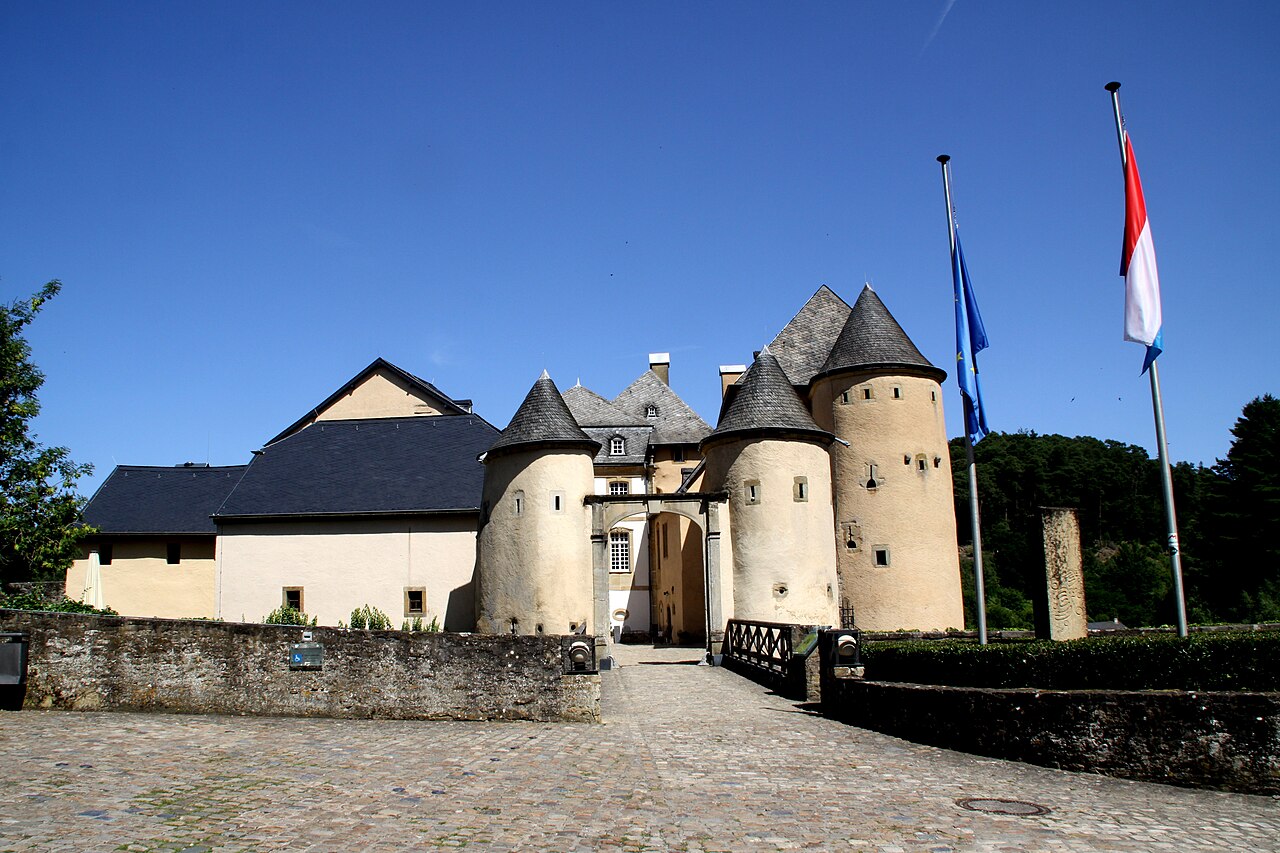
Munsbach Castle is a notable example of Baroque architecture constructed in 1775 during the post-Renaissance period. Located in Munsbach, Luxembourg, the castle reflects the architectural trends of the late 18th century, characterized by symmetry, grandeur, and decorative detail.

Architectural features and design

The castle prominently features two towers that contribute to its distinctive silhouette. These towers, along with the main building, exhibit the typical Baroque emphasis on bold forms and elaborate ornamentation. The structure is complemented by several dependent buildings that historically supported the castle’s functions and estate operations.

The layout of Munsbach Castle follows the Baroque tradition of integrating the main residence with its surrounding outbuildings to create a cohesive estate. The design balances aesthetic appeal with practical use, reflecting the architectural priorities of the era.

Historical context and ownership

Constructed in the late 18th century, Munsbach Castle was built during a period when Luxembourg was influenced by various European powers, which is reflected in its architectural style. The castle has transitioned from a private noble residence to a modern educational facility.

Today, the castle is owned by the Institut Universitaire International Luxembourg. The institute utilizes the castle as a center for higher education, offering courses in business, European law, and public sector management. This adaptive reuse preserves the castle's historical fabric while giving it a contemporary function.

Preservation and current use

Munsbach Castle is maintained in a well-preserved condition, retaining much of its original Baroque character. The castle’s preservation allows visitors and students alike to experience a historical environment that continues to serve a practical role in Luxembourg’s educational landscape.

The castle grounds and buildings provide a unique setting that combines cultural heritage with academic pursuits, highlighting the versatility of historic estates in modern contexts.

Significance in Luxembourg’s cultural heritage

As a post-Renaissance Baroque castle, Munsbach Castle represents an important chapter in Luxembourg’s architectural history. Its survival and continued use demonstrate the value placed on preserving historical monuments while adapting them for contemporary needs.

The castle contributes to the understanding of 18th-century aristocratic life and architectural trends in the region, making it a point of interest for historians, architects, and visitors interested in Luxembourg’s heritage.

Frequently asked questions (FAQ)

What is the historical significance of Munsbach Castle?
Munsbach Castle is a remarkable example of medieval architecture in Luxembourg, dating back to the 14th century. It serves as a symbol of the region's rich history and has been an important residence for various noble families over the centuries. Today, it stands as a testament to the feudal past of the area and attracts history enthusiasts from around the world.
When was Munsbach Castle built?
Munsbach Castle was constructed in the late 14th century, specifically around 1380. Its design reflects the architectural styles of the time, showcasing the defensive features typical of medieval fortifications. Over the years, it has undergone several renovations, preserving its historical essence while adapting to modern needs.
Can I visit Munsbach Castle?
Yes, Munsbach Castle is open to visitors, allowing them to explore its beautiful grounds and learn about its history. Guided tours are available, providing insights into the castle's past and architectural features. Be sure to check the official website for the latest visitor information and any special events.
What are the opening hours for Munsbach Castle?
Munsbach Castle typically opens to the public from 10 AM to 5 PM, Tuesday through Sunday. However, it is advisable to verify the hours ahead of your visit as they may vary seasonally or due to special events. Checking the official website will provide the most accurate and updated information.
Is it possible to hold events at Munsbach Castle?
Yes, Munsbach Castle offers facilities for hosting various events, including weddings, corporate gatherings, and private parties. The picturesque surroundings and historical ambiance make it a unique venue for special occasions. Interested parties should contact the castle management for details on availability and booking procedures.
What is the best time to visit Munsbach Castle?
The best time to visit Munsbach Castle is during the spring and early autumn when the weather is mild and the gardens are in full bloom. These seasons not only enhance the beauty of the castle's surroundings but also offer a more pleasant experience for exploring the grounds. Additionally, visiting during special events or festivals can provide a unique perspective on the castle's history.
Are there any nearby attractions to visit?
Yes, Munsbach Castle is conveniently located near several attractions, including the charming village of Munsbach and the picturesque Moselle Valley. Visitors can also explore local wineries and scenic hiking trails in the area. Combining your visit to the castle with nearby attractions can create a wonderful day out.
What are the ticket prices for Munsbach Castle?
Ticket prices for Munsbach Castle vary depending on the type of tour or event. Generally, adult tickets range from 5 to 10 euros, while discounts may apply for students and seniors. It's best to check the official website for up-to-date pricing and any special offers.
How do I get to Munsbach Castle?
Munsbach Castle is easily accessible by car and is located just a short drive from Luxembourg City. Public transportation options, such as buses, also serve the area, making it convenient for visitors. For the most accurate travel information, consider checking local transit schedules or maps before your visit.

Information

Lowland Castle

Current owner

Institut Universitaire International Luxembourg

Loading map...

Visitor reviews

No reviews yet. Been here? Write the first review and help other travelers!

Write the first review

Visited this castle? Share your experience

Your review helps other travelers and adds first-hand knowledge to our encyclopedia.

Write a review

(5/5)

0/2000 characters

Your review will be visible after admin approval

Nearby castles

8.6 km
La Fontaine Castle — Luxembourg castle

La Fontaine Castle

Luxembourg City, Luxembourg

La Fontaine Castle, known in French as Château La Fontaine, in German as Schloss La Fontaine, and in Luxembourgish as Schlass La Fontaine, was a significant Renaissance-era residence located in the Clausen district of Luxembourg City. Constructed beginning in 1563, it served as the home of Peter Ernst I von Mansfeld-Vorderort, the governor of Luxembourg during the late 16th century. The castle is also referred to as the Palais Mansfeld or Mansfeld Palace, highlighting its association with this prominent historical figure. Historical background and significance Peter Ernst I von Mansfeld-Vorderort was appointed governor of Luxembourg in 1545 and remained in this position until his death in 1604. During his tenure, he undertook the ambitious construction and expansion of La Fontaine Castle, transforming it into an elaborate Renaissance residence. This period in Luxembourg was marked by significant architectural and cultural developments influenced by Renaissance ideals spreading across Europe. The castle's construction began in 1563, a time when Renaissance architecture was becoming prominent in the region. Mansfeld's residence was a symbol of his status and power, reflecting the era's architectural trends and the political importance of Luxembourg within the Holy Roman Empire. Architectural features and design While almost nothing remains of La Fontaine Castle today, historical records indicate that it was an elaborate structure typical of Renaissance architecture. The castle likely featured ornate façades, symmetrical layouts, and decorative elements such as pilasters, cornices, and classical motifs inspired by Italian Renaissance designs. The residence would have included spacious halls and living quarters befitting a governor of Luxembourg, as well as defensive features common to castles of the period, though its primary function was residential rather than military. The location in Clausen, a district known for its historical significance, provided a strategic and prestigious setting. Decline and current condition Over the centuries, La Fontaine Castle fell into disrepair and was eventually reduced to ruins. Today, only archaeological remains mark the site where the castle once stood. The loss of the physical structure limits detailed study, but the castle remains an important part of Luxembourg's heritage and history. Archaeological efforts have helped to uncover some aspects of the castle's layout and construction techniques, providing valuable insights into Renaissance architecture in Luxembourg. The site serves as a reminder of the region's historical evolution and the legacy of its notable figures like Mansfeld. La Fontaine Castle in the context of Luxembourg's heritage Though the castle no longer stands, its historical significance endures. It represents a period when Luxembourg was a key political and cultural center in Europe. The association with Peter Ernst I von Mansfeld-Vorderort connects the site to broader European history, including the governance and military affairs of the Holy Roman Empire. La Fontaine Castle's story contributes to understanding the Renaissance influence on Luxembourg's architectural and cultural landscape. It also highlights the challenges of preserving historical monuments, especially those that have not survived intact. Visiting the site today As an archaeological site with only ruins remaining, La Fontaine Castle does not offer extensive visitor facilities or reconstructed buildings. However, the location in Clausen is accessible and of interest to those studying Luxembourg's history or exploring its heritage sites. Visitors can view the archaeological remains and appreciate the historical context of the castle within Luxembourg City's development. Informational plaques or guided tours may provide additional background on the castle's significance and Mansfeld's role in the region.

Renaissance (15th–17th c.)
Details
8.6 km
Bourglinster Castle — Luxembourg castle

Bourglinster Castle

Rue du Château 8, Luxembourg

Bourglinster Castle, also known locally as Burg Linster, is a remarkable example of a late medieval hill castle located in the village of Bourglinster, about 17 kilometers east of Luxembourg City. The castle's history spans nearly a millennium, with its earliest recorded mention dating back to 1098, when it belonged to the religious institution of St Symeon of Trier. Originally, the castle complex consisted of a residential keep, a Romanesque chapel, and a defensive curtain wall, establishing it as a fortified noble residence in the medieval period. Medieval origins and architectural evolution The oldest surviving architectural elements of Bourglinster Castle date from the 12th century, including the residential tower, the chapel, and the surrounding curtain wall that defined the upper castle. Around 1350, the chapel was extensively rebuilt in the Gothic style, reflecting the architectural trends of the time. Concurrently, a bergfried (a tall defensive tower) was added on the northern side, significantly enhancing the castle's fortifications. Between the late 14th century and early 15th century, the castle expanded with the construction of the lower castle or basse cour, situated to the north of the main structure. This lower section included fortified walls, two defensive towers, and the Waldeck house, providing additional residential and defensive capabilities. The moat surrounding the lower castle was dug out in the 15th century, although it proved insufficient to prevent damage during later military conflicts. Ownership and historical significance Throughout its history, Bourglinster Castle was owned by several noble families, including the Lords of Orley in the 14th century. In 1421, it became a Ganerbenburg, a castle jointly owned and inhabited by multiple noble families such as the Orley, Hammerstein, Bettstein, Waldeck, and Metzenhausen families. The complex rules of this shared ownership were codified in a Burgfrieden or "Castle Peace," which regulated the rights and responsibilities of the co-owners. From the 16th to 18th centuries, the castle was held as a fief by the von Metzenhausen family, who exercised judicial rights granted by Emperor Charles V, underscoring the castle's role in local governance and administration. Conflicts, destruction, and architectural modifications Bourglinster Castle endured significant damage during the wars between Charles V and Francis I from 1542 to 1544. Following these conflicts, the castle was repaired and expanded with the addition of a Renaissance wing in 1548, which included a new southern wing designed in Renaissance architectural style. Further destruction occurred during the late 17th century when French troops under Marshal de Boufflers attacked the castle in 1682 and 1684. These assaults severely damaged the lower castle, leading to the demolition of most of its buildings by the late 17th century. In the early 18th century, the castle's appearance was updated with the construction of a Baroque façade at the far end of the courtyard, commissioned by the Mungenast brothers between 1730 and 1750. This addition reflected the evolving tastes and architectural styles of the period. Later history, restoration, and current use After the castle's decline as a noble residence, it was sold around 1850 and converted into a farmhouse, a function it retained until the mid-20th century. In 1968, the State of Luxembourg acquired Bourglinster Castle and undertook extensive restoration work, which was completed by 1988. The castle was officially listed as a national monument in 1982. Today, Bourglinster Castle is well preserved and serves as a vibrant cultural venue. It houses three banqueting halls, including the elegant Salle des chevaliers (knight's hall), which hosts chamber music concerts and various events. The former stables have been repurposed as an arts center managed by a local artists' collective, while a converted barn functions as a used bookstore known as the Pabeierscheier (Paper Barn). The castle also features La Distillerie, a renowned restaurant considered one of the finest in Luxembourg, attracting visitors who wish to experience its historic ambiance alongside gourmet dining. Although the castle's interior is generally accessible only to restaurant guests, visitors can freely explore the castle grounds and the remains of the lower castle. Architectural features and layout Bourglinster Castle is strategically situated on a low rocky hill, a typical location for a hill castle that provided natural defensive advantages. The complex is divided into the upper castle, containing the original residential keep and chapel, and the lower castle with its fortified walls, moat, and defensive towers. The chapel is a significant architectural highlight, originally built in the Romanesque style and later rebuilt in the Gothic style around the mid-14th century. The addition of the bergfried provided a powerful lookout and defensive position on the northern side of the upper castle. The Renaissance wing added in 1548 along the southern courtyard side introduces elegant architectural details characteristic of the Renaissance period. The Baroque façade from the 18th century adds a contrasting stylistic element, demonstrating the castle's architectural evolution through centuries.

Late Medieval (14th–15th c.)
Details
8.8 km
Fort Thüngen — Luxembourg castle

Fort Thüngen

Luxembourg City, Luxembourg

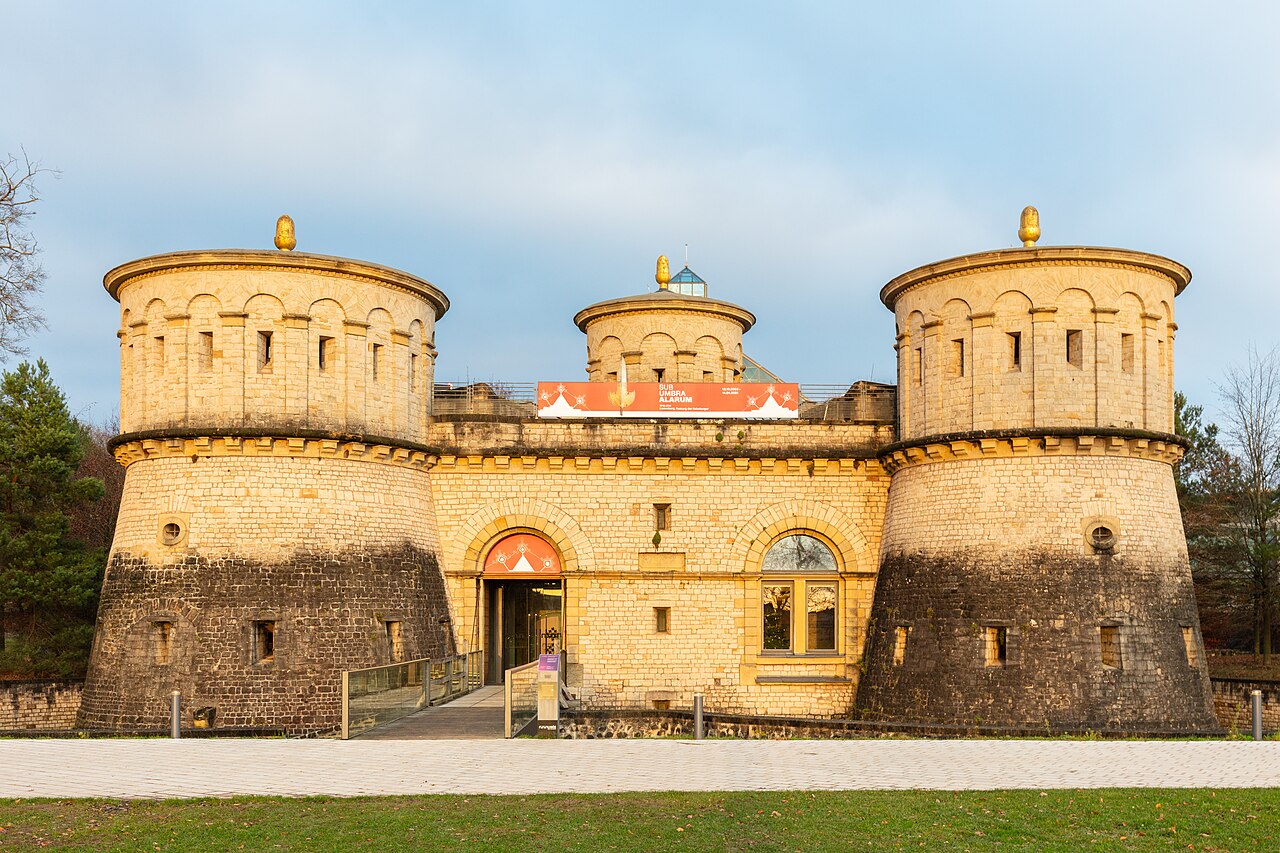
Fort Thüngen is a significant bastioned fortress located in Luxembourg City, within the Dräi Eechelen Park in the Kirchberg district. This historic fortification, often referred to as Three Acorns (Luxembourgish: Dräi Eechelen), derives its nickname from the distinctive acorn-shaped finials atop its three surviving towers. The fort stands as a remarkable example of 18th-century military architecture and reflects the evolving defensive strategies of Luxembourg through the centuries. Origins and early construction The original fortification on this site was the Redoute du Parc, a defensive work established by the renowned French military engineer Sébastien Le Prestre de Vauban around 1683. Approximately 50 years later, in 1732-1733, the fortress was expanded and enclosed by the Austrian military under the command of Adam Sigmund von Thüngen, after whom the fort is named. This construction phase marked the transformation of the site into a fully bastioned fortress designed to withstand the artillery advances of the post-Renaissance period. Architectural features and defensive design Fort Thüngen was strategically designed with a deep moat surrounding the main structure, enhancing its defensive capability. Access to the fort was uniquely secured by a 169-metre-long underground tunnel carved through the rock from the nearby Obergrünewald forest. This tunnel allowed safe passage for troops and supplies, protected from enemy fire. The fortress's layout featured bastions that provided overlapping fields of fire, a hallmark of military engineering in the 18th century. The three towers The three towers of Fort Thüngen are its most distinctive architectural elements. Each tower is topped with an acorn-shaped finial, which inspired the fort's local name. These towers served as observation points and defensive strongholds, allowing defenders to monitor the surrounding landscape and repel attackers. Their robust construction and strategic placement exemplify the principles of bastioned fortifications, which aimed to eliminate blind spots and maximize defensive coverage. Modifications and historical developments In 1836, the Prussian military authorities undertook significant extensions to the fort, reflecting the changing military technologies and strategic needs of the 19th century. Further strengthening occurred between 1859 and 1860, enhancing the fort's resilience against more powerful artillery. Despite these improvements, the fort's military role diminished following the 1867 Treaty of London, which mandated the dismantling of Luxembourg City's extensive fortifications to ensure its neutrality. Demolition and preservation Following the treaty, most of Fort Thüngen was demolished, leaving only the three towers and the foundational structures intact. These remnants became a symbol of Luxembourg's complex military history and its position as a fortified city in Europe. The site gradually transitioned from a military installation to a historical monument. Restoration and modern use During the 1990s, Fort Thüngen underwent a comprehensive reconstruction project that aimed to restore the fort to its historical form. This restoration was carried out in conjunction with the development of the nearby Mudam Luxembourg – Musée d'Art Moderne Grand-Duc Jean, integrating the fort into a cultural and heritage precinct. The restoration carefully preserved the original bastioned layout and the iconic towers. Musée Dräi Eechelen In 2012, the restored fort was reopened as the Musée Dräi Eechelen, a museum dedicated to the history of Luxembourg's fortifications and military past. The museum offers visitors detailed exhibitions on the architectural evolution of the fort, the strategic importance of Luxembourg City, and the broader European military context. Its location within the historic walls provides an immersive experience that connects visitors directly with the site’s heritage. Significance in Luxembourg's heritage Fort Thüngen represents a critical chapter in the military and architectural history of Luxembourg. Its bastioned design reflects the defensive innovations of the 18th century, while its survival and restoration illustrate the city’s commitment to preserving its historical landmarks. The fort’s integration with modern cultural institutions highlights the adaptive reuse of military architecture for educational and tourism purposes. Today, Fort Thüngen stands as a prominent landmark within Dräi Eechelen Park, offering panoramic views of Luxembourg City and serving as a reminder of the city’s fortified past. Its well-preserved towers and reconstructed walls provide valuable insights into the construction techniques and military strategies of the post-Renaissance period. Visitors can explore the museum’s exhibitions and the fort’s architectural features, gaining a comprehensive understanding of Luxembourg’s role in European military history.

Post-Renaissance (17th–18th c.)
Details