Fort Thüngen
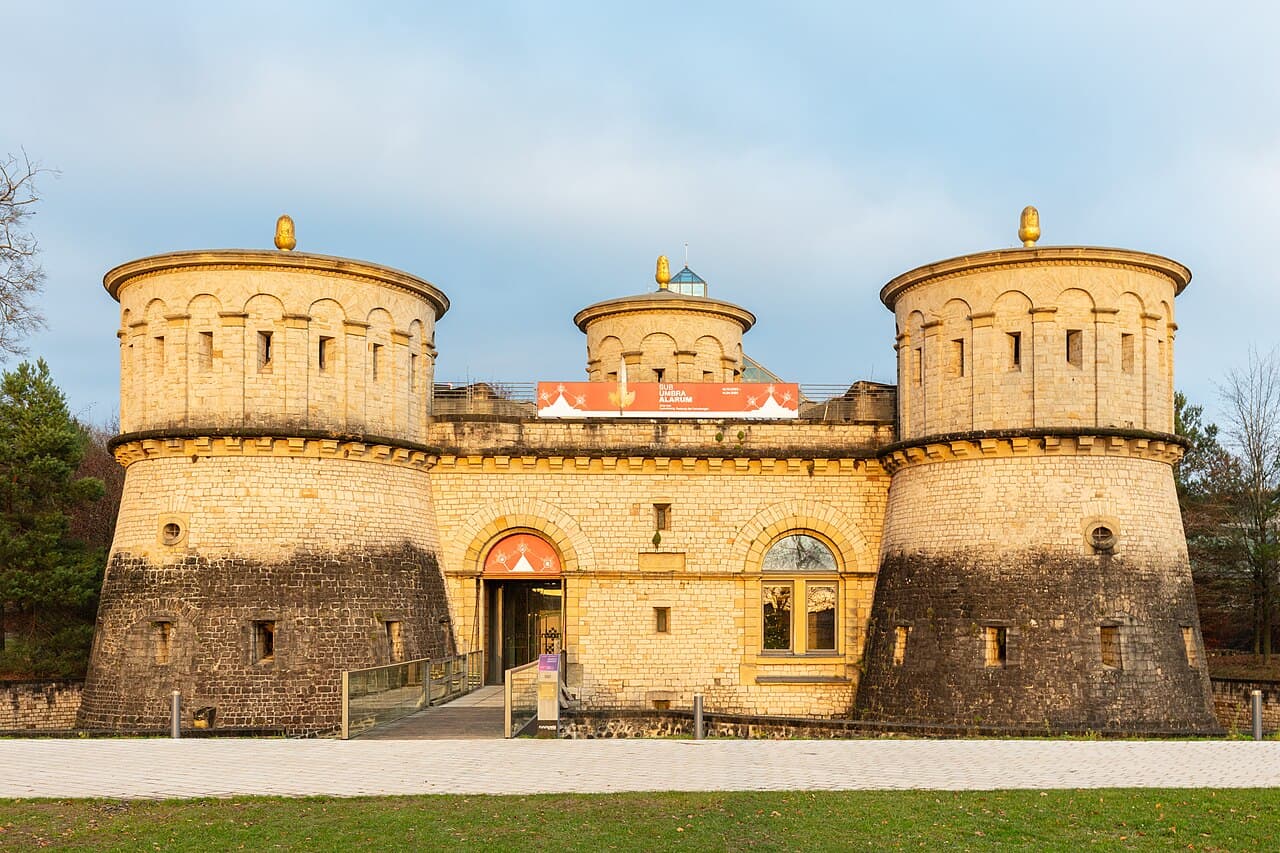
Fort Thüngen is a significant bastioned fortress located in Luxembourg City, within the Dräi Eechelen Park in the Kirchberg district. This historic fortification, often referred to as Three Acorns (Luxembourgish: Dräi Eechelen), derives its nickname from the distinctive acorn-shaped finials atop its three surviving towers. The fort stands as a remarkable example of 18th-century military architecture and reflects the evolving defensive strategies of Luxembourg through the centuries.
Origins and early construction
The original fortification on this site was the Redoute du Parc, a defensive work established by the renowned French military engineer Sébastien Le Prestre de Vauban around 1683. Approximately 50 years later, in 1732-1733, the fortress was expanded and enclosed by the Austrian military under the command of Adam Sigmund von Thüngen, after whom the fort is named. This construction phase marked the transformation of the site into a fully bastioned fortress designed to withstand the artillery advances of the post-Renaissance period.
Architectural features and defensive design
Fort Thüngen was strategically designed with a deep moat surrounding the main structure, enhancing its defensive capability. Access to the fort was uniquely secured by a 169-metre-long underground tunnel carved through the rock from the nearby Obergrünewald forest. This tunnel allowed safe passage for troops and supplies, protected from enemy fire. The fortress's layout featured bastions that provided overlapping fields of fire, a hallmark of military engineering in the 18th century.
The three towers
The three towers of Fort Thüngen are its most distinctive architectural elements. Each tower is topped with an acorn-shaped finial, which inspired the fort's local name. These towers served as observation points and defensive strongholds, allowing defenders to monitor the surrounding landscape and repel attackers. Their robust construction and strategic placement exemplify the principles of bastioned fortifications, which aimed to eliminate blind spots and maximize defensive coverage.
Modifications and historical developments
In 1836, the Prussian military authorities undertook significant extensions to the fort, reflecting the changing military technologies and strategic needs of the 19th century. Further strengthening occurred between 1859 and 1860, enhancing the fort's resilience against more powerful artillery. Despite these improvements, the fort's military role diminished following the 1867 Treaty of London, which mandated the dismantling of Luxembourg City's extensive fortifications to ensure its neutrality.
Demolition and preservation
Following the treaty, most of Fort Thüngen was demolished, leaving only the three towers and the foundational structures intact. These remnants became a symbol of Luxembourg's complex military history and its position as a fortified city in Europe. The site gradually transitioned from a military installation to a historical monument.
Restoration and modern use
During the 1990s, Fort Thüngen underwent a comprehensive reconstruction project that aimed to restore the fort to its historical form. This restoration was carried out in conjunction with the development of the nearby Mudam Luxembourg – Musée d'Art Moderne Grand-Duc Jean, integrating the fort into a cultural and heritage precinct. The restoration carefully preserved the original bastioned layout and the iconic towers.
Musée Dräi Eechelen
In 2012, the restored fort was reopened as the Musée Dräi Eechelen, a museum dedicated to the history of Luxembourg's fortifications and military past. The museum offers visitors detailed exhibitions on the architectural evolution of the fort, the strategic importance of Luxembourg City, and the broader European military context. Its location within the historic walls provides an immersive experience that connects visitors directly with the site’s heritage.
Significance in Luxembourg's heritage
Fort Thüngen represents a critical chapter in the military and architectural history of Luxembourg. Its bastioned design reflects the defensive innovations of the 18th century, while its survival and restoration illustrate the city’s commitment to preserving its historical landmarks. The fort’s integration with modern cultural institutions highlights the adaptive reuse of military architecture for educational and tourism purposes.
Today, Fort Thüngen stands as a prominent landmark within Dräi Eechelen Park, offering panoramic views of Luxembourg City and serving as a reminder of the city’s fortified past. Its well-preserved towers and reconstructed walls provide valuable insights into the construction techniques and military strategies of the post-Renaissance period. Visitors can explore the museum’s exhibitions and the fort’s architectural features, gaining a comprehensive understanding of Luxembourg’s role in European military history.
Frequently asked questions (FAQ)
- What is the historical significance of Fort Thüngen?
- Fort Thüngen is a significant example of 19th-century military architecture and played a crucial role in the fortifications of Luxembourg City. Built between 1732 and 1735, it served as a defensive structure during various conflicts and now stands as a testament to Luxembourg's military history.
- What are the opening hours of Fort Thüngen?
- Fort Thüngen is typically open to visitors from 10 AM to 6 PM, Tuesday through Sunday. However, it is closed on Mondays and certain public holidays, so it's advisable to check the official website for any updates before your visit.
- Can I purchase tickets in advance for Fort Thüngen?
- Yes, tickets for Fort Thüngen can be purchased online in advance, which is highly recommended during peak tourist seasons. This allows you to secure your entry and avoid long wait times on-site.
- When is the best time to visit Fort Thüngen?
- The best time to visit Fort Thüngen is during the spring and early autumn months when the weather is mild and pleasant. Additionally, visiting during weekdays can help you avoid crowds and enjoy a more peaceful experience.
- Is Fort Thüngen accessible for visitors with disabilities?
- Fort Thüngen strives to be accessible to all visitors, with ramps and designated paths for those with mobility challenges. However, some areas may have limited access due to the castle's historical structure, so checking in advance is advisable.
- What nearby attractions can I visit while at Fort Thüngen?
- While visiting Fort Thüngen, you can also explore the nearby Parc de la Pétrusse and the Luxembourg City History Museum. Both locations offer a rich cultural experience and are within walking distance from the fort.
- What architectural features characterize Fort Thüngen?
- Fort Thüngen showcases a blend of Renaissance and Baroque architectural styles, with its impressive bastions and thick stone walls. The fort's design reflects the military strategies of its time, making it a fascinating study for architecture enthusiasts.
Photo gallery

Information
Website
Visit websiteSources & official resources
Verify the information above using these authoritative references.
Loading map...
Visitor reviews
No reviews yet. Been here? Write the first review and help other travelers!
Write the first reviewVisited this castle? Share your experience
Your review helps other travelers and adds first-hand knowledge to our encyclopedia.