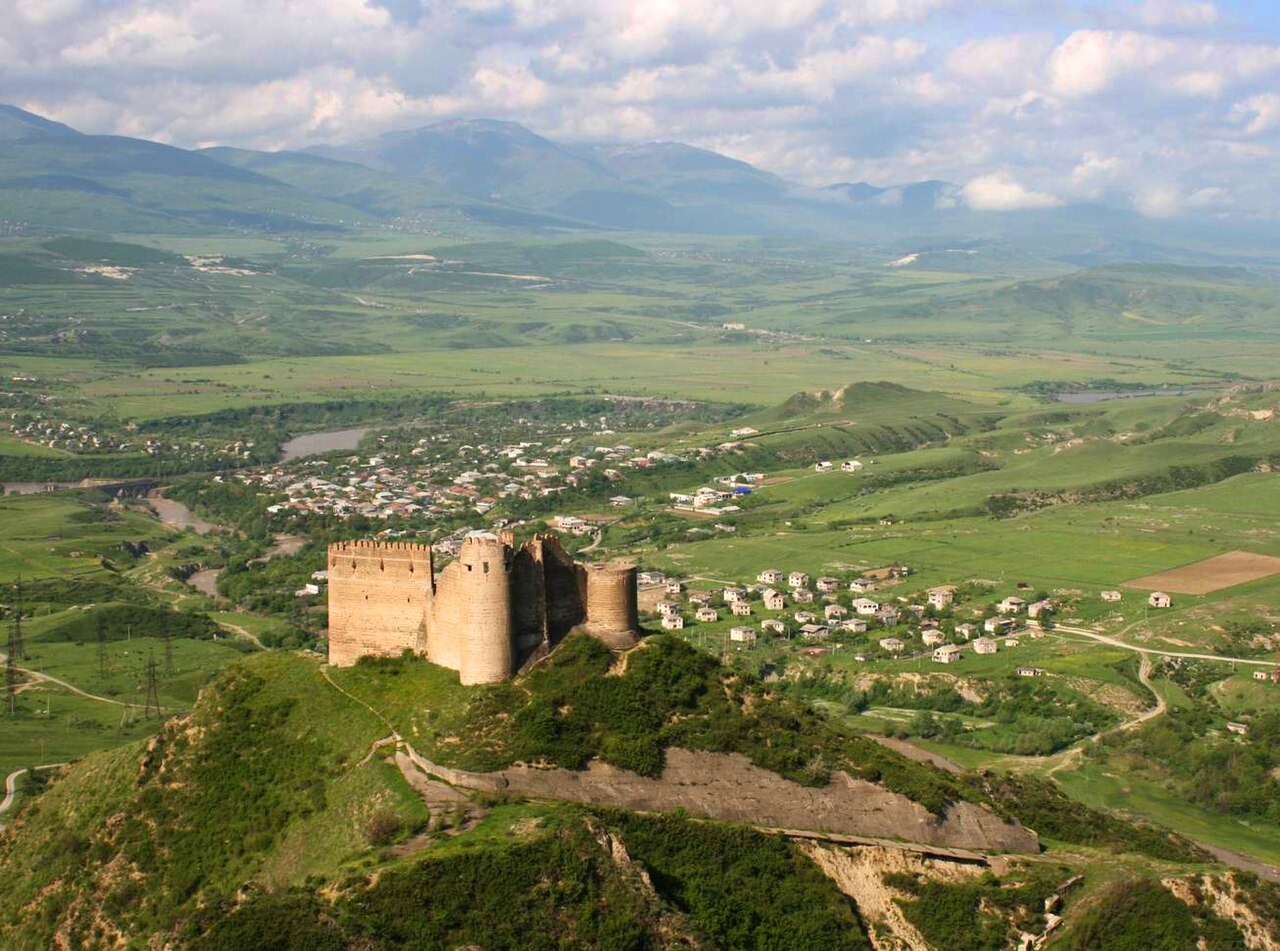
Mukhrani Castle
Mukhrani Castle is located in the village of Mukhrani within the Mtskheta municipality of the Mtskheta-Mtianeti region in Georgia. This 18th-century fortress was constructed in the early 1700s and has played a significant role in the region's history, serving both as a noble residence and a place of refuge for local villagers during times of conflict.
Historical background and origins
The castle was built in the 1730s by Mamuka Mukhranbatoni with assistance from Levan Mukhranbatoni, members of the influential Mukhrani noble family. This family was a branch of the Bagrationi dynasty, which ruled various parts of Georgia for centuries. The castle served as the main residence of the lords of Mukhrani, symbolizing their power and status in the region.
By the mid-18th century, the castle had suffered damage during local conflicts. In 1756, Konstantine Mukhranbatoni recorded that the castle had been destroyed by enemy forces, forcing the local villagers to flee. Following this devastation, Konstantine undertook the task of rebuilding the fortress, restoring its defensive capabilities and opening it as a sanctuary for the surrounding population during times of unrest.
After remaining in the hands of the Mukhrani family for over a century, the castle changed ownership in 1895 following the death of its last private owner. This marked the end of its status as a noble residence.
Architectural features and layout
Mukhrani Castle is characterized by its square ground plan with round towers at each corner. This design reflects the typical fortification style of the post-Renaissance period in Georgia, combining defensive functionality with residential needs. The round towers provided vantage points for surveillance and defense against attackers.
Originally, the castle was part of a larger complex of fortifications, including walls and possibly additional defensive structures, which have mostly disappeared over time. The surviving castle walls and towers give insight into the military architecture of the era and the strategic importance of the site.
Construction materials and techniques
The castle was built using local stone and mortar, common in Georgian fortifications of the 18th century. The thick walls and robust towers were designed to withstand sieges and attacks, while the interior spaces were adapted for noble living, including halls, chambers, and service areas.
Later uses and current status
During the Soviet period, the castle was repurposed to house laboratories for an agricultural institute, reflecting a shift from military and residential use to scientific and educational functions. This change altered the castle's interior but helped preserve the structure from complete neglect.
Today, Mukhrani Castle functions as a monastery. Although the castle is well preserved, it is not always open to the public, and visitors may find it closed at times. The religious use of the castle adds a new layer of cultural significance to the site, blending historical heritage with spiritual practice.
Cultural and regional significance
The castle is an important landmark in the Mtskheta-Mtianeti region, illustrating the architectural and historical evolution of Georgian noble residences and fortifications in the 18th century. Its association with the Mukhrani family connects it to the broader narrative of Georgian history and the legacy of the Bagrationi dynasty.
The castle's role as a refuge during conflicts highlights its strategic importance, while its current status as a monastery reflects the ongoing cultural and religious traditions of the area.
Frequently asked questions (FAQ)
- What is the historical significance of Mukhrani Castle?
- Mukhrani Castle, dating back to the 16th century, is a crucial part of Georgia's architectural heritage and played a significant role in the defense of the region. It is linked to the influential Mukhranbatoni noble family, showcasing the rich history of Georgian nobility and their contributions to the country's culture and politics.
- When was Mukhrani Castle built?
- Mukhrani Castle was constructed in the late 16th century, specifically around the year 1580. Its design reflects the defensive architecture of the period, with robust walls and strategic positioning to protect against invasions.
- Can I visit Mukhrani Castle?
- Yes, visitors can explore Mukhrani Castle and its grounds. It is advisable to check the official website or contact local tourism offices for the latest visiting hours and any special events that might be taking place.
- What are the opening hours for Mukhrani Castle?
- Mukhrani Castle typically opens to visitors from 10 AM to 6 PM, but hours may vary seasonally. It's recommended to verify the current schedule before planning your visit to ensure you have ample time to explore the site.
- Is it possible to access Mukhrani Castle by public transport?
- Yes, Mukhrani Castle is accessible by public transport from major cities in Georgia, though schedules may vary. Visitors can also consider using taxi services or renting a car for more flexibility in their travel plans.
- What is the best time to visit Mukhrani Castle?
- The best time to visit Mukhrani Castle is during the spring and early autumn months when the weather is mild and conducive to outdoor exploration. This period also allows visitors to enjoy the scenic beauty of the surrounding landscape.
- Are there any nearby attractions to Mukhrani Castle?
- Yes, nearby attractions include the historic town of Mtskheta, a UNESCO World Heritage site, and the scenic landscapes of the Caucasus Mountains. Visitors can easily combine their trip to Mukhrani Castle with these cultural and natural landmarks.
- What are the ticket prices for Mukhrani Castle?
- Ticket prices for Mukhrani Castle are generally affordable, with discounts available for students and groups. It's best to check the official site for the most current pricing and any special promotions that may be offered.
- What architectural features can I see at Mukhrani Castle?
- Mukhrani Castle features traditional Georgian architectural elements, including thick stone walls, towers, and intricate designs that reflect the era's defensive needs. Visitors can appreciate the blend of functionality and artistry that characterizes this historical structure.
Information
Loading map...
Visitor reviews
No reviews yet. Been here? Write the first review and help other travelers!
Write the first reviewVisited this castle? Share your experience
Your review helps other travelers and adds first-hand knowledge to our encyclopedia.