Ksani Castle
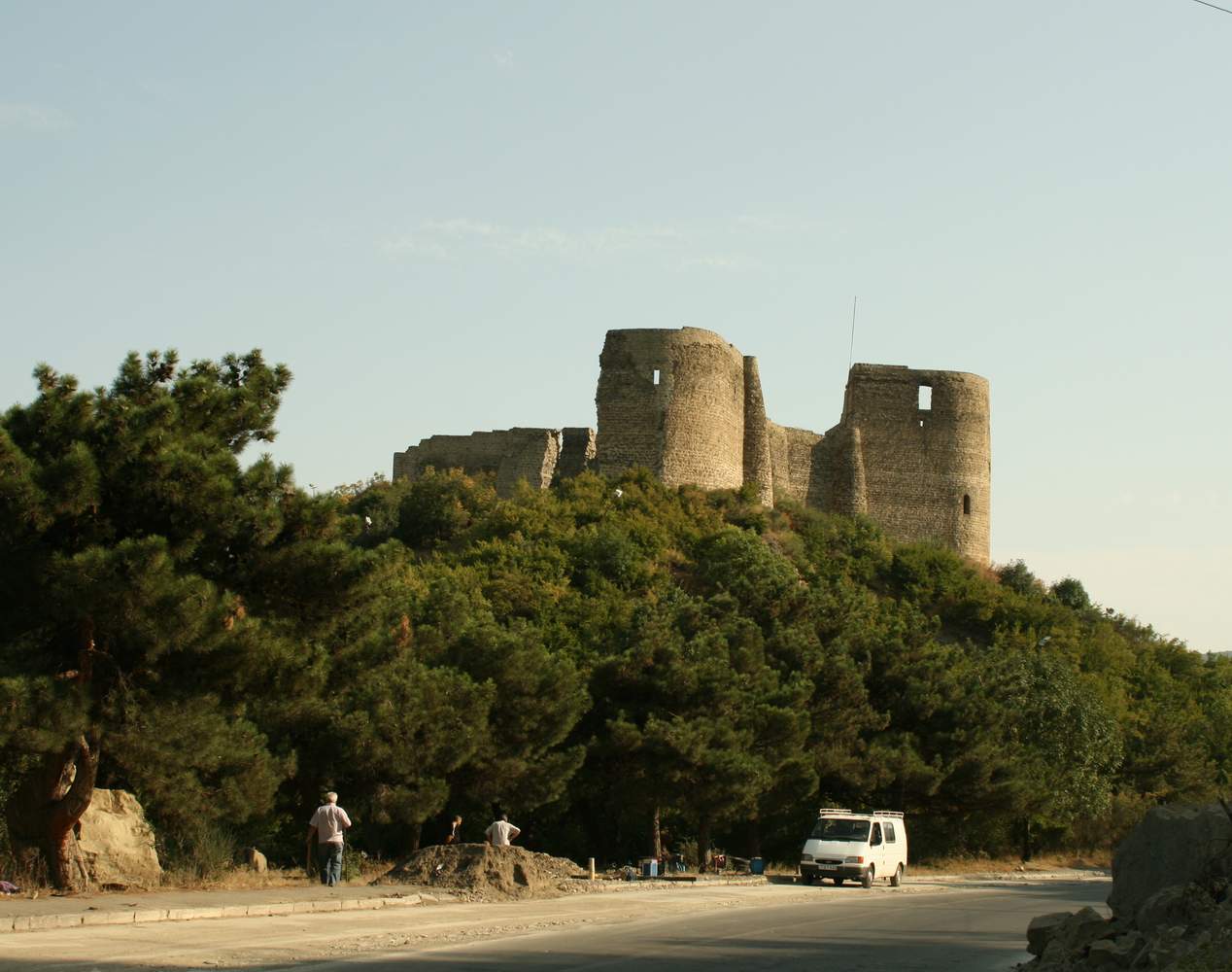
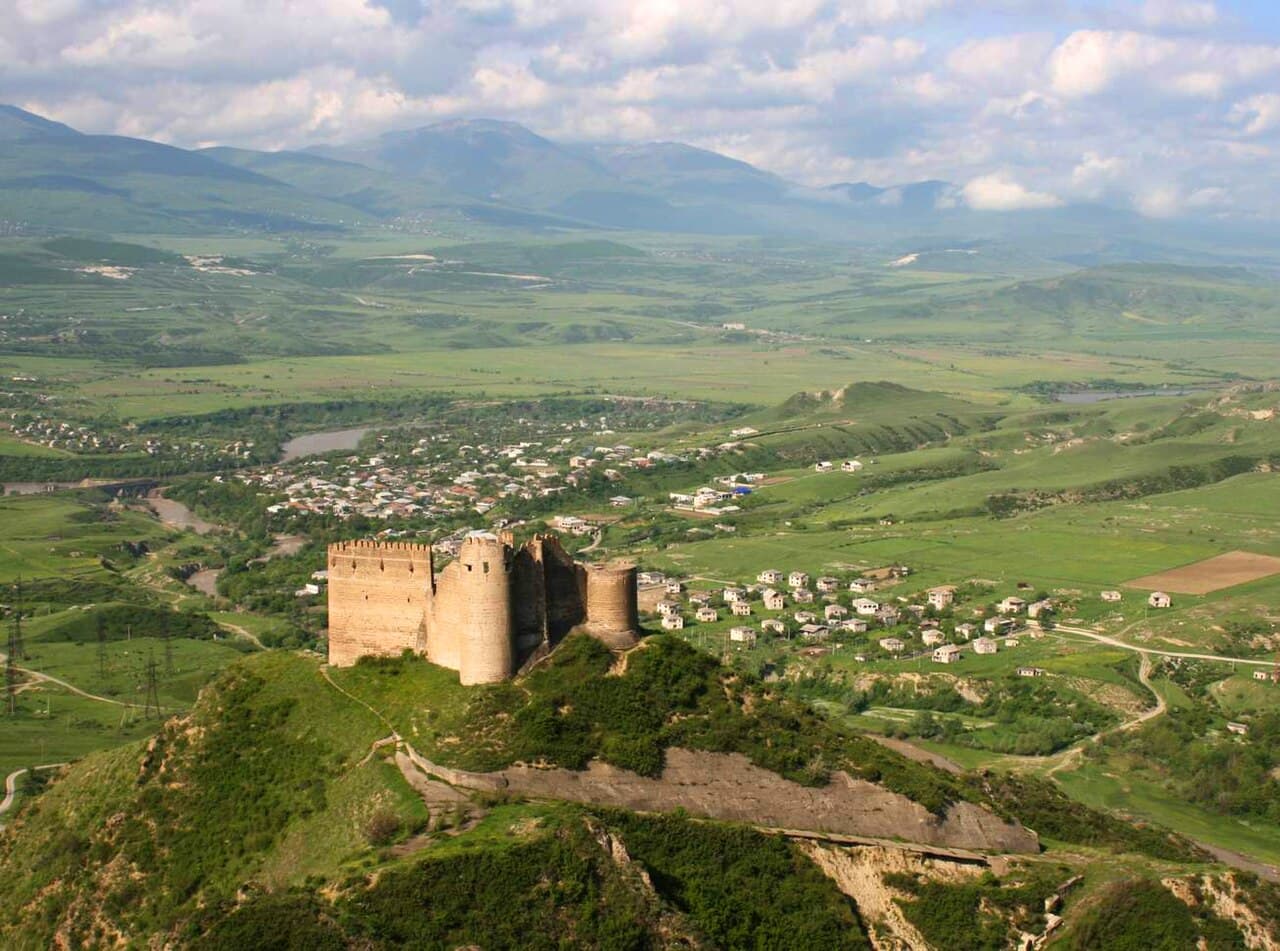
Ksani Castle, also known as the Mtkvari fortress, is a significant bastioned fortress located on a 600-meter-high mountain south of the village of Patara Kanda in the Mtskheta-Mtianeti region of Georgia. This fortress commands a strategic position overlooking the confluence of the Ksani and Mtkvari (Kura) rivers, a location that has historically been vital for controlling regional movements and defense.
Construction and historical context
The castle was constructed between 1511 and 1514 by Bagrat I, Prince of Mukhrani, a member of the Bagrationi dynasty and younger brother to David X, King of Kartli. The fortress was built during the Renaissance period, reflecting the military architectural trends of the early 16th century in the Caucasus region, designed to serve both as a defensive stronghold and a princely residence.
Its construction coincided with a turbulent period marked by frequent conflicts among Georgian kingdoms and external threats. In 1512, during a siege by George II of Kakheti, the castle demonstrated its defensive strength. The siege lasted three months but ultimately failed, exemplified by a famous anecdote where Bagrat sent a live salmon to George II in response to a mocking gift of wine, indicating ample provisions inside the fortress. This event not only highlighted the castle's resilience but also secured Bagrat's reputation and resulted in his receiving the Mukhrani lands from his brother.
Role in regional power struggles
Following the failed siege, George II of Kakheti launched another invasion of Kartli in 1513. During this conflict, Bagrat captured George II and imprisoned him within Ksani Castle, where the latter eventually died. This episode underscores the castle's role not only as a military bastion but also as a political prison and symbol of the Mukhrani principality’s power.
From 1513 until 1733, Ksani Castle served as the residence of the Dukes of Mukhrani-Bagrationi. The castle’s strategic importance was maintained throughout this period, although the dukes eventually relocated to the newly constructed Mukhrani Castle in the valley below in 1733, signaling a shift in residential preferences and possibly changes in military strategy.
Architectural features and later modifications
The fortress is classified as a bastioned fortress, a style characterized by angular bastions designed to deflect artillery fire and provide overlapping fields of defensive fire. While the original construction dates to the early 16th century, the castle underwent significant rebuilding in 1746 under Constantine III, Prince of Mukhrani. The sections of the fortress constructed with brick, visible in the ruins today, date from this mid-18th-century reconstruction.
Despite these reinforcements, the castle has suffered considerably from natural forces, particularly landslides. The west wall of the fortress has disappeared due to such geological activity, and even the Soviet-era concrete road that once provided access has been destroyed by landslides. These natural challenges have impacted the castle's preservation but have not diminished its historical and architectural significance.
Current condition and accessibility
Today, Ksani Castle remains partially preserved with some concrete reinforcements to stabilize the ruins. The site is freely accessible to visitors, though reaching the fortress requires a hike of approximately 30 minutes from the valley below. The castle’s elevated position offers commanding views of the surrounding landscape, including the river confluence and the historical district of Mukhrani.
The castle is recognized as one of Georgia's Immovable Cultural Monuments of National Significance, reflecting its importance in the nation's cultural heritage and medieval history. Visitors can explore the remains of the bastions, walls, and other defensive features that illustrate the military architecture of the Georgian Renaissance period.
Cultural and historical significance
Ksani Castle is a testament to the feudal power structures of early modern Georgia and the strategic importance of fortifications in the Caucasus region. Its association with the Bagrationi dynasty and key historical figures such as Bagrat I and Constantine III anchors it firmly in Georgian history. The castle’s role in regional conflicts, including the sieges and imprisonments, highlights its function beyond mere defense, serving as a political and military center.
The castle also exemplifies the adaptation of European bastioned fortress design principles in Georgian architecture during the Renaissance, blending local construction techniques with broader military innovations of the time.
Visitor information and tips
Visitors planning to explore Ksani Castle should prepare for a moderate hike and wear appropriate footwear due to the mountainous terrain. The site is open year-round, but spring through autumn offers the best weather for hiking and sightseeing. While there are no formal visitor facilities on site, the castle’s dramatic ruins and scenic views provide a rewarding experience for history enthusiasts and hikers alike.
Frequently asked questions (FAQ)
- How do I get to Ksani Castle from Patara Kanda?
- Ksani Castle is accessible by a hike of about 30 minutes from the village of Patara Kanda. The trail leads up the mountain where the castle is located, so be prepared for a moderate climb.
- What is the historical significance of Ksani Castle?
- Ksani Castle was built in the early 16th century by Bagrat I, Prince of Mukhrani, and played a key role in regional conflicts, including the imprisonment of George II of Kakheti. It served as the residence of the Dukes of Mukhrani-Bagrationi until the 18th century.
- Is Ksani Castle open to visitors year-round?
- Yes, Ksani Castle is freely accessible throughout the year. Visitors should consider the weather and terrain, with spring to autumn being the most favorable seasons for hiking and exploration.
- What architectural style does Ksani Castle represent?
- Ksani Castle is a bastioned fortress, reflecting Renaissance military architecture with angular bastions designed for artillery defense, typical of early 16th-century fortifications.
- Are there any safety concerns when visiting Ksani Castle?
- While the castle has been partially reinforced with concrete, visitors should exercise caution due to uneven terrain and the effects of landslides that have damaged parts of the fortress and access roads.
Photo gallery

Information
Loading map...
Visitor reviews
No reviews yet. Been here? Write the first review and help other travelers!
Write the first reviewVisited this castle? Share your experience
Your review helps other travelers and adds first-hand knowledge to our encyclopedia.