Nichbisi Castle

Nichbisi castle in kvemo nichbisi, georgia
Kvemo Nichbisi, Mtskheta-Mtianeti, Georgia
Post-Renaissance (17th–18th c.)
Ruins

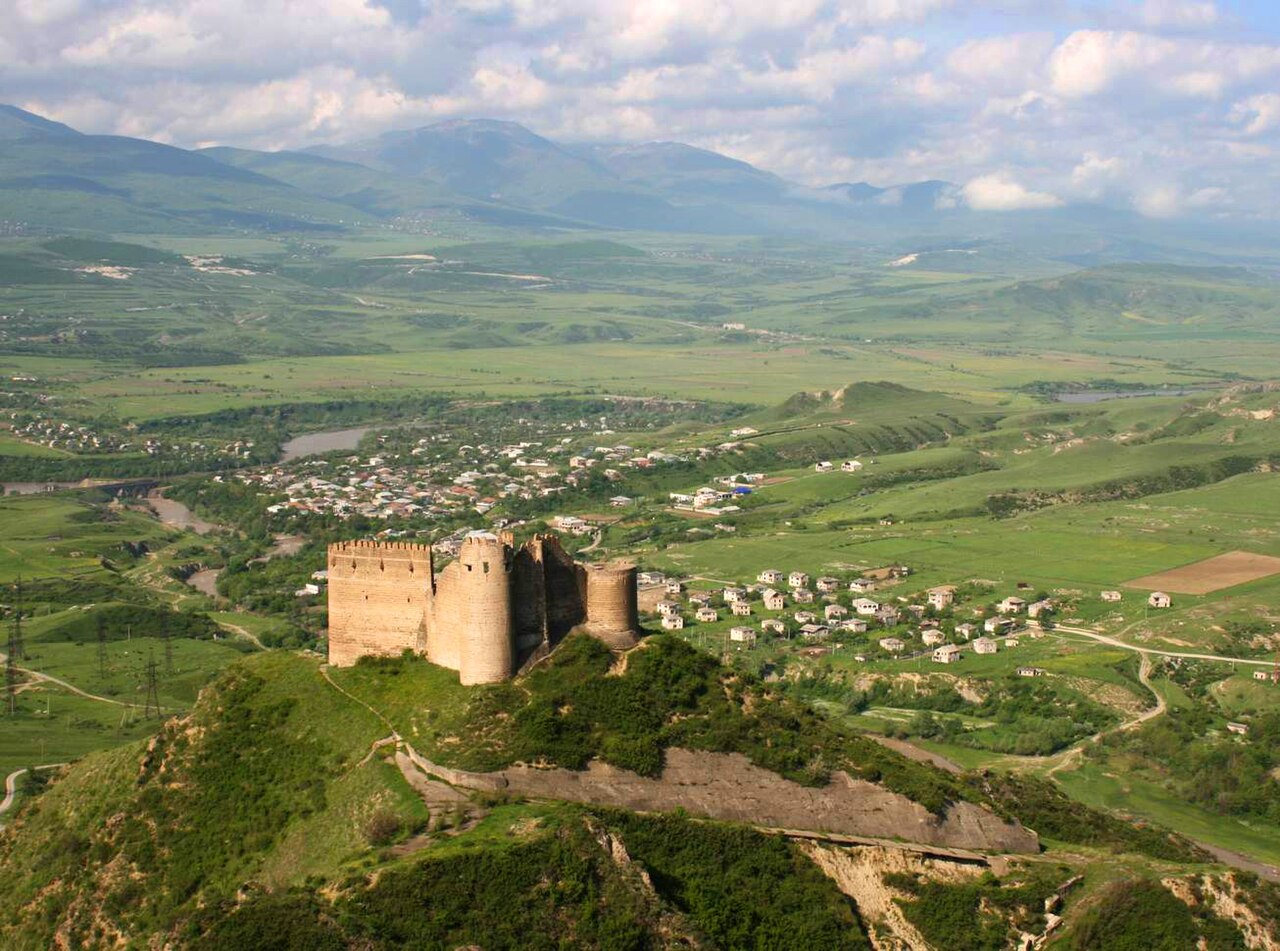
Nichbisi Castle, also known as Tsitsishvili Palace, is located in the village of Kvemo Nichbisi within the Mtskheta municipality of the Mtskheta-Mtianeti region in Georgia. This castle holds historical significance as a residence of the Georgian noble family Tsitsishvili, who were granted the village by King Luarsab II of Kartli in 1615. Following this royal donation, the Tsitsishvili family constructed the castle, which served as their fortified home in the early 17th century.

Historical background and ownership

The castle's origins are closely tied to the political and social landscape of early 17th-century Georgia. Luarsab II, a prominent monarch of the Kingdom of Kartli, bestowed the village of Nichbisi upon Qaikhosro and Merab Tsitsishvili, members of a distinguished Georgian noble lineage. This act was part of the feudal system where land grants reinforced loyalty and power among noble families. The Tsitsishvili family established their seat of power here, constructing the castle as a symbol of their status and as a defensive structure.

While detailed records of the castle's later history are limited, it is evident that Nichbisi Castle played a role as a noble residence rather than a military fortress. The Tsitsishvili family’s influence in the region and their architectural contributions are embodied in this site.

Architectural features and layout

Nichbisi Castle is notable for its irregular ground plan, which adapts to the natural terrain of its location. The castle complex includes several key structures that reflect the functional needs and lifestyle of its noble inhabitants.

The keep

The most prominent feature of the castle is its three-storey rectangular keep. This keep served as the main defensive tower and residential quarters, providing both protection and living space. Its rectangular shape is typical of Georgian noble architecture of the period, emphasizing verticality and fortification.

The bath house

Within the castle walls lie the remains of a small bath house, an important amenity reflecting the comfort and customs of the time. The bath house ruins illustrate the integration of domestic facilities within the castle complex, offering insight into daily life for the Tsitsishvili family.

Palace ruins

Alongside the keep and bath house are the remains of a palace structure, which likely housed the main living and reception areas. Though now in ruins, the palace would have been central to the castle’s function as a noble residence.

Current condition and accessibility

Today, Nichbisi Castle stands as a ruined but significant historical monument. The castle is freely accessible to visitors, offering an opportunity to explore its remains and appreciate its architectural features firsthand. The bath house and the keep are particularly notable for their preservation state, providing a tangible connection to the castle's past.

The castle’s location in the scenic Mtskheta-Mtianeti region adds to its appeal, making it a worthwhile destination for those interested in Georgian history and medieval architecture.

Cultural significance and heritage

Nichbisi Castle represents an important chapter in Georgian noble history and architecture. Its association with the Tsitsishvili family and King Luarsab II situates it within the broader narrative of Georgian feudal politics and cultural development during the early modern period. The castle’s architectural elements reflect the blend of defensive needs and residential comfort typical of noble estates in Georgia at the time.

Efforts to preserve and study Nichbisi Castle contribute to understanding Georgia’s medieval and early modern heritage, highlighting the region’s historical depth and architectural traditions.

Frequently asked questions (FAQ)

How do I get to Nichbisi Castle?
Nichbisi Castle is located in Kvemo Nichbisi, Georgia, and can be accessed by car or public transport from nearby cities. The closest major city is Tbilisi, which is approximately 40 kilometers away. It is advisable to check local transport schedules or consider renting a vehicle for convenience.
What is the historical significance of Nichbisi Castle?
Nichbisi Castle dates back to the 12th century and played a crucial role in the region's defense during various conflicts. It is an important symbol of medieval Georgian architecture and offers insights into the historical landscape of the area. The castle's ruins reflect the craftsmanship and strategic importance of its time.
When was Nichbisi Castle built?
Nichbisi Castle was constructed in the 12th century, during the height of the Georgian feudal period. It was built as a fortification to protect the region from invaders and has stood the test of time, showcasing the architectural styles of its era. Today, it remains a significant historical site for visitors and scholars alike.
Can I explore the interior of Nichbisi Castle?
Visitors can explore the exterior and the grounds of Nichbisi Castle, but the interior is largely in ruins and may not be accessible for safety reasons. Guided tours may be available, allowing you to learn more about the castle's history and architecture. Always check with local guides for the best experience.
Why is Nichbisi Castle a popular tourist destination?
Nichbisi Castle attracts visitors due to its rich history, stunning architecture, and picturesque surroundings. The castle's strategic hilltop location offers breathtaking views of the surrounding landscape, making it a perfect spot for photography. Additionally, it provides a unique glimpse into Georgia's medieval past.
Is it possible to visit Nichbisi Castle year-round?
Yes, Nichbisi Castle is open to visitors year-round, but it's best to check for any seasonal changes in accessibility. The site is especially beautiful in spring and autumn when the weather is mild and the natural scenery is at its finest. Always verify local conditions before planning your visit.
What are the opening hours for Nichbisi Castle?
Nichbisi Castle typically welcomes visitors during daylight hours, but specific opening times may vary by season. It is recommended to check with local tourism offices for the most accurate and updated information regarding hours of operation. Planning your visit during the day will allow you to fully appreciate the site.
Are there any nearby attractions to visit when I go to Nichbisi Castle?
Yes, there are several attractions near Nichbisi Castle, including the picturesque landscapes of the surrounding region and other historical sites in Kvemo Nichbisi. Visitors can also explore local villages to experience Georgian culture and cuisine. Make sure to allocate some time to discover the charm of the area.
What are the ticket prices for Nichbisi Castle?
Currently, there is no entrance fee to visit Nichbisi Castle, making it an accessible destination for all visitors. However, donations to maintain the site are appreciated. Always check for any updates regarding potential fees or guided tour costs when planning your visit.

Information

Hill Castle

Loading map...

Visitor reviews

No reviews yet. Been here? Write the first review and help other travelers!

Write the first review

Visited this castle? Share your experience

Your review helps other travelers and adds first-hand knowledge to our encyclopedia.
Write a review

(5/5)

0/2000 characters

Your review will be visible after admin approval

Nearby castles

6.2 km
Ksani Castle — Georgia castle

Ksani Castle

Patara Kanda, Georgia

Ksani Castle, also known as the Mtkvari fortress, is a significant bastioned fortress located on a 600-meter-high mountain south of the village of Patara Kanda in the Mtskheta-Mtianeti region of Georgia. This fortress commands a strategic position overlooking the confluence of the Ksani and Mtkvari (Kura) rivers, a location that has historically been vital for controlling regional movements and defense. Construction and historical context The castle was constructed between 1511 and 1514 by Bagrat I, Prince of Mukhrani, a member of the Bagrationi dynasty and younger brother to David X, King of Kartli. The fortress was built during the Renaissance period, reflecting the military architectural trends of the early 16th century in the Caucasus region, designed to serve both as a defensive stronghold and a princely residence. Its construction coincided with a turbulent period marked by frequent conflicts among Georgian kingdoms and external threats. In 1512, during a siege by George II of Kakheti, the castle demonstrated its defensive strength. The siege lasted three months but ultimately failed, exemplified by a famous anecdote where Bagrat sent a live salmon to George II in response to a mocking gift of wine, indicating ample provisions inside the fortress. This event not only highlighted the castle's resilience but also secured Bagrat's reputation and resulted in his receiving the Mukhrani lands from his brother. Role in regional power struggles Following the failed siege, George II of Kakheti launched another invasion of Kartli in 1513. During this conflict, Bagrat captured George II and imprisoned him within Ksani Castle, where the latter eventually died. This episode underscores the castle's role not only as a military bastion but also as a political prison and symbol of the Mukhrani principality’s power. From 1513 until 1733, Ksani Castle served as the residence of the Dukes of Mukhrani-Bagrationi. The castle’s strategic importance was maintained throughout this period, although the dukes eventually relocated to the newly constructed Mukhrani Castle in the valley below in 1733, signaling a shift in residential preferences and possibly changes in military strategy. Architectural features and later modifications The fortress is classified as a bastioned fortress, a style characterized by angular bastions designed to deflect artillery fire and provide overlapping fields of defensive fire. While the original construction dates to the early 16th century, the castle underwent significant rebuilding in 1746 under Constantine III, Prince of Mukhrani. The sections of the fortress constructed with brick, visible in the ruins today, date from this mid-18th-century reconstruction. Despite these reinforcements, the castle has suffered considerably from natural forces, particularly landslides. The west wall of the fortress has disappeared due to such geological activity, and even the Soviet-era concrete road that once provided access has been destroyed by landslides. These natural challenges have impacted the castle's preservation but have not diminished its historical and architectural significance. Current condition and accessibility Today, Ksani Castle remains partially preserved with some concrete reinforcements to stabilize the ruins. The site is freely accessible to visitors, though reaching the fortress requires a hike of approximately 30 minutes from the valley below. The castle’s elevated position offers commanding views of the surrounding landscape, including the river confluence and the historical district of Mukhrani. The castle is recognized as one of Georgia's Immovable Cultural Monuments of National Significance, reflecting its importance in the nation's cultural heritage and medieval history. Visitors can explore the remains of the bastions, walls, and other defensive features that illustrate the military architecture of the Georgian Renaissance period. Cultural and historical significance Ksani Castle is a testament to the feudal power structures of early modern Georgia and the strategic importance of fortifications in the Caucasus region. Its association with the Bagrationi dynasty and key historical figures such as Bagrat I and Constantine III anchors it firmly in Georgian history. The castle’s role in regional conflicts, including the sieges and imprisonments, highlights its function beyond mere defense, serving as a political and military center. The castle also exemplifies the adaptation of European bastioned fortress design principles in Georgian architecture during the Renaissance, blending local construction techniques with broader military innovations of the time. Visitor information and tips Visitors planning to explore Ksani Castle should prepare for a moderate hike and wear appropriate footwear due to the mountainous terrain. The site is open year-round, but spring through autumn offers the best weather for hiking and sightseeing. While there are no formal visitor facilities on site, the castle’s dramatic ruins and scenic views provide a rewarding experience for history enthusiasts and hikers alike.

Renaissance (15th–17th c.)
Details
12 km

Mukhrani Castle

Mukhrani, Georgia

Mukhrani Castle is located in the village of Mukhrani within the Mtskheta municipality of the Mtskheta-Mtianeti region in Georgia. This 18th-century fortress was constructed in the early 1700s and has played a significant role in the region's history, serving both as a noble residence and a place of refuge for local villagers during times of conflict. Historical background and origins The castle was built in the 1730s by Mamuka Mukhranbatoni with assistance from Levan Mukhranbatoni, members of the influential Mukhrani noble family. This family was a branch of the Bagrationi dynasty, which ruled various parts of Georgia for centuries. The castle served as the main residence of the lords of Mukhrani, symbolizing their power and status in the region. By the mid-18th century, the castle had suffered damage during local conflicts. In 1756, Konstantine Mukhranbatoni recorded that the castle had been destroyed by enemy forces, forcing the local villagers to flee. Following this devastation, Konstantine undertook the task of rebuilding the fortress, restoring its defensive capabilities and opening it as a sanctuary for the surrounding population during times of unrest. After remaining in the hands of the Mukhrani family for over a century, the castle changed ownership in 1895 following the death of its last private owner. This marked the end of its status as a noble residence. Architectural features and layout Mukhrani Castle is characterized by its square ground plan with round towers at each corner. This design reflects the typical fortification style of the post-Renaissance period in Georgia, combining defensive functionality with residential needs. The round towers provided vantage points for surveillance and defense against attackers. Originally, the castle was part of a larger complex of fortifications, including walls and possibly additional defensive structures, which have mostly disappeared over time. The surviving castle walls and towers give insight into the military architecture of the era and the strategic importance of the site. Construction materials and techniques The castle was built using local stone and mortar, common in Georgian fortifications of the 18th century. The thick walls and robust towers were designed to withstand sieges and attacks, while the interior spaces were adapted for noble living, including halls, chambers, and service areas. Later uses and current status During the Soviet period, the castle was repurposed to house laboratories for an agricultural institute, reflecting a shift from military and residential use to scientific and educational functions. This change altered the castle's interior but helped preserve the structure from complete neglect. Today, Mukhrani Castle functions as a monastery. Although the castle is well preserved, it is not always open to the public, and visitors may find it closed at times. The religious use of the castle adds a new layer of cultural significance to the site, blending historical heritage with spiritual practice. Cultural and regional significance The castle is an important landmark in the Mtskheta-Mtianeti region, illustrating the architectural and historical evolution of Georgian noble residences and fortifications in the 18th century. Its association with the Mukhrani family connects it to the broader narrative of Georgian history and the legacy of the Bagrationi dynasty. The castle's role as a refuge during conflicts highlights its strategic importance, while its current status as a monastery reflects the ongoing cultural and religious traditions of the area.

Post-Renaissance (17th–18th c.)
Details
13.4 km

Noste Castle

Noste, Georgia

Noste Castle is a historic fortress located in the foothills south of the village of Noste, within the Kaspi municipality of the Shida Kartli region in Georgia. This castle stands as a notable example of late medieval Georgian military architecture, reflecting the strategic importance of the region during the 15th century. Historical background and significance The origins of Noste Castle trace back to the 15th century, when it was likely constructed under the direction of Duke Ivane Saakadze, a prominent noble figure of the time. The castle gained further historical prominence in 1603 when Prince Giorgi Saakadze, a distinguished Georgian politician and military commander, took residence within its walls. Prince Giorgi Saakadze played a significant role in Georgian history, and his association with Noste Castle adds to its cultural and historical value. Throughout its history, the castle served as a stronghold and residence for the Saakadze family, a noble lineage influential in Georgian affairs during the late medieval and early modern periods. The castle's location in the strategic Kaspi municipality allowed it to function as a defensive bastion controlling access through the Shida Kartli region. Architectural features and layout The surviving structures of Noste Castle include a slender tower keep dating from the 17th century. This tower functioned as the main defensive and residential element of the castle, typical of Georgian fortifications of the period. The tower's vertical design emphasizes defense and surveillance capabilities, with thick stone walls and narrow windows designed for archers. In addition to the tower, archaeological excavations have uncovered the foundations of a former two-storey palace and stables dating to the 18th century. These structures indicate the castle's evolution from a purely military fortress to a more complex residential and administrative center. East of the castle walls, the foundations of a bath house were also discovered, reflecting the lifestyle and amenities available to its inhabitants. The castle's construction utilized local stone materials, with masonry techniques characteristic of the late medieval period in Georgia. The layout suggests a compact fortified complex designed to maximize defense while providing functional living quarters. Restoration and current condition During the Soviet era, Giorgi Saakadze was celebrated as a national hero, which led to efforts to consolidate and preserve the ruins of Noste Castle. These restoration activities aimed to stabilize the remaining structures and improve accessibility for visitors. Today, Noste Castle is classified as a partially preserved ruin. The slender tower remains the most prominent feature, standing as a testament to the castle's medieval origins. The foundations of the palace, stables, and bath house provide valuable archaeological insights but remain exposed as ruins. The site is freely accessible to the public, offering visitors a glimpse into Georgian medieval fortification architecture and the historical legacy of the Saakadze family. The castle's modest size and preserved elements make it an interesting destination for those exploring the cultural heritage of the Shida Kartli region. Visiting information and accessibility Noste Castle can be reached by local roads from the village of Noste and the nearby town of Kaspi. The castle's location in the foothills provides scenic views of the surrounding landscape, enhancing the visitor experience. As a freely accessible ruin, there are no entrance fees or formal visiting hours, allowing visitors to explore the site at their own pace. However, the lack of extensive facilities means visitors should prepare accordingly, bringing water and suitable footwear for uneven terrain. The castle is a suitable destination for history enthusiasts, architecture students, and travelers interested in Georgian medieval heritage. Nearby attractions in the Shida Kartli region include other historical sites and natural landmarks that complement a visit to Noste Castle.

Late Medieval (14th–15th c.)
Details

