Mourão Castle
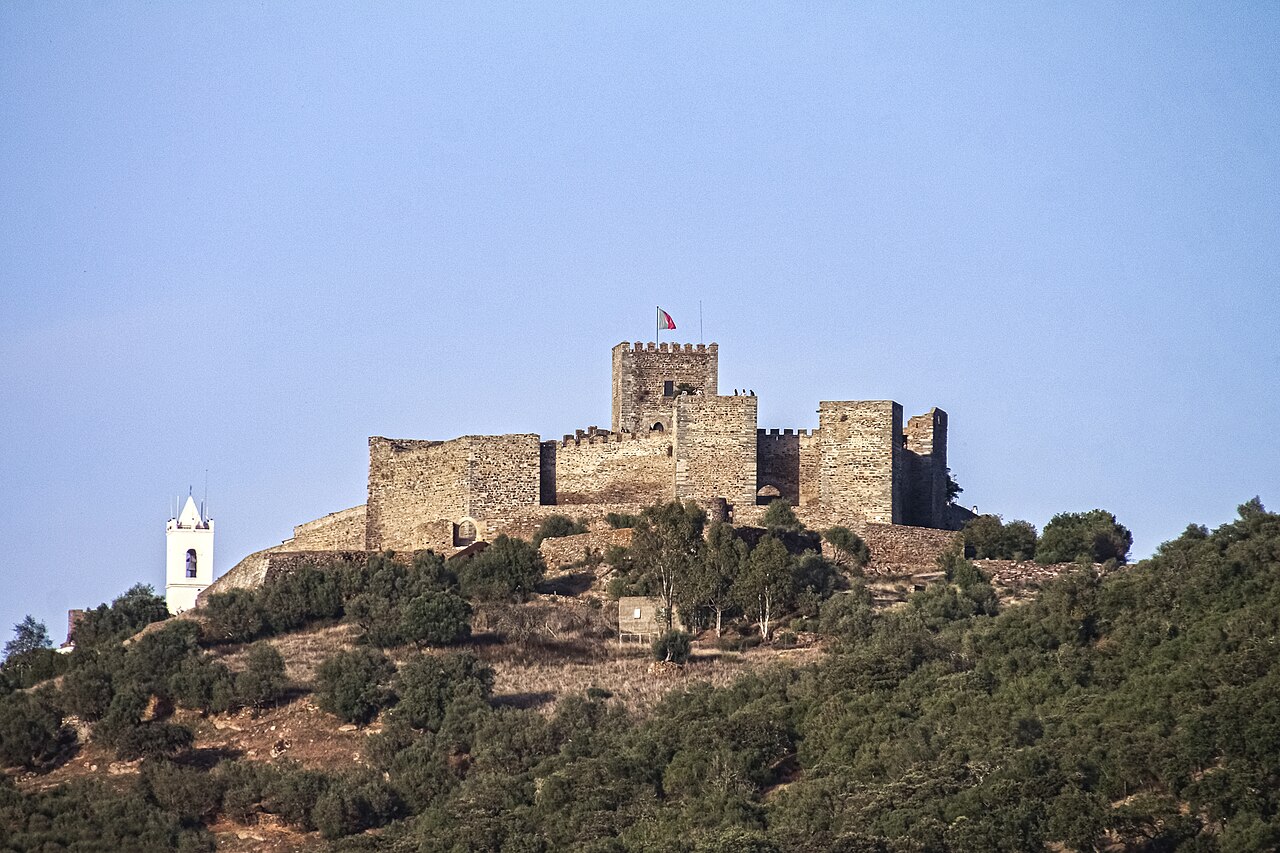
Mourão Castle, locally known as Castelo de Mourão, is a notable historical fortress situated in the town of Mourão in the Alentejo Central region of Portugal. This castle occupies a strategic position on a low hill overlooking the left bank of the Guadiana River, near the border with Spain. Its location has made it a key defensive site through several centuries of Iberian history.
The early history of the site is somewhat obscure, but it is believed that the hill was originally occupied by a Muslim fortification during the period of Moorish presence in the Iberian Peninsula. The region experienced frequent clashes during the Reconquista, which led to the depopulation of the area. Following the final conquest of the territory by Portuguese forces, the site was granted in 1226 to the Knights Hospitaller, a military order tasked with repopulating and defending the town.
Medieval origins and early fortifications
The initial construction of what would become Mourão Castle likely took place during the reign of Sancho II of Portugal in the early 13th century. This medieval fortress was possibly built atop the remains of the earlier Muslim stronghold, capitalizing on the natural defensive advantages of the hill. By the late 13th century, during the reign of Denis of Portugal (1290s), the castle underwent significant renovations and expansions. At this time, it featured a defensive structure with three towers, designed to strengthen its military capabilities in a turbulent border region.
Renaissance updates and architectural features
In the early 16th century, Mourão Castle was modernized to align with contemporary military standards of the Renaissance period. This included updates to its fortifications to better withstand artillery and other evolving siege technologies. A notable addition from this era is the church integrated into the south wall of the castle enclosure, reflecting the dual military and religious significance of the site.
The bastioned fortress transformation in the 17th century
Following the restoration of Portuguese independence in 1640, after 60 years of Iberian Union under Spanish rule, Mourão Castle quickly reaffirmed its allegiance to Portugal. Due to its proximity to the Spanish border, the castle became a focal point during the conflicts that ensued. In 1657, it suffered severe damage during a Spanish attack.
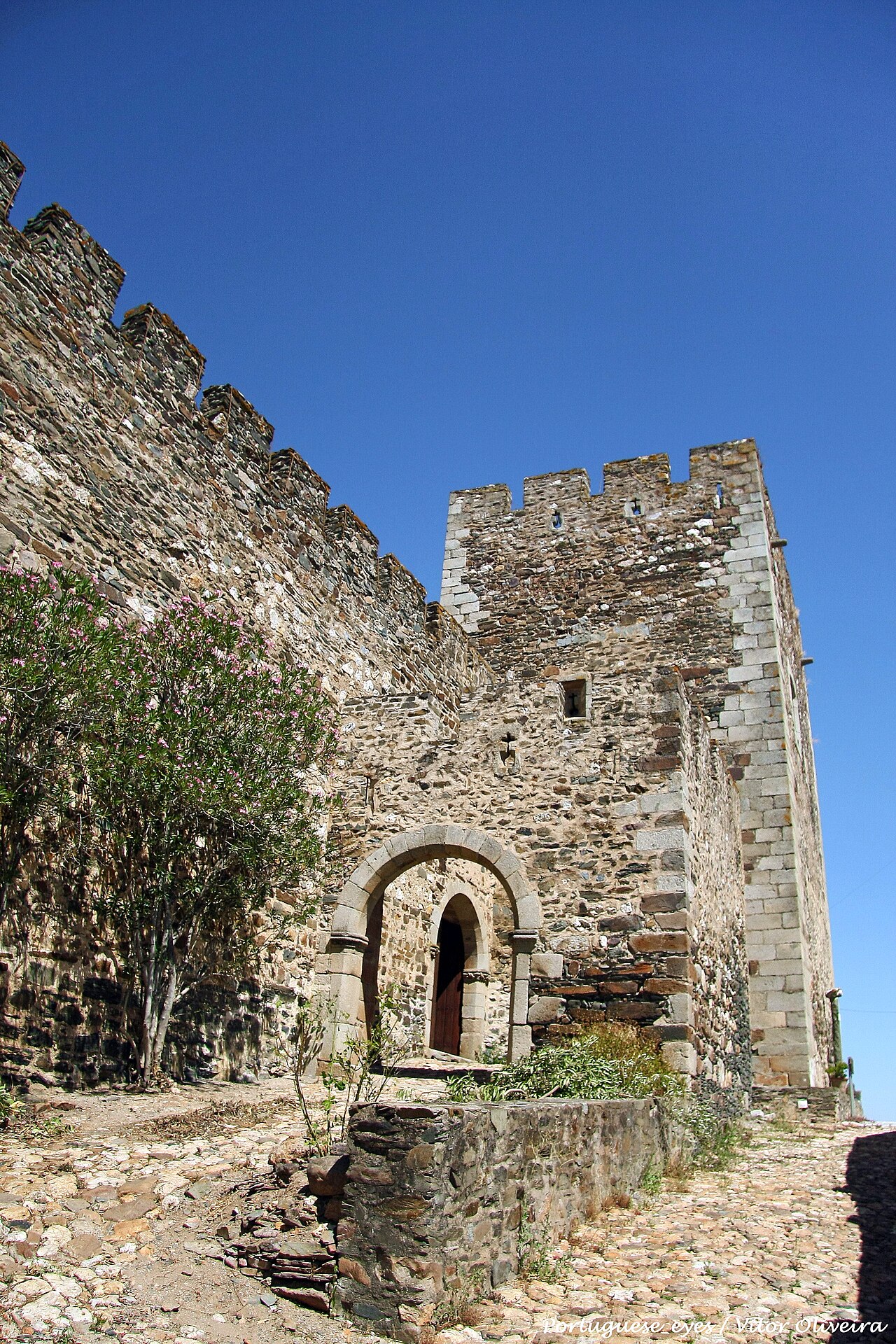
In response, a major renovation was commissioned in 1658 under the direction of the French military engineer Nicolas de Langres. This renovation transformed Mourão Castle into a bastioned fortress, a style characterized by angular bastions designed to better resist cannon fire and improve defensive coverage. Despite these modernizations, the medieval core of the castle, including its original walls and keep, remained central to the fortress's layout.
Architectural layout and surviving structures
The castle's plan is an irregular trapezoidal shape, combining medieval and early modern military architectural elements. Originally, Mourão Castle featured four gates, but three have since been bricked up, leaving only the southern gate accessible today. The inner castle is rectangular, located in the southwest corner, and includes a square keep, a typical feature of medieval fortifications serving as a last line of defense and residence for the lord or commander.
The bastions constructed in the 17th century surrounded the medieval castle, but these have not been preserved as well as the central structures. Over the centuries, the castle's strategic importance declined, leading to its gradual disuse and deterioration. Restoration efforts in the 20th century focused primarily on the medieval castle ruins, while the bastioned walls have mostly disappeared.
Cultural significance and visitor experience
Today, Mourão Castle is accessible to the public and offers visitors a glimpse into the layered military history of the region. It provides panoramic views of the surrounding plains and the Alqueva Reservoir, a large artificial lake created by damming the Guadiana River around the year 2000. The castle maintains a visual connection with Monsaraz Castle, located across the river on the opposite bank, highlighting the strategic network of fortifications along this historic border.
The castle's combination of medieval architecture and Renaissance bastioned fortifications illustrates the evolution of military engineering in Portugal from the Middle Ages through the early modern period. Its preservation as a ruin allows visitors to explore the site freely, appreciating both its historical context and its commanding natural setting.
Frequently asked questions (FAQ)
- How do I get to Mourão Castle?
- Mourão Castle is located in the town of Mourão in Alentejo, Portugal. Visitors can reach the castle by car or local transport, with the address at R. Frei António das Chagas. The castle is situated on a hill, so some walking uphill is required.
- What is the historical significance of Mourão Castle?
- Mourão Castle was a key defensive fortress during the Reconquista and later conflicts between Portugal and Spain. Its evolution from a medieval castle to a Renaissance bastioned fortress reflects important military architectural developments.
- Can I visit the interior of Mourão Castle?
- Yes, the castle ruins are open to the public and can be explored freely. While the structure is partially restored, visitors can walk around the walls, towers, and the inner keep area.
- When is the best time to visit Mourão Castle?
- The castle is accessible year-round, but spring and autumn offer mild weather ideal for exploring the outdoor site and enjoying panoramic views of the Guadiana River and Alqueva Reservoir.
- Is there an entrance fee to visit Mourão Castle?
- No, entry to Mourão Castle is free of charge, making it an accessible historical site for all visitors.
Information
Opening hours
Open daily, sunrise to sunset
Ticket prices
Free
Current owner
Municipality
Address
R. Frei António das Chagas, Mourão, Portugal
Loading map...
Visitor reviews
No reviews yet. Been here? Write the first review and help other travelers!
Write the first reviewVisited this castle? Share your experience
Your review helps other travelers and adds first-hand knowledge to our encyclopedia.