Moura Castle
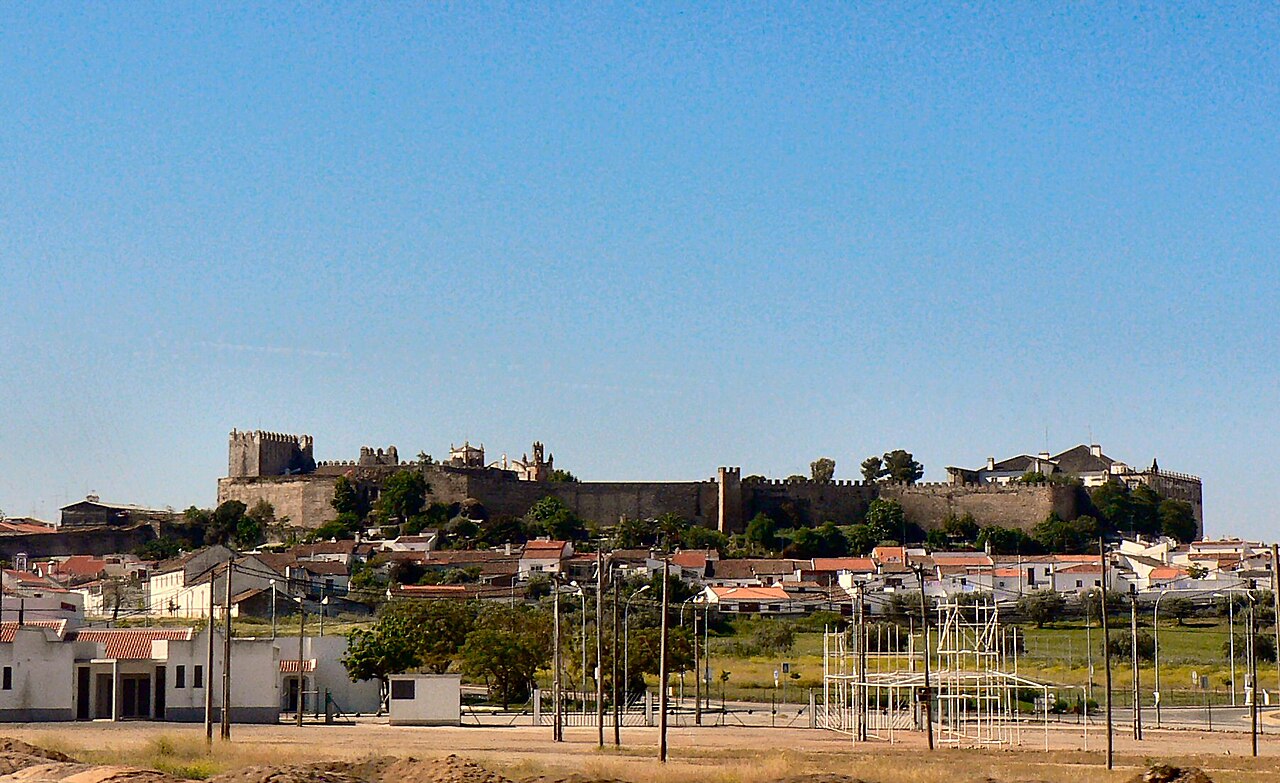
Moura Castle, also known as Castelo de Moura, is a striking medieval fortress located in the town of Moura within the Evora district of Portugal's Baixo Alentejo region. Perched atop a prominent limestone hill, the castle commands views over the confluence of the Rio Ardila and surrounding ravines, emphasizing its strategic importance since antiquity. The site’s occupation spans multiple historical layers, from an Iron Age castro through Roman and Visigothic settlements, culminating in the early medieval fortress built by the Moors in the 11th and 12th centuries.
The castle’s original construction by the Moors featured an oval-shaped layout fortified with taipa (rammed earth) walls and included an alcazaba or citadel on the southwest end. This early fortification served as the capital of the Al-Manijah province during Muslim rule. The castle’s history is marked by repeated conflict during the Reconquista, with control passing between Muslim and Christian forces multiple times in the 12th and 13th centuries. It was only under the reign of King Denis of Portugal (1279–1325) that Moura was definitively integrated into the Portuguese kingdom, initiating significant reconstruction that incorporated the Moorish walls into a new Christian fortress.
Historical significance and legends
The castle is deeply entwined with local legend and historical events. One famous tale recounts the daring Christian conquest in 1166 by the brothers Pedro and Álvaro Rodrigues, who infiltrated the castle disguised as Moorish soldiers and assassinated the Moorish mayor Bráfama. This act allowed Christian forces to capture Moura temporarily. The tragic story of the Moorish princess Salúquia, the fiancée of the Muslim governor, who leapt from the castle tower upon discovering the deception and death of her beloved, remains a poignant symbol of Moura’s turbulent past and is commemorated in the town’s coat of arms.
King Afonso I granted the first foral (charter) to Moura around 1171, formalizing its status under Portuguese rule, although contested control persisted until the early 13th century. Subsequent rulers, including King Afonso II and King Manuel I, renewed and updated these charters, reflecting the town’s growing importance. The castle and town expanded notably during the reign of King Fernando in the 14th century, prompting the construction of a second defensive wall encompassing the growing settlement.
Architectural development and features
Medieval fortifications and layout
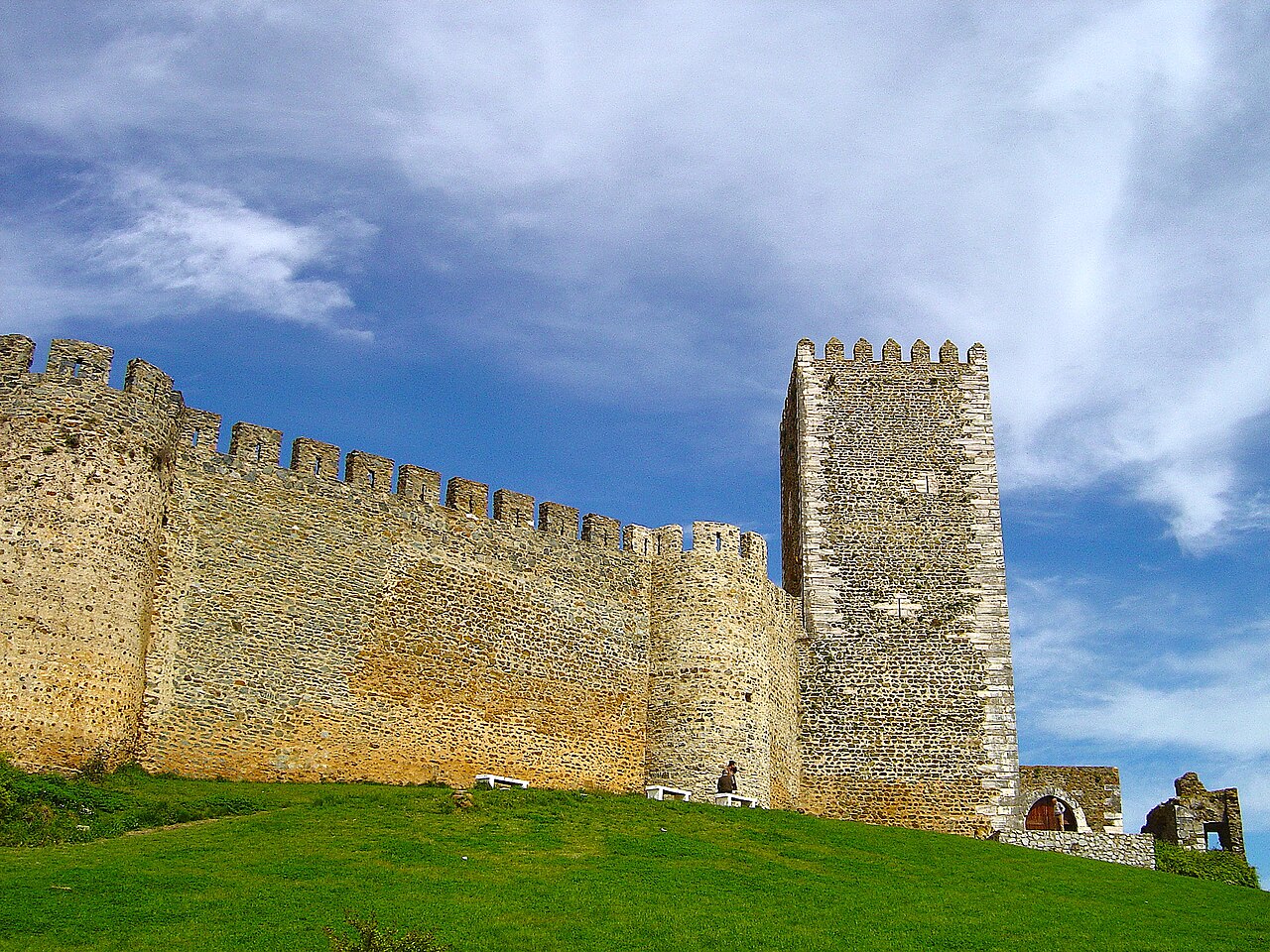
The castle’s oval-shaped enclosure measures approximately 200 by 120 meters and is divided into an inner and outer castle. The inner castle, or alcazaba, situated on the southwest side, retains remnants of square defensive towers and a prominent rectangular keep tower with prismatic pyramidal merlons. This keep includes the Sala dos Alcaides, a vaulted hall with ribbed pointed arches supported by slender columns, connected by a corridor to the chemin de ronde (wall walkway) and terrace.
The outer castle walls follow the natural contours of the limestone outcrop and feature a series of towers, including the semi-ruined Salúquia Tower and the clock tower, which was adapted in the 19th century. The main entrance is marked by a pointed arch framed by an alfiz, a Moorish architectural element, leading into an elbow-shaped corridor beneath the library building. Additional gates provide access at the northwest and within the alcazaba.
Later modifications and bastioned fortifications
In the early 16th century, the castle’s defenses were modernized under the guidance of architect Francisco de Arruda, who added walls separating the dungeon from the Salúquia and clock towers. The 17th century saw further enhancements during the Portuguese Restoration Wars, including the construction of bastioned walls designed by Nicolau de Langres. These star-shaped fortifications featured sloping faces adapted to artillery warfare and were originally surrounded by a moat, much of which has since been filled.
Religious presence and the dominican convent
Within the outer castle walls lie the ruins of the Dominican Convent of São Domingos, established in 1562 atop the foundations of the former mosque. The convent church has a rectangular plan with a single nave, a side chapel, and a belltower. Its façade features a stepped gable with decorative windings and a galilee with vaulted arches. Inside, the nave is tiled and includes a raised choir loft. The side chapel houses a Manueline-style tomb of Pedro and Álvaro Rodrigues, linking the religious site to the castle’s legendary Christian conquest.
Decline, damage, and restoration efforts
The castle endured significant damage during the War of the Spanish Succession in 1707, when Spanish troops occupied the fortress and were later expelled, leading to deliberate demolition of parts of the walls with dynamite to prevent reoccupation. The 1755 Lisbon earthquake further compromised the structure. In the 19th century, the castle fell into ruin, with stones repurposed for local construction, and the convent was abandoned by 1875.
Restoration and consolidation efforts began in the mid-20th century, with notable archaeological investigations in 1981 uncovering Roman funerary tombs and earlier structures beneath the castle. The site was declared a Property of Public Interest in 1944, and protection zones were established in 2010 to preserve its cultural heritage. Today, the inner castle is accessible to visitors for a fee, while the outer castle grounds serve as a public park, offering a glimpse into Portugal’s layered medieval history.
Architectural significance and visitor experience
Moura Castle exemplifies a complex palimpsest of architectural styles and military technologies, reflecting its evolution from a Moorish alcazaba to a fortified Christian stronghold with Renaissance and early modern bastioned enhancements. Its keep tower with prismatic merlons and vaulted halls, alongside the remnants of the bastioned walls, illustrate the adaptation of medieval fortifications to changing warfare demands.
Visitors to the castle can explore the well-preserved inner castle featuring the impressive keep interior, walk along the surviving walls and towers, and visit the evocative ruins of the Dominican convent. The surrounding park area of the outer castle offers a tranquil setting and panoramic views of the town and landscape. The site’s rich history, legendary stories, and architectural diversity make it a significant cultural landmark in the Evora region.
Frequently asked questions (FAQ)
- How do I visit Moura Castle and what are the opening hours?
- Moura Castle's inner castle is open to visitors for a fee during office hours, typically weekdays. The outer castle grounds are accessible as a public park at any time, offering free entry and scenic views.
- What is the historical significance of Moura Castle?
- Moura Castle was originally built by the Moors and played a key role in the Reconquista, changing hands multiple times between Muslim and Christian forces before becoming a permanent Christian stronghold under King Denis of Portugal in the late 13th century.
- Can I explore the architectural features of Moura Castle?
- Yes, visitors can explore the castle's oval-shaped walls, the rectangular keep tower with its vaulted Sala dos Alcaides, several defensive towers including the Salúquia and clock towers, and the ruins of the 16th-century Dominican convent within the outer castle walls.
- Is Moura Castle accessible for people with limited mobility?
- Due to the castle's hilltop location and uneven terrain, accessibility may be challenging for those with limited mobility. Visitors are advised to wear suitable footwear and check in advance for any available assistance or accommodations.
- When is the best time to visit Moura Castle?
- The best time to visit Moura Castle is during spring and autumn when the weather is mild, allowing comfortable exploration of the outdoor ruins and park areas without the summer heat.
- Are there any nearby attractions to visit after Moura Castle?
- After visiting Moura Castle, travelers can explore the historic town of Moura, enjoy local Alentejo cuisine, or visit nearby natural parks and other cultural heritage sites within the Evora region.
- What are the ticket prices for Moura Castle?
- Ticket prices for the inner castle are modest, typically a few euros for adults, with reduced rates for children and seniors. The outer castle park is free to enter.
Information
Sources & official resources
Verify the information above using these authoritative references.
Loading map...
Visitor reviews
No reviews yet. Been here? Write the first review and help other travelers!
Write the first reviewVisited this castle? Share your experience
Your review helps other travelers and adds first-hand knowledge to our encyclopedia.