
Mothe-Chandeniers Castle
Mothe-Chandeniers Castle, located in Les Trois-Moutiers within the Nouvelle-Aquitaine region of France, is a captivating example of a romantic neo-Gothic castle that has evolved dramatically over centuries. Though it remains unclassified as a historic monument, its fairy-tale turrets, imposing moat, and atmospheric ruins continue to enchant visitors and historians alike.
Early history and medieval origins
The castle's oldest sections date back to the early 13th century, originally constructed by the noble Bauçay family. Strategically positioned in the historic province of Poitou-Charentes, Mothe-Chandeniers was designed as a fortified residence with defensive features typical of the high medieval period. Its robust stone walls, towers, and moat reflect the military architecture of the time, intended to withstand sieges and protect its inhabitants.
Throughout the Middle Ages, the castle was a focal point of conflict during the Hundred Years' War, changing hands at least twice when it was seized by English forces. These turbulent events left their mark on the castle's structure and history, contributing to its layered architectural fabric.
Renaissance to 18th century decline
Following the medieval period, Mothe-Chandeniers experienced gradual changes in ownership and function. By the 18th century, the castle had fallen into a state of disrepair, reflecting broader social and political shifts in France that rendered many feudal fortresses obsolete. Despite this decline, the castle retained much of its original medieval character, with its moat and turrets still defining the silhouette against the landscape.
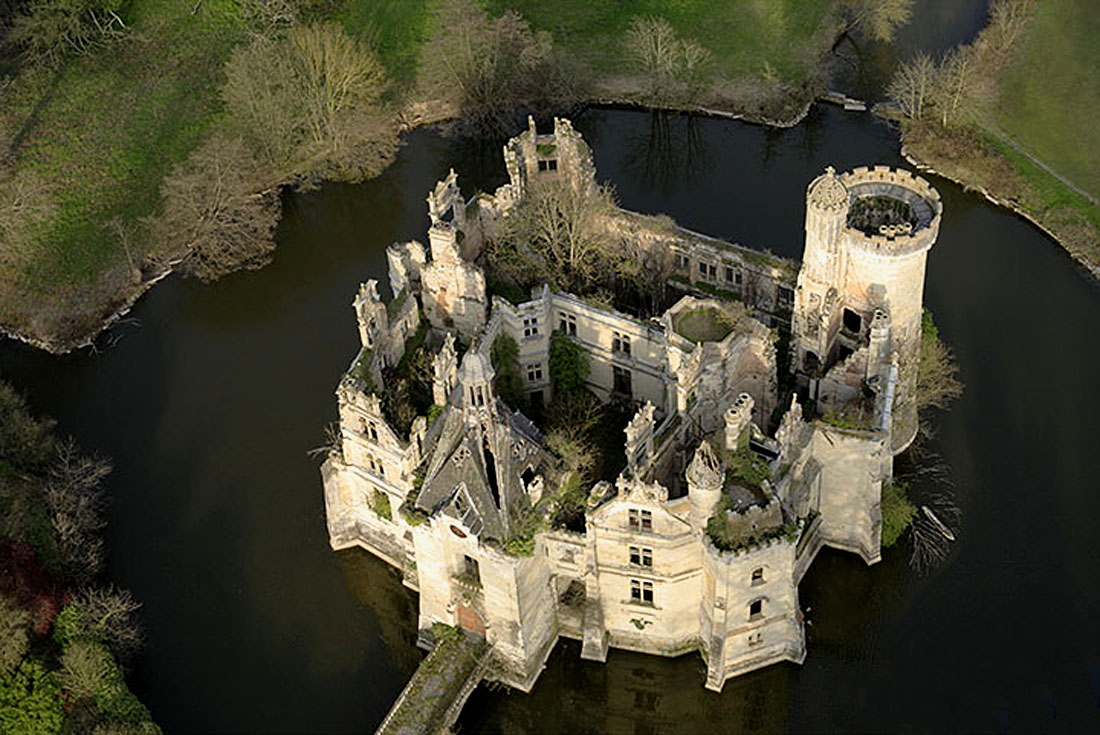
Photo by Pierre Mairé • CC BY 2.5
19th century restoration and romantic revival
In 1809, the estate was acquired by François Hennecart, a wealthy Parisian businessman who undertook significant restoration efforts. Hennecart preserved much of the castle's medieval fabric while enhancing the surrounding parkland with a vineyard, blending agricultural utility with aristocratic residence.
The most transformative period came in the late 19th century under the ownership of Baron Edgard Lejeune. Around 1870, Lejeune initiated an extensive reconstruction in the romantic neo-Gothic style, a revivalist architectural movement that celebrated medieval forms with picturesque embellishments. He added ornate towers, decorative battlements, and elegant balconies, turning the castle into a lavish party venue renowned for its grandeur and charm.
20th century fire and ruin
Tragedy struck in 1932 when a devastating fire engulfed Mothe-Chandeniers shortly after the installation of central heating. The blaze destroyed much of the castle's interiors, including a priceless library of rare books, antique furniture, tapestries, and paintings. Despite heroic efforts by local firefighters, only the chapel, some annexed buildings, and a dovecote tower survived.
The financial loss was immense, estimated at several million francs at the time, and the fire marked the beginning of the castle's decline into ruin. The once vibrant estate was left abandoned, its stone walls gradually succumbing to the encroaching forest and vegetation.
Late 20th century ownership and decay
In 1963, the expansive estate, including over 1,200 hectares of forest, was purchased by retired industrialist Jules Cavroy. Later, in 1981, it was acquired by Marc Deyemer, a former secondary school mathematics teacher who sought to preserve the castle. Despite his dedication, limited resources meant that the castle continued to deteriorate, with nature reclaiming the structure as greenery sprouted through windows, turrets, and balconies.
Architectural features and romantic allure
Mothe-Chandeniers is distinguished by its romantic neo-Gothic architecture, characterized by turrets with conical roofs, pointed arches, and ornamental stonework. The castle's moat adds to its fairy-tale appearance, surrounding the main building and offering a glimpse into medieval defensive strategies.
The surviving chapel and dovecote tower provide insight into the estate's former grandeur and functional diversity. The chapel's architecture reflects the religious devotion of the castle's inhabitants, while the dovecote was an important feature for food supply and status symbol in aristocratic estates.
Cultural significance and modern interest
Though never officially classified as a historic monument, Mothe-Chandeniers has gained international attention as a symbol of romantic decay and heritage at risk. Its evocative ruins have inspired photographers, artists, and conservationists, highlighting the challenges of preserving architectural heritage in rural France.
Recent crowdfunding efforts and preservation campaigns aim to stabilize the ruins and promote sustainable tourism, ensuring that Mothe-Chandeniers remains a cherished landmark that tells the story of medieval fortification, romantic revival, and the passage of time.
Visiting mothe-chandeniers today
Visitors to Mothe-Chandeniers can explore the atmospheric ruins, surrounded by lush forests and tranquil parkland. The site offers a unique opportunity to witness the interplay between nature and architecture, where stone walls entwined with greenery evoke a sense of timelessness and mystery.
Guided tours and events are increasingly organized, allowing guests to learn about the castle's rich history, architectural evolution, and the ongoing efforts to preserve this remarkable heritage site.
Frequently asked questions (FAQ)
- What is the historical significance of Mothe-Chandeniers Castle?
- Mothe-Chandeniers Castle is a remarkable example of French medieval architecture, built in the 15th century. It has witnessed significant historical events and changes over the centuries, reflecting the rich heritage of the region. The castle is also known for its romantic and picturesque ruins, which attract many visitors each year.
- When was Mothe-Chandeniers Castle built?
- The construction of Mothe-Chandeniers Castle began in the 15th century, specifically around 1470. It has undergone various modifications and restorations throughout its history, enhancing its architectural features and historical appeal. Today, it stands as a testament to the artistry and craftsmanship of its time.
- Can I visit Mothe-Chandeniers Castle?
- Yes, visitors can explore the enchanting ruins of Mothe-Chandeniers Castle. However, keep in mind that access may be limited to certain areas due to restoration efforts. It is advisable to check the official website or local resources for the latest information on visiting hours and guided tours.
- What are the opening hours for Mothe-Chandeniers Castle?
- Mothe-Chandeniers Castle typically opens to visitors from April to October, with specific hours varying depending on the season. During the peak summer months, the castle is usually open daily, while in the off-peak months, opening days may be reduced. Always verify the current schedule before planning your visit.
- Is it possible to access Mothe-Chandeniers Castle for individuals with disabilities?
- Mothe-Chandeniers Castle presents some challenges for individuals with disabilities due to its historical ruins and uneven terrain. While efforts are made to accommodate all visitors, it is recommended to contact the site directly to inquire about specific accessibility options and assistance available during your visit.
- What is the best time to visit Mothe-Chandeniers Castle?
- The best time to visit Mothe-Chandeniers Castle is during the spring and early autumn months when the weather is pleasant, and the surrounding landscape is in full bloom. Additionally, these seasons tend to have fewer crowds, allowing for a more enjoyable and peaceful experience. Visiting during special events or guided tours can also enhance your experience.
- Are there any nearby attractions to visit along with Mothe-Chandeniers Castle?
- Yes, the region around Mothe-Chandeniers Castle offers several nearby attractions worth exploring. You can visit the charming village of Les Trois-Moutiers, renowned for its beautiful countryside and local culture. Additionally, the nearby historic town of Poitiers provides a rich array of historical sites and cultural experiences.
- What are the ticket prices for visiting Mothe-Chandeniers Castle?
- Ticket prices for Mothe-Chandeniers Castle can vary based on the time of year and any special events taking place. Generally, tickets are reasonably priced, with discounts often available for children, students, and seniors. For the most accurate and up-to-date information, it is recommended to check the official website before your visit.
Photo gallery

Information
Website
Visit websiteSources & official resources
Verify the information above using these authoritative references.
Loading map...
Visitor reviews
No reviews yet. Been here? Write the first review and help other travelers!
Write the first reviewVisited this castle? Share your experience
Your review helps other travelers and adds first-hand knowledge to our encyclopedia.