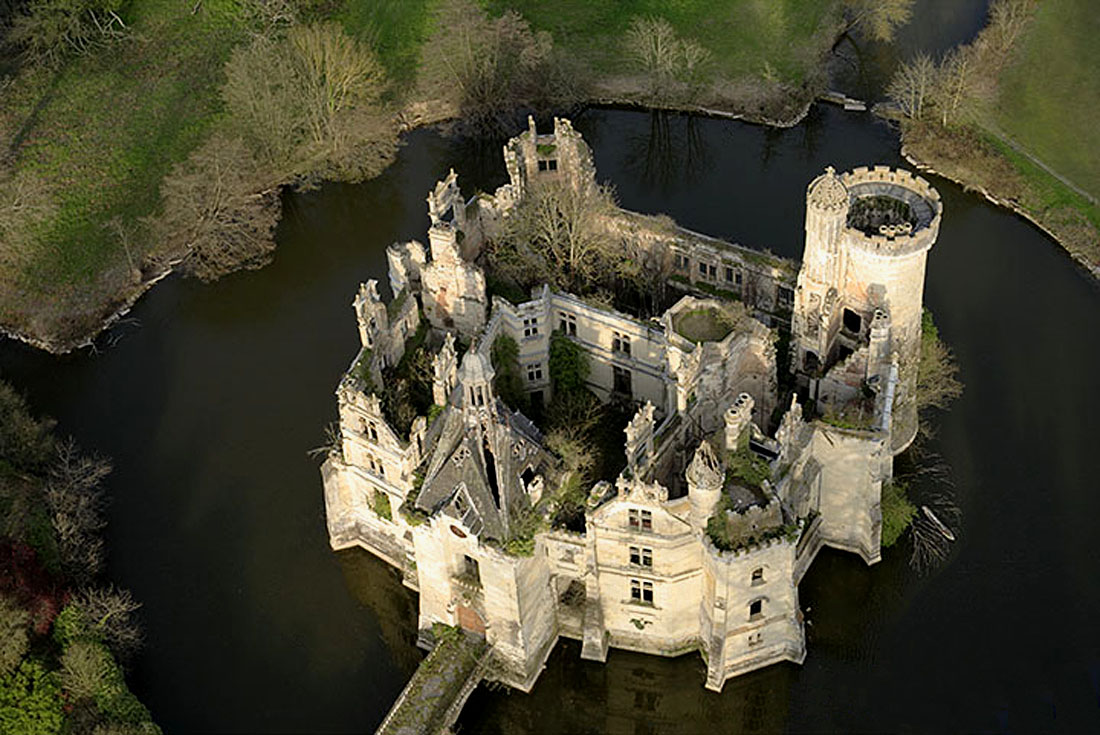
Château du Coudray Montpensier

Château du Coudray Montpensier: historic late medieval castle in Seuilly, France
Seuilly, Centre-Val de Loire, France
Late Medieval (14th–15th c.)
Well Preserved

The Château du Coudray Montpensier stands as a significant example of a late medieval castle located in Seuilly, France. Positioned strategically on the road between Chinon and Seuilly, it is surrounded by expansive fields and vineyards that have shaped its agricultural and cultural landscape. The castle's origins trace back to the 11th century, marking it as a site with deep historical roots extending into the Middle Ages.

Historical lineage and ownership

The estate of Coudray-Montpensier has passed through the hands of numerous noble families over the centuries, reflecting the complex feudal and aristocratic history of the region. Among these were the Montsoreau, Marmande, Sainte Maure, Artois, Bournan, Bourbon, Escoubleau, de Vallière, and ultimately the Lamote-Baracé family. Each lineage contributed to the castle's development, maintenance, and status within the local hierarchy.

Architectural development and features

The current structure of the château was primarily constructed in the 14th century, during the late medieval period. This phase established the castle's foundational layout, characterized by fortified walls and defensive features typical of the era. In the 15th century, significant enhancements were made, likely including the strengthening of defensive elements and the addition of residential comforts as the castle transitioned from purely military use to a noble residence.

Defensive structures

The castle's architecture combines functional fortification with residential aspects. It likely includes thick stone walls, battlements, and possibly a moat or other water defenses, common in castles of this period and region. Towers and gatehouses would have served both defensive and symbolic purposes, asserting the owner's power and control over the surrounding lands.

Residential and aesthetic enhancements

By the 15th century, modifications to the château may have introduced larger windows, improved living quarters, and decorative elements reflecting the Gothic architectural influences prevalent in France at the time. These changes would have made the castle more comfortable and visually impressive, aligning with the tastes and social expectations of its noble inhabitants.

18th-century garden terraces

In the 18th century, the château's surroundings were transformed with the addition of three garden terraces designed by the architect Anjubault. These terraces are located to the north of the château and represent a shift towards integrating formal landscaping and aesthetic refinement into the estate. The terraces likely feature geometric layouts, stone balustrades, and pathways that enhance the visual connection between the château and its natural environment.

Current use and cultural significance

Today, the Château du Coudray Montpensier functions as a venue for hospitality, dining, and special events, blending its rich historical atmosphere with modern uses. This adaptive reuse helps preserve the castle's fabric while allowing visitors and guests to experience its heritage firsthand. The château remains an important cultural landmark in the region, reflecting centuries of architectural evolution and noble history.

Frequently asked questions (FAQ)

How do I get to Château du Coudray Montpensier?
Château du Coudray Montpensier is located in Seuilly, France, and can be accessed by car or public transport. The nearest train station is in Chinon, from where you can take a taxi or a bus to reach the castle. Parking is available on-site for visitors driving to the location.
What is the historical significance of Château du Coudray Montpensier?
Château du Coudray Montpensier has a rich history dating back to the 15th century and played a significant role during the Hundred Years' War. It was built by the Montpensier family and has served as a strategic defensive stronghold. The castle reflects the architectural evolution of the period and is a testament to the region's historical heritage.
Is it possible to take guided tours of the castle?
Yes, guided tours of Château du Coudray Montpensier are available for visitors wishing to learn more about its history and architecture. These tours provide in-depth information and allow guests to explore areas of the castle not typically accessible to the public. It's recommended to book in advance, especially during peak tourist seasons.
When was Château du Coudray Montpensier built?
Château du Coudray Montpensier was constructed in the early 15th century, specifically around the year 1420. Its architecture showcases the transition from medieval to Renaissance styles, making it an interesting study for history and architecture enthusiasts. The castle has undergone several renovations over the centuries, preserving its historical essence.
What are the opening hours for Château du Coudray Montpensier?
Château du Coudray Montpensier is open to visitors from April to October, with varying hours throughout the week. Typically, the castle opens at 10 AM and closes at 6 PM, but it is advisable to check the official website for the most current hours before planning your visit. Special hours may apply during holidays or events.
Can I buy tickets in advance for my visit?
Yes, tickets for Château du Coudray Montpensier can be purchased online in advance. Buying tickets ahead of time is recommended, especially during the busy summer months, to ensure you secure your preferred visiting time. On-site ticket sales are also available, but availability may vary.
What is the best time to visit Château du Coudray Montpensier?
The best time to visit Château du Coudray Montpensier is during the spring and early fall months when the weather is mild, and the gardens are in full bloom. These seasons offer a pleasant experience for exploring the castle and its surroundings. Summer can be crowded, but it also features special events and activities.
Are there any nearby attractions to visit?
Yes, there are several nearby attractions to explore, including the historic town of Chinon and the beautiful vineyards of the Loire Valley. Visitors can also enjoy wine tasting tours or explore other châteaux in the region, such as Château de Langeais and Château de Saumur. Combining these visits can create a rich cultural and historical experience.
Is the castle accessible for visitors with disabilities?
Château du Coudray Montpensier is committed to accessibility and provides facilities for visitors with disabilities. While some areas of the castle may have limited access due to historical architectural features, staff is available to assist guests as needed. It is best to contact the castle in advance to inquire about specific accessibility options.

Information

Hill Castle

Loading map...

Visitor reviews

No reviews yet. Been here? Write the first review and help other travelers!

Write the first review

Visited this castle? Share your experience

Your review helps other travelers and adds first-hand knowledge to our encyclopedia.
Write a review

(5/5)

0/2000 characters

Your review will be visible after admin approval

Nearby castles

6.9 km
Chinon Castle — France castle

Chinon Castle

Chinon, France

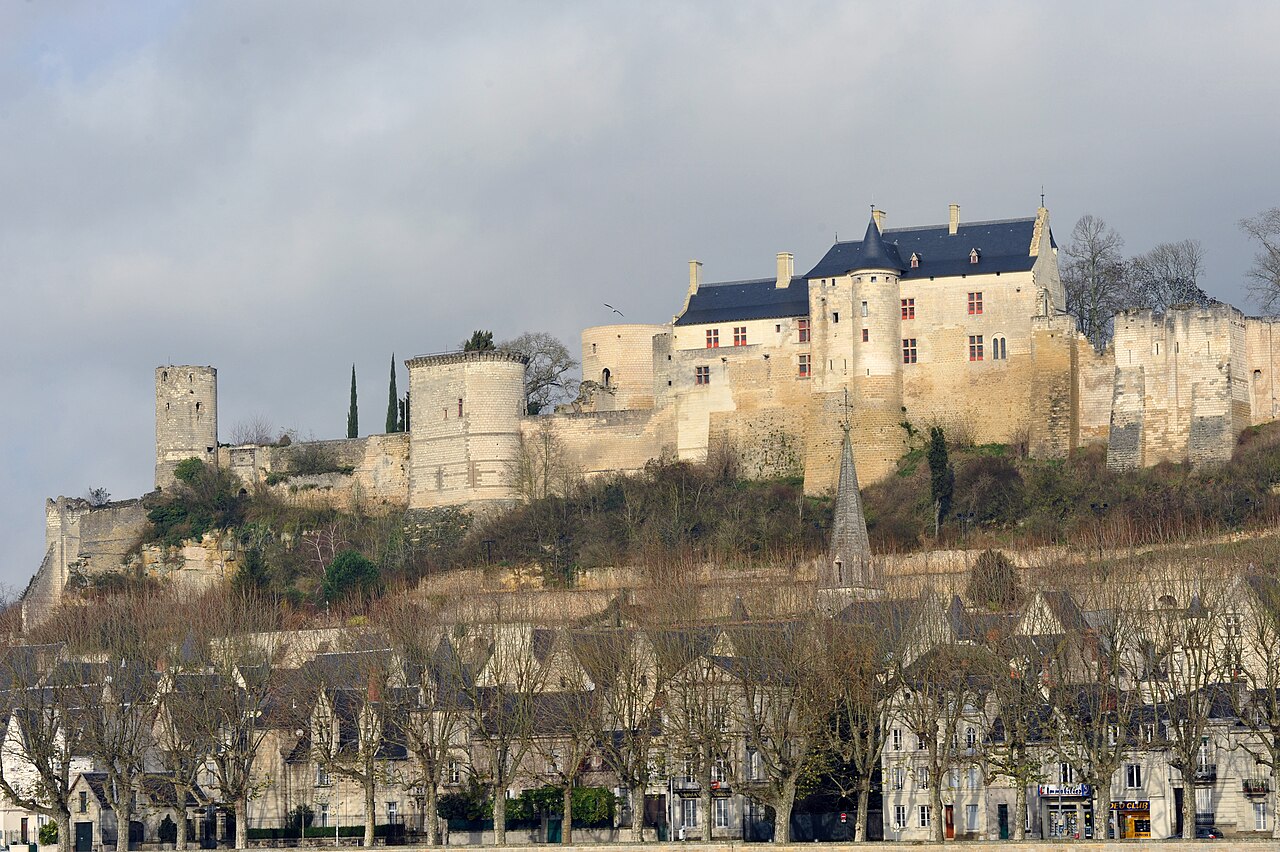
Chinon Castle, also known as the Chinon Royal Fortress, stands majestically on a rocky promontory overlooking the confluence of the Vienne and Loire rivers in the town of Chinon, within the Centre-Val de Loire region of France. This hill castle is a monumental testament to medieval military architecture and royal history, commanding strategic control over an important river crossing for nearly a millennium. The castle's origins date back to the 10th century when Theobald I, Count of Blois, established the first stone fortifications on the site. Over the centuries, it evolved into a sprawling fortress complex through successive expansions by the Counts of Anjou and the Plantagenet dynasty. The most significant construction phase occurred in the 12th century under Henry II of England, who transformed Chinon into his principal continental residence and administrative center. Many of the castle's surviving structures, including the palatial fortifications and defensive walls, date from his reign. Henry II also died at Chinon in 1189, marking the castle as a site of royal significance. Architectural layout and fortifications The castle extends approximately 300 meters along the ridge and is divided into three main fortified sections: Fort Saint-Georges at the western end, the Château du Milieu in the center, and Fort de Coudray to the east. Each enclosure is separated by deep dry moats and connected by fortified gates and bridges, creating a formidable defensive system. Fort saint-georges Fort Saint-Georges is the oldest part of the castle, built under Henry II's direction. It includes a palace complex arranged in three wings perpendicular to the main building parallel to the river. The fort was enclosed by a curtain wall without towers but featured two monumental gates, including a rectangular gatehouse tower on the west side. Archaeological excavations in the early 21st century uncovered the foundations of this palace, which had been hidden beneath later constructions and a garden. The fort also housed a chapel dedicated to Saint George. Château du milieu The central section, the Château du Milieu, served as the royal residential quarters. It contains the remains of the priory of Saint-Melaine and the south wing, which housed the Salle de la Reconnaissance—a large courtroom used by Charles VII and Marie d'Anjou. The royal chambers here were heated and comfortable, reflecting the castle's role as a royal residence during the Hundred Years' War. The great hall was demolished in 1699, but its foundations and fireplace remain visible. Fort de coudray Fort de Coudray features the distinctive cylindrical keep known as the Tour du Coudray, constructed by King Philip II of France after he captured the castle in 1205. This tower is notable for its vaulted interiors with pointed arches and narrow arrow slits designed for defense. A subterranean passage connects it to the Château du Milieu, leading to a concealed postern gate used for secret access and escape. Historical significance Medieval royal residence and political center Chinon Castle was a key stronghold of the Angevin Empire under Henry II and his successors. It served as a royal residence and administrative hub for the Plantagenet kings of England, who ruled vast territories in France. The castle's strategic location allowed control over the Loire Valley and the surrounding regions. Sieges and royal transitions In 1205, after a protracted siege, King Philip II of France successfully captured Chinon from the English, ending Angevin dominance in the area. Philip II enhanced the castle's defenses, notably adding the Tour du Coudray. The fortress remained under French control thereafter, symbolizing the shifting balance of power between England and France during the medieval period. Knights templar imprisonment During the early 14th century, King Philip IV used Chinon Castle as a prison for prominent members of the Knights Templar amid his campaign to suppress the order. The Grand Master Jacques de Molay and other leading Templars were detained here. Notably, the "Parchment of Chinon", a document recording papal cardinals' interrogation of the Templars in 1308, is associated with this site. Joan of arc and the hundred years' war In 1429, during the Hundred Years' War, Joan of Arc arrived at Chinon to meet Charles VII, the Dauphin of France. Their historic meeting at the castle marked a turning point in the war, leading to Charles VII's coronation and the eventual French victory. Joan stayed in the Tour du Coudray during her visit, highlighting the castle's role as a royal and military center. Decline, restoration, and modern use From the 17th century onwards, Chinon Castle lost its military relevance and gradually fell into ruin. Ownership passed to the Dukes of Richelieu until the French Revolution, after which the castle was sold and partially dismantled. Recognized as a monument historique in 1840, it attracted the attention of preservationists such as Prosper Mérimée. Extensive restoration efforts in the 19th and 21st centuries have stabilized and conserved the castle's structures. Archaeological excavations uncovered the foundations of Henry II's palace and other medieval buildings, leading to the reconstruction of roofs and timber frameworks inspired by 15th-century designs. Today, the castle is well preserved and serves as a major tourist attraction managed by the Indre-et-Loire General Council. Visitor experience Visitors to Chinon Castle can explore its three fortified sections, including the Clock Tower offering panoramic views of the Loire Valley, the Throne Room, and the Royal Residence. The castle's museum displays artifacts from its rich history, including items related to the Knights Templar and Joan of Arc. The picturesque approach through the medieval town with its cobbled streets and black slate roofs enhances the historic atmosphere. Architectural legacy The castle's architecture reflects a blend of High Medieval military design with Capetian and Angevin influences. Its triple enclosure layout, dry moats, curtain walls, and towers exemplify defensive strategies of the period. The use of vaulted interiors, arrow slits, and fortified gatehouses demonstrates advanced fortification techniques. The preservation of these features offers valuable insight into medieval castle construction and royal residence design. In summary, Chinon Castle is a landmark of French medieval history, combining architectural grandeur with profound historical significance. Its connections to the Plantagenet kings, the Knights Templar, and Joan of Arc make it an essential site for understanding the complex political and military history of medieval France.

High Medieval (11th–13th c.)
Details
11.2 km
Mothe-Chandeniers Castle — France castle

Mothe-Chandeniers Castle

Les Trois-Moutiers, France

Mothe-Chandeniers Castle, located in Les Trois-Moutiers within the Nouvelle-Aquitaine region of France, is a captivating example of a romantic neo-Gothic castle that has evolved dramatically over centuries. Though it remains unclassified as a historic monument, its fairy-tale turrets, imposing moat, and atmospheric ruins continue to enchant visitors and historians alike. Early history and medieval origins The castle's oldest sections date back to the early 13th century, originally constructed by the noble Bauçay family. Strategically positioned in the historic province of Poitou-Charentes, Mothe-Chandeniers was designed as a fortified residence with defensive features typical of the high medieval period. Its robust stone walls, towers, and moat reflect the military architecture of the time, intended to withstand sieges and protect its inhabitants. Throughout the Middle Ages, the castle was a focal point of conflict during the Hundred Years' War, changing hands at least twice when it was seized by English forces. These turbulent events left their mark on the castle's structure and history, contributing to its layered architectural fabric. Renaissance to 18th century decline Following the medieval period, Mothe-Chandeniers experienced gradual changes in ownership and function. By the 18th century, the castle had fallen into a state of disrepair, reflecting broader social and political shifts in France that rendered many feudal fortresses obsolete. Despite this decline, the castle retained much of its original medieval character, with its moat and turrets still defining the silhouette against the landscape. 19th century restoration and romantic revival In 1809, the estate was acquired by François Hennecart, a wealthy Parisian businessman who undertook significant restoration efforts. Hennecart preserved much of the castle's medieval fabric while enhancing the surrounding parkland with a vineyard, blending agricultural utility with aristocratic residence. The most transformative period came in the late 19th century under the ownership of Baron Edgard Lejeune. Around 1870, Lejeune initiated an extensive reconstruction in the romantic neo-Gothic style, a revivalist architectural movement that celebrated medieval forms with picturesque embellishments. He added ornate towers, decorative battlements, and elegant balconies, turning the castle into a lavish party venue renowned for its grandeur and charm. 20th century fire and ruin Tragedy struck in 1932 when a devastating fire engulfed Mothe-Chandeniers shortly after the installation of central heating. The blaze destroyed much of the castle's interiors, including a priceless library of rare books, antique furniture, tapestries, and paintings. Despite heroic efforts by local firefighters, only the chapel, some annexed buildings, and a dovecote tower survived. The financial loss was immense, estimated at several million francs at the time, and the fire marked the beginning of the castle's decline into ruin. The once vibrant estate was left abandoned, its stone walls gradually succumbing to the encroaching forest and vegetation. Late 20th century ownership and decay In 1963, the expansive estate, including over 1,200 hectares of forest, was purchased by retired industrialist Jules Cavroy. Later, in 1981, it was acquired by Marc Deyemer, a former secondary school mathematics teacher who sought to preserve the castle. Despite his dedication, limited resources meant that the castle continued to deteriorate, with nature reclaiming the structure as greenery sprouted through windows, turrets, and balconies. Architectural features and romantic allure Mothe-Chandeniers is distinguished by its romantic neo-Gothic architecture, characterized by turrets with conical roofs, pointed arches, and ornamental stonework. The castle's moat adds to its fairy-tale appearance, surrounding the main building and offering a glimpse into medieval defensive strategies. The surviving chapel and dovecote tower provide insight into the estate's former grandeur and functional diversity. The chapel's architecture reflects the religious devotion of the castle's inhabitants, while the dovecote was an important feature for food supply and status symbol in aristocratic estates. Cultural significance and modern interest Though never officially classified as a historic monument, Mothe-Chandeniers has gained international attention as a symbol of romantic decay and heritage at risk. Its evocative ruins have inspired photographers, artists, and conservationists, highlighting the challenges of preserving architectural heritage in rural France. Recent crowdfunding efforts and preservation campaigns aim to stabilize the ruins and promote sustainable tourism, ensuring that Mothe-Chandeniers remains a cherished landmark that tells the story of medieval fortification, romantic revival, and the passage of time. Visiting mothe-chandeniers today Visitors to Mothe-Chandeniers can explore the atmospheric ruins, surrounded by lush forests and tranquil parkland. The site offers a unique opportunity to witness the interplay between nature and architecture, where stone walls entwined with greenery evoke a sense of timelessness and mystery. Guided tours and events are increasingly organized, allowing guests to learn about the castle's rich history, architectural evolution, and the ongoing efforts to preserve this remarkable heritage site.

High Medieval (11th–13th c.)
Details
11.9 km

Château-vieux de Candes

Candes-Saint-Martin, France

Château-vieux de Candes stands as a remarkable example of a hill castle nestled in the picturesque village of Candes-Saint-Martin in the Centre-Val de Loire region of France. This ancient fortress, restored to preserve its medieval character, offers visitors a glimpse into the defensive architecture and feudal history of the area. Positioned strategically on a promontory overlooking the confluence of the Loire and Vienne rivers, the castle's location underscores its historical importance in controlling river traffic and regional defense. Historical background and significance The origins of Château-vieux de Candes trace back to the High Medieval period, when fortifications were essential for territorial control and protection against invasions. The castle played a crucial role in local power dynamics, serving as a stronghold for regional lords. Its proximity to the important religious site of Saint Martin's Abbey in Candes-Saint-Martin further enhanced its strategic and cultural significance during the Middle Ages. Throughout its history, the castle witnessed various phases of construction and modification, reflecting the evolving military and residential needs of its occupants. The castle's endurance through centuries of conflict, including the Hundred Years' War, attests to its robust fortifications and strategic value. Architectural features and layout Château-vieux de Candes exemplifies typical hill castle architecture, utilizing the natural topography to enhance its defenses. The castle's layout includes a central keep or donjon, surrounded by fortified walls that once enclosed a courtyard. The elevation provided commanding views of the surrounding landscape and river valleys, crucial for early warning and defense. The castle's walls are constructed from locally sourced stone, with evidence of medieval masonry techniques visible in the surviving structures. Defensive elements such as battlements, narrow arrow slits, and a fortified gatehouse highlight the castle's military purpose. Restoration efforts have preserved these features, allowing visitors to appreciate the craftsmanship and strategic design. Defensive structures The castle's fortifications include thick curtain walls reinforced by towers at key points, designed to repel attackers and provide vantage points for archers. The entrance was likely protected by a drawbridge and possibly a moat or ditch, common features in medieval hill castles to impede enemy access. Residential and functional spaces Within the walls, the castle housed living quarters, storage rooms, and possibly a chapel, reflecting the dual military and domestic functions of such fortresses. The arrangement of these spaces would have been adapted over time to meet the needs of its occupants. Restoration and current status Today, Château-vieux de Candes is classified as restored, with preservation efforts focused on maintaining its structural integrity and historical authenticity. The castle serves as a cultural landmark and tourist attraction, offering guided tours and educational programs that highlight its architectural and historical importance. Its well-preserved state allows visitors to explore the castle's defensive features and appreciate the medieval ambiance. The site contributes to the cultural heritage of the Centre-Val de Loire region, known for its rich collection of castles and historic sites. Visiting information and cultural context Located in the charming village of Candes-Saint-Martin, the castle is accessible to visitors interested in medieval history, architecture, and scenic river landscapes. The region's reputation as the "Garden of France" adds to the appeal, combining natural beauty with historical exploration. Visitors can enjoy walking tours around the castle and the village, experiencing the blend of natural and architectural heritage. The castle's proximity to the Loire Valley, a UNESCO World Heritage site, situates it within a broader context of French cultural and historical tourism. Nearby attractions The confluence of the Loire and Vienne rivers, offering picturesque views and opportunities for river walks. Saint Martin's Church and Abbey, significant religious sites with historical ties to the castle. Other castles and historic towns in the Centre-Val de Loire region, renowned for their Renaissance and medieval heritage. Architectural style and influences The castle's architecture reflects the High Medieval style, characterized by functional military design with modest decorative elements. The emphasis on strong defensive features over elaborate aesthetics is typical of hill castles constructed during this period. While primarily a fortress, the castle also exhibits elements that suggest adaptation for residential comfort, a common trend as medieval castles evolved from purely military structures to noble residences.

Details