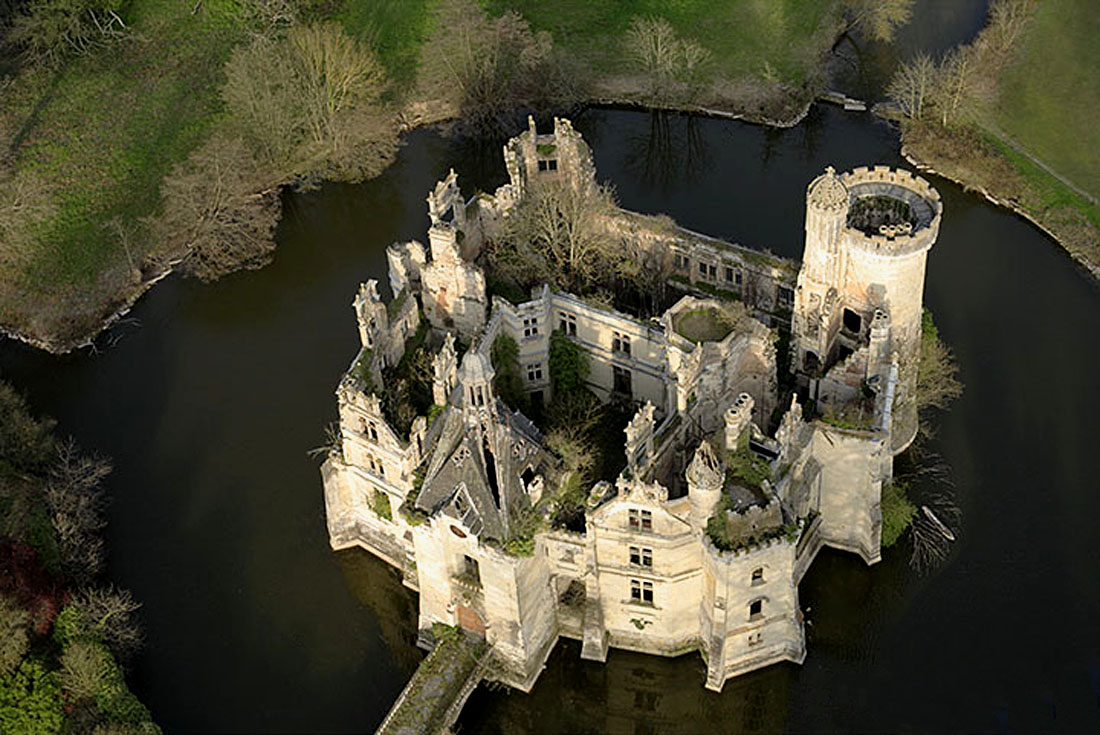
Château de Ternay
The Château de Ternay stands as a remarkable example of a 15th-century hill castle located in the commune of Ternay within the Hauts-de-France region of northern France. Originally constructed under the direction of Bertrand de Beauvau, a prominent vassal of King Charles VII, the château's building phase began in 1439 and extended over thirteen years. This period marks the castle's foundation in the late medieval era, reflecting the architectural and defensive needs of French nobility during the turbulent times of the Hundred Years' War.
Medieval origins and architectural features
The château’s core structure is a testament to medieval construction techniques, featuring robust stone walls and a round tower that houses a donjon, or fortified keep. This keep was central to the castle’s defense strategy, providing a secure refuge during sieges. The round tower remains one of the most significant preserved elements and is officially recognized as a historic monument. The main building also includes artistic influences from Italy, notably visible in the chapel’s decoration.
The chapel and artistic embellishments
The château’s chapel is distinguished by its vaulted ceilings and stained glass windows, which were crafted by Venetian artists invited specifically for this purpose. The chapel’s sculptural works and decorative elements highlight the cross-cultural artistic exchanges of the period and add a unique aesthetic dimension to the castle’s religious space. This blend of medieval French architecture with Italian Renaissance artistic touches enriches the château’s cultural heritage.
Historical ownership and transformations
Throughout the late Middle Ages, the Beauvau family maintained possession of the château. However, in 1574, following a fatal dispute involving Claude de Beauvau, the estate was confiscated. By 1606, ownership had transferred to the d’Arsac family. This change in ownership marked the beginning of significant architectural modifications. Around the end of the 17th century, the château saw the addition of a new building featuring mansard roofs, reflecting the evolving architectural tastes and functional needs of the time.
Impact of the French Revolution
The upheavals of the French Revolution led to the château being sold as national property in 1792. This was part of a widespread confiscation of noble estates during the revolutionary period. The property was later reacquired in 1804 by Marie-Adélaïde Cantineau de Commacre, widow of Gabriel d’Arsac, restoring the château to private noble ownership. Subsequently, it passed to the d’Aviau family, who would oversee further renovations in the 19th century.
19th-century renovations and adaptations
Significant changes were implemented in 1864 under the direction of Charles Marie d’Aviau de Piolant. These renovations included the construction of new stables designed to accommodate horses and related activities, the dismantling of the château’s defensive walls, and the filling in of the protective moat. The west, north, and south wings of the château were altered to suit contemporary residential and functional requirements, resulting in a blend of medieval and 19th-century architectural elements.
Preservation of interior decor and tapestries
Inside, the château retains rooms with original furnishings and decorations dating from the 1880s. Features such as coffered ceilings, wood paneling, and fireplaces reflect the refined tastes of the late 19th century. Notably, one ground-floor chamber houses two Aubusson tapestries from the 17th century, renowned for their craftsmanship and artistry. Family portraits throughout the château provide a visual record of its noble lineage, linking the architectural heritage to the personal histories of its owners.
Cultural significance and notable figures
The château is not only architecturally significant but also historically important due to its association with notable figures. Among them is Charles Louis d’Arsac, the Chevalier de Ternay (1722–1780), born at the château. He played a prominent role in escorting French troops during the American Revolution and is buried in Newport, Rhode Island. This connection extends the château’s historical relevance beyond France, linking it to international events of the 18th century.
Modern heritage status and current use
Today, the Château de Ternay is recognized for its cultural heritage value. Several parts of the estate, including the chapel, round tower with donjon, and the 19th-century stables, have been officially designated as historic monuments. The château remains inhabited by descendants of the d’Aviau de Ternay family, who have preserved much of its historic character. The estate maintains original decorations and furnishings from the late 19th century alongside earlier tapestries, offering visitors and historians a layered narrative of French noble life and architectural evolution across centuries.
Frequently asked questions (FAQ)
- How do I get to Château de Ternay?
- Château de Ternay is located in the Loire Valley, France, and can be reached by car or public transport. The nearest train station is in Saumur, from where you can take a taxi or a local bus to the castle.
- What is the historical significance of Château de Ternay?
- Château de Ternay dates back to the 15th century and is an excellent example of Renaissance architecture in the Loire Valley. It has played a vital role in local history, serving as a residence for various noble families over the centuries.
- When was Château de Ternay built?
- Construction of Château de Ternay began in the 15th century, with significant renovations and expansions occurring in the following centuries. The castle reflects the architectural styles and historical influences of its time.
- Can I take guided tours of Château de Ternay?
- Yes, guided tours are available at Château de Ternay, allowing visitors to explore the castle's rich history and stunning architecture. It is recommended to book in advance, especially during peak tourist seasons.
- Why is the architecture of Château de Ternay unique?
- The architecture of Château de Ternay is unique due to its blend of medieval and Renaissance styles, showcasing intricate stone carvings and elegant facades. The castle's design reflects the transition from fortified structures to more ornate residential designs.
- Is it possible to visit Château de Ternay year-round?
- Château de Ternay has specific opening hours and is generally open from spring to autumn. It is advisable to check the official website for seasonal hours and any special events that may affect visiting times.
- What are the ticket prices for Château de Ternay?
- Ticket prices for Château de Ternay vary depending on the season and the type of tour selected. Discounts may be available for students and groups, so it's best to check the official site for the most current pricing information.
- What is the best time to visit Château de Ternay?
- The best time to visit Château de Ternay is during the spring and early autumn when the weather is mild, and the gardens are in full bloom. These seasons also tend to have fewer crowds, allowing for a more enjoyable experience.
- Are there any nearby attractions to Château de Ternay?
- Yes, there are several nearby attractions, including the historic town of Saumur and the beautiful vineyards of the Loire Valley. Visitors can also explore other nearby châteaux, such as Château de Saumur and Château de Brézé, to enhance their experience.
Information
Website
Visit websiteSources & official resources
Verify the information above using these authoritative references.
Loading map...
Visitor reviews
No reviews yet. Been here? Write the first review and help other travelers!
Write the first reviewVisited this castle? Share your experience
Your review helps other travelers and adds first-hand knowledge to our encyclopedia.