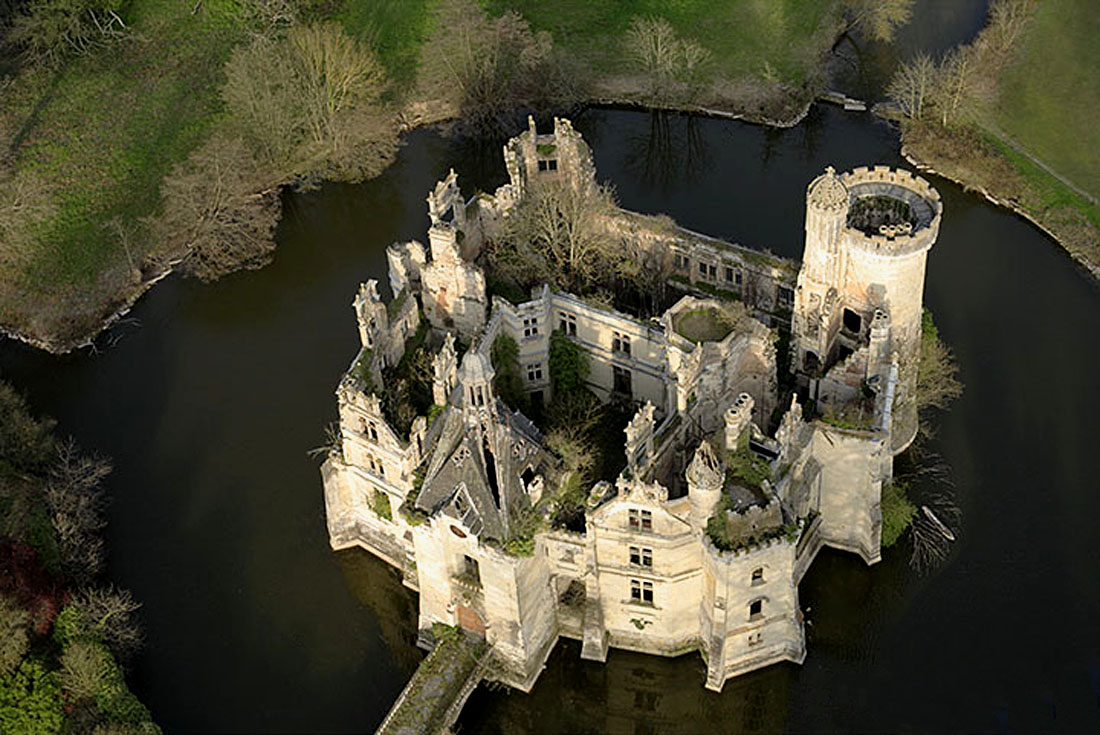
Château de Berrie
The Château de Berrie stands as a remarkable example of medieval fortification nestled in the region of Hauts-de-France, France. This hill castle boasts a rich history that traces back to the Carolingian Empire, a pivotal era in European history known for its consolidation of power and cultural revival during the early Middle Ages. Originally conceived as a fortified refuge, the château’s strategic location atop an oval-shaped elevated platform provided natural defensive advantages, which were further enhanced by its surrounding moat and complex subterranean structures.
Early origins and carolingian foundations
The earliest phase of the Château de Berrie dates to the late Carolingian period, when the site featured a light well ingeniously carved directly into the local tuffeau rock. This architectural element was not merely decorative but served a functional purpose by illuminating extensive underground cellars. These cellars were vital for daily living needs and provided a secure refuge during times of invasion and unrest, reflecting the turbulent political landscape of early medieval Europe.
During this period, the château’s design emphasized both shelter and defense, combining natural geological features with human ingenuity to create a fortified complex that could sustain its inhabitants under siege. The use of troglodyte dwellings—rock-cut habitations integrated into the counterscarp of the moat—demonstrates an advanced adaptation of the natural environment for both residential and defensive purposes.
Medieval development and noble stewardship
By the late 11th century, the land encompassing the château was part of the barony of Loudun, which fell under the influence of the powerful Angevin domain. This affiliation positioned the château within a broader network of feudal territories that played significant roles in regional politics and military affairs.
Following the death of the last lord of Berrie in 1274, control of the castle passed to the lords of Amboise, who were also viscounts of Thouars. These lords administered the surrounding castle district, or châtellenie, until the mid-15th century. The Amboise family’s tenure marked an era of architectural and administrative consolidation, with the château serving as a key stronghold in their territorial holdings.
Subsequently, ownership transitioned to the La Trémoille family, a distinguished noble house in France, known for their political influence and patronage of the arts. The château’s connection to such prominent families underscores its importance as both a defensive fortress and a noble residence.
In 1695, the château was acquired by the Dreux-Brézé family, who maintained possession for several centuries. Notably, the château escaped the widespread destruction that befell many noble estates during the French Revolution, preserving its historical fabric for future generations. The late 19th century saw significant renovation efforts led by a descendant of the Dreux-Brézé family, who undertook restoration and modernization projects to adapt the château to contemporary tastes while respecting its historical integrity.
Architectural features and subterranean elements
The château’s architecture is distinguished by a harmonious blend of Romanesque and medieval elements, reflecting its long history of construction and adaptation. Several rooms within the château date back to the Romanesque period, characterized by their pointed vaults and paired arches, which exemplify the robust and functional style of early medieval architecture.
The medieval halls are supported by sturdy pillars and feature arcatures—small series of arches that serve both decorative and structural purposes. The presence of silos within the castle indicates its role in storage and sustenance during sieges or prolonged habitation.
One of the château’s most notable features is its castle chapel, established in the early 13th century (circa 1200-1250). This sacred space preserves 15th-century mural paintings that offer valuable insight into the religious and artistic traditions maintained within the château across centuries. The chapel’s survival and artistic heritage contribute significantly to the château’s cultural importance.
The château’s defensive system is further enhanced by its moat, which encircles the elevated platform and incorporates a sophisticated network of tunnels and troglodyte dwellings within the counterscarp. Access to the extensive subterranean cellars, including a remarkable hypostyle rotunda—a circular chamber supported by multiple columns—is achieved via dry moats that separate the château from the surrounding terrain. These features illustrate the castle’s complex layering of defense, habitation, and storage, making it a unique example of medieval military architecture.
Preservation and cultural significance
Today, the Château de Berrie is recognized for its exceptional preservation, combining both visible above-ground structures and extensive underground spaces. Its designation as a historic monument in 1997 underscores its value as a cultural and architectural heritage site in France.
The château’s survival through centuries of political upheaval, including the French Revolution, and its continuous adaptation by successive noble families, reflect its resilience and enduring significance. Visitors to the site can explore a rich tapestry of history, from its Carolingian origins to its medieval expansions and modern restorations, all set within the picturesque landscape of Hauts-de-France.
As a hill castle with a unique combination of troglodyte dwellings, Romanesque architecture, and extensive subterranean features, Château de Berrie offers a compelling glimpse into the evolution of medieval fortifications and noble residences in northern France.
Frequently asked questions (FAQ)
- How do I get to Château de Berrie?
- Château de Berrie is located in the picturesque region of France. You can reach it by car or public transportation, with ample parking available nearby. The closest train station is approximately 10 kilometers away, and local buses provide regular services to the castle.
- What is the historical significance of Château de Berrie?
- Château de Berrie dates back to the 15th century and holds significant historical value as a representation of medieval architecture in the region. It has witnessed various historical events and has been carefully preserved to showcase its original design and cultural importance. The castle is a testament to the rich history of French nobility.
- When was Château de Berrie built?
- Château de Berrie was constructed in the late 15th century, specifically around 1470. It reflects the architectural styles of the period, combining both defensive and residential features. The castle has undergone various renovations over the centuries while retaining its historical character.
- Can I take guided tours of Château de Berrie?
- Yes, guided tours are available for visitors who wish to learn more about the history and architecture of Château de Berrie. These tours provide insights into the castle's past and its significance in French heritage. It is recommended to book in advance, especially during peak tourist seasons.
- Is it possible to visit Château de Berrie year-round?
- Château de Berrie is open to visitors throughout the year, although opening hours may vary by season. Typically, the castle is open from 10 AM to 6 PM, with extended hours during the summer months. Always check the official website for the most current visitor information before planning your trip.
- What are the ticket prices for Château de Berrie?
- Ticket prices for Château de Berrie vary depending on the visitor's age and whether they choose a guided tour. Generally, adult tickets are priced around €10, while discounts are available for children and seniors. Special rates may apply for group bookings, so it's advisable to check in advance.
- What is the best time to visit Château de Berrie?
- The best time to visit Château de Berrie is during the spring and early autumn when the weather is mild and the gardens are in full bloom. This period also tends to be less crowded compared to the summer months. Plan your visit on weekdays for a more peaceful experience.
- Are there any nearby attractions to visit while at Château de Berrie?
- Yes, there are several attractions near Château de Berrie, including charming local villages and scenic parks. Visitors can also explore historical landmarks and enjoy outdoor activities in the surrounding countryside. Don't miss the opportunity to experience the local cuisine at nearby restaurants.
- Is Château de Berrie accessible for visitors with disabilities?
- Château de Berrie strives to be accessible for all visitors, including those with disabilities. While some areas may have limited access due to the castle's historical structure, staff are available to assist and provide alternative options. It's best to contact the castle's administration prior to your visit to ensure a smooth experience.
Information
Website
Visit websiteSources & official resources
Verify the information above using these authoritative references.
Loading map...
Visitor reviews
No reviews yet. Been here? Write the first review and help other travelers!
Write the first reviewVisited this castle? Share your experience
Your review helps other travelers and adds first-hand knowledge to our encyclopedia.