Morpeth Castle
Morpeth Castle stands as a significant example of Norman military architecture in the historic county of Northumberland, England. Located strategically on a hill overlooking the Wansbeck River, the castle's origins date back to the 11th century, when the Normans established a motte-and-bailey fortification to control this important crossing and surrounding territory. This early design featured a raised earthwork mound known as a motte topped with a wooden or stone keep, accompanied by an enclosed courtyard or bailey. The castle's initial purpose was primarily defensive, serving as a stronghold during the turbulent years following the Norman Conquest.
In 1216, during a period of political unrest in England, King John ordered the destruction of the original castle, reflecting the widespread conflicts of the era. However, the site retained its strategic importance, and in the 1340s, Baron Ranulf de Merlay constructed a new stone fortress on the same location. This new castle replaced earlier wooden structures with robust stone walls and fortifications, embodying the advancements of medieval military architecture in the 14th century. The stone castle featured a prominent gatehouse, curtain walls, and defensive towers, designed to withstand sieges and assert control over the region.
Architectural features and layout
The surviving elements of Morpeth Castle primarily date from the 14th-century stone reconstruction. The castle is classified as a hill castle, situated approximately 56 meters above sea level, providing commanding views of the surrounding landscape and the Wansbeck River valley. This elevated position was critical for surveillance and defense.
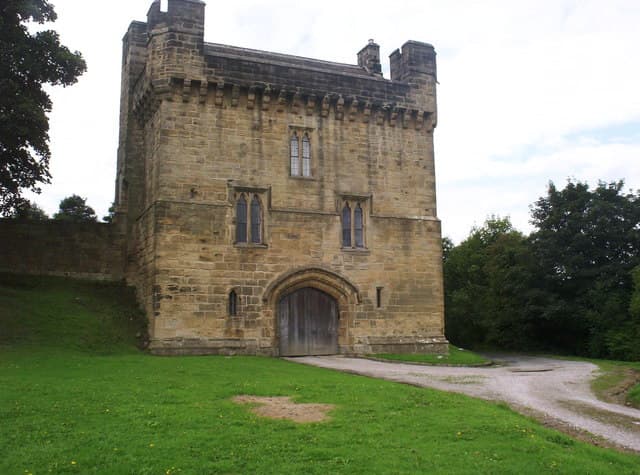
The most prominent and well-preserved structure is the gatehouse, also referred to as a châtelet. This fortified entrance tower served as both the main gateway and a defensive strongpoint. The gatehouse is characterized by thick stone walls, narrow arrow slits, and battlements designed to repel attackers. It was restored meticulously by the Landmark Trust between 1988 and 1990, which removed later 19th-century modifications and returned the structure to its medieval appearance.
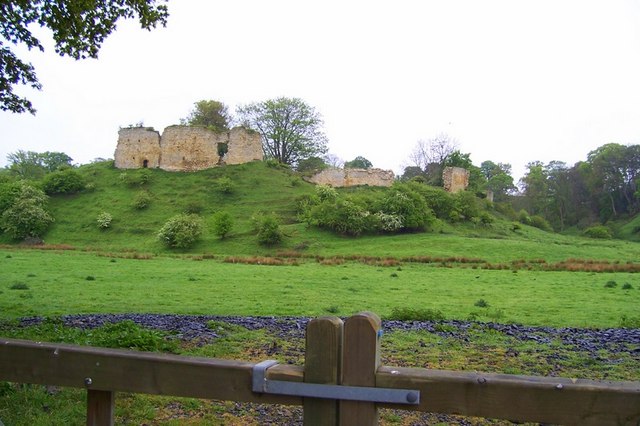
Surrounding the gatehouse are fragments of the original curtain walls, which once enclosed the castle's inner ward. These stone walls, although partially ruined, outline the castle's original defensive perimeter. The walls would have been equipped with battlements and walkways for guards to patrol and defend the castle effectively.
Historical significance and ownership
Throughout its history, Morpeth Castle passed through the hands of several prominent noble families, including the Greystoke earls, Dacre barons, and the Howard family. Although these families did not reside permanently at the castle, it remained an important symbol of feudal power in the region.
One of the castle's most notable historical episodes occurred in 1516 when Margaret Tudor, sister to King Henry VIII of England and widow of King James IV of Scotland, sought refuge within its walls. Her four-month stay underscored the castle's role as a secure sanctuary during periods of political intrigue and conflict between England and Scotland.
The castle also played a military role during the English Civil War in 1644. It was defended by around 500 Lowland Scots against a much larger Royalist force of approximately 2,700 troops. The defenders successfully held out for 20 days, demonstrating the castle's continued strategic importance even in the 17th century.
Decline and restoration
By the 19th century, Morpeth Castle had fallen into considerable ruin, with only the gatehouse and portions of the curtain wall remaining in relatively good condition. Around 1860, the gatehouse was repaired to serve as living quarters for servants, marking a shift from military to domestic use.
In the late 20th century, the Landmark Trust undertook an extensive restoration project to remove 19th-century alterations and restore the gatehouse to its medieval form. This careful work preserved the castle's architectural integrity and allowed it to be appreciated as a historic monument.
Today, Morpeth Castle is a Grade I listed building, recognized for its national importance in England's architectural and historical heritage. The site offers valuable insight into medieval fortifications and the feudal history of Northumberland.
The castle's setting and visitor experience
Situated on a hill with low vegetation and open terrain, Morpeth Castle provides visitors with panoramic views of the Wansbeck River and the surrounding countryside. The castle's elevated position and remaining stone structures evoke the atmosphere of medieval fortification and defense.
The restored gatehouse is the focal point of the site and exemplifies medieval military architecture. Visitors can appreciate the design features such as the battlements, arrow slits, and thick defensive walls. The remaining curtain wall fragments help outline the castle's original scale and layout, enhancing the understanding of its defensive capabilities.
Morpeth Castle's rich history, architectural features, and restoration efforts make it a significant heritage site. It stands as a testament to the Norman legacy in northern England and offers a tangible connection to the region's medieval past.
Frequently asked questions (FAQ)
- How do I visit Morpeth Castle?
- Morpeth Castle is open to visitors by arrangement. It is advisable to contact the Landmark Trust or local tourist information in Morpeth to arrange a visit.
- What is the historical significance of Morpeth Castle?
- Morpeth Castle is a Norman-origin hill castle with a 14th-century stone gatehouse. It played roles in medieval defense, sheltered Margaret Tudor, and was involved in the English Civil War.
- When was Morpeth Castle built?
- The original motte-and-bailey castle was built in the 11th century. The current stone structures date mainly from the 1340s reconstruction by Baron Ranulf de Merlay.
- Can I see the medieval gatehouse at Morpeth Castle?
- Yes, the gatehouse is the most prominent surviving structure and has been carefully restored to its medieval appearance by the Landmark Trust.
- Is Morpeth Castle accessible for visitors with mobility issues?
- Due to its hilltop location and historic structures, accessibility may be limited. Visitors with mobility concerns should inquire in advance about accommodations.
Photo gallery

Information
Opening hours
Open to visitors by arrangement
Ticket prices
Free
Current owner
Landmark Trust
Website
Visit websiteSources & official resources
Verify the information above using these authoritative references.
Loading map...
Visitor reviews
No reviews yet. Been here? Write the first review and help other travelers!
Write the first reviewVisited this castle? Share your experience
Your review helps other travelers and adds first-hand knowledge to our encyclopedia.