Moravská Třebová Castle — Czech Republic castle

Moravská Třebová Castle

Moravská Třebová Castle
Moravská Třebová, Czech Republic
Renaissance (15th–17th c.)
Well Preserved

Moravská Třebová Castle is a prominent Renaissance hill castle located in the town of Moravská Třebová in the Pardubice Region of Czechia. This castle stands as an important example of Renaissance architecture in Central Europe, reflecting the cultural and historical developments of the 16th and 17th centuries. Its construction and evolution embody the transition from medieval fortifications to more residential and representative noble estates.

Historical background and construction

The origins of Moravská Třebová Castle date back to the early 16th century, with significant construction phases occurring throughout the 16th and 17th centuries. The castle was built on a hilltop overlooking the town, which provided strategic defensive advantages typical of hill castles. Its initial construction was commissioned by the noble family of Berka of Dubá, who were influential in the region during the Renaissance period.

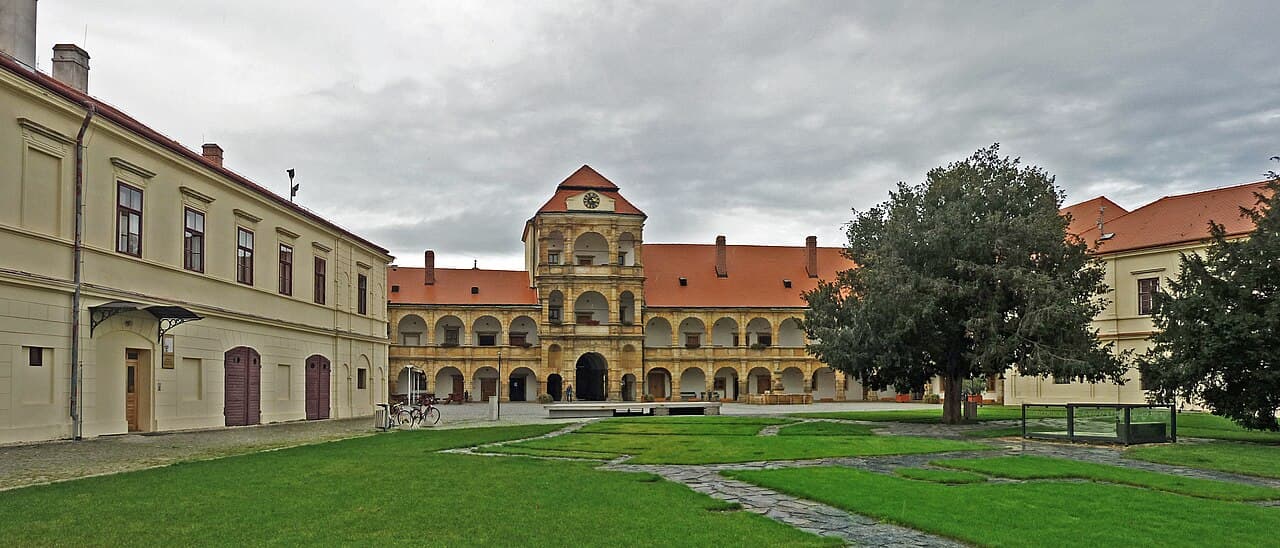
The castle's design reflects the shift from purely military fortifications to more comfortable and ornate noble residences. While the original medieval fortress elements are still evident, the castle was extensively rebuilt and expanded in the 17th century, incorporating Renaissance stylistic features such as ornamental facades, arcaded courtyards, and elegant residential wings.

Architectural features and layout

Moravská Třebová Castle is characterized by its harmonious blend of defensive and residential architecture. The castle complex includes robust stone walls and bastions designed to withstand sieges, alongside refined arcades and ornamental windows typical of Renaissance aesthetics.

The castle's layout centers around a spacious courtyard, enclosed by buildings on all sides, which was a common feature in Renaissance castles aimed at creating an intimate and secure environment for the noble family. The main residential wing features richly decorated interiors, including vaulted ceilings and stucco work, which demonstrate the artistic influences of the period.

Defensive elements such as towers and remain integral to the castle's structure, though their military role diminished over time as the castle transitioned into a representative noble residence.

Significance and cultural heritage

The castle holds considerable historical importance as a symbol of the Renaissance nobility in Moravia and as a center of local administration and culture. It witnessed various historical events, including regional conflicts and the gradual decline of feudal power in the area.

Today, Moravská Třebová Castle is valued for its architectural heritage and is a protected cultural monument. It attracts visitors interested in Renaissance architecture and Central European history.

Current condition and visitor information

The castle is well preserved and has undergone restoration efforts to maintain its structural integrity and aesthetic appeal. It is accessible to the public, offering tours that highlight its architectural features and historical significance.

Visitors can explore the castle's courtyards, towers, and interior chambers, gaining insight into noble life during the Renaissance period. The castle also hosts cultural events and exhibitions that celebrate its heritage.

Frequently asked questions (FAQ)

What is the historical significance of Moravská Třebová Castle?
Moravská Třebová Castle is a remarkable example of Gothic and Renaissance architecture, reflecting its long-standing history dating back to the 13th century. It served as a key administrative center and residence for various noble families, playing an important role in the region's history.
When was Moravská Třebová Castle built?
The castle was originally constructed in the late 13th century, with significant modifications and expansions occurring in the following centuries. Its architectural evolution showcases the transition from Gothic to Renaissance styles, making it a fascinating site for history enthusiasts.
Can I visit Moravská Třebová Castle?
Yes, Moravská Třebová Castle is open to visitors, allowing you to explore its rich history and stunning architecture. Guided tours are available, giving insight into the castle’s past and the lives of those who once lived there.
What are the opening hours of Moravská Třebová Castle?
The castle typically opens to visitors from April to October, with specific hours varying by season. It is advisable to check the official website or contact the castle directly for the most current opening hours and any special events.
Is it possible to access Moravská Třebová Castle with a wheelchair?
While efforts have been made to improve accessibility, some areas of Moravská Třebová Castle may pose challenges for wheelchair users due to the historic structure's design. It’s recommended to contact the castle in advance to inquire about specific accessibility options and accommodations.
When is the best time to visit Moravská Třebová Castle?
The best time to visit is during the late spring and early autumn months when the weather is mild, and the gardens are in full bloom. Additionally, visiting during these periods allows you to enjoy various cultural events and festivals held at the castle.
What are the ticket prices for Moravská Třebová Castle?
Ticket prices for Moravská Třebová Castle vary depending on the type of tour and visitor age group. Discounts may be available for students, seniors, and families, so it's advisable to check the official website for detailed pricing information.
Are there any nearby attractions to Moravská Třebová Castle?
Yes, the area surrounding Moravská Třebová Castle is rich in history and natural beauty. Nearby attractions include the local museum, picturesque parks, and charming streets filled with shops and cafes, making it a perfect destination for a full day of exploration.

Photo gallery

Moravská Třebová Castle
Click to view

Photo by SchiDD•CC BY-SA 4.0

1 photo • Click any image to view in full screen

Information

Hill Castle

Loading map...

Visitor reviews

No reviews yet. Been here? Write the first review and help other travelers!

Write the first review

Visited this castle? Share your experience

Your review helps other travelers and adds first-hand knowledge to our encyclopedia.

Write a review

(5/5)

0/2000 characters

Your review will be visible after admin approval

Nearby castles

15.5 km

Hoštejn Castle

Czechia, Czech Republic

Hoštejn castle stands as a significant medieval hill castle near the village of Hoštejn-Zábřeh in the Czech Republic. Constructed in the late 13th century by the influential Hrabišic noble family, it played a strategic role in regional power struggles during the High and Late Medieval periods. The castle's earliest documented mention dates to 1289, although references to a castle official named Mutiš de Honstein in 1267 suggest the site's importance predates this record. The castle was originally built to serve as a counterbalance to the nearby Zábřeh fortress, held by political rivals of the Hrabišic family. This rivalry was intertwined with larger conflicts between King Rudolf of Habsburg and King Přemysl Otakar II. After Rudolf's death in 1278, Hoštejn briefly fell under the control of Protiva of Zábřeh before being reclaimed by the Hrabišic faction under Fridrich of Schonburk. The castle's strategic position and fortifications made it a valuable asset in the volatile political landscape of Moravia. Historical context and ownership transitions During the late 13th century, Hoštejn castle gained notoriety as a hideout for bandits, as chronicled in the Zbraslav Chronicle. This prompted King Václav II to send an army led by Záviš of Falkenštejn, who captured the castle, executed the garrison, and transferred ownership to the king's stepfather. After Záviš's death in 1290, the castle came into the possession of the Sternberg family, who controlled it from at least 1335 and integrated it with their estates of Šilperský and Zábřeh. At the close of the 14th century, the estate passed to the Lukov branch of the Sternbergs following the death of Smil of Hoštejn in 1398. The family faced territorial disputes with Margrave Jošt of Moravia during this period. The early 15th century saw the castle become embroiled in the religious and military conflicts of the Hussite movement. In 1406, the castle was under the castellanship of Hynčík of Frývaldov, a Hussite supporter, making it a frequent target of assaults. Around 1424, it suffered significant damage inflicted by forces loyal to Albrecht of Austria. By 1434, ownership had shifted to Jan of Zvole, aligned with Catholic interests. Despite this, the castle was largely ruined by 1437, likely due to the ongoing Hussite wars. In the early 1500s, the dilapidated fortress became a refuge for bandits until Arkleb Trnavský of Boskovice captured and reportedly demolished it in 1522. The castle's final destruction occurred in the 19th century when its stones were repurposed for embankments of the Olomouc–Prague railway, completed in 1845. Architectural features and castle layout The fortifications of Hoštejn castle once extended approximately 450 meters, featuring a distinctive two-part defensive layout. The core area was almost rectangular, measuring about 50 by 20 to 25 meters. Archaeological excavations have uncovered the remains of a palace building within this core, oriented transversely and measuring roughly 25 by 9.5 meters. This palace was situated near the site of a former tower, the only significant above-ground ruin visible today. A surviving section of the palace's western wall remains, alongside parts of a cellar and a buried staircase. Surrounding the core was a circular earthwork forming a wide ditch between 18 and 38 meters in width, serving as a formidable defensive barrier. The outer bailey lay in front of the main complex, measuring about 45 by 14 meters, enclosed by an embankment and ditch up to 25 meters wide. Interestingly, no buildings have been found within this outer enclosure, suggesting it may have served as a protected space for livestock or military staging. Defensive mounds and additional fortifications Near the castle, a large platform measuring 47 by 19 meters lies close to the local church. This platform is bordered on three sides by fencing traces and lower terraces, possibly indicating an earlier settlement, a military camp, or the site of the original church associated with Hoštejn. On the opposite side of the castle, a pentagonal mound measuring approximately 23 by 15 meters is separated from the main fortification by a deep ditch nearly 17 meters wide and 5 meters deep. This advanced defense likely protected the castle’s most vulnerable approach against siege engines. A sandstone monument now marks the presumed location of the castle’s former tower. This monument stands nearly 3 meters high and measures about 7.5 meters in diameter, commemorating the completion of the Olomouc–Prague railway, which led to the removal of much of the castle's ruins in the 19th century. Religious structures and cultural heritage Historical records note several religious buildings near the castle site. The parish church of Saint Cunigunde, documented from 1350, no longer stands but once served the local community. An 18th-century pilgrimage chapel dedicated to Saint Anne was rebuilt in 1815 nearby, continuing the spiritual tradition of the area. Additionally, an Empire-style Holy Trinity sculpture dating from 1820 stands as a later religious landmark connected to the castle's surroundings. Preservation and current status Today, Hoštejn castle exists primarily as archaeological ruins with limited visible remains. The site has been protected as a cultural monument since 1964, preserving its historical significance and encouraging archaeological study. Visitors can explore the remnants of its medieval fortifications, the palace wall, and the surrounding earthworks, gaining insight into the castle's strategic importance and turbulent history. While much of the castle was dismantled during the 19th century for railway construction, the surviving features provide valuable evidence of medieval castle architecture in Moravia. The site also offers a glimpse into the complex political and religious conflicts of the region, including the Hussite wars and noble rivalries that shaped Central European history.

Details
17.1 km
Bouzov Castle — Czech Republic castle

Bouzov Castle

Bouzov, Czech Republic

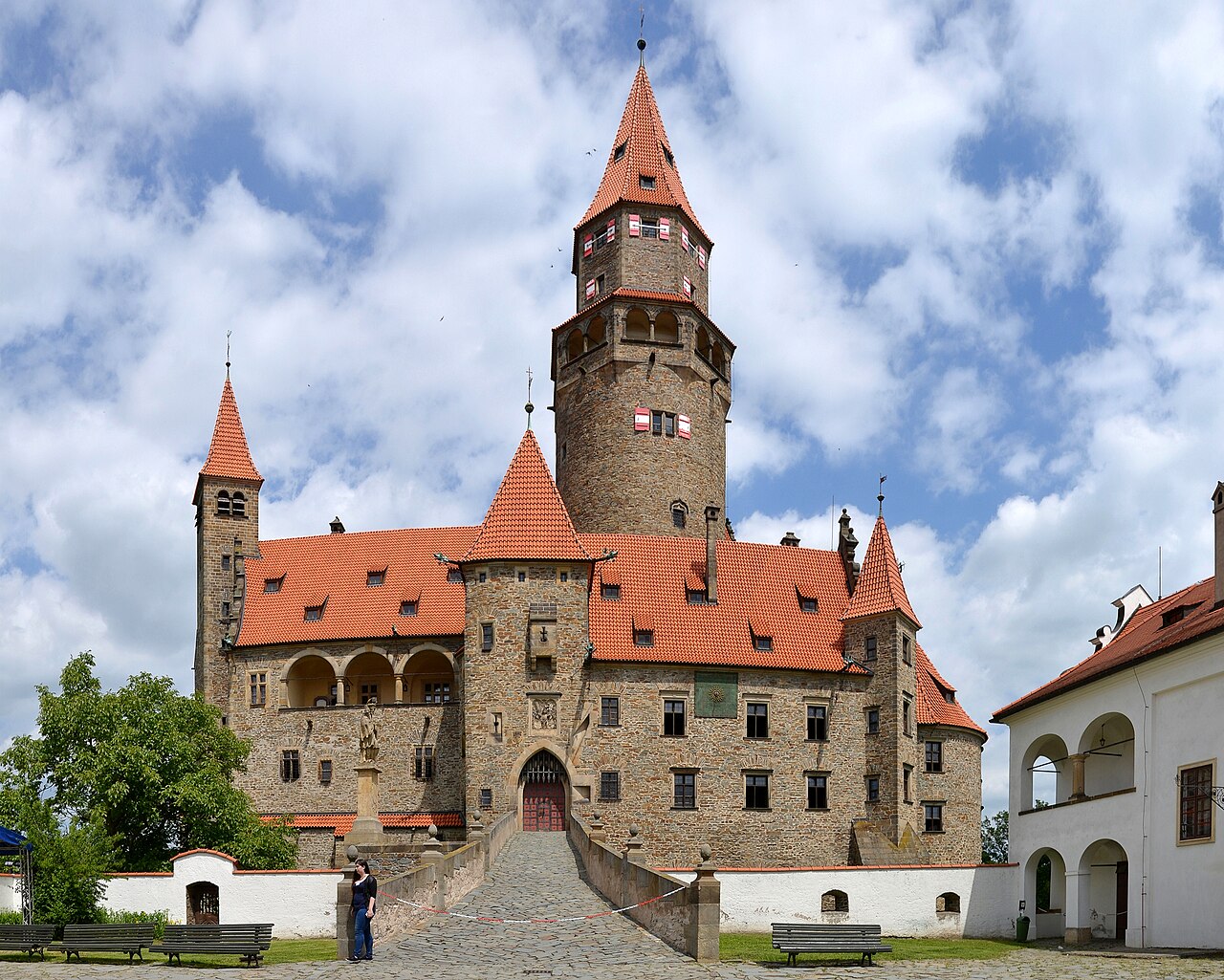
Bouzov Castle, located in the picturesque countryside of the Czech Republic near the villages of Litovel and Mohelnicka, stands as a remarkable example of a romantic neo-Gothic hill castle. Founded around the turn of the 13th and 14th centuries, this castle has witnessed centuries of historical transformation, evolving from a medieval fortress guarding vital trade routes to a majestic residence and cultural monument. Its strategic position atop a hill was chosen to oversee the important trade route from Olomouc to Loštice, reflecting the medieval emphasis on controlling commerce and regional security. The earliest known owners were the minor aristocratic family of Búz of Bludovec, recorded from 1317 to 1339, from whom the castle derives its name. Over the centuries, ownership passed through several prominent noble families, including the Lords of Kunštát and the Lords of Vildenberk, each leaving their mark on the castle's architecture and function. The medieval origins and defensive architecture Initially constructed as a late medieval hill castle, Bouzov's original design centered on defense and surveillance. The castle likely began as a tower and rampart with wooden residential buildings. The Vildenberks later replaced these with a stone manor on the western side, taller than the surrounding rampart, signaling a shift towards more permanent and imposing fortifications. By the 14th century, the castle had expanded significantly to include a fortified settlement with outhouses, surrounded by a ditch, rampart, and a moat wall. A notable feature was a 61-meter tall watchtower, which served as a vantage point for early warning and defense. Under the Lords of Kunštát, the fortifications were further enhanced with a connected rampart featuring two bastions and a moat wall rebuilt with five round bastions. A round gun bastion was also added, reflecting advancements in military architecture designed to withstand artillery. Architectural features and layout The castle's layout is horseshoe-shaped, with buildings grouped around the central eight-storey watchtower rising 58 meters. This tower, a typical bergfried, was both a defensive stronghold and a symbol of feudal power. The complex includes numerous towers, bastions, battlements, oriel windows, and loopholes. The two long bridges, each ending with a short drawbridge, span the deep dry moat encircling the castle, combining defensive utility with controlled access. Historical significance and ownership changes Bouzov Castle's history is intertwined with notable historical figures and events. It is famously associated with Jiří z Poděbrady (George of Poděbrady), born in 1420 at Bouzov, who became the King of Bohemia in 1458. His reign marked a significant period in Czech history, and the castle’s connection to him enhances its cultural importance. Throughout the 15th to 19th centuries, the castle changed hands multiple times, including ownership by the Lords of Vildenberk, Margrave Jošt, the Haugvic family, and the Pod Štatský family. In 1558, a devastating fire damaged the castle, after which it gradually lost its defensive role and transitioned into a residential manor. In 1696, the castle was acquired by the Order of the Teutonic Knights, who held it until the 20th century. During their tenure, Bouzov ceased to function as a defensive fortress, with only the outer settlement remaining inhabited. By the late 19th century, the castle was in ruins but attracted tourists fascinated by its medieval past. Neo-Gothic restoration and modern history The castle's current romantic and fairy-tale-like appearance is largely the result of a comprehensive Neo-Gothic restoration undertaken between 1896 and 1910. This reconstruction was commissioned by Archduke Eugen Habsburg, Grand Master of the Teutonic Order, and executed by the renowned architect Georg von Hauberrisser, known for his work on Munich’s town hall and St. Paul's Church. The restoration aimed to revive Bouzov as a romantic mansion with characteristic features such as battlements, bay windows, gargoyles, and functional defensive elements like two drop-down bridges and a tramway grille. Modern amenities including running water and central heating were also installed to adapt the castle for contemporary use. During World War II, the castle was confiscated and used by Nazi forces, notably by Heinrich Himmler, who acquired it as a gift for Adolf Hitler. After the war, Bouzov returned to state ownership and has since been preserved as a cultural monument. In 1999, it was officially declared a national cultural monument of the Czech Republic. Interior and cultural significance today Bouzov Castle is fully furnished and equipped with period paintings, art objects, and custom-made historical furniture. Its interiors include the knights' hall, an armoury with original Gothic vaulting, residential chambers, and a neo-Gothic chapel featuring a Gothic altar and tombs. The furniture largely comes from Archduke Eugen’s private collection and the archives of the Teutonic Order, offering visitors an authentic glimpse into the castle’s noble past. The castle's magical ambiance and picturesque setting make it a popular venue for social events, concerts, theater performances, exhibitions, and weddings. It has also served as a filming location for numerous fairy tales and historical films, enhancing its cultural footprint in the region. Visitors can explore a variety of interiors, including halls, attics, and courtyards, and witness unique features such as the functional drop-down bridges and tramway grille during special ceremonies and seasonal events. Preservation and tourism Today, Bouzov Castle is well preserved, blending its original medieval structures with the romantic Neo-Gothic additions from the late 19th and early 20th centuries. Its status as a national cultural monument ensures ongoing protection and maintenance. The castle is a key tourist destination in the Czech Republic, drawing visitors interested in medieval history, architecture, and romantic castle aesthetics. Its accessibility and rich historical narrative make it an educational site as well as a cultural landmark, contributing significantly to the heritage and tourism economy of the region.

Late Medieval (14th–15th c.)
Details
23.5 km
Svojanov Castle — Czech Republic castle

Svojanov Castle

Svojanov, Czech Republic

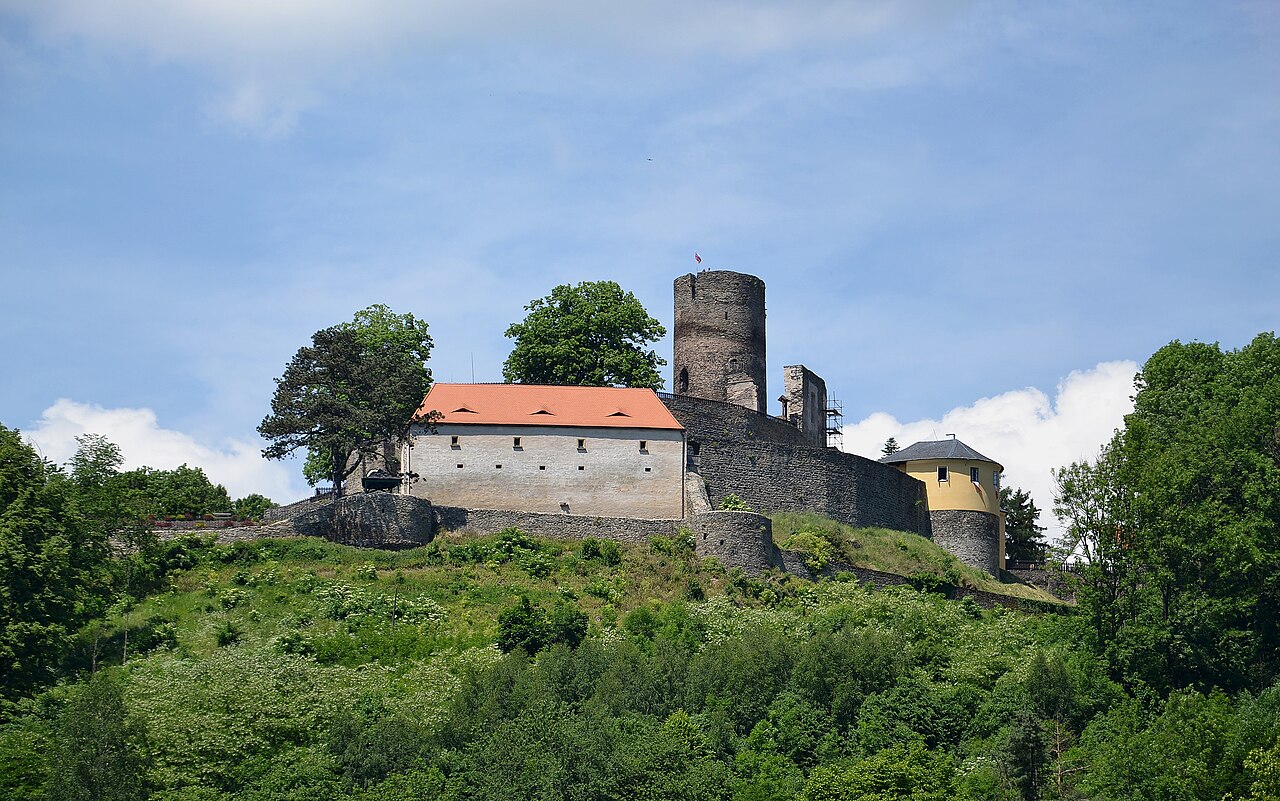
Svojanov Castle stands as a remarkable example of a high medieval hill castle in the heart of the Czech Republic. Constructed originally in 1224, it was strategically positioned to oversee and protect a vital trade route connecting Bohemia and Moravia. This location on a rocky promontory overlooking the Křetínka River provided natural defensive advantages that were enhanced through successive architectural developments over centuries. The castle’s origins are closely tied to the reign of King Přemysl Otakar II, who established the fortress as a royal stronghold in the mid-13th century. The first documented mention of the castle dates to 1287, when it was under the ownership of Záviš of Falkenstein. Záviš expanded the original fortress into a significant Gothic castle, reflecting the architectural styles and military needs of the period. Ownership of the castle fluctuated between noble families and the Bohemian crown, with notable possession by the Lords of Boskovice during the Hussite Wars in the early 15th century. Medieval origins and strategic importance The establishment of Svojanov Castle was primarily motivated by its role in securing the important trade route that linked the regions of Bohemia and Moravia. This route was crucial for commerce and military movements, making the castle a focal point in regional power struggles. The castle’s location on a hill allowed defenders to monitor the surrounding landscape and control access along the trade path. Throughout the 13th and 14th centuries, Svojanov Castle served as a royal fortress and administrative center. Its early construction featured a robust curtain wall and a bergfrit—a tall cylindrical tower typical of medieval fortifications designed as a last refuge during sieges. The bergfrit at Svojanov is particularly notable for its two separate entrances on the first and second floors, with the ground floor accessible only via a hatch from above, enhancing its defensibility. Castle architecture and defensive features The castle complex is enclosed by a thick curtain wall, varying in thickness from about three meters in the oldest sections to five meters in later late Gothic modifications. This wall was supplemented by an outer line of fortifications including four semi-circular bastions arranged to provide flanking fire along the walls, a round tower, and a triangular bastion with rounded corners. These features reflect adaptations to evolving military technology and siege tactics over the centuries. The bergfrit’s interior includes a vaulted stone dome on the ground floor and timber floors above, connected by ladder-like stairs. Its base measures approximately 1.9 meters in diameter, and the interior floor rests directly on the natural rock, with a small niche whose original purpose remains uncertain. This tower remains accessible today, offering visitors panoramic views of the surrounding landscape. The castle’s palace, originally a three-room structure on the ground floor with potential upper chambers, retains much of its medieval core, especially in the cellar and western ground floor. Renaissance and Empire style renovations extended the palace eastward, reflecting changing tastes and residential needs. Access to the palace is through a steep stairway from the courtyard, passing two portals, with evidence of a blocked corridor that may have led to latrines. Historical events and ownership changes Svojanov Castle’s history is marked by significant events and changes in ownership. After Záviš of Falkenstein’s imprisonment in 1289, the castle reverted to royal hands and remained so until 1419. During the Hussite Wars, the castle was pledged to the Lords of Boskovice, who were influential nobles in the region. In the early 1500s, it was sold to the Trčka of Lípa family, who undertook Renaissance-style renovations. The castle endured a siege by the famed Hussite commander Jan Žižka in 1421. Later, during the Thirty Years’ War (1618–1648), it suffered damage from fire and occupation by Swedish troops between 1642 and 1645. The decline of the castle’s military importance coincided with the rise of new transportation methods, such as railways, in the 19th century. In the 19th century, the castle grounds were repurposed for industrial use, housing a graphite processing factory until a fire in 1842 caused significant damage. Subsequent reconstruction incorporated Empire style architectural elements, blending historical preservation with contemporary tastes of the period. Ownership transferred to the town of Polička in 1910, and the site was affected by events during World War II. Restoration efforts resumed after 1992 to preserve the castle's historical and cultural legacy. Architectural evolution and restoration Svojanov Castle’s architecture reflects a layered history of medieval fortification, Renaissance remodeling, and 19th-century stylistic updates. The original high medieval construction prioritized defense, evident in the thick walls, bergfrit tower, and strategic hilltop location. The later Gothic additions enhanced fortifications with bastions and improved curtain walls to adapt to advances in siege warfare. The Renaissance period brought residential and aesthetic improvements, including expansions to the palace and the introduction of decorative elements. The 19th-century Empire style renovations added further refinements, particularly in interior spaces, blending functionality with elegance. Since the mid-20th century, Svojanov Castle has been legally protected as a cultural monument, ensuring its preservation. Archaeological excavations, such as the 2011 discovery of a previously covered well in the courtyard, have provided valuable insights into the castle’s infrastructure and daily life. Current condition and visitor experience Today, Svojanov Castle is well preserved and open to the public. Visitors can explore the castle’s extensive grounds, including the bergfrit tower, palace, curtain walls, bastions, and remains of a chapel and gardens. The castle hosts cultural events and exhibitions showcasing life in the 19th century, enriching the visitor experience with historical context. The castle’s elevated position offers panoramic views of the surrounding landscape, making it a popular destination for history enthusiasts and tourists. Its combination of medieval military architecture and later stylistic layers provides a tangible connection to the region’s complex past. Visitor information and accessibility Svojanov Castle is accessible year-round, with guided tours available to provide in-depth historical and architectural insights. The site’s facilities support cultural events, educational programs, and seasonal activities. Visitors are encouraged to explore the castle’s courtyards, towers, and exhibitions to fully appreciate its historical significance.

High Medieval (11th–13th c.)
Details