Moosham Castle
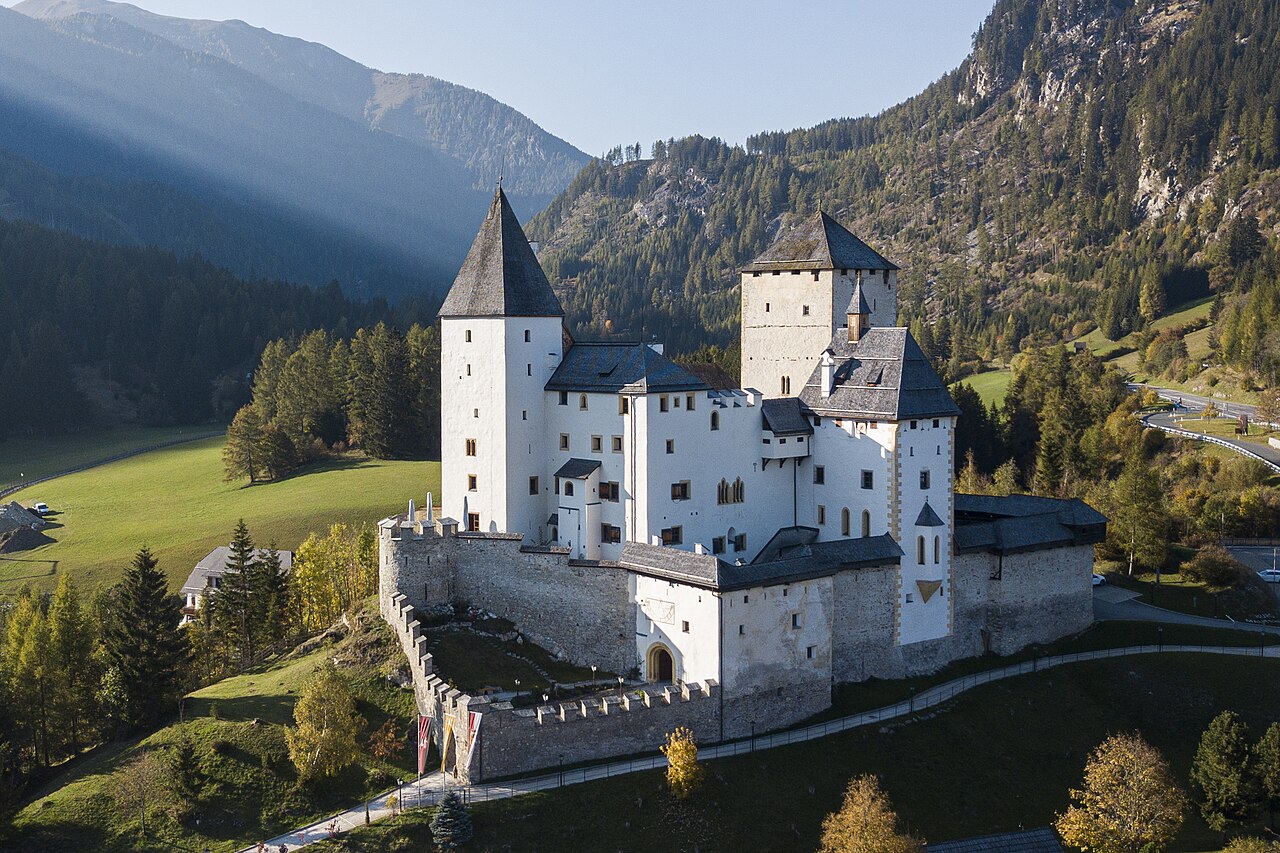
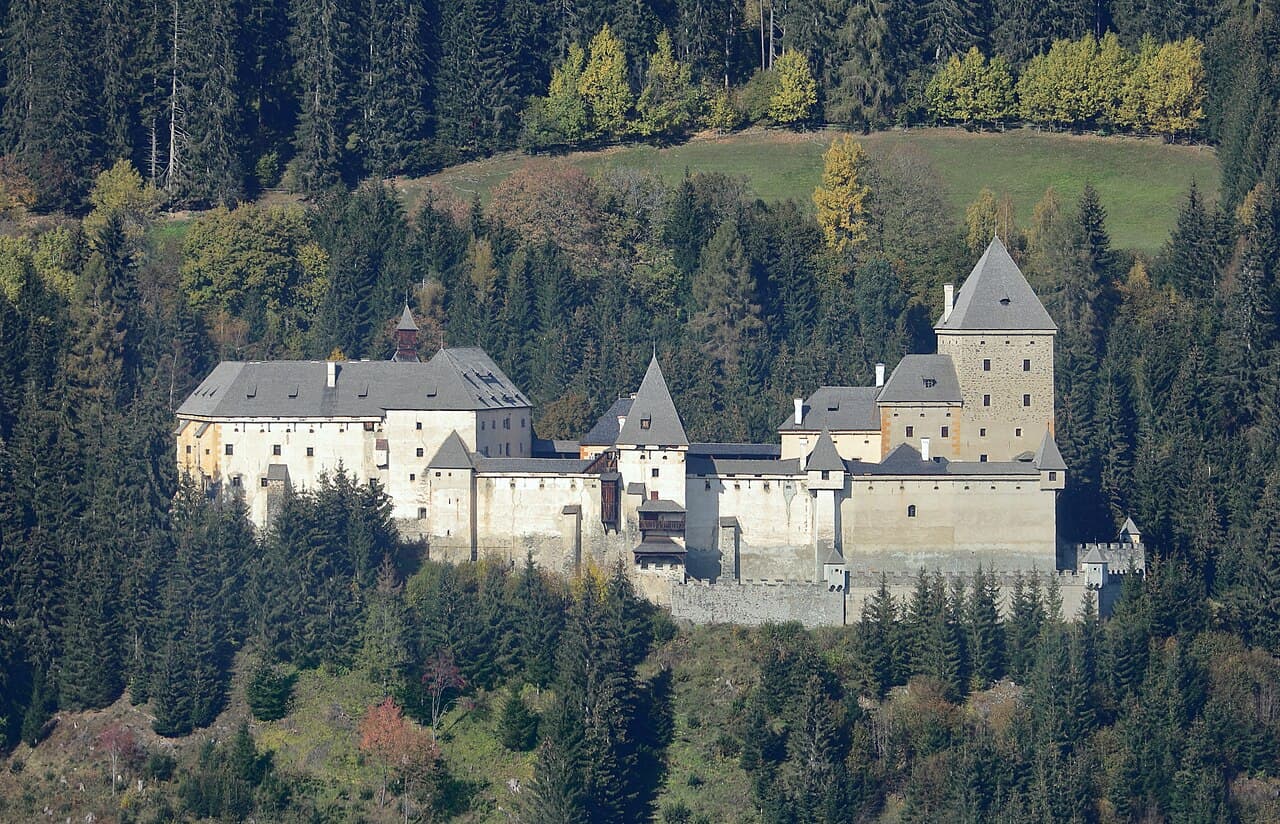
Moosham Castle stands as a remarkable example of medieval and Renaissance architecture nestled in the Salzburg region of Austria. Its origins trace back to the 12th century, built possibly on the foundations of a Roman castrum fortress, which underlines the strategic importance of its location since ancient times. The castle's history is deeply intertwined with the political and ecclesiastical power of the Prince-Archbishops of Salzburg, who seized it in the late 13th century and used it as a residence and administrative seat for centuries.
Early history and strategic significance
Archaeological excavations beneath the castle grounds uncovered remnants of a Roman settlement and a temple dedicated to the god Mithras, confirming the site's use during Roman times. The presence of two Roman roads nearby connected the area to major routes, highlighting its early military and commercial significance. The castle itself first appears in historical records in 1191, associated with the Moosheim ministerial family, who were the original noble occupants.
By 1213, the Lungau region including Moosham came under the control of the Archbishopric of Salzburg, a transfer sanctioned by Emperor Frederick II. The castle was explicitly documented in 1256, revealing an expansion into an older and newer section, a common feature in castles evolving over centuries. In 1285, the Moosheim family was expelled after accusations of disloyalty, and the castle became firmly under ecclesiastical control.
Medieval and renaissance transformations
Under the rule of Prince-Archbishop Leonhard von Keutschach from 1495, Moosham Castle underwent significant modernization and expansion that shaped much of its current Renaissance appearance. The castle served as the administrative center of the Lungau region from 1520 and was a focal point during the German Peasants' War (1524–25), when it was besieged by revolting peasants. The castle also served as a summer residence for Salzburg’s archbishops, blending defensive features with residential comfort.
The castle's keep, known as the Witch Tower, became infamous in the 17th and 18th centuries as the site of witch trials, which often resulted in death sentences. This grim chapter reflects the broader European witch hunt phenomena and adds a dark historical layer to the castle's legacy. The tower was removed in 1722 and partially rebuilt, showing the changing needs and tastes of the period.
Architecture and structural features
Moosham Castle is the third largest castle in Salzburg and comprises two main parts: the older Lower Castle and the Upper Castle, the latter extensively renovated in the 16th century. The original drawbridge was replaced by a sturdy stone bridge, enhancing the castle's defensibility. The entrance to the Upper Castle courtyard is marked by a large arched portal and a barrel-vaulted passage, architectural elements typical of the period.
A prominent three-story guardhouse bears the coat of arms of Archbishop Hieronymus Prince Colloredo, Salzburg’s last prince-bishop, symbolizing the castle's ecclesiastical heritage. The courtyard’s east side features a large granary with a vaulted basement and a remarkable larch wood ceiling supported by beams measuring 28 meters in length. This granary was later adapted into a museum space by Count Wilczek to display carriages and sledges.
The castle chapel, accessible from the courtyard, is adorned with frescoes attributed to Gregor Lederwasch, depicting the 14 Stations of the Cross and the 12 Apostles. The late Gothic altar originated from Hamburg, and the pipe organ was relocated from Pettenegg Palace. Fifteenth-century stained glass from a church near Leoben enriches the apse. Despite being desecrated between 1790 and 1910, the chapel has been reconsecrated and remains a significant spiritual and artistic feature.
The noble residential area includes a great dining hall with a Gothic wooden ceiling and a Salzburg marble fireplace taken from the former Grimming House in Mauterndorf. The hunting hall displays historical trophies and weapons, reflecting the aristocratic lifestyle. The princely section houses a writing hall with a ribbed vault supported by a central pillar, decorated with hunting trophies and artworks inspired by Dutch and German masters.
On the upper floor of the Upper Castle, the Prince’s Hall and Renaissance Hall retain original wooden ceilings. The Renaissance Hall’s walls are covered with gold-pressed leather wallpaper and contain a maiolica stove from 1687, originally from Winterthur. The Prince’s Room is paneled in Gothic style and features a maiolica stove assembled in 1726, underscoring the blend of artistic styles over centuries.
Between the Upper and Lower Castles lies a courtyard with wooden battlements typical of Salzburg fortifications. These battlements are affixed inside the outer courtyard walls and the zwinger, a defensive outer enclosure reconstructed at the end of the 19th century.
The Lower Castle once housed courtrooms, with a statue of the Madonna and Child dating from around 1440 above the judge’s seat. The walls display a collection of judicial artifacts, including a judgment sword and weapons confiscated from poachers. The castle's torture chamber preserves original instruments used during the witch trials, offering a sobering glimpse into the judicial practices of the time.
Restoration and modern significance
After the judicial court moved away in 1790, the castle fell into decline and was sold multiple times. In 1886, Count Johann Nepomuk Wilczek, an Austrian explorer and patron of the arts, purchased the ruin and undertook extensive restoration efforts. Wilczek rebuilt the keep, restored interiors, and furnished rooms with his extensive art collection, transforming the castle into a cultural landmark.
Moosham Castle has remained in the Wilczek family since 1892 and survived both World Wars. It underwent further restorations in the 20th century, preserving its architectural integrity and historical character. In 1993, Austria designated Moosham Castle as a protected historic monument, recognizing its cultural and historical importance.
Today, the castle remains private property but opens its rooms to the public, showcasing Wilczek's art collections and the castle's rich history. Situated at an elevation of 1,113 meters above sea level, the castle is surrounded by mixed forests and mountainous terrain, offering visitors a scenic and historically immersive experience. The local hemiboreal climate brings cold winters and mild summers, adding to the atmospheric charm of this historic hill castle.
Frequently asked questions (FAQ)
- How do I get to Moosham Castle?
- Moosham Castle is located in Unternberg, Austria, and is easily accessible by car or public transport. If you're traveling by car, take the A10 motorway and follow the signs for Unternberg. Public transport options include regional trains and buses that connect to the area.
- What is the historical significance of Moosham Castle?
- Moosham Castle dates back to the 12th century and has a rich history, including its role as a stronghold during the Middle Ages. It is famously known for its association with witch hunts and trials in the 17th century, making it a site of great historical interest. The castle's storied past attracts history enthusiasts and visitors alike.
- When was Moosham Castle built?
- Moosham Castle was constructed in the 12th century, with its architecture reflecting the styles of that era. Over the centuries, it has undergone various renovations and expansions, particularly in the Gothic and Renaissance styles. This blend of architectural influences adds to its historical charm.
- Can I visit Moosham Castle year-round?
- Yes, Moosham Castle is open to visitors year-round, but it's recommended to check the specific opening hours before your visit. The castle may have varying hours depending on the season and any special events. Always plan ahead to ensure you can explore this historic site.
- Why is Moosham Castle considered an architectural gem?
- Moosham Castle is regarded as an architectural gem due to its well-preserved structures and unique design features. Its combination of medieval fortifications, elegant arches, and picturesque towers showcases the craftsmanship of the periods it represents. The surrounding landscape further enhances its aesthetic appeal.
- Is it possible to take guided tours of Moosham Castle?
- Yes, guided tours are available at Moosham Castle, providing visitors with in-depth insights into its history and architecture. These tours are led by knowledgeable guides who offer fascinating stories and details that enhance the visitor experience. Reservations are recommended, especially during peak tourist seasons.
- What are the ticket prices for Moosham Castle?
- Ticket prices for Moosham Castle vary depending on age and group size, with discounts available for children, students, and seniors. Typically, adult tickets are affordably priced, making it accessible for families and tourists. Check the official website for the most current pricing information.
- When is the best time to visit Moosham Castle?
- The best time to visit Moosham Castle is during the spring and early fall, when the weather is pleasant and the surrounding scenery is at its finest. Summer can be busy with tourists, while winter offers a unique charm with snow. Consider visiting during weekdays for a more tranquil experience.
- Are there nearby attractions to Moosham Castle?
- Yes, there are several nearby attractions worth exploring while visiting Moosham Castle. The scenic landscapes of the Salzburg region offer outdoor activities like hiking and skiing, while charming villages and local museums provide cultural experiences. Plan a day to discover the rich heritage of the area.
Photo gallery

Information
Website
Visit websiteFeatured in
Articles on the Castlopedia blog that feature Moosham Castle.
Sources & official resources
Verify the information above using these authoritative references.
Loading map...
Visitor reviews
No reviews yet. Been here? Write the first review and help other travelers!
Write the first reviewVisited this castle? Share your experience
Your review helps other travelers and adds first-hand knowledge to our encyclopedia.