Burg Mauterndorf
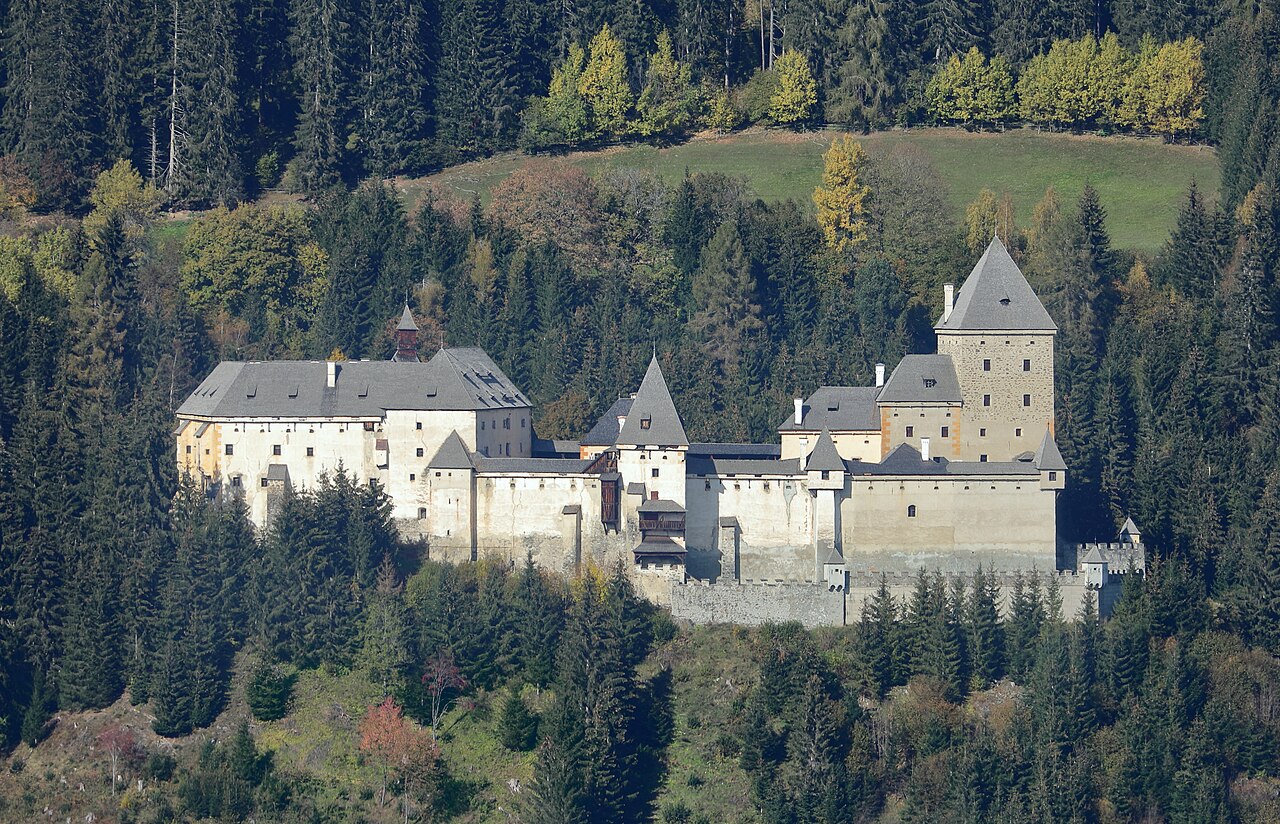
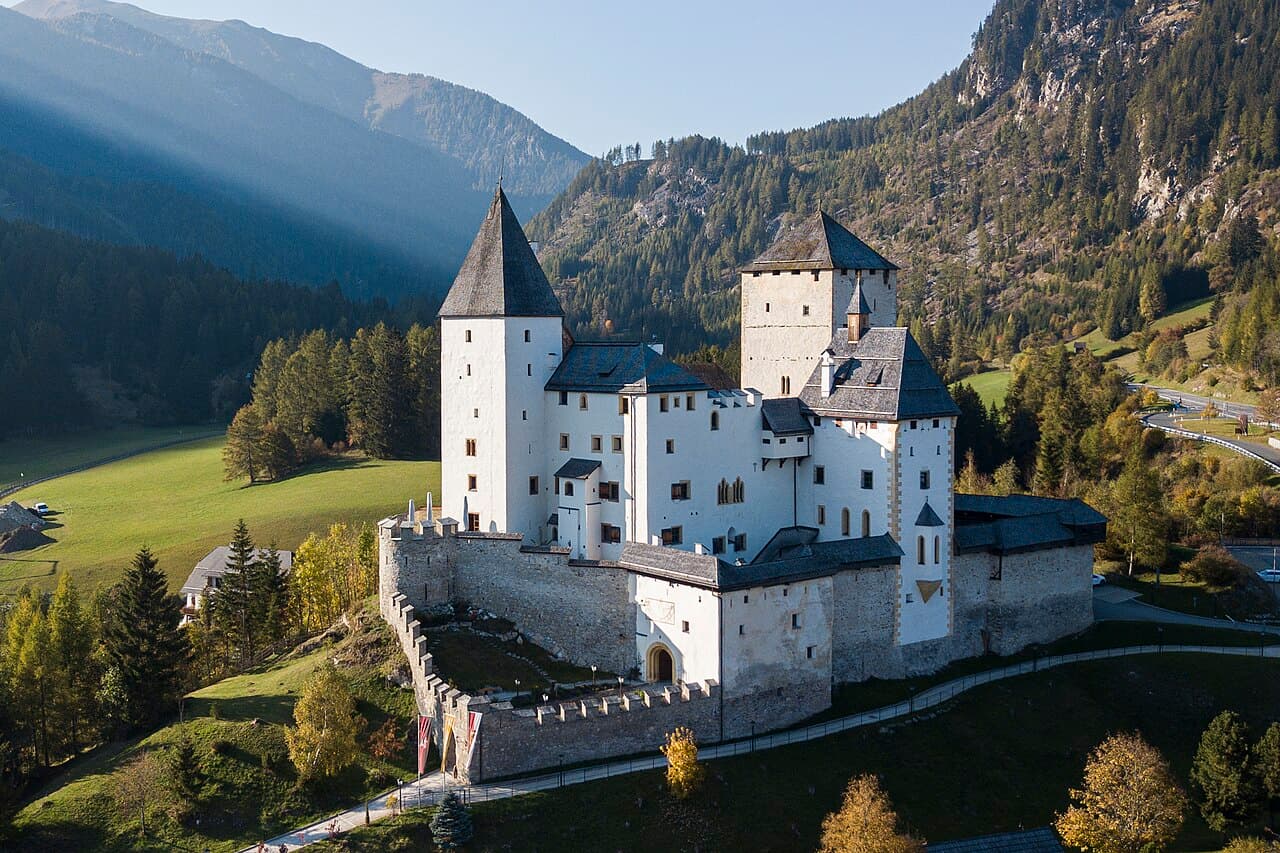
Burg Mauterndorf stands as a striking example of a high medieval hill castle in the Salzburg region of Austria, embodying a rich history that spans from the Roman Empire to modern times. Perched on a commanding rocky hill overlooking the Radstädter Tauern Pass, this fortress occupies a site of strategic importance that has been continuously utilized since antiquity. The castle’s origins are deeply intertwined with an earlier Roman fortification, believed to have been established around AD 326 or earlier, serving as both a military stronghold and the residence of a Roman provincial administrator in the province of Noricum.
The transition from Roman fort to medieval fortress marks an evolution in defensive architecture and regional control. While the original Roman fortification was destroyed during the Migration Period, the site was revitalized in the 13th century with the construction of the castle’s keep, known as a Bergfried. This keep is the earliest documented part of the medieval castle, first mentioned in historical records dating to 1253. The castle was strategically important as a toll collection point on a vital mountain route, a function that had been formalized by a decree from Emperor Henry II in 1002, establishing a tax and toll system in the area.
Medieval expansion and archiepiscopal control
Throughout the Middle Ages, Burg Mauterndorf was held by the Prince-Archbishops of Salzburg, who played a significant role in the castle’s development and regional administration. The fortress underwent substantial enlargement and fortification during the 15th century, particularly under the leadership of Archbishops Burkhard Weisbriach and Leonhard von Keutschach. These expansions enhanced the castle’s defensive capabilities and administrative functions, shaping the structure into the form that largely survives today.
Architectural features and layout
The castle’s core is dominated by the keep (Bergfried), a tall, robust tower that served as the fortified heart of the complex. Surrounding the keep, the castle complex includes thick stone curtain walls, defensive battlements, and strategically placed towers adapted to the rocky hilltop terrain. The 15th-century renovations incorporated late medieval fortress design principles, balancing military defense with residential needs.
Historical significance and ownership transitions
The castle’s role as a toll station ended in the early 19th century, specifically in 1803 during the upheavals of the Napoleonic Wars. Ownership transferred to the Austrian state in 1806, marking a new chapter in its history. In 1894, Hermann Epenstein, a Prussian Army surgeon who had converted to Catholicism, purchased the castle and undertook significant restoration efforts to adapt it for residential use. Epenstein’s contributions were recognized by Emperor Franz Joseph I, who granted him the minor noble title Ritter von Mauternburg.
Epenstein’s connection to the prominent Göring family led to the castle becoming a refuge and residence for Hermann Göring during the turbulent years leading up to and during World War II. Although Göring never formally took ownership, he used the castle as a retreat and ultimately surrendered to United States forces nearby in 1945, fleeing the advancing Soviet army.
Post-war preservation and museum establishment
After World War II, disputes over the castle’s ownership delayed its future until 1966, when Göring’s relatives agreed to transfer it to the Austrian Republic. Since 1968, the castle has been managed by the state of Salzburg. A comprehensive restoration project from 1979 to 1982 ensured the preservation of the castle’s structure and historical integrity.
Today, Burg Mauterndorf houses the Lungau Regional Museum, featuring exhibitions that vividly recreate historical life within the castle. The museum’s "castle of impressions" display offers visitors an immersive experience of medieval and early modern residential life, while the castle’s well-preserved architecture provides insight into centuries of military and administrative functions.
Architectural conservation and visitor experience
The castle’s preservation includes careful maintenance of the stone masonry, battlements, and internal chambers, ensuring the site remains a valuable cultural and historical landmark. Visitors can explore the castle’s courtyards, defensive walls, and the imposing keep, gaining a tangible sense of its strategic importance and architectural evolution.
While archaeological evidence from the Roman period is limited on the surface, the castle’s location and structural layers reflect a continuum of occupation and adaptation from antiquity through the medieval period to the present day.
Frequently asked questions (FAQ)
- How do I get to Burg Mauterndorf?
- Burg Mauterndorf is located in the picturesque village of Mauterndorf, Austria. It can be easily reached by car or public transport, with ample parking available nearby. For those traveling by train, the nearest station is in the town of St. Michael im Lungau, from where you can catch a local bus or taxi to the castle.
- What is the historical significance of Burg Mauterndorf?
- Burg Mauterndorf dates back to the 13th century and served as a vital defensive structure in the region. It played a key role in the trade route between the north and south of Europe. Today, it stands as a testament to medieval architecture and is a fascinating representation of the region's history.
- When was Burg Mauterndorf built?
- Burg Mauterndorf was constructed in the early 1200s, making it one of the oldest castles in the Lungau region. Over the centuries, it has undergone various renovations and restorations, preserving its historical elements while adapting to modern visitor needs.
- Can I visit Burg Mauterndorf year-round?
- Yes, Burg Mauterndorf is open to visitors throughout the year, although specific opening hours may vary by season. It’s recommended to check their official website or contact the castle administration for the most current visiting hours and any special events.
- Why is Burg Mauterndorf popular among tourists?
- Burg Mauterndorf attracts tourists due to its stunning architecture, rich history, and breathtaking views of the surrounding landscape. The castle also hosts various cultural events and exhibitions, making it a vibrant part of the local community. Its combination of historical significance and scenic beauty makes it a must-visit destination.
- Is it possible to take guided tours of Burg Mauterndorf?
- Yes, guided tours are available at Burg Mauterndorf, providing visitors with an in-depth understanding of the castle's history and architecture. These tours are often led by knowledgeable guides who can share fascinating stories and insights. It's advisable to book in advance, especially during peak tourist seasons.
- What are the ticket prices for visiting Burg Mauterndorf?
- Ticket prices for Burg Mauterndorf are quite reasonable, with discounts available for students, seniors, and families. Children under a certain age may enter for free. For the most accurate and updated pricing, it's best to check the official website or inquire at the entrance.
- What are the opening hours of Burg Mauterndorf?
- Burg Mauterndorf typically opens at 9 AM and closes at 5 PM, but these hours can vary depending on the season. During the peak summer months, the castle may offer extended hours to accommodate more visitors. Always verify the opening hours before your visit to ensure you have ample time to explore.
- What nearby attractions can I visit while in Mauterndorf?
- While in Mauterndorf, you can explore the nearby Lungau Valley, known for its stunning hiking trails and natural beauty. The region also offers skiing opportunities in the winter months, along with charming local shops and restaurants. Don't miss the chance to visit the historic village of Mauterndorf itself, which is rich in cultural heritage.
Photo gallery

Information
Website
Visit websiteSources & official resources
Verify the information above using these authoritative references.
Loading map...
Visitor reviews
No reviews yet. Been here? Write the first review and help other travelers!
Write the first reviewVisited this castle? Share your experience
Your review helps other travelers and adds first-hand knowledge to our encyclopedia.