Mauterndorf Castle
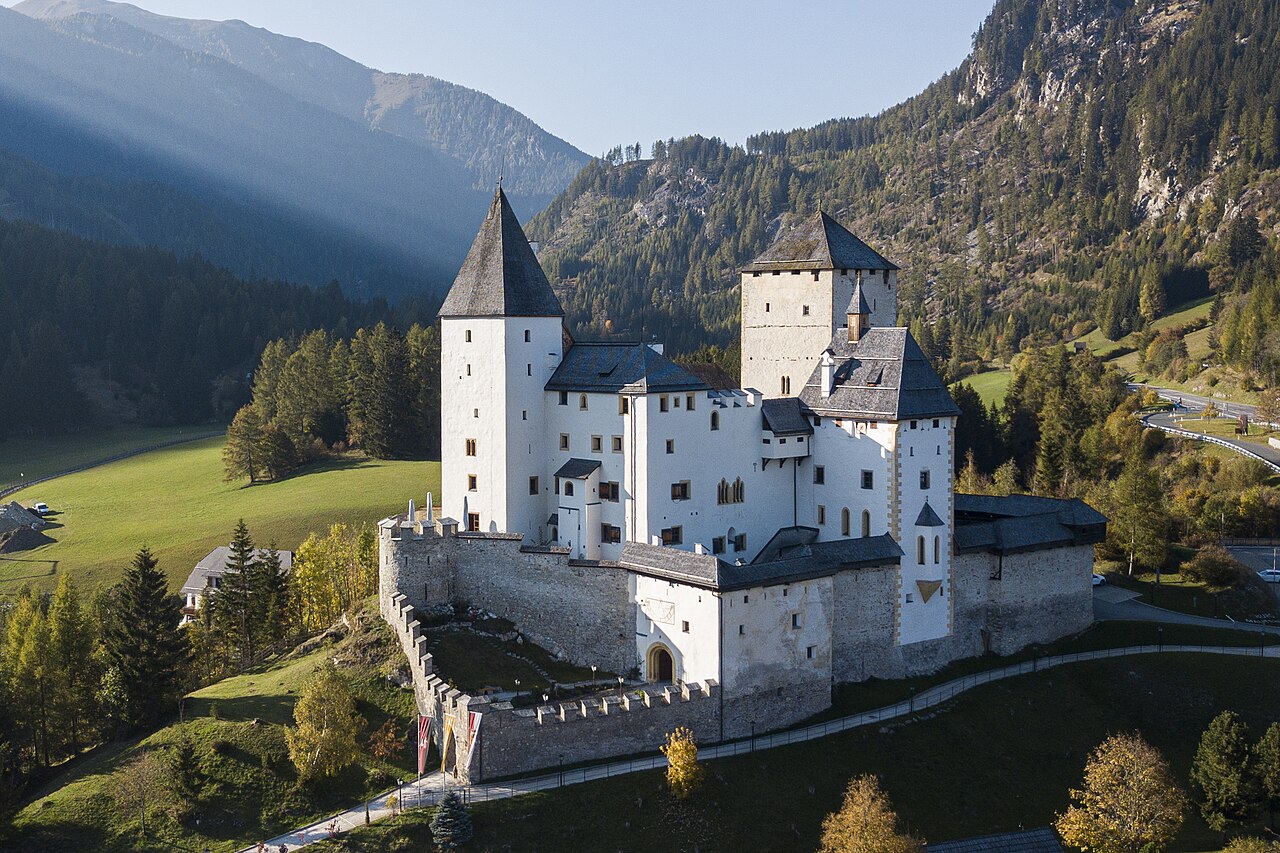
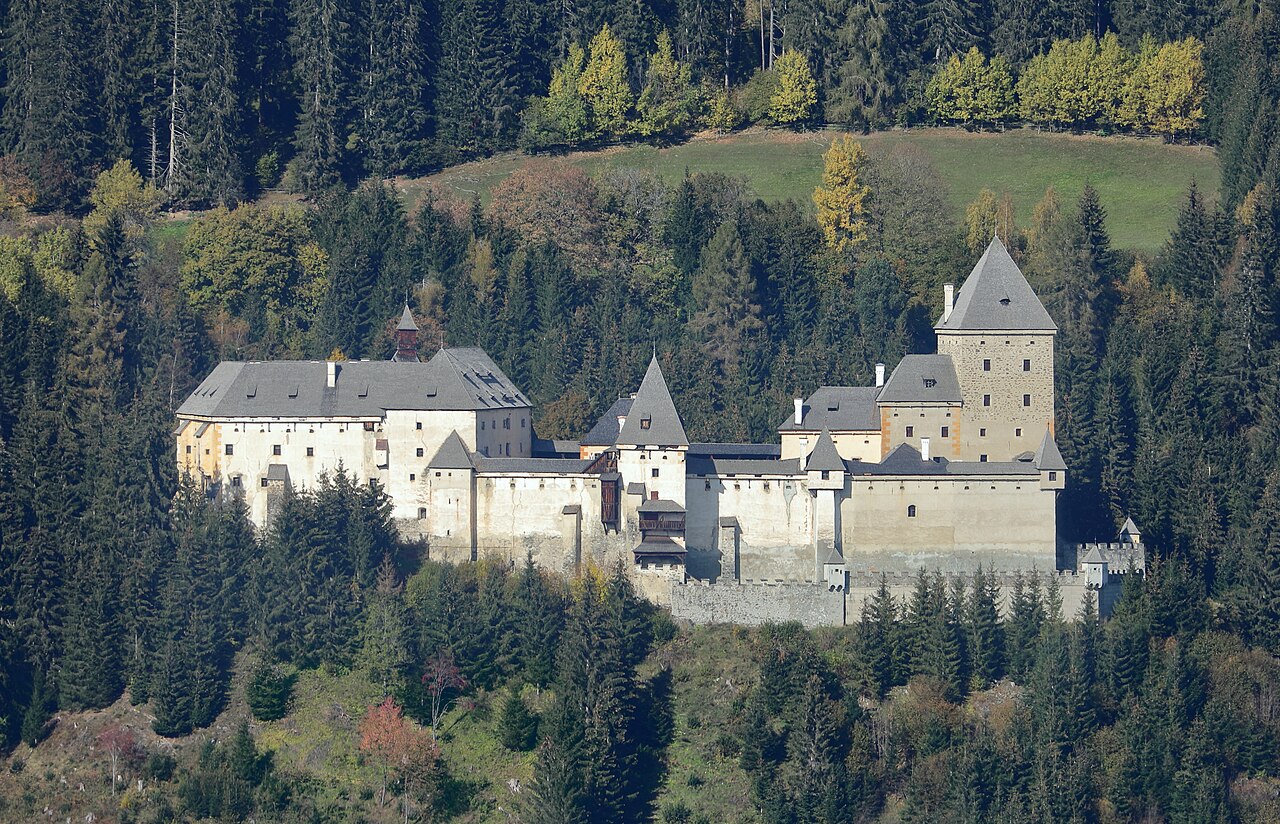
Mauterndorf Castle stands as a remarkable example of a high medieval hill castle with origins that trace back to antiquity. Situated in the town of Mauterndorf in the Austrian state of Salzburg, the castle occupies a strategic position overlooking the Radstädter Tauern Pass. This location was historically crucial as a transit and trade route through the Alps, connecting the Noricum province during Roman times to the northern territories.
The site of Mauterndorf Castle is believed to have originally hosted a Roman fortification dating to around 326 AD or earlier. This fort was part of a defensive network protecting the Roman mountain road from Teurnia to Iuvavum (modern Salzburg). It also served as a residence for the Roman provincial administrator, underscoring its early administrative and military importance. However, this original fort was destroyed during the Migration Period, a time marked by widespread upheaval and invasions across Europe.
Medieval origins and architectural development
The medieval castle that succeeded the Roman fortification was established to control and benefit from the toll collection system on the nearby mountain road. Documentation from a 1002 deed issued by Emperor Henry II references the toll rights in this region, highlighting the economic role of the castle even before its physical mention. The first explicit record of the castle itself dates to 1253, coinciding with the construction of the keep (bergfried), a central defensive tower typical of medieval fortifications.
Throughout the 15th century, Mauterndorf Castle underwent significant expansion and fortification under the auspices of the Prince-Archbishops of Salzburg, notably during the reigns of Burkhard Weisbriach and Leonhard von Keutschach. These enhancements included strengthening the curtain walls, enlarging the living quarters, and improving defensive features such as battlements and gatehouses. The castle's architecture from this period reflects the transition from purely military fortification to a more complex residence with administrative functions.
Architectural features
- The bergfried remains a dominant feature of the castle, serving as a lookout and last refuge during sieges.
- The castle's curtain walls are robust and include battlements for archers and artillery placement.
- It features a gatehouse that controlled access and was likely equipped with defensive mechanisms such as a portcullis and murder holes.
- The interior contains residential chambers, a great hall, and courtyards that supported both defensive and domestic needs.
- The castle is situated on a natural hill, enhancing its defensive advantage and visibility over the surrounding terrain.
Economic and political significance
The castle's prosperity was closely tied to the toll collection on the Radstädter Tauern Pass road, which was a vital commercial artery through the Alps. This toll system supported both the castle's maintenance and the local village economy until its abolition in 1803 during the upheavals of the Napoleonic Wars. Following the end of toll collection, the castle's strategic and economic importance diminished, leading to changes in ownership and usage.
Modern history and restoration
In 1806, Mauterndorf Castle became property of the Austrian state. It fell into decay until it was purchased in 1894 by Hermann Epenstein, a Prussian Army surgeon of Jewish descent. Epenstein undertook extensive restoration efforts, transforming the castle into a comfortable residence while preserving its historic character. His contributions were recognized by Emperor Franz Joseph I, who granted him the minor noble title of Ritter von Mauternburg in 1908.
Epenstein's connection to the Göring family, particularly as a mentor and godfather to Hermann Göring, adds a complex layer to the castle's 20th-century history. The Göring family frequently visited the castle, which was a place of refuge and hospitality. After Epenstein's death in 1934, the castle passed to his widow and was eventually bequeathed to Hermann Göring, though legal disputes over ownership ensued. During the closing stages of World War II, Göring attempted to flee to the castle but surrendered to US forces nearby.
Contemporary use and cultural role
Since 1968, Mauterndorf Castle has been owned by the state of Salzburg. It was opened as a castle museum in 2003, showcasing its rich history and architecture to visitors. The castle also hosts a variety of cultural events, scientific conferences, and serves as a venue for local enterprises including a well-regarded restaurant and catering services. Its preservation and adaptive reuse have made it a significant cultural landmark in the region.
Visitors to Mauterndorf Castle can explore its well-preserved medieval architecture, learn about its Roman antecedents, and appreciate its role in the historical and economic development of the Salzburg region. The castle's commanding position and extensive restoration make it a notable example of a restored high medieval hill castle with a continuous legacy from antiquity to modern times.
Frequently asked questions (FAQ)
- How do I visit Mauterndorf Castle and what can I expect?
- Mauterndorf Castle is open to visitors as a museum showcasing medieval architecture and history. Visitors can explore the castle's towers, courtyards, and exhibitions that detail its Roman origins and medieval expansions. Check local tourism websites for current opening hours and ticket prices.
- What is the historical significance of Mauterndorf Castle?
- Mauterndorf Castle played a crucial role in controlling the Radstädter Tauern Pass and collecting tolls, which supported its upkeep and the local economy. Its origins date back to a Roman fort, and it was significantly expanded in the 15th century by the Prince-Archbishops of Salzburg.
- Can I attend events or cultural activities at Mauterndorf Castle?
- Yes, the castle hosts various cultural events, scientific conferences, and local gatherings. It also features a restaurant and catering services, making it a vibrant cultural venue in the Salzburg region.
- Is Mauterndorf Castle accessible for visitors with mobility impairments?
- While the castle has some areas that may be challenging due to its historic structure, efforts have been made to improve accessibility. Visitors with mobility impairments are advised to contact the castle administration in advance to inquire about specific accommodations.
- When was Mauterndorf Castle restored and who was responsible?
- The castle was extensively restored starting in 1894 by Hermann Epenstein, a Prussian Army surgeon who purchased the decayed property and transformed it into a residence while preserving its medieval character.
Information
Current owner
State of Salzburg
Loading map...
Visitor reviews
No reviews yet. Been here? Write the first review and help other travelers!
Write the first reviewVisited this castle? Share your experience
Your review helps other travelers and adds first-hand knowledge to our encyclopedia.