Montgomery Castle
Montgomery Castle, located in Montgomery, Powys, is a significant High Medieval stone castle that played a crucial role in the turbulent history of the Welsh Marches. Originally constructed as a motte and bailey fortification known as Hen Domen between 1071 and 1074 by Roger de Montgomery, Earl of Shrewsbury, it exemplifies the typical Norman military architecture of the period. The castle's strategic position near the border of Wales and England made it a focal point for numerous conflicts, reconstructions, and sieges over several centuries.
Early origins and motte and bailey design
The initial fortification at Hen Domen was a classic motte and bailey castle, featuring a raised earthwork (motte) topped by a wooden or stone keep, accompanied by an enclosed courtyard (bailey). This design was common among Norman castles built shortly after the Conquest of England in 1066, serving as both a defensive stronghold and a symbol of Norman authority. The site was selected for its natural defensive advantages, including elevated ground and proximity to vital routes across the borderlands.
Transition to stone fortifications
Following the destruction of the original castle by Prince Llywelyn ab Iorwerth in 1214, the castle was rebuilt in stone beginning in 1223. This reconstruction was undertaken under the direction of Hubert de Burgh, a prominent architect and royal official responsible for several key fortifications in the Welsh Marches, including Skenfrith Castle, Grosmont Castle, and White Castle. The new stone castle was situated approximately a mile southeast of the original motte and bailey site, on a commanding rock overlooking the later town of Montgomery.
Architectural features of the stone castle
The stone castle's design included a robust inner ward or donjon, which was constructed over a five-year period from 1223 to 1228. Key features comprised a formidable gatehouse, two D-shaped towers, and residential apartments arranged around the curtain wall of the inner ward. The castle's elevated position on a rocky outcrop enhanced its defensive capabilities, making it difficult for attackers to breach.
After an unsuccessful assault by Prince Llywelyn in 1228, the castle's defenses were further strengthened with the addition of middle and outer wards. Despite these improvements, the castle suffered damage during a 1233 attack, notably to the well tower, which was later repaired and re-roofed to maintain water supply and defense.
Military history and sieges
Montgomery Castle witnessed several significant military engagements throughout its history. The castle and its surrounding walled town were attacked and burned in 1402 during the rebellion led by Owain Glyndŵr, a major Welsh uprising against English rule. Although the town suffered extensive damage, the castle itself was successfully defended by local forces.
During the First English Civil War (1642–1646), the castle was held by Royalist forces under the command of Lord Herbert of Cherbury. In September 1644, Parliamentarian troops led by Sir Thomas Myddelton and Thomas Mytton besieged and captured the castle in what became the largest battle of the war in Wales. A subsequent Royalist attempt to retake the castle was repulsed, solidifying Parliamentarian control.
Despite a brief change of allegiance by the Parliamentarian governor Sir John Pryce, the castle remained strategically important until the Second English Civil War in 1648. In June 1649, the castle's walls were deliberately demolished (slighted) by order of Parliament to prevent its future military use, a common practice across England and Wales during this period.
Legacy and archaeological significance
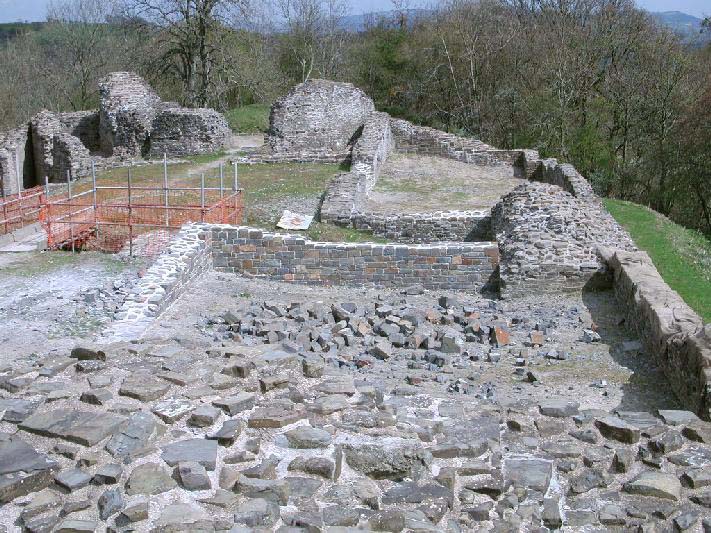
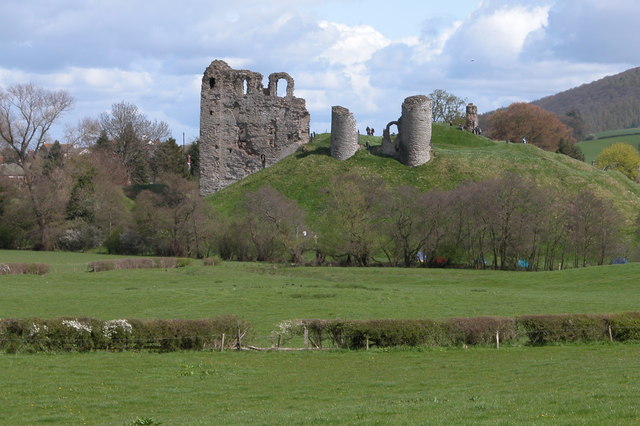
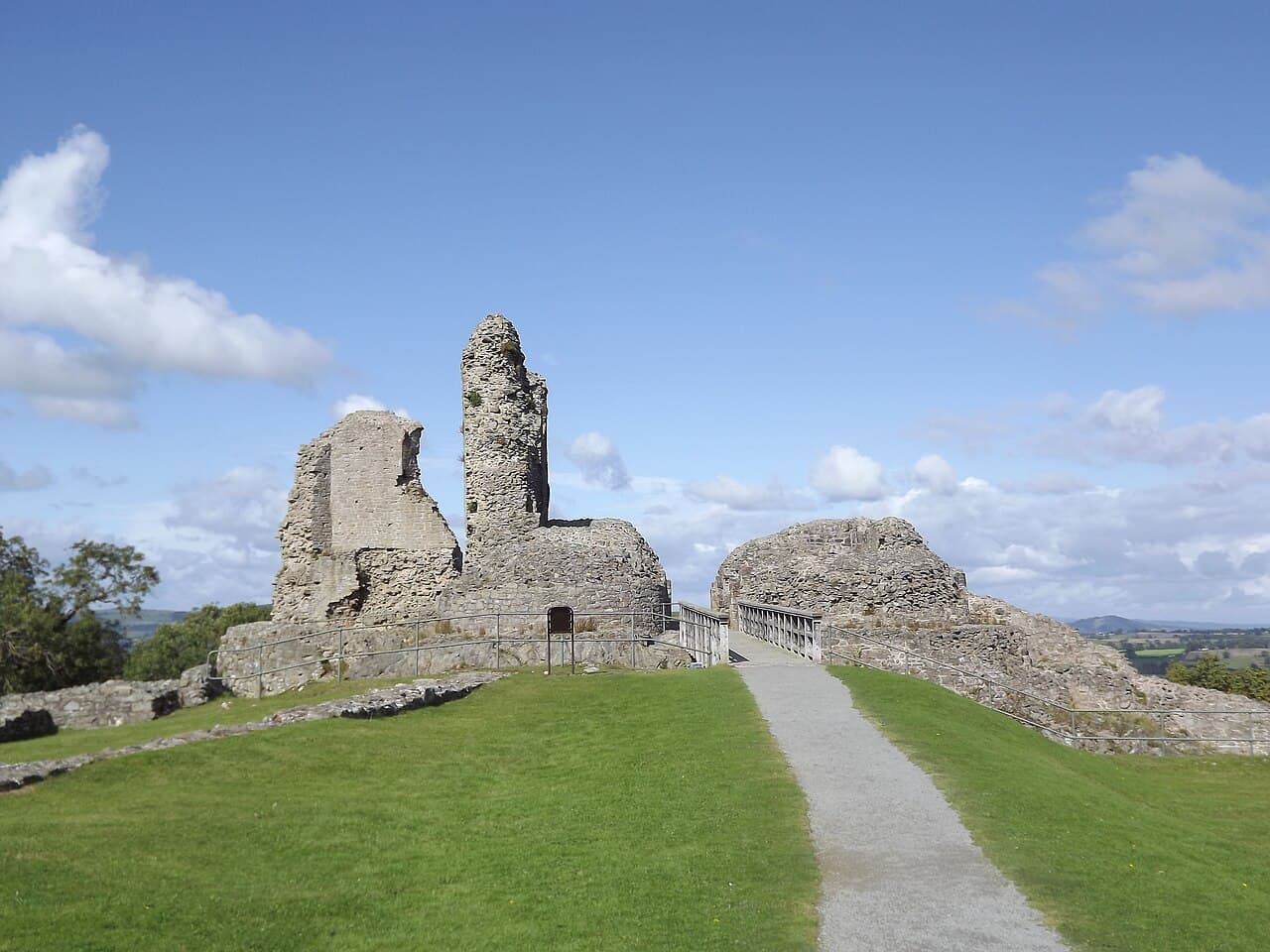
Today, Montgomery Castle stands as archaeological ruins, offering valuable insights into Norman military architecture and medieval border conflicts. The original motte and bailey site at Hen Domen has been extensively excavated, revealing the layout and construction techniques of early Norman fortifications.
The castle's ruins, including the surviving stone walls, towers, and gatehouse foundations, attract historians, archaeologists, and visitors interested in medieval history. The nearby Old Bell Museum in Montgomery houses permanent exhibitions featuring scale models of both the original Hen Domen motte and bailey and the later stone castle, alongside artifacts uncovered during archaeological excavations.
Architectural style and construction
Montgomery Castle exemplifies High Medieval castle architecture with its transition from timber to stone fortifications. The use of D-shaped towers and a strong gatehouse reflects evolving defensive strategies designed to counter siege engines and infantry assaults. The castle's layout with multiple wards and a commanding donjon demonstrates the importance of layered defense in medieval military design.
Preservation and public access
As a ruined castle, Montgomery Castle is preserved as a historic site with ongoing archaeological interest. Visitors can explore the remains and gain a deeper understanding of the castle's role in regional history through interpretive displays and guided tours offered in the town of Montgomery.
Frequently asked questions (FAQ)
- How do I get to Montgomery Castle?
- Montgomery Castle is located in the picturesque town of Montgomery in Wales. You can reach the castle by car, as it is easily accessible from the A483 road, and there are parking facilities nearby. Public transport options include local buses that connect to nearby towns and cities.
- What is the historical significance of Montgomery Castle?
- Montgomery Castle was built in the late 11th century by Roger de Montgomery, a key figure in the Norman conquest of Wales. It played a strategic role in the defense against Welsh uprisings and has witnessed numerous historical events over the centuries. Today, it stands as a testament to medieval military architecture and history.
- When was Montgomery Castle built?
- Construction of Montgomery Castle began in 1071, making it one of the earliest stone castles in Wales. The castle was completed in the following years and served as a stronghold for the Normans. Its impressive structure has withstood the test of time, and many of its features remain intact for visitors to explore.
- Can I visit Montgomery Castle year-round?
- Yes, Montgomery Castle is open to visitors throughout the year, although specific opening hours may vary by season. It is advisable to check the official website for the latest information on opening times and any potential closures. Guided tours may also be available, enhancing your experience of the castle's rich history.
- Why is Montgomery Castle considered an architectural marvel?
- Montgomery Castle showcases the impressive design typical of Norman military architecture, featuring thick stone walls, a commanding keep, and a strategic layout. The castle's ruins provide insight into the defensive strategies of the time and the lifestyle of its inhabitants. Its picturesque setting on a hilltop offers stunning views of the surrounding countryside, adding to its charm.
- Is it possible to access all areas of the castle?
- While visitors can explore many parts of Montgomery Castle, some areas may have restricted access due to safety concerns. The main ruins and grounds are generally open, allowing you to enjoy the historical atmosphere and views. Staff is on hand to provide information and ensure a safe visiting experience.
- What is the best time to visit Montgomery Castle?
- The best time to visit Montgomery Castle is during the spring and early autumn months when the weather is generally mild and pleasant. These seasons also tend to have fewer crowds compared to the summer peak. Additionally, visiting during these times allows you to enjoy the beautiful surrounding landscapes in full bloom.
- Are there any nearby attractions to Montgomery Castle?
- Yes, Montgomery Castle is close to several attractions, including the charming town of Montgomery itself, which offers quaint shops and cafes. Nearby, you can explore the beautiful St. Nicholas Church and the scenic Montgomeryshire countryside, perfect for walking and hiking. The historic market towns of Welshpool and Newtown are also within a short drive.
- What are the ticket prices for Montgomery Castle?
- Ticket prices for Montgomery Castle are generally affordable, with discounts available for children, students, and seniors. Family tickets may also be offered at a reduced rate. It is recommended to check the official website for the latest pricing information and any special offers before your visit.
- What are the opening hours for Montgomery Castle?
- Montgomery Castle typically opens at 10 AM and closes at 5 PM, although these hours may vary by season. During peak tourist season, extended hours may be in effect to accommodate more visitors. Always verify the current opening hours on the official website before planning your visit.
Photo gallery

Information
Loading map...
Visitor reviews
No reviews yet. Been here? Write the first review and help other travelers!
Write the first reviewVisited this castle? Share your experience
Your review helps other travelers and adds first-hand knowledge to our encyclopedia.